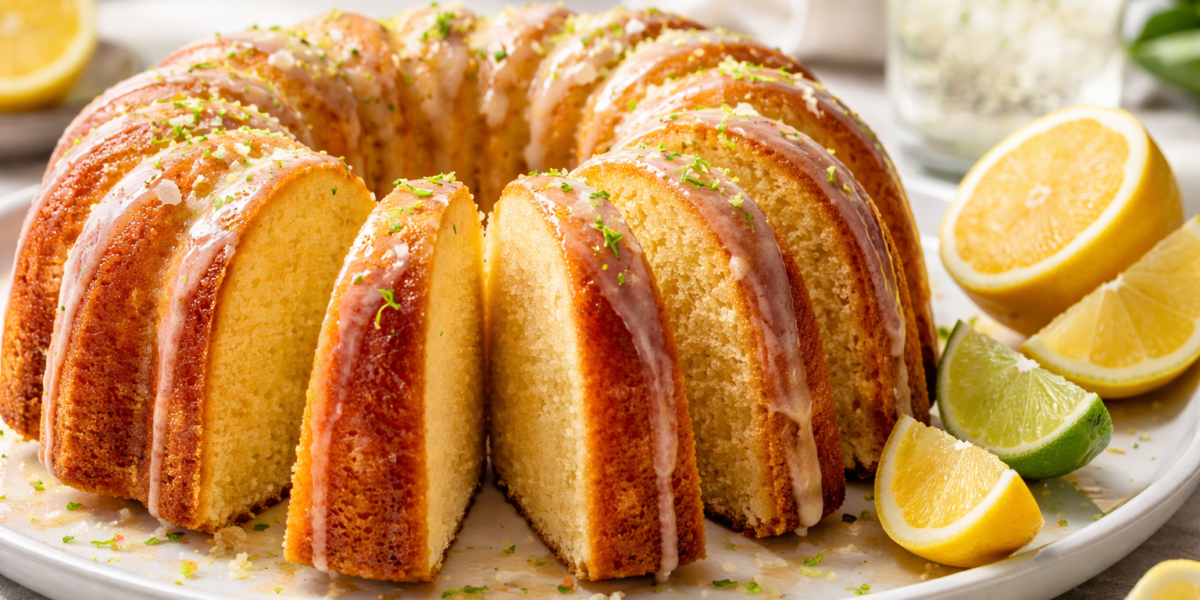
7UP Cake recipe The 7UP cake is a pinnacle of American mid-century patisserie, often misunderstood as a novelty but revered by culinary professionals for its unique structural properties. Unlike a traditional génoise or a standard Victoria sponge, the 7UP cake is a derivative of the classic pound cake, modified to incorporate the chemical and physical advantages of carbonated citrus soda.
In this professional guide, we analyze the mechanics of the “soda cake” to understand how dissolved carbon dioxide ($CO_2$) and high-fructose concentrations interact with lipid emulsions to produce a crumb that is simultaneously tight-knit and exceptionally moist. To master this recipe is to master the balance of aeration and weight.
Recipe Overview
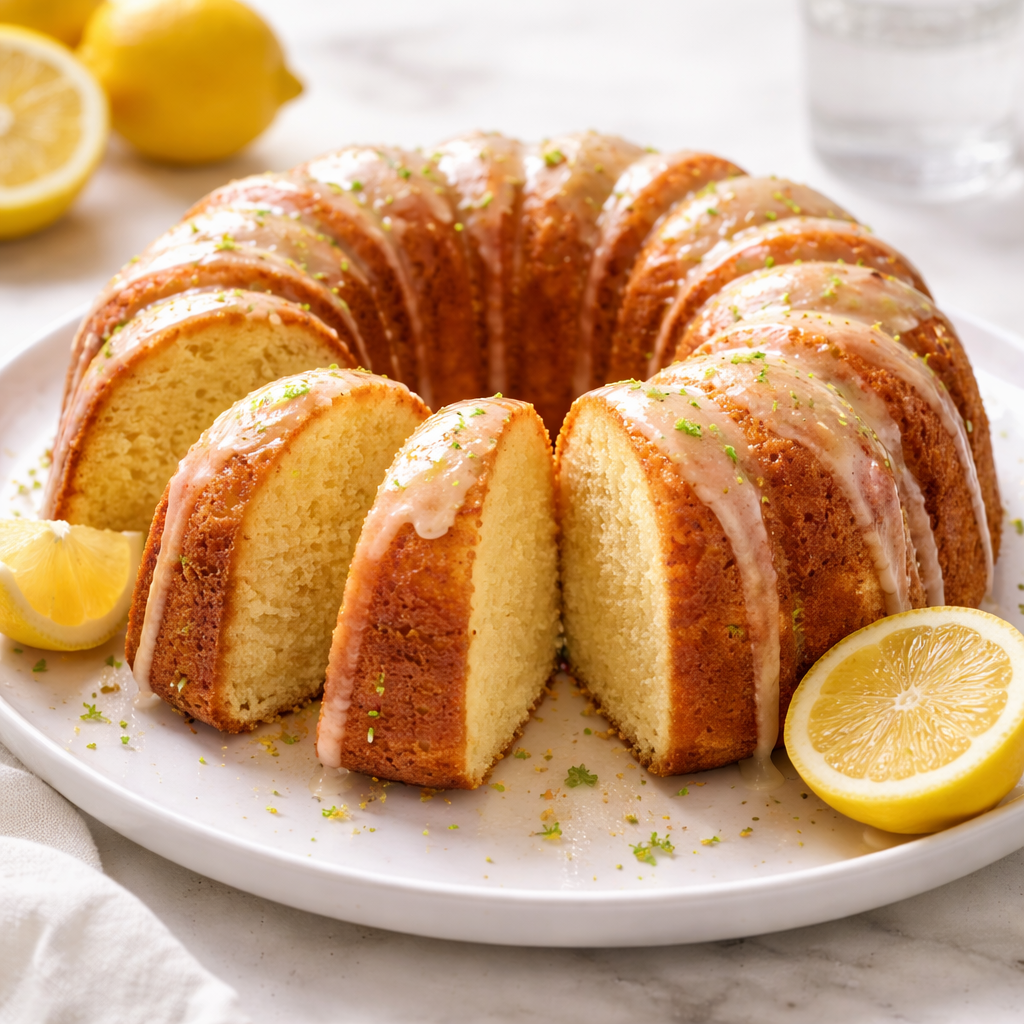
The 7UP cake is characterized by its signature Bundt form and a fine-crumbed interior that possesses a distinct “spring.” It relies on a high-fat ratio (the creaming method) supplemented by the effervescence of the soda, which acts as a secondary leavening agent.
- Yield: One 10-12 cup standard Bundt pan.
- Classification: Modified Pound Cake.
- Technique: High-aeration creaming method.
- Service Temperature: Room temperature, ideally 24 hours post-bake for optimal moisture redistribution.
Flavor Profile Analysis
The flavor of a professional 7UP cake is more nuanced than simple “lemon-lime.” It is a study in bright aromatics vs. rich lipids.
- Citrus High Notes: While the soda provides a subtle citrus background, the true flavor engine is the fresh zest. The terpenes in the lemon and lime rinds provide a floral, sharp contrast to the heavy butter.
- Lactic Depth: The high volume of butter (traditionally 3 sticks) creates a savory, creamy base note that anchors the sugar.
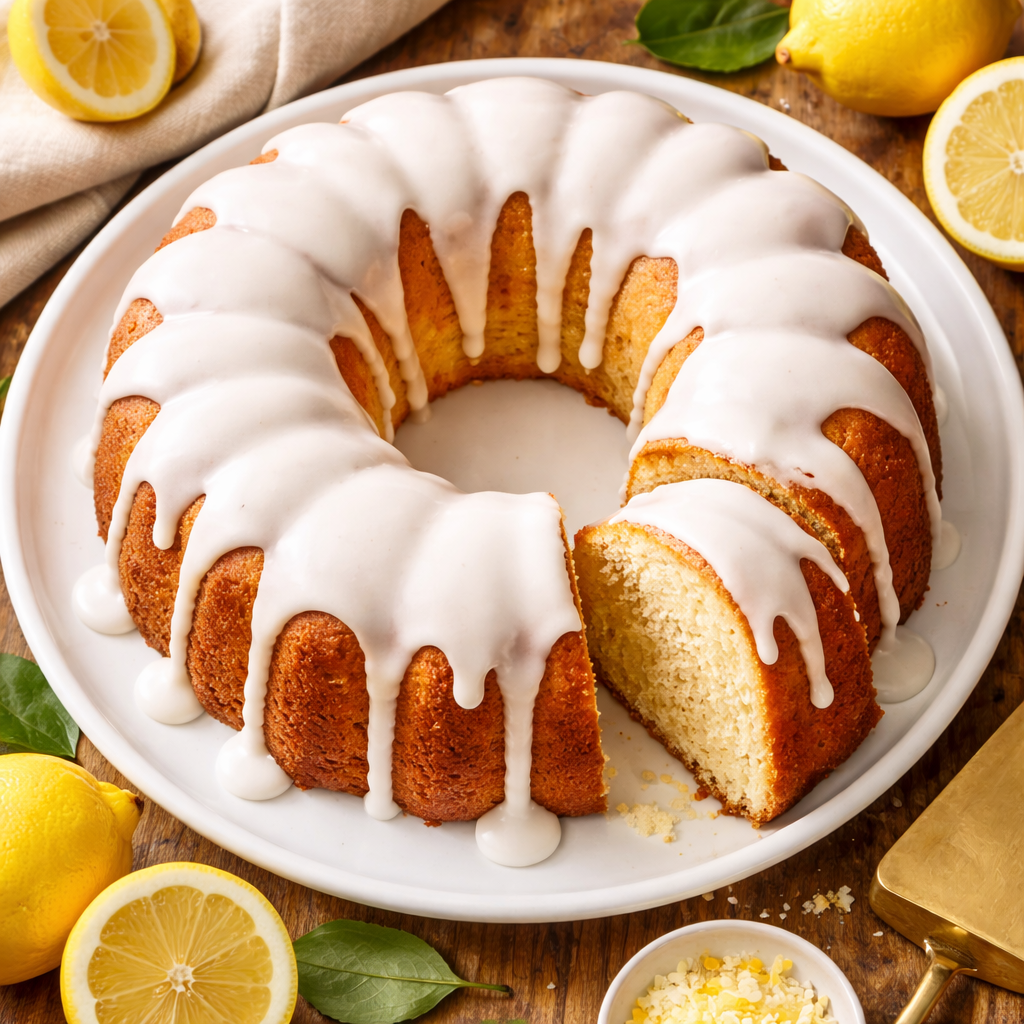
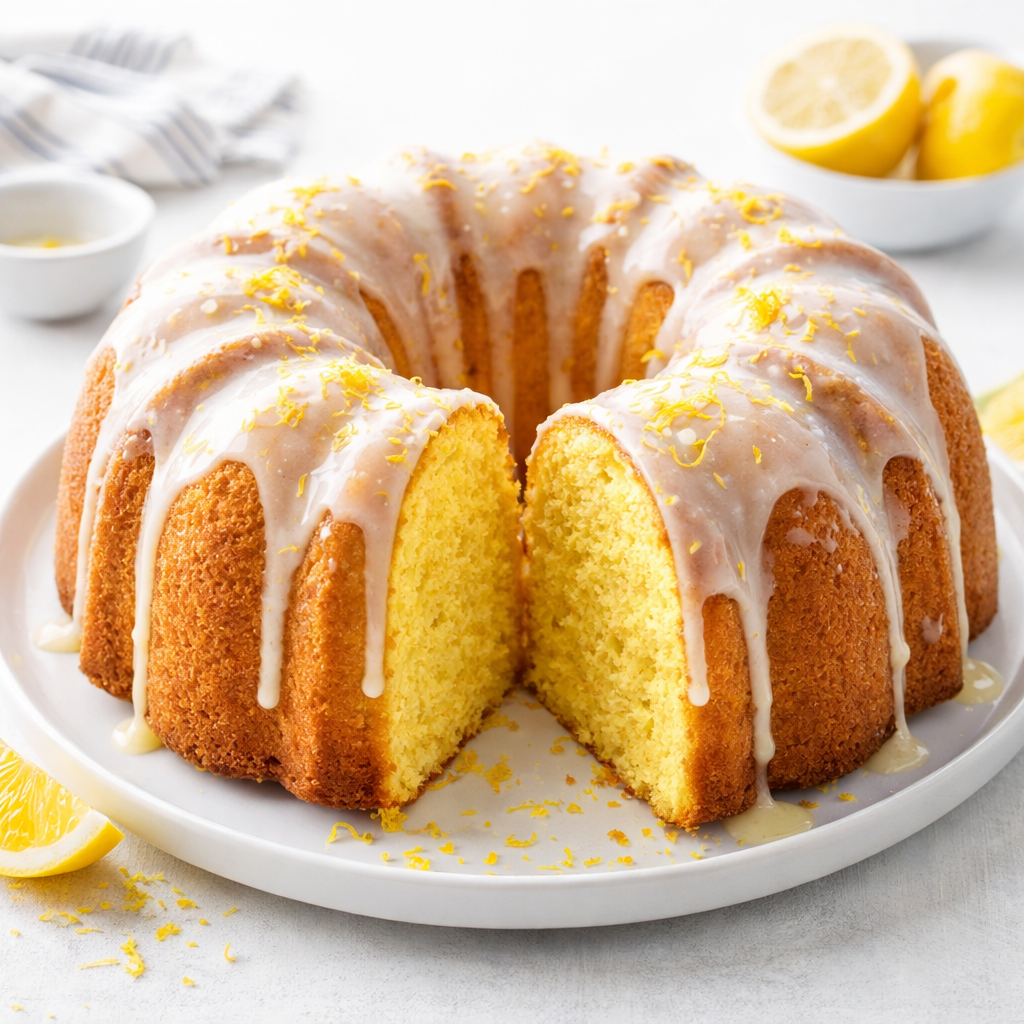
- The Glaze Factor: A traditional 7UP cake is finished with a tart lemon-lime icing. This provides a “hit” of acidity that cuts through the density of the crumb, ensuring the palate does not become fatigued by the richness.
Ingredient Ratios Explained
In professional baking, success is found in the ratio of tenderizers (sugar, fat) to structural builders (flour, eggs).
1. The Fat-to-Flour Equilibrium
We utilize a ratio that leans heavily toward moisture. For 375g (3 cups) of All-Purpose flour, we employ 340g (1.5 cups) of unsalted butter. This high fat content inhibits long-chain gluten development, ensuring the cake remains “short” and tender.
2. The Carbonation Variable
The 180ml (¾ cup) of 7UP serves three functions:
- Leavening: The $CO_2$ bubbles expand in the oven’s heat, providing lift that prevents the heavy batter from becoming a leaden brick.
- pH Manipulation: The slight acidity of the soda reacts with the proteins in the flour to further tenderize the crumb.
- Sugar Concentration: The additional glucose in the soda aids in the Maillard reaction (browning) of the exterior crust.
3. The Protein Binder
Five large eggs (approx. 250g) are required to provide enough structure to hold the air incorporated during the creaming process.
Precise Cooking Method
Phase 1: The Lipid Aeration (The Most Critical Step)
In a stand mixer fitted with the paddle attachment, combine 340g room-temperature unsalted butter and 600g (3 cups) granulated sugar.
Culinary Note: You must cream these ingredients on medium-high speed for no less than 5 to 7 minutes. The mixture should transition from a yellow paste to a pale, voluminous foam. This is not merely mixing; it is the mechanical creation of millions of microscopic air cells.
Phase 2: Emulsification
Add the 5 eggs, one at a time. Ensure each egg is fully incorporated before adding the next. If the batter appears “curdled,” it is because the eggs were too cold or added too quickly.
Phase 3: The Dry and Carbonated Integration
With the mixer on the lowest setting, add the 375g sifted flour and 180ml 7UP in alternating additions (Flour-Soda-Flour).
Technical Warning: Over-mixing at this stage will develop gluten and “deflate” the carbonation. Mix only until the last streak of flour disappears. Fold in 2 tbsp of mixed lemon and lime zest by hand.
Heat & Timing Control
The Bundt pan’s central chimney is designed for convection, but the density of a 7UP cake requires a “low and slow” approach to prevent the exterior from burning before the interior sets.
- Oven Calibration: Preheat to 165°C (325°F). A standard 175°C (350°F) oven is too aggressive for this volume of sugar and fat.
- Pan Preparation: Use a “pan paste” of equal parts melted butter, oil, and flour. Apply with a pastry brush to every crevice.
- Bake Time: 60 to 75 minutes.
- Visual Cue: The cake should pull away slightly from the edges of the pan, and the top should be a deep, golden mahogany.
- The Internal Check: A digital thermometer should read 96°C to 98°C (205°F to 210°F) at the thickest point.
Professional Tips
- Room Temperature Synergy: Ensure your eggs, butter, and 7UP are all at 21°C (70°F). Temperature differentials are the primary cause of failed emulsions in high-fat cakes.
- The 10-Minute Inversion: Allow the cake to rest in the pan for exactly 10 minutes post-bake. This allows the internal steam to loosen the crust from the pan. If you wait longer, the sugar in the crust will “glue” the cake to the metal.
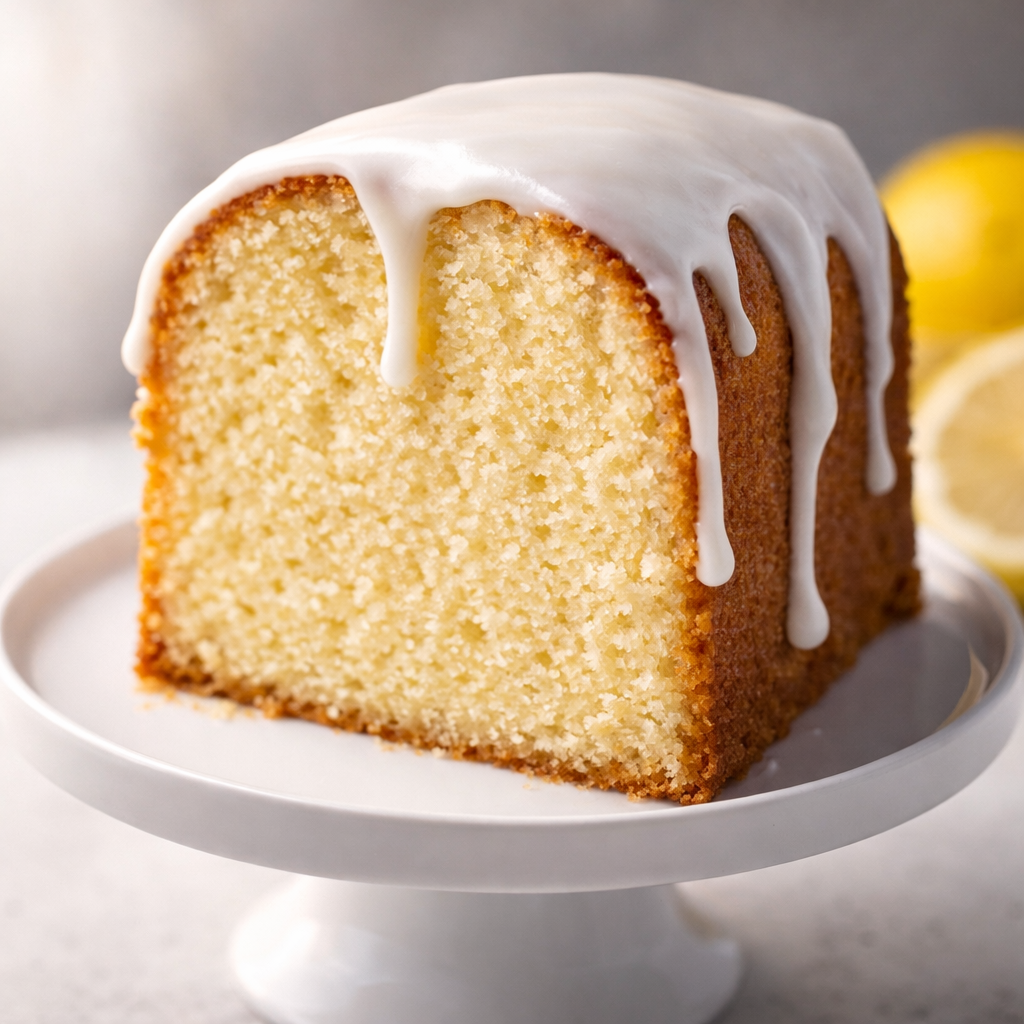
- Sifting: Sift your flour three times. This incorporates air and ensures the fine, sand-like texture characteristic of a professional 7UP cake.
Customization Techniques
- The “Cold Press” Infusion: For a more intense citrus flavor, macerate the citrus zest in the sugar for 2 hours before creaming. The sugar draws out the essential oils, intensifying the aroma.
- The Boozy Glaze: Replace 1 tbsp of the lemon juice in the icing with a high-quality limoncello or a splash of gin. The botanical notes in gin complement the lime profile of the soda.
- The Brown Butter Variation: Use beurre noisette (browned butter) that has been chilled back to a solid state. This adds a toasted, nutty flavor that elevates the cake to a fine-dining dessert level.
Storage & Reheating
- Maturation: This cake is technically better on Day 2. The high sugar and fat content mean the moisture redistributes overnight, resulting in a more uniform “melt-in-the-mouth” feel.
- Storage: Wrap tightly in professional-grade plastic wrap. Store at room temperature for up to 5 days.
- Freezing: This cake freezes exceptionally well due to its density. Freeze unglazed for up to 3 months.
- Reheating: If serving a slice warm, heat in a 150°C (300°F) oven for 5 minutes. Avoid the microwave, which can make the high-sugar crumb “rubbery.”
FAQ
Q: Can I use Diet 7UP or Ginger Ale?
A: You can use Ginger Ale for a spiced variation, but avoid Diet 7UP. The artificial sweeteners (aspartame/sucralose) do not behave like sucrose under heat; they do not aid in the Maillard reaction and can leave a bitter aftertaste. Furthermore, the lack of real sugar changes the weight and density of the batter.
Q: Why did my cake sink in the middle?
A: This usually results from one of two things: under-baking or “over-creaming.” If you cream the butter/sugar for too long (over 10 minutes), you incorporate too much air, causing the cake to rise too rapidly and then collapse because the protein structure (eggs/flour) hasn’t set yet.
Q: Can I make this in a regular cake pan?
A: It is not recommended. The volume of batter and its density require the central tube of a Bundt or tube pan to ensure the middle cooks through. In a standard round pan, the edges will be scorched before the center is set.
Q: My cake is “hole-y” and has large air pockets. How do I fix this?
A: After pouring the batter into the pan, firmly tap the pan on the counter three times. This releases large air bubbles trapped during the pour, ensuring a professional, tight-knit crumb.