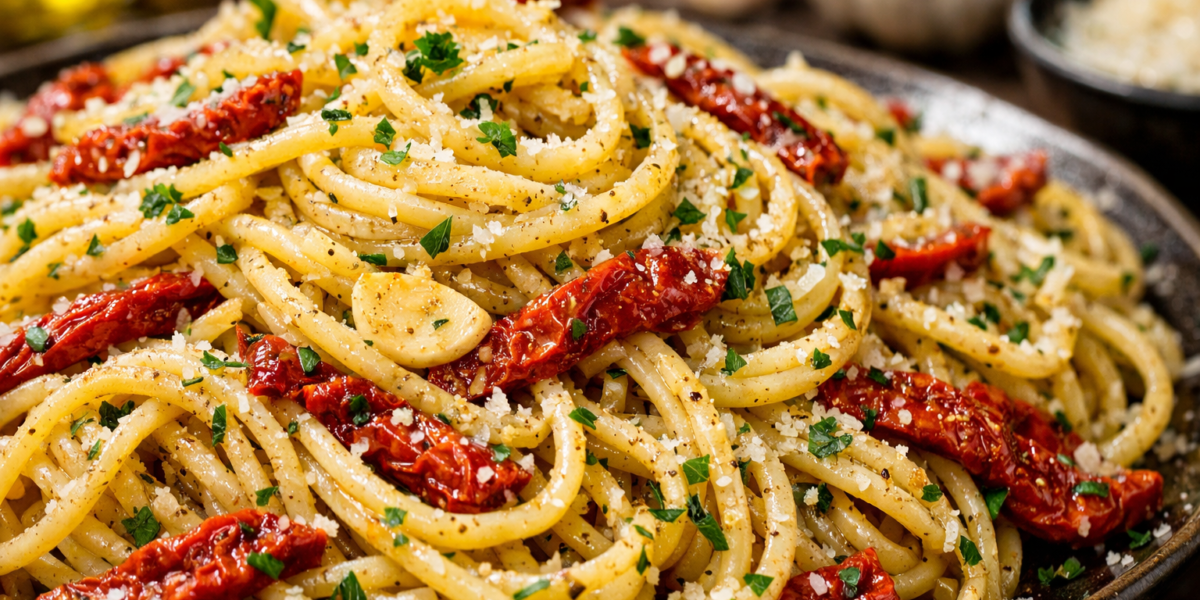
There is a specific culinary resonance found only in the preservation of the harvest. While fresh tomatoes offer a bright, fleeting acidity, the sun-dried variety represents the soul of the fruit, distilled. To prepare a Sun-Dried Tomato Pasta recipe is to work with an ingredient that has undergone a fundamental structural transformation, trading its water content for a deep, jammy umami that can easily overwhelm a dish if not balanced with precision.
In the professional kitchen, this pasta is more than a quick weeknight solution; it is an exercise in managing intensity. The goal is to create a sauce that is velvety and cohesive, ensuring the concentrated notes of the tomato are supported by aromatics and fats rather than buried under them. This guide explores the technical framework required to master this Mediterranean classic, focusing on the synergy between starch-rich pasta water and oil-packed concentrates.
Why This Method Works
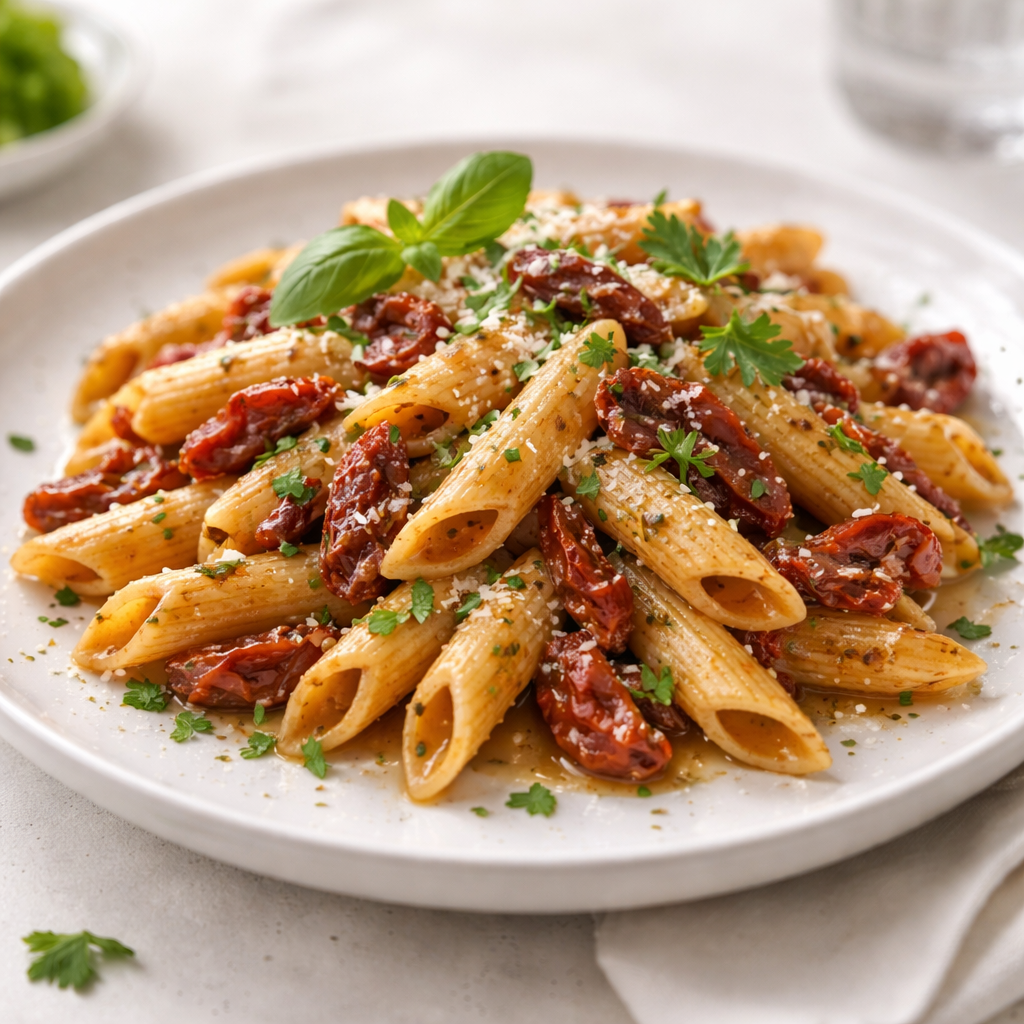
The success of this Sun-Dried Tomato Pasta recipe relies on the principle of flavor bridging. Because sun-dried tomatoes are intensely savory and slightly tart, they require a bridge to connect them to the neutral canvas of the pasta.
- Fat-Soluble Infusion: By sautéing the tomatoes in their own packing oil along with aromatics, we release the lycopene and essential oils that are trapped in the dehydrated flesh. This tints the entire sauce and ensures the flavor is distributed through the fat, not just the solids.
- Starch-Driven Emulsification: We bypass the need for heavy, flour-based thickeners. Instead, we utilize the “liquid gold”—the salted, starchy water in which the pasta was boiled—to bind the oil and aromatics into a glossy, pan-sauce consistency.
- The Acid-Dairy Balance: The inclusion of a small amount of heavy cream or high-fat parmesan provides a lactic cushion. This softens the sharp edges of the tomatoes, creating a “round” flavor profile that lingers on the palate.
The Ingredients: A Study in Quality
Each element in this Sun-Dried Tomato Pasta recipe must be selected with an eye toward its functional role.
The Concentrates
- 8 oz Oil-Packed Sun-Dried Tomatoes: Preference is given to those packed in olive oil with herbs. The oil itself is a high-value ingredient and must be reserved.
- 2 tbsp Tomato Paste: This provides a third layer of tomato flavor, offering a caramelized depth that fresh or dried tomatoes cannot achieve on their own.
The Aromatics and Fats
- 1 lb Long Pasta: De Cecco or similar high-protein bronze-cut pasta (such as Linguine or Fettuccine) is ideal. The rough surface of bronze-cut pasta is essential for sauce adhesion.
- 4 Cloves Garlic: Thinly sliced rather than minced. Slicing allows the garlic to sweeten and brown gently without the risk of the acrid bitterness that comes from scorched mince.
- 1 Large Shallot: Finely diced to provide a delicate, sulfuric sweetness.
- 1/2 cup Heavy Cream: For a silky finish.
The Finishes
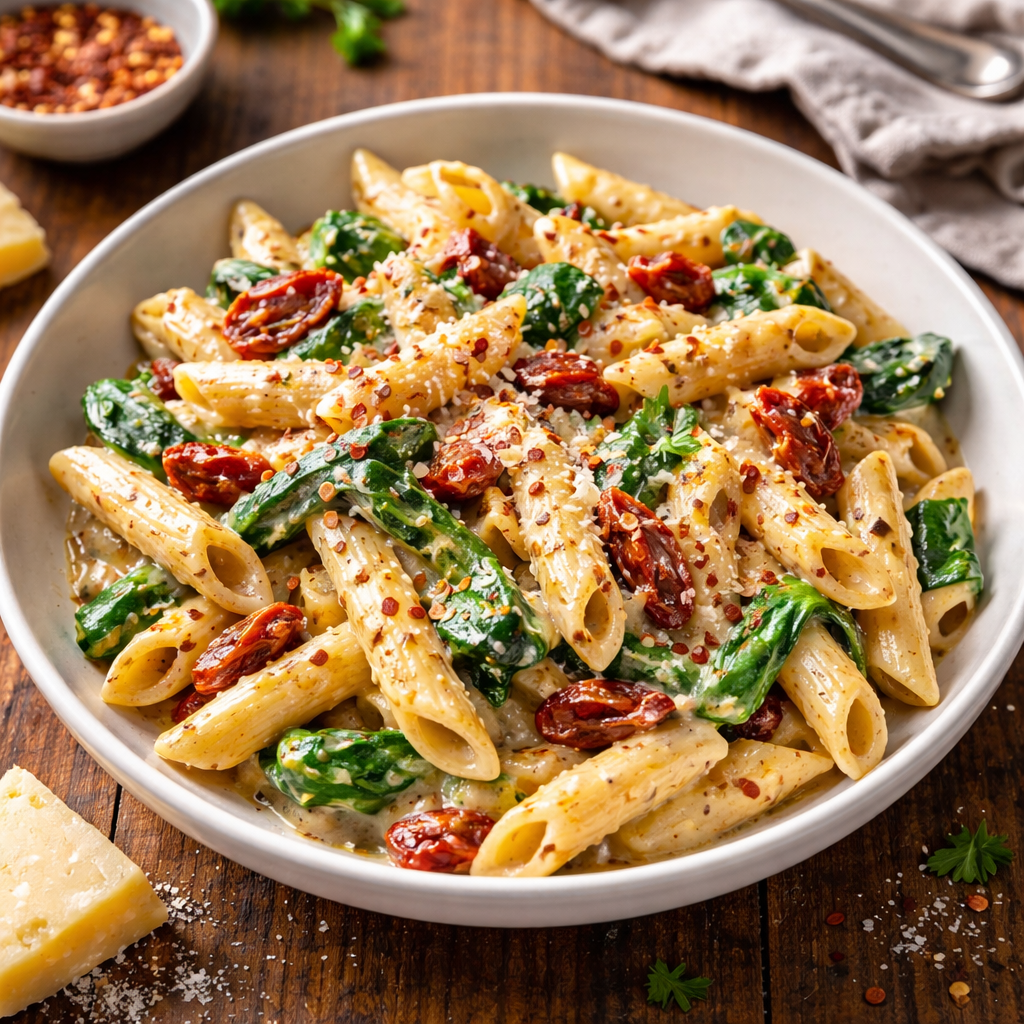
- 1/2 cup Freshly Grated Parmigiano-Reggiano: Real Parmesan provides the necessary salt and protein to stabilize the emulsion.
- 2 cups Fresh Baby Spinach: For color and a subtle mineral lift.
- Red Pepper Flakes: To provide a “high-frequency” heat that cuts through the rich fats.
Step-by-Step Cooking: The Technical Execution
1. The Oil Extraction
Begin by draining the sun-dried tomatoes, reserving at least 3 tablespoons of the packing oil. Slice the tomatoes into thin strips (julienne). In a large, heavy-bottomed skillet over medium-low heat, add the reserved oil.
2. The Slow Aromatic Sweat
Add the sliced garlic and diced shallots to the oil. The objective here is not to sear, but to “sweat.” You are looking for the shallots to become translucent and the garlic to turn a pale straw color. At this stage, add the tomato paste and red pepper flakes. Stir constantly for 2 minutes until the paste darkens to a brick-red hue, signaling that the natural sugars have caramelized.
3. The Infusion
Add the julienned sun-dried tomatoes to the skillet. Stir to coat them in the aromatic oil and tomato paste. Allow them to cook for 3-4 minutes. This softens the chewy texture of the tomatoes, making them more integrated with the pasta.
4. The Starch Preparation
Boil your pasta in a large pot of heavily salted water. Crucial Step: Cook the pasta until it is two minutes shy of al dente. It should still have a firm, slightly chalky center. This is because the pasta will finish its cooking process inside the sauce, absorbing the tomato-infused liquid.
5. Building the Emulsion
Before draining the pasta, reserve 1.5 cups of the starchy pasta water. Increase the skillet heat to medium. Add 1 cup of the pasta water and the heavy cream to the sun-dried tomato mixture. Whisk gently until the liquid begins to bubble and thicken.
6. The Marriage
Transfer the undercooked pasta directly into the skillet. Toss continuously with tongs. As the pasta finishes cooking, it will draw the sauce into the noodle. If the pan looks dry, add the remaining half-cup of pasta water.
7. The Final Set
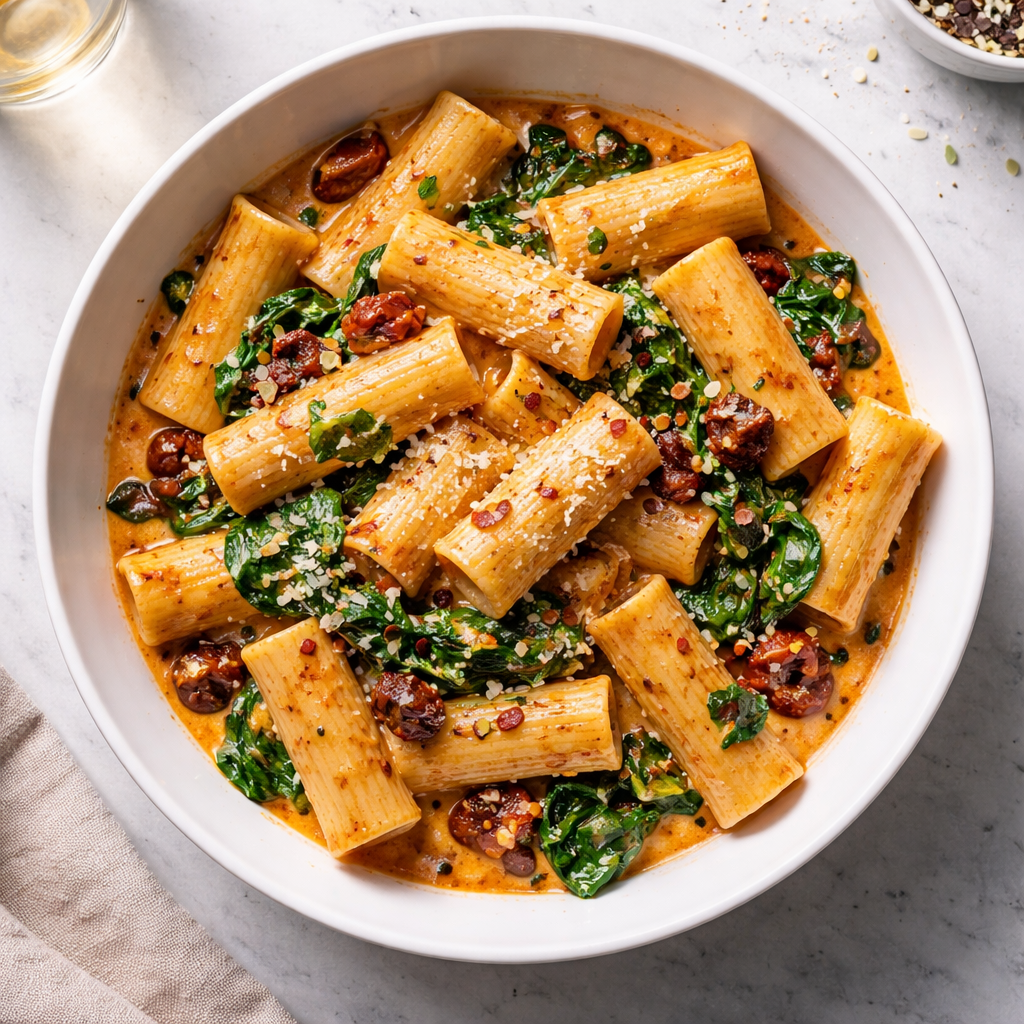
Turn off the heat. This is vital; adding cheese to a boiling sauce can cause it to “break” or become stringy. Fold in the grated Parmigiano-Reggiano and the baby spinach. The residual heat will melt the cheese into a velvet coating and wilt the spinach to a vibrant green.
Texture & Flavor Indicators
A perfectly executed Sun-Dried Tomato Pasta recipe will meet the following professional criteria:
- The “Nappe” Consistency: The sauce should not pool at the bottom of the plate. It should coat each strand of pasta like a thin, glossy glove. If the pasta looks “wet” or watery, it needs more tossing to encourage emulsification.
- Color Intensity: The pasta should take on a beautiful sunset-orange hue. This indicates that the lycopene from the tomatoes has successfully moved into the fat and cream.
- The Bite: The pasta should be al dente—firm to the tooth—providing a structural contrast to the creamy sauce and the chewy, concentrated tomato strips.
Common Errors to Avoid
1. Discarding the Packing Oil
The oil in the jar is essentially a pre-made infusion of tomato and herbs. Using standard olive oil instead of the packing oil is a missed opportunity for depth. If your tomatoes are dry-packed, soak them in warm olive oil for 20 minutes before beginning.
2. Rinsing the Pasta
Never rinse pasta. Rinsing removes the surface starch required to bind the sauce. Furthermore, do not add oil to the pasta water, as this will coat the noodles and prevent the sun-dried tomato sauce from adhering.
3. Over-Reducing the Cream
If the cream is cooked at too high a temperature for too long, it can “split,” leaving a greasy residue on the tongue. Always maintain a gentle simmer rather than a rolling boil once the dairy is introduced.
Serving Ideas: Elevating the Experience
While this Sun-Dried Tomato Pasta recipe is a complete meal in itself, thoughtful additions can transition it from a casual dinner to a formal course.
- The Protein Addition: Slices of grilled chicken breast or pan-seared scallops provide a neutral protein that allows the tomato flavor to remain the protagonist.
- Textural Contrast: Toasted pine nuts or a handful of herbed breadcrumbs (pangrattato) added just before serving provide a necessary crunch that breaks up the creaminess of the dish.
- Herbaceous Lift: While spinach is integrated into the sauce, a final chiffonade of fresh basil provides a volatile aroma that mimics the freshness of a garden, balancing the “cooked” intensity of the sun-dried fruit.
FAQ: Professional Troubleshooting
Q: Can I use sun-dried tomatoes that aren’t packed in oil? A: Yes, but they require rehydration. Place dry tomatoes in a bowl and cover with boiling water for 10 minutes. Drain, pat dry, and then proceed with the recipe using a high-quality extra virgin olive oil.
Q: Why did my cheese clump instead of melting into the sauce? A: This is usually a temperature issue. If the sauce is too hot, the proteins in the cheese tighten and separate from the fat. Always remove the pan from the heat source before folding in your Parmigiano-Reggiano. Also, ensure you are using freshly grated cheese; pre-shredded varieties are coated in potato starch to prevent clumping in the bag, which interferes with melting.
Q: My sauce is too salty. How can I fix it? A: Sun-dried tomatoes and Parmesan are both naturally high in sodium. If the dish is too salty, add a squeeze of fresh lemon juice. The acidity won’t remove the salt, but it will distract the palate and brighten the overall flavor profile.
Q: Can I make this Sun-Dried Tomato Pasta recipe vegan? A: Certainly. Substitute the heavy cream with full-fat canned coconut milk (the tomato and garlic will mask the coconut flavor) or a splash of cashew cream. Use nutritional yeast or a high-quality vegan parmesan alternative in place of the cheese.