Chicken Carbonara recipe 1. Is authentic carbonara made with cream, and can I use it here? In the strictest Roman tradition, carbonara relies solely on the emulsion of pasta water, eggs, and cheese to create its signature silkiness. However, when adding chicken—a leaner, drier protein—many home cooks find that a small splash of heavy cream provides a necessary “buffer” that prevents the eggs from scrambling and keeps the chicken succulent. For this recipe, we prioritize technique over strict dogma to ensure a foolproof result.
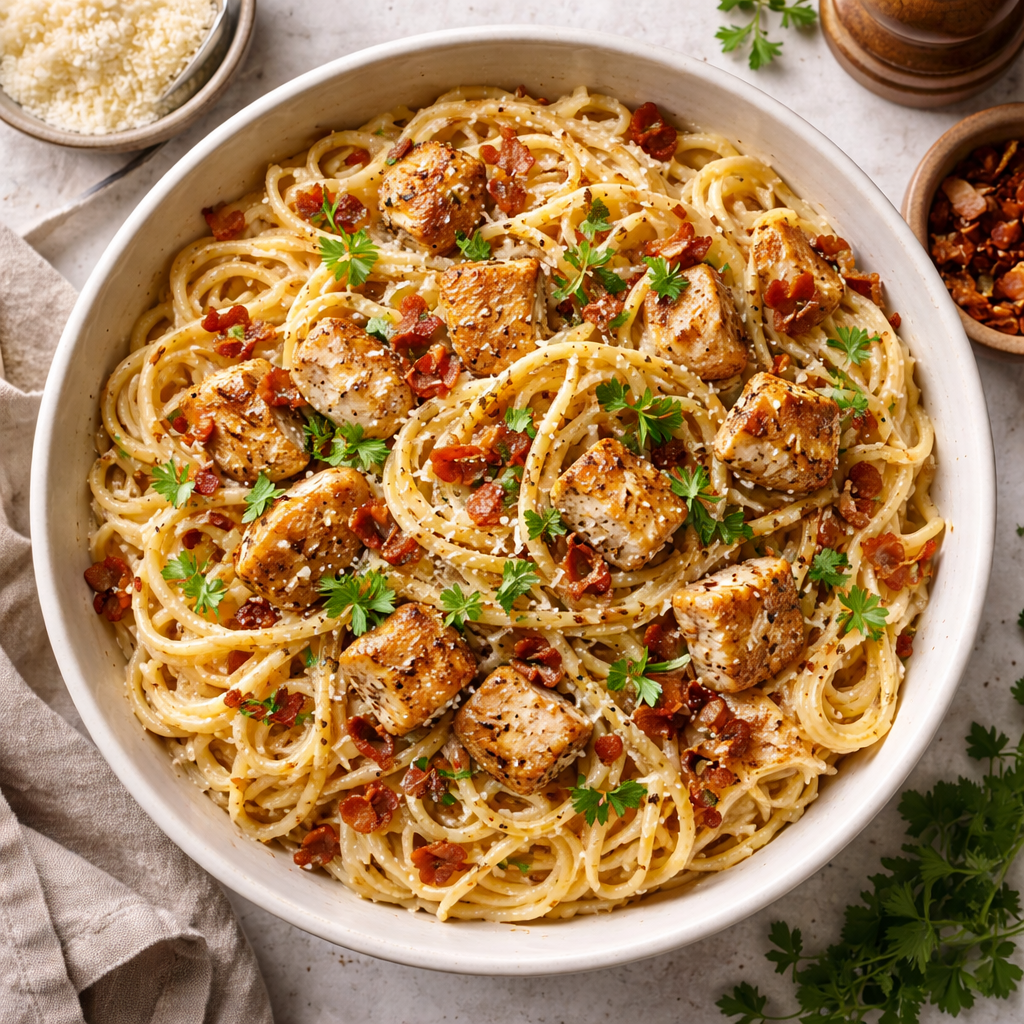
2. How do I stop the eggs from turning into an omelet in the pan? This is the most common frustration. The secret is “residual heat.” You must remove the pan from the active heat source before introducing the egg mixture. The ambient heat of the pasta and the rendered fat is more than enough to cook the eggs into a creamy sauce without solidifying them into clumps.
3. Can I use chicken breast instead of thighs? Absolutely. While chicken thighs offer more fat and flavor, chicken breast works beautifully as long as it is sliced thin and seared quickly. Since carbonara is a rich, heavy dish, the leanness of the breast can actually provide a nice balance to the salty pancetta and sharp Pecorino cheese.
Introduction: The Evolution of a Classic
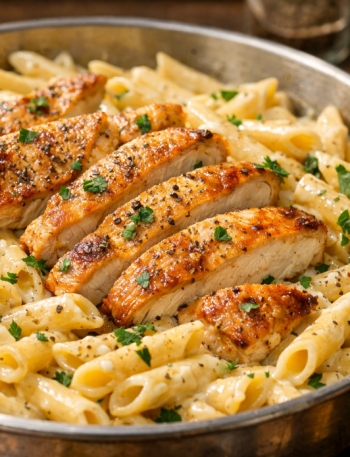
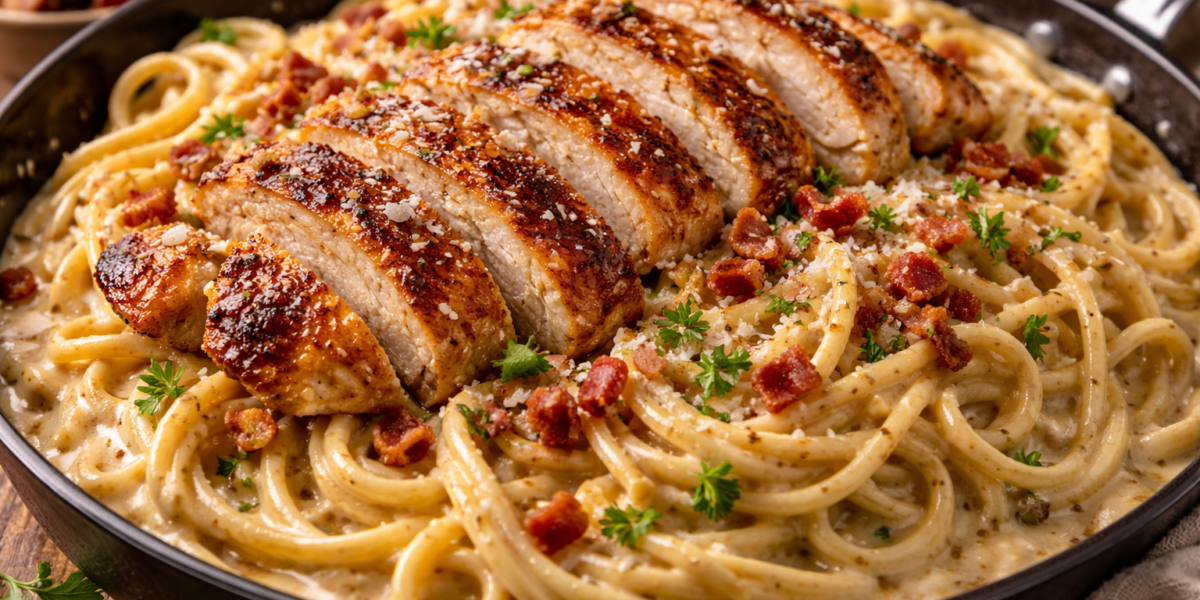
Carbonara is a dish defined by its alchemy—the transformation of humble pantry staples into a luxurious, velvet-coated masterpiece. While the traditional Roman version is a minimalist affair of guanciale and pepper, the addition of golden, seared chicken transforms it into a robust, stand-alone meal that has become a staple of modern Italian-American comfort cooking.
A successful Chicken Carbonara recipe is a study in timing and temperature. It is a high-reward dish that requires a bit of finesse, particularly during the “marriage” of the eggs and the pasta. By introducing protein into this delicate equation, we add layers of texture and savory depth that make the dish feel truly celebratory.
The Ingredients
To execute this recipe with professional precision, gather the following components:
- 1 lb Spaghetti or Bucatini: Long, thin noodles provide the maximum surface area for the sauce to cling to.
- 1 lb Chicken Breast or Thighs: Cut into bite-sized, uniform pieces.
- 4 oz Pancetta or Thick-Cut Bacon: Diced. This provides the foundational fat and salt.
- 3 Large Eggs + 1 Egg Yolk: The extra yolk adds a deeper color and a richer mouthfeel.
- 1 cup Freshly Grated Pecorino Romano or Parmesan: Pecorino offers a sharper, saltier tang.
- 2 Cloves Garlic: Smashed (to be removed later) or finely minced.
- 1 tsp Coarsely Ground Black Pepper: The “carbones” (coals) that give the dish its name.
- Fresh Parsley: For a bright, herbaceous finish.
Instructions: The Step-by-Step Method
1. The Pasta Foundation
Bring a large pot of heavily salted water to a boil. Cook your pasta until it is al dente. Crucial: Before draining, reserve at least 1 cup of the starchy pasta water. This is your primary emulsifying agent.
2. The Protein Sear
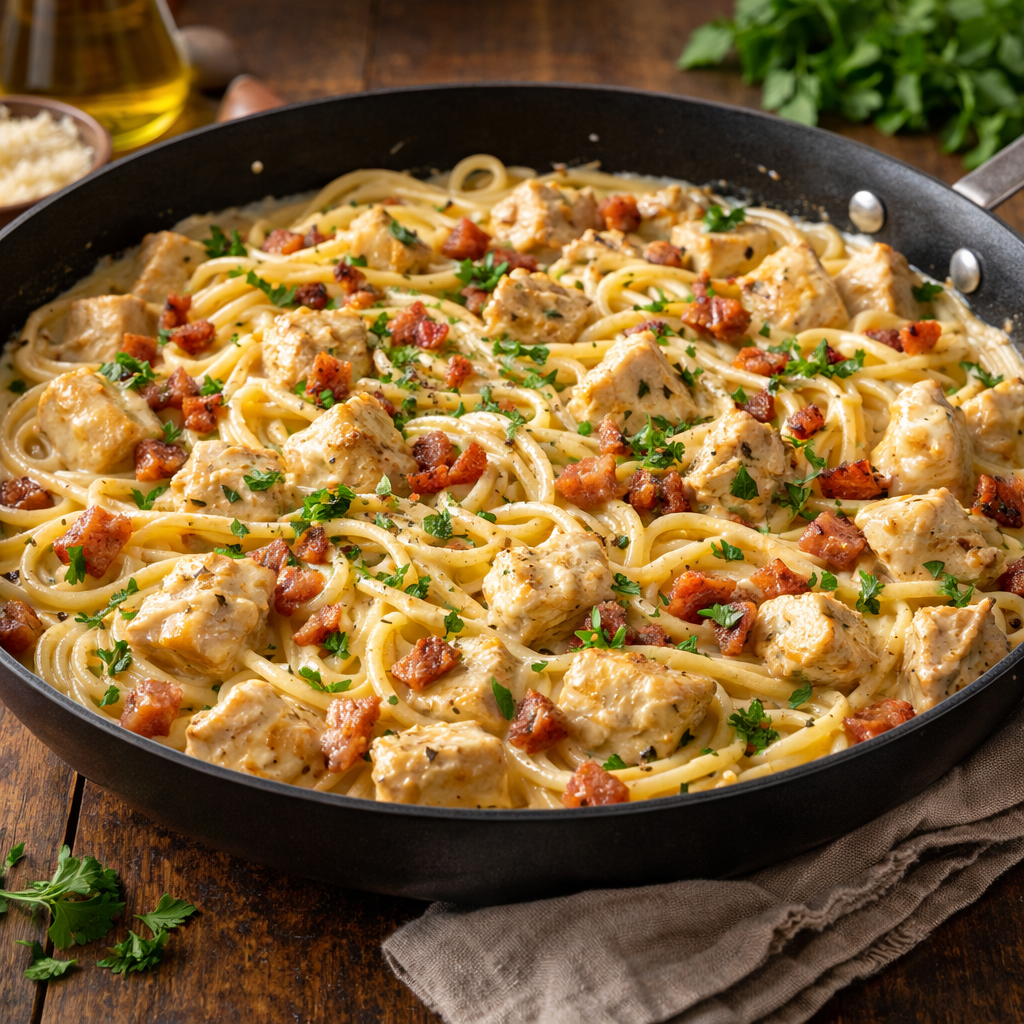
While the pasta cooks, heat a large skillet over medium-high heat. Add the diced pancetta and cook until the fat has rendered and the meat is crispy. Remove the pancetta with a slotted spoon, leaving the rendered fat in the pan. Add the chicken pieces to the pan. Sear until golden brown and cooked through (about 5–7 minutes). Stir in the garlic during the last minute of cooking.
3. The Egg Preparation
In a medium bowl, whisk together the eggs, the extra yolk, the grated cheese, and the black pepper until a thick paste forms.
4. The Tempering
This is the “pro” move. Whisk 2 tablespoons of the warm (not boiling) pasta water into the egg and cheese mixture. This gently raises the temperature of the eggs, making them less likely to scramble when they hit the hot pan.
5. The Marriage
Add the cooked pasta and the crispy pancetta into the skillet with the chicken. Toss vigorously over medium heat for 30 seconds to coat the noodles in the rendered fat.
6. The Final Emulsion
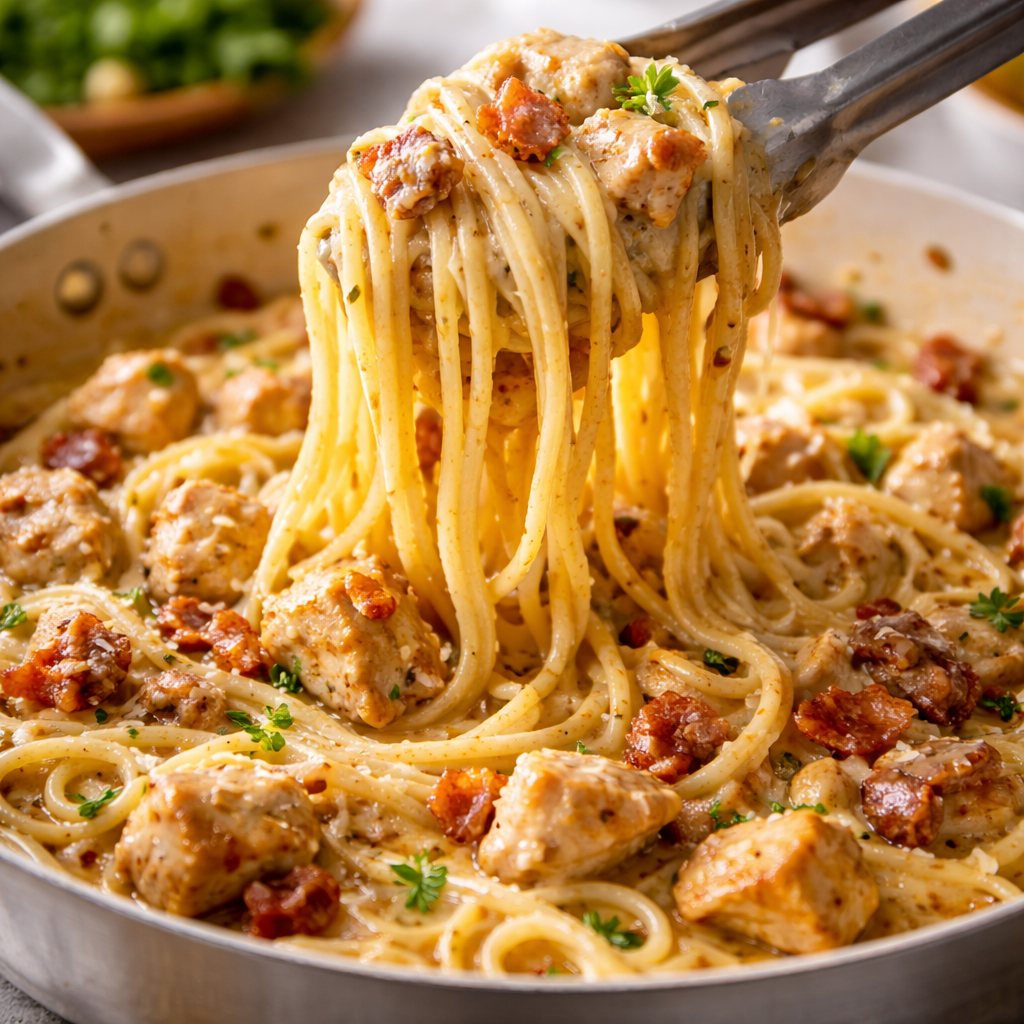
Turn off the heat and move the skillet to a cool burner. Pour the egg and cheese mixture over the pasta. Toss continuously with tongs, adding splashes of the reserved pasta water as needed. The cheese will melt, and the eggs will thicken into a glossy, cream-like sauce that coats every strand.
Timing Details
- Prep Time: 15 minutes (chopping chicken, grating cheese).
- Cook Time: 15–20 minutes (simultaneous pasta boiling and chicken searing).
- Total Time: 35 minutes.
- The “Window of Excellence”: Carbonara should be served within 2 to 5 minutes of finishing. As it sits, the starch in the pasta continues to absorb moisture, which can cause the sauce to become tacky rather than creamy.
Mistakes to Avoid
- Draining All the Pasta Water: This is the most frequent error. Without that starchy water, you cannot achieve a smooth emulsion; you will simply have dry noodles with melted cheese.
- Using Pre-Grated Cheese: Pre-packaged shredded cheese is coated in potato starch or cellulose to prevent clumping. This coating will prevent the cheese from melting smoothly into the egg sauce, resulting in a gritty texture. Always grate your cheese fresh.
- Adding Eggs to a Boiling Pan: If the pan is still on high heat, the egg proteins will bond instantly into solid curds. The “off-the-heat” method is non-negotiable for a professional result.
- Under-Seasoning the Pasta Water: Since the sauce itself relies on the salty cheese and pancetta, the pasta noodles need their own seasoning. The water should taste “like the sea.”
Storage and Reheating
Carbonara is famously temperamental when it comes to leftovers. Because the sauce is an egg-based emulsion, high heat will “break” the sauce upon reheating, leaving you with oily noodles and scrambled eggs.
The Transformation: If the sauce refuses to return to its creamy state, consider pressing the leftovers into a pan and frying them to make “Pasta Fritta”—a crispy, savory pancake that is a traditional way to enjoy second-day carbonara.
Storage: Store in an airtight container for up to 2 days.
The Gentle Reheat: Avoid the microwave if possible. Instead, place the leftovers in a skillet over very low heat. Add a tablespoon of water or milk and whisk or toss constantly just until it is warm to the touch.