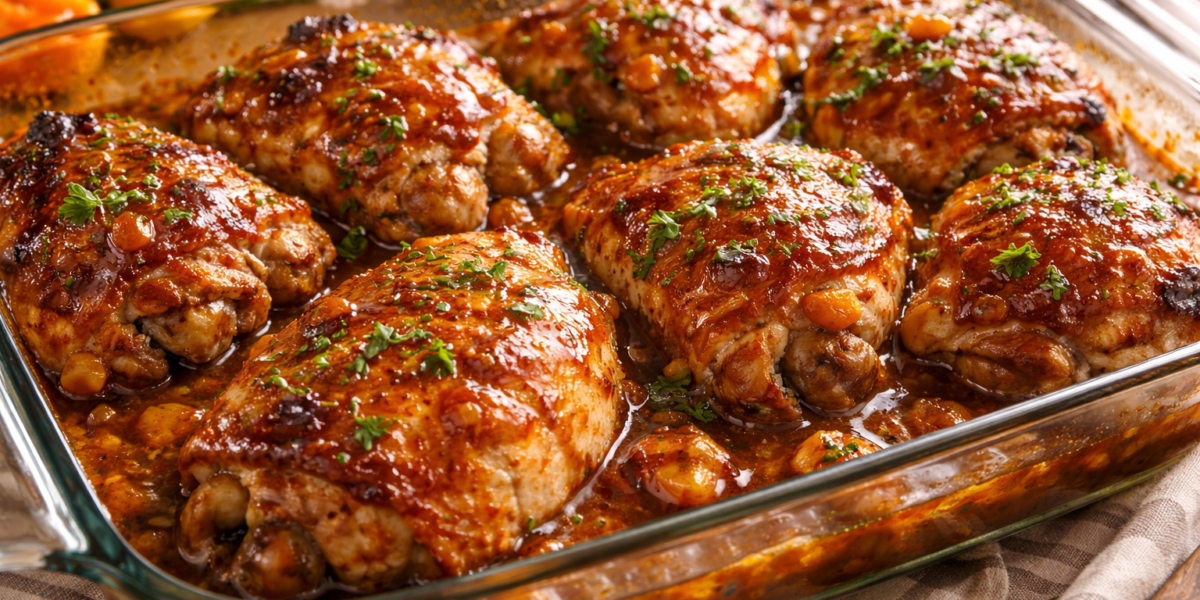
The most common frustration with many apricot chicken recipes is a lack of balance. Too often, this nostalgic dish—popularized in the 1970s and 80s—comes out of the oven as a cloyingly sweet, one-dimensional mess that tastes more like a dessert than a savory dinner. Home cooks frequently struggle with a sauce that is either too thin and watery or so thick with sugar that it scorches before the chicken is even cooked through.
The culinary challenge is transforming the natural sugars of the apricot into a sophisticated glaze that complements, rather than overpowers, the savory depth of the poultry. This apricot chicken recipe addresses these issues by introducing specific acidic and aromatic “bridges” that cut through the sweetness, resulting in a dish that is bright, complex, and structurally sound. If you are looking for a high-protein meal that hits the perfect note between tangy and sweet, this technical guide is your solution.
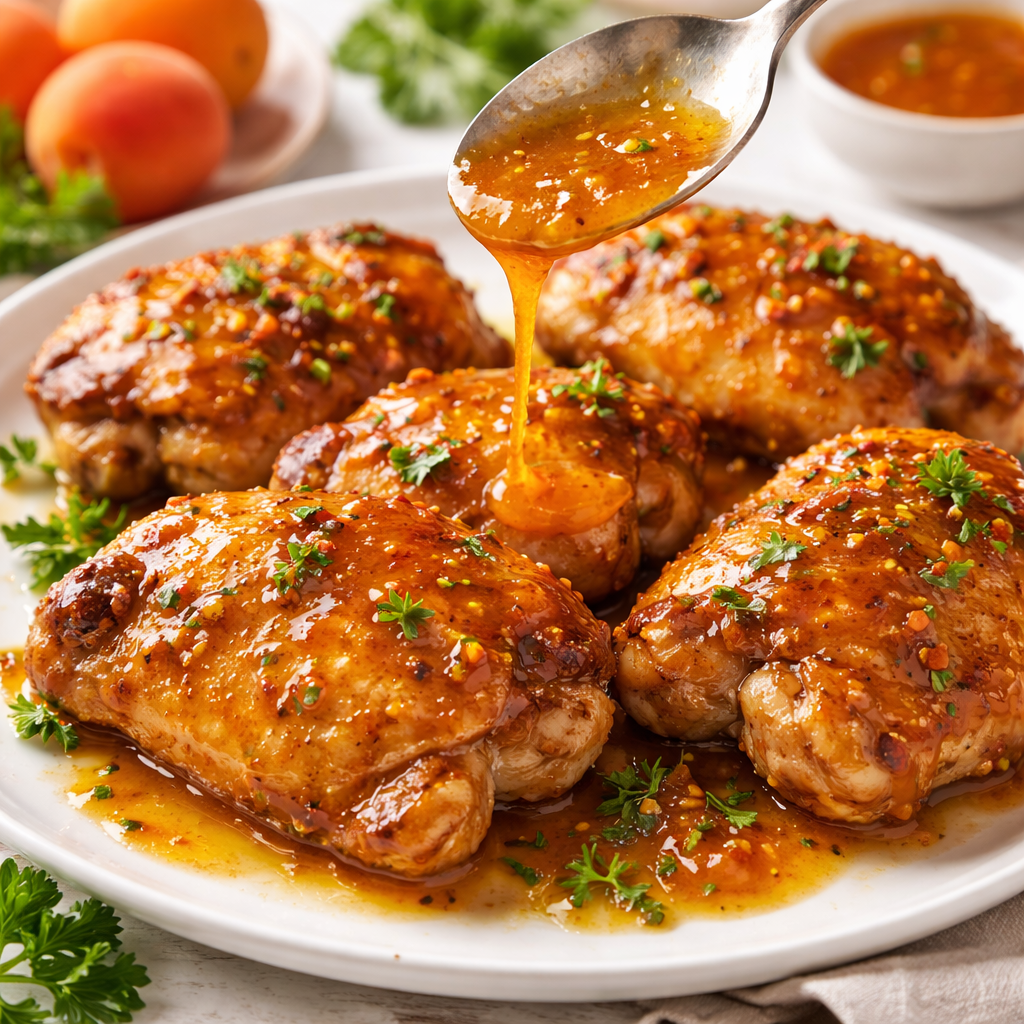
Why This Recipe Works
To move beyond the basic “jam and onion soup mix” versions of the past, this apricot chicken recipe utilizes a few professional-grade techniques to ensure a superior result.
- The Acidic Pivot: By incorporating Dijon mustard and apple cider vinegar, we provide a sharp counterpoint to the apricot nectar. This creates a “gastrique-style” sauce that cleanses the palate rather than coating it in sugar.
- Maillard Reaction Focus: We do not simply toss raw chicken into a sauce. By searing the chicken skin-side down first, we develop a savory crust that provides a textural contrast to the silky apricot glaze.
- Aromatic Infusion: Using fresh ginger and garlic provides a “back-end” heat. This subtle spice prevents the apricot flavor from becoming “childish” and gives the dish a more adult, global-inspired profile.
- Reduction Management: Instead of using cornstarch thickeners which can make a sauce look cloudy, we rely on the natural pectins in the apricot preserves to thicken the sauce through a controlled oven reduction.
Ingredients & Measurements
Success with this apricot chicken recipe depends on using high-quality preserves and the right cut of meat.
The Protein
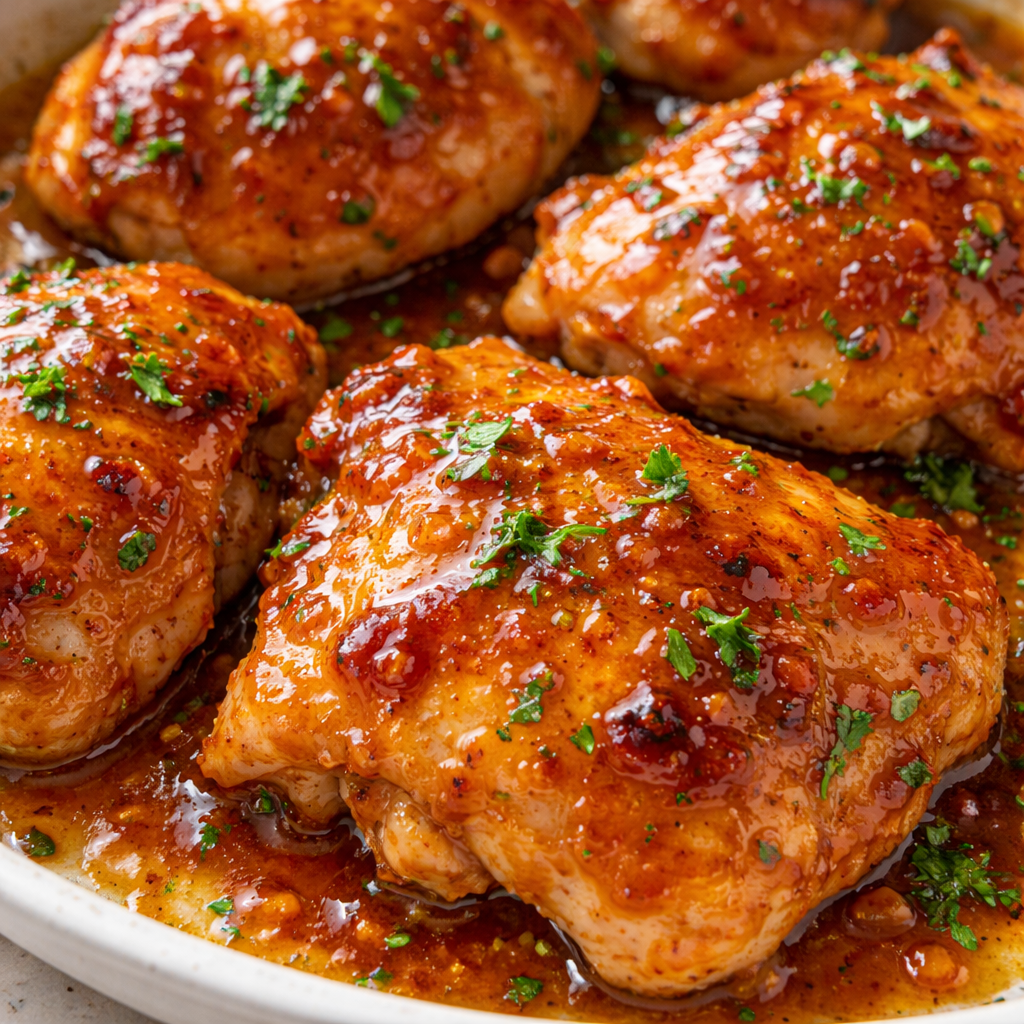
- 3.5 lbs Chicken Thighs (Bone-in, Skin-on): Dark meat is essential here. It stays succulent during the reduction process and provides the fat necessary to balance the sugar in the glaze.
The Glaze Components
- 1 cup High-Quality Apricot Preserves: Look for a brand where “apricots” are the first ingredient, not “high fructose corn syrup.”
- 1/2 cup Apricot Nectar or Orange Juice: This provides the liquid base for the sauce to thin out initially before reducing.
- 2 tbsp Dijon Mustard: Adds a piquant, savory depth.
- 1 tbsp Apple Cider Vinegar: Vital for the acidic balance.
- 1 tbsp Soy Sauce: Provides the salt and “umami” that tethers the fruit flavor to the meat.
Aromatics & Seasonings
- 1 tbsp Fresh Ginger, grated: Adds a bright, spicy top note.
- 3 cloves Garlic, minced: For foundational savory aroma.
- 1 tsp Smoked Paprika: To give the sauce a subtle, “grilled” undertone.
- 1/2 tsp Crushed Red Pepper Flakes: Optional, for those who prefer a “Sweet and Spicy” profile.
- Salt and Cracked Black Pepper: To taste.
Step-by-Step Cooking Guide
1. The Critical Sear
Preheat your oven to 375°F (190°C). Pat the chicken thighs completely dry with paper towels. Season both sides generously with salt and pepper. Heat a large, oven-safe skillet (cast iron is ideal) over medium-high heat. Add a tablespoon of neutral oil.
Place the chicken thighs in the pan, skin-side down. Sear for 5–7 minutes without moving them. This renders the fat and creates a crispy, golden-brown skin. Flip and sear for 2 minutes on the other side. Remove chicken from the pan and set aside on a plate.
2. Building the Aromatic Base
In the same skillet, there will be rendered chicken fat. If there is more than 2 tablespoons, spoon out the excess. Reduce heat to medium and add the minced garlic and grated ginger. Sauté for 60 seconds until fragrant.
3. The Deglaze and Emulsion
Pour in the apricot nectar (or orange juice), using a wooden spoon to scrape the bottom of the pan to release the fond (the savory browned bits). Add the apricot preserves, Dijon mustard, soy sauce, vinegar, and smoked paprika. Whisk until the preserves have melted into a smooth, bubbling liquid.
4. The Oven Reduction
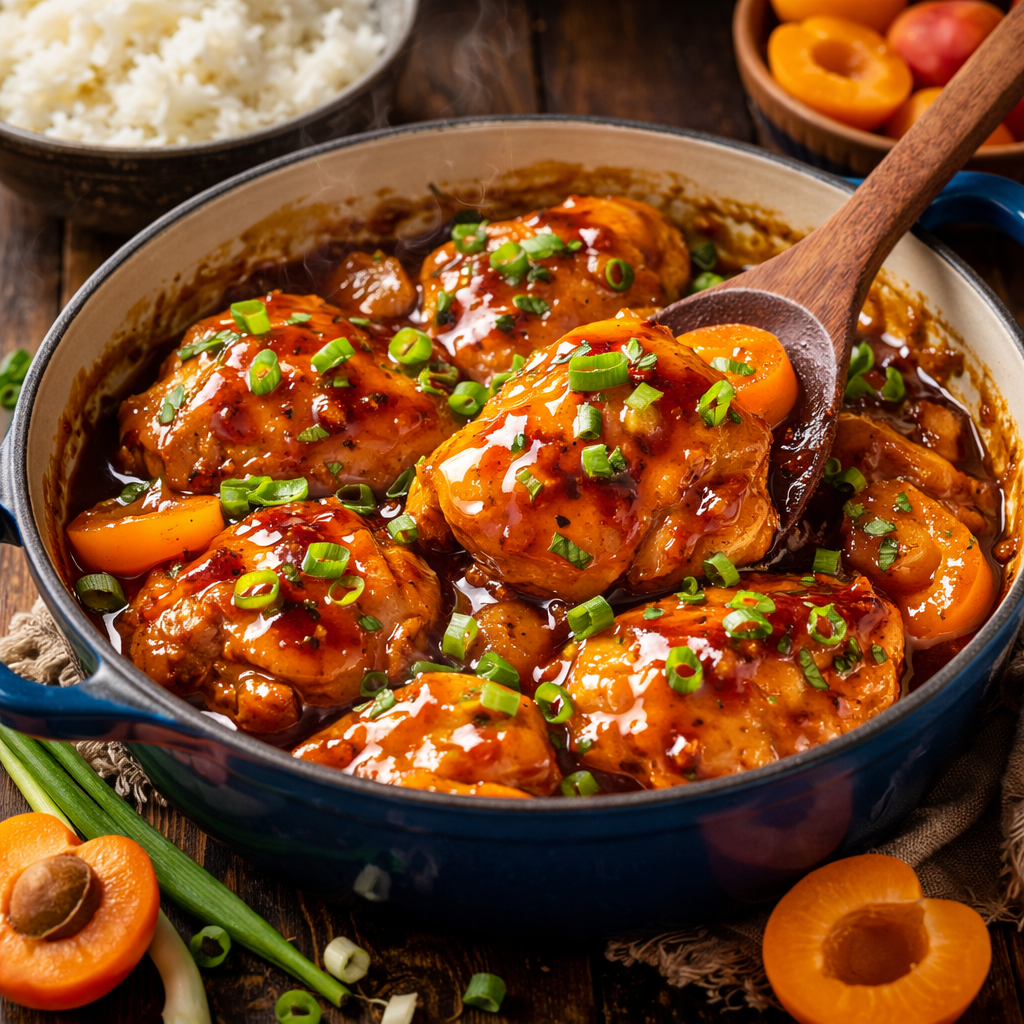
Nestle the chicken thighs back into the skillet, ensuring the skin remains above the sauce. We want the bottom of the chicken to braise in the apricot liquid while the skin continues to crisp in the oven’s dry heat.
Place the skillet in the oven. Bake for 25–30 minutes. Every 10 minutes, use a spoon to baste the meat (not the skin) with the thickening sauce.
5. The Final Glaze
For the last 2–3 minutes, you can turn on the broiler to caramelize the very top of the apricot glaze on the chicken skin. Watch it carefully; sugar burns rapidly under a broiler.
Common Mistakes to Avoid
- Using Chicken Breasts: While you can use breasts for an apricot chicken recipe, they lack the fat content to stand up to a sugary glaze. If you choose breasts, reduce the oven time by 10 minutes to prevent them from becoming dry and fibrous.
- Covering the Dish: Do not put a lid on your skillet or baking dish. Covering the chicken creates steam, which will turn your beautifully seared skin into a rubbery, soggy layer.
- Over-sweetening: If you find the sauce is too sweet midway through cooking, do not add more water. Add a teaspoon of lime juice or rice vinegar to reset the balance.
- Ignoring the Fond: That brown “gunk” on the bottom of the pan after searing the chicken is concentrated flavor. If you don’t deglaze the pan properly with the nectar, your apricot chicken recipe will lack the professional “savory” backbone it needs.
Timing & Doneness Indicators
To ensure your apricot chicken recipe is safe and delicious, use these sensory and technical markers:
Serving Suggestions
Because the sauce in this apricot chicken recipe is so potent, your sides should be relatively neutral to act as a sponge for the glaze.
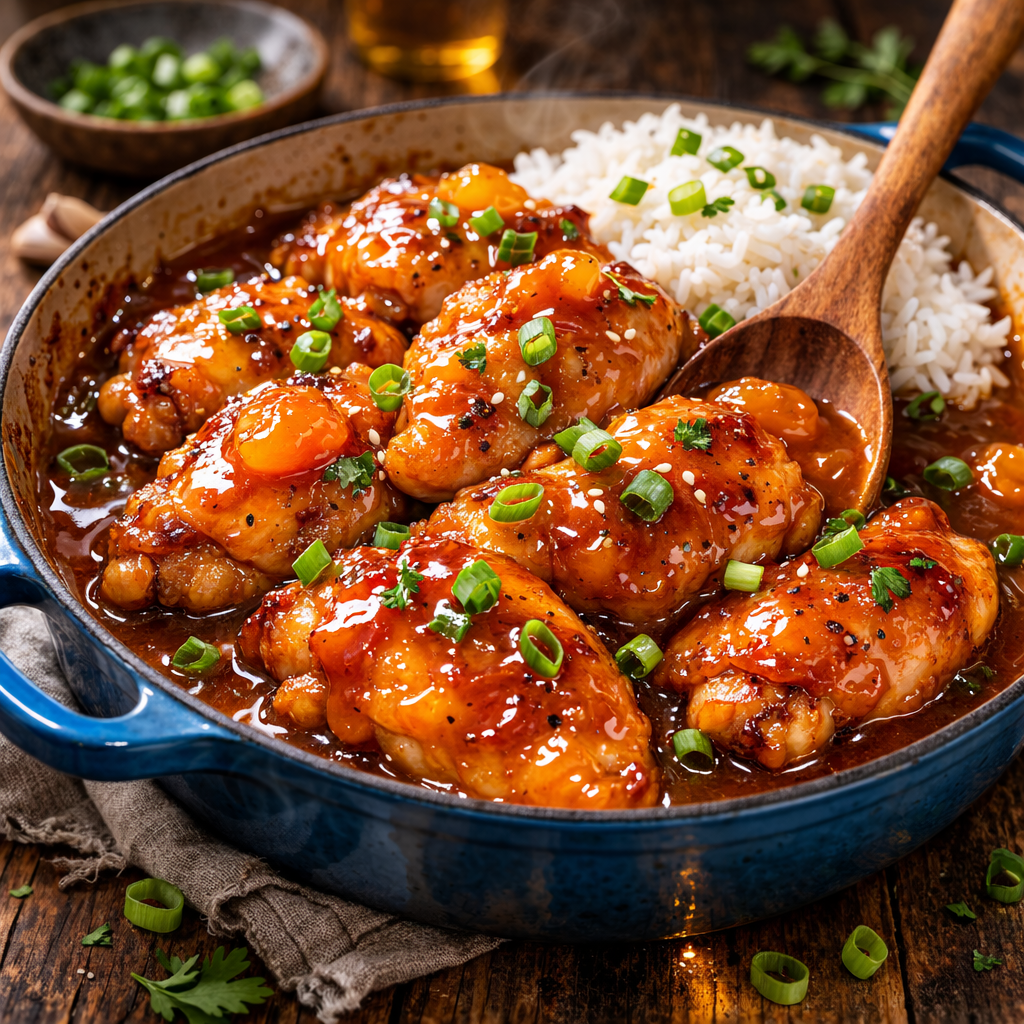
- The Classic Bed: Serve over Basmati or Jasmine rice. The individual grains stay separate and soak up the apricot sauce without becoming mushy.
- The Modern Twist: Pair with roasted broccolini or charred Brussels sprouts. The slight bitterness of the roasted greens is a perfect foil for the sweet fruit glaze.
- The Garnish: Top with toasted slivered almonds for crunch and fresh cilantro or sliced green onions for a hit of herbaceousness.
- The Bread: A crusty piece of sourdough is excellent for “mopping” the remaining apricot reduction from the plate.
FAQ: Solving Your Cooking Frustrations
Q: My sauce is too thin. How do I thicken it without ruinous cornstarch? A: If the chicken is done but the sauce is watery, remove the chicken to a warm plate. Place the skillet back on the stovetop over high heat. Boil the sauce for 3–5 minutes. As the water evaporates, the natural sugars and pectins will create a thick, professional glaze.
Q: Can I make this apricot chicken recipe in a slow cooker? A: Yes, but you will lose the crispy skin. If using a Crock Pot, sear the chicken first, then cook on Low for 4–5 hours. You will likely need to finish the sauce in a pan on the stove to get the right thickness.
Q: Is apricot nectar the same as apricot juice? A: Nectar is typically thicker and includes some fruit pulp, whereas juice is thinner. For this apricot chicken recipe, nectar is superior for body, but orange juice is a perfectly acceptable substitute if nectar is unavailable.
Q: Can I use dried apricots instead of preserves? A: Dried apricots won’t provide the “saucy” consistency on their own. However, you can chop 1/2 cup of dried apricots and add them to the preserves for extra texture and “pops” of tartness.