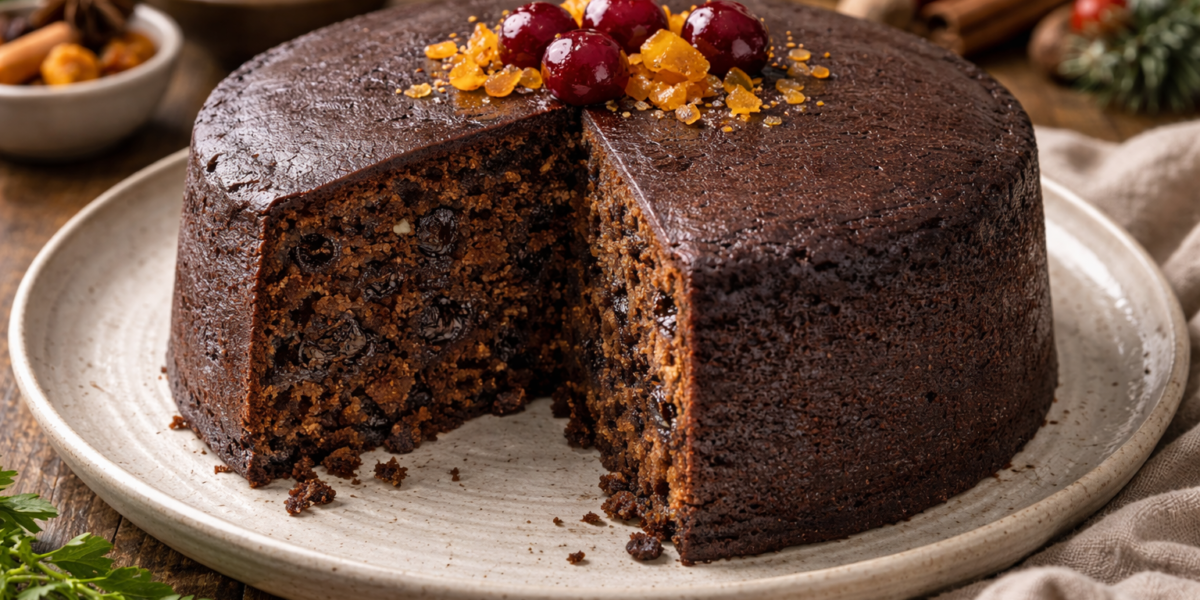
The most persistent frustration with any Black Cake recipe is the “bitter-burn” or the “dry crumble.” For those uninitiated in this Caribbean holiday staple, Black Cake (also known as Caribbean Fruit Cake or Wedding Cake) is not a standard sponge. It is a dense, boozy, and deeply aromatic masterpiece that relies on months of preparation. Too often, home bakers end up with a cake that is either unpleasantly bitter from over-burnt browning or a texture that resembles a dry brick rather than a moist, fudge-like confection.
The culinary challenge of a Black Cake recipe lies in the equilibrium between the macerated fruits, the caramel coloring, and the alcohol content. Unlike a British plum pudding or a standard American fruitcake, Black Cake requires the fruit to be blended into a smooth paste, creating a uniform, decadent crumb. This guide provides a technically precise framework to solve the problem of inconsistent texture and flavor, ensuring your holiday centerpiece is the talk of the season.
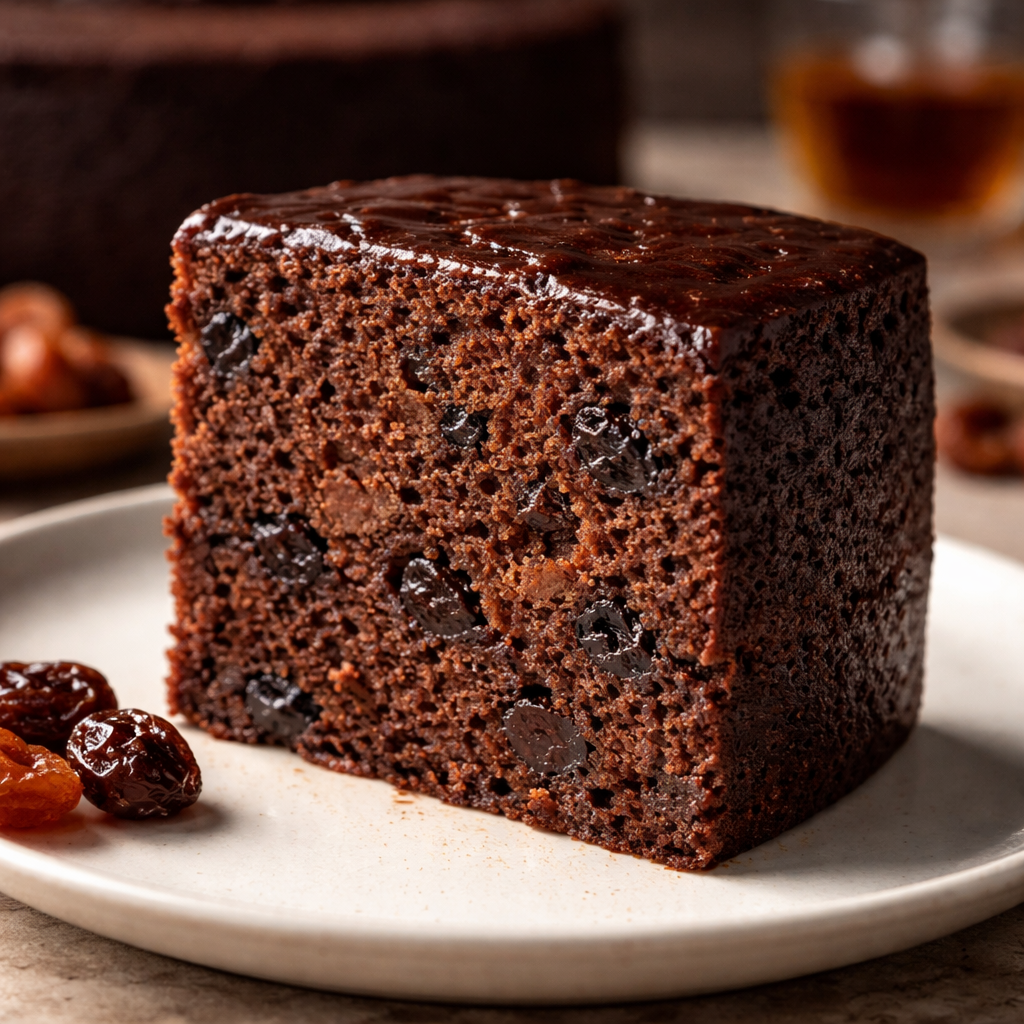
Why This Recipe Works
This Black Cake recipe succeeds by treating the cake as a preserved confection rather than a fleeting baked good.
- Enzymatic Breakdown: By soaking the fruits in rum and cherry brandy for weeks (or months), we allow the alcohol to break down the fruit fibers. This creates a “conserve” that integrates seamlessly into the batter, preventing the “fruit-sinking” common in other cakes.
- The Browning Control: Instead of using store-bought “gravy browning” which can be salty, we utilize a homemade burnt-sugar essence. This provides the iconic obsidian color and a complex, smoky sweetness without the acrid bitterness of commercial dyes.
- Steam-Retention Baking: We utilize a low-and-slow baking method, often accompanied by a water bath in the oven. This prevents the high sugar content from scorching the edges while ensuring the center reaches a safe temperature without drying out.
- Post-Bake Saturation: This recipe employs a “feed-the-cake” technique. By dousing the cake in spirits immediately after it leaves the oven, we create an airtight moisture seal that allows the cake to age for weeks without spoiling.
Ingredients & Measurements
For two 9-inch round cakes, the quality of your spirits and the ratio of fruit to flour is the most critical factor in this Black Cake recipe.
The Macerated Fruit Base (Prepared in Advance)
- 1 lb Raisins & 1 lb Prunes (Pitted): The foundation of the dark color.
- ½ lb Currants & ½ lb Glacé Cherries: For sweetness and texture.
- ¼ lb Mixed Citrus Peel: For a bright, essential-oil lift.
- 2 cups Dark Rum (Overproof preferred): To preserve and soften.
- 2 cups Cherry Brandy or Port Wine: To provide the floral “red” notes.
The Cake Batter
- 1 lb (4 sticks) Unsalted Butter: Room temperature for proper creaming.
- 1 lb (2 cups) Dark Brown Sugar: For moisture and molasses depth.
- 1 lb (approx. 9-10) Large Eggs: Room temperature.
- 1 lb (4 cups) All-Purpose Flour: Sifted to avoid lumps.
- 2 tsp Baking Powder: For a subtle, dense lift.
- 1 tbsp Cinnamon & 1 tbsp Allspice: The essential warm spices.
- 2 tsp Freshly Grated Nutmeg: Never use pre-ground if you can avoid it.
- 2 tbsp Vanilla Extract & 1 tsp Almond Essence: For aromatic layering.
- ½ cup to 1 cup Browning (Burnt Sugar Essence): Added until the desired “black” color is achieved.
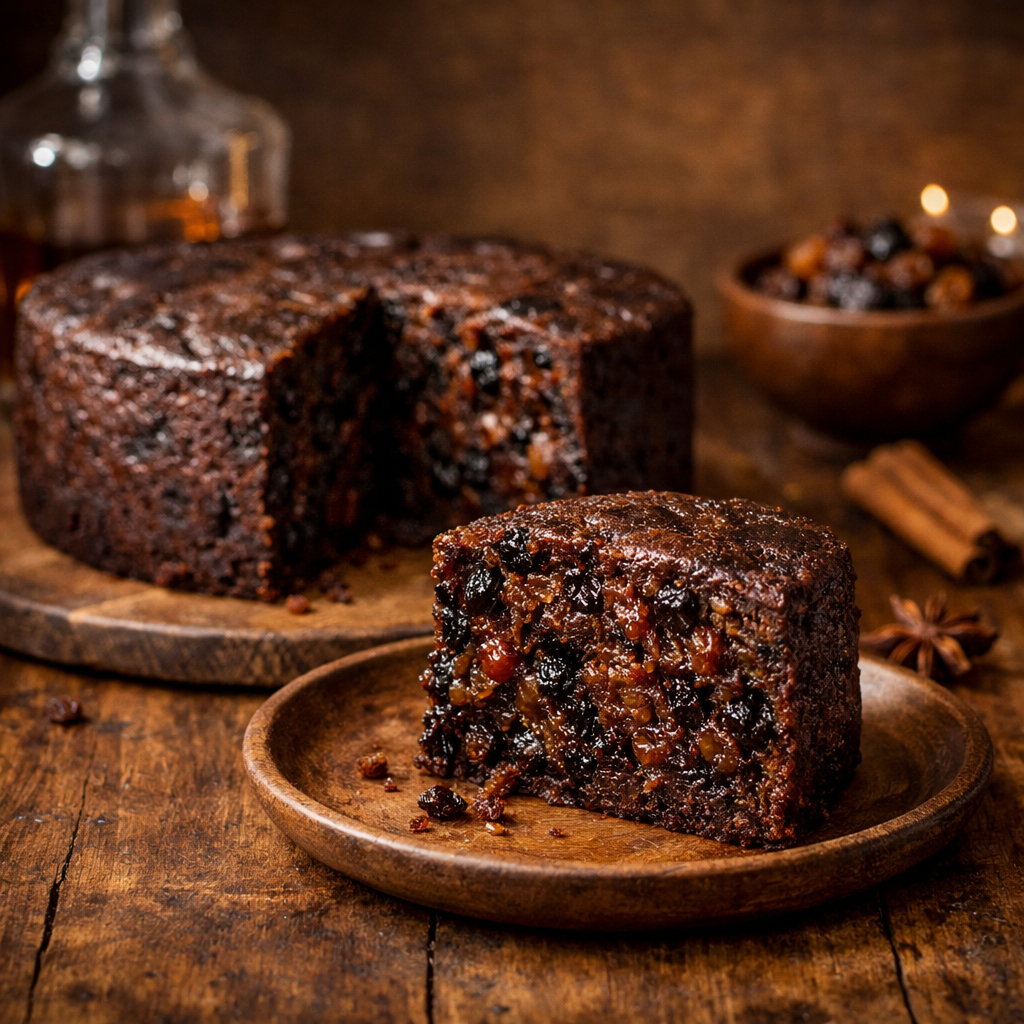
Step-by-Step Cooking Guide
1. The Fruit Maceration (Weeks Before)
Combine all dried fruits in a large glass jar. Cover with the rum and brandy. Store in a cool, dark place for at least 2 weeks, though 6 months is preferred. When ready to bake, pulse the fruit and the soaking liquid in a blender until it reaches a thick, jam-like consistency.
2. Crafting the Browning
If you cannot find high-quality Caribbean browning, melt 1 cup of granulated sugar in a heavy saucepan over medium heat. Stir until it turns a very dark, smoky brown—just past the point of caramel. Carefully (it will sputter) whisk in ½ cup of boiling water until smooth. Set aside to cool.
3. The Creaming Process
In a stand mixer, beat the butter and dark brown sugar for at least 8–10 minutes. In a Black Cake recipe, you are looking for a pale, fluffy texture. This mechanical aeration is vital since the fruit paste is incredibly heavy.
4. The Egg and Fruit Integration
Add eggs one at a time, beating well after each addition. If the mixture looks like it is curdling, add a tablespoon of flour. Once the eggs are in, fold in the blended fruit paste and the vanilla and almond essences. The batter will look incredibly dark and rich at this stage.
5. Incorporating the Dry Ingredients
Whisk the flour, baking powder, and spices together. Slowly fold them into the wet mixture. Finally, stir in your browning. Add it one tablespoon at a time until the batter is a deep, dark chocolate-to-black color.
6. The Low-and-Slow Bake
Preheat your oven to 275°F (135°C). Line your cake pans with double layers of parchment paper—the high sugar content makes this cake prone to sticking. Pour the batter into the pans. Place a shallow pan of water on the bottom rack of the oven to create a humid environment. Bake for 2.5 to 3 hours.
Common Mistakes to Avoid
- Rushing the Fruit Soak: If the fruit is not soaked long enough, the cake will have “crunchy” bits and won’t achieve that famous fudgy texture. If you are in a rush, simmer the fruit and alcohol for 15 minutes and let it cool completely before blending.
- Too Much Browning: Adding too much burnt sugar will make the cake taste like ash. Always stop when the batter is a shade lighter than you want the finished cake to be; it darkens as it bakes.
- Opening the Oven Door: Because of the long bake time, it’s tempting to peek. Every time you open the door, you lose the steam that is keeping the cake moist.
- Using “Fruitcake” Mix: Avoid the neon-green tubbed “fruit mix” found in supermarkets. These are often flavorless and waxy. Use whole, high-quality dried fruits for an authentic result.
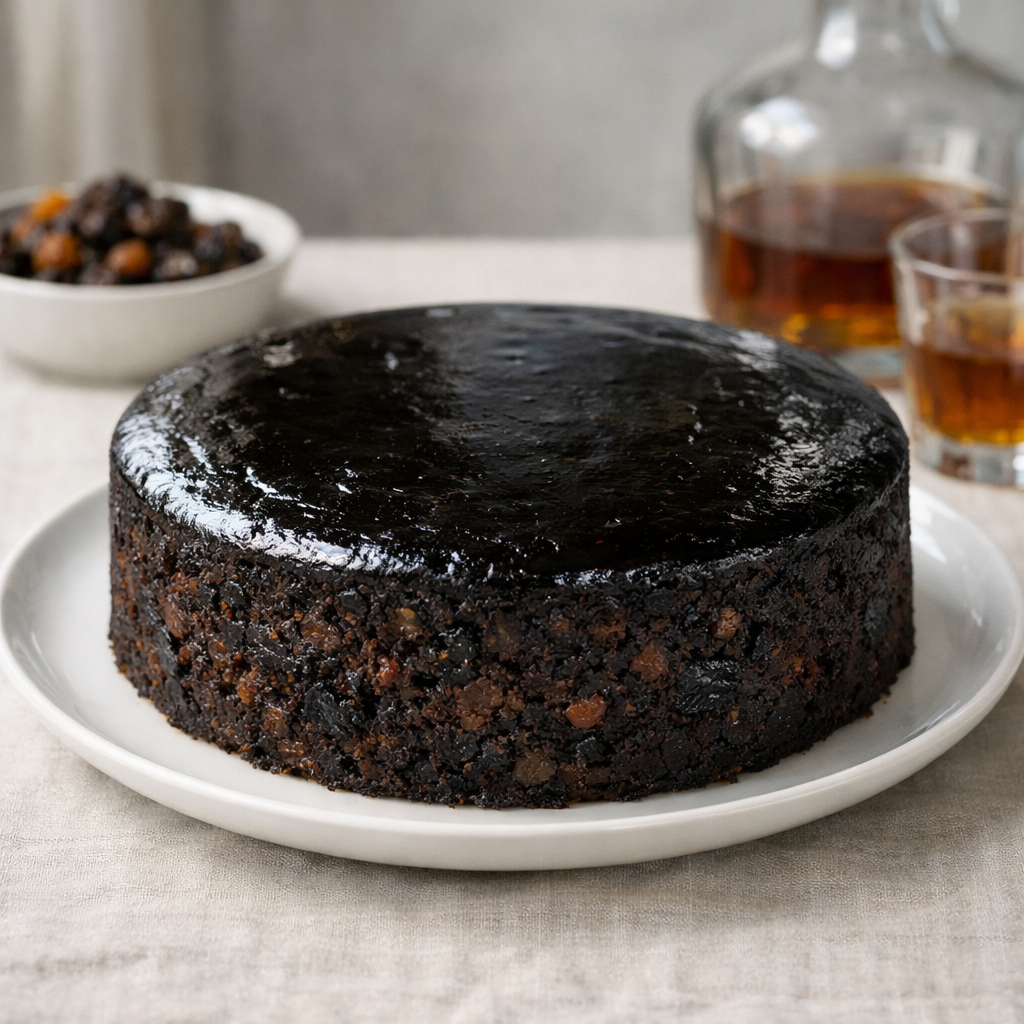
Timing & Doneness Indicators
A Black Cake recipe does not behave like a sponge cake. Use these specific markers to determine when to pull it from the heat:
Serving Suggestions
A Black Cake recipe is rarely eaten the day it is baked. It is a labor of patience.
- The Aging Process: Wrap the cooled cake in parchment paper, then foil, and store in a tin. “Feed” the cake with a tablespoon of rum once a week for 2–4 weeks. This matures the flavor and creates a melt-in-the-mouth texture.
- Traditional Pairing: Serve in thin, rich slices. Because it is so dense, a small piece goes a long way. It is traditionally served with a glass of sorrel or ginger beer.
- The Icing (Optional): Some prefer a layer of marzipan followed by royal icing for a wedding-style finish. However, most purists believe the dark, complex fruit should stand on its own.
FAQ: Solving Your Black Cake Frustrations
Q: My cake is too “boozy” and the alcohol flavor is harsh. How can I fix this? A: This happens if the cake hasn’t aged long enough. The “harshness” of the rum mellows into a warm, toasted flavor over 2–3 weeks of storage. If you must serve it sooner, pair it with unsweetened whipped cream to cut the heat of the alcohol.
Q: Why did my cake sink in the middle? A: This is usually caused by too much baking powder or the oven temperature being too high initially. In a Black Cake recipe, we want a slow, even rise. Ensure your oven is truly at 275°F using an external thermometer.
Q: Can I make this Black Cake recipe without alcohol? A: You can substitute the rum and brandy with a mixture of strong black tea and prune juice. However, keep in mind that the alcohol acts as a preservative. A non-alcoholic version must be kept in the refrigerator and eaten within a week.
Q: My browning turned out grainy. Is it usable? A: Grainy browning means the sugar didn’t fully dissolve into the water. Reheat it gently until smooth. If it has black “flakes” that don’t dissolve, it is burnt and will be too bitter—it’s best to start over.
Q: The cake is stuck to the parchment paper. Help! A: Because of the high sugar and fruit content, this is common. Use a thin palette knife dipped in hot water to gently release the paper from the sides of the cake.