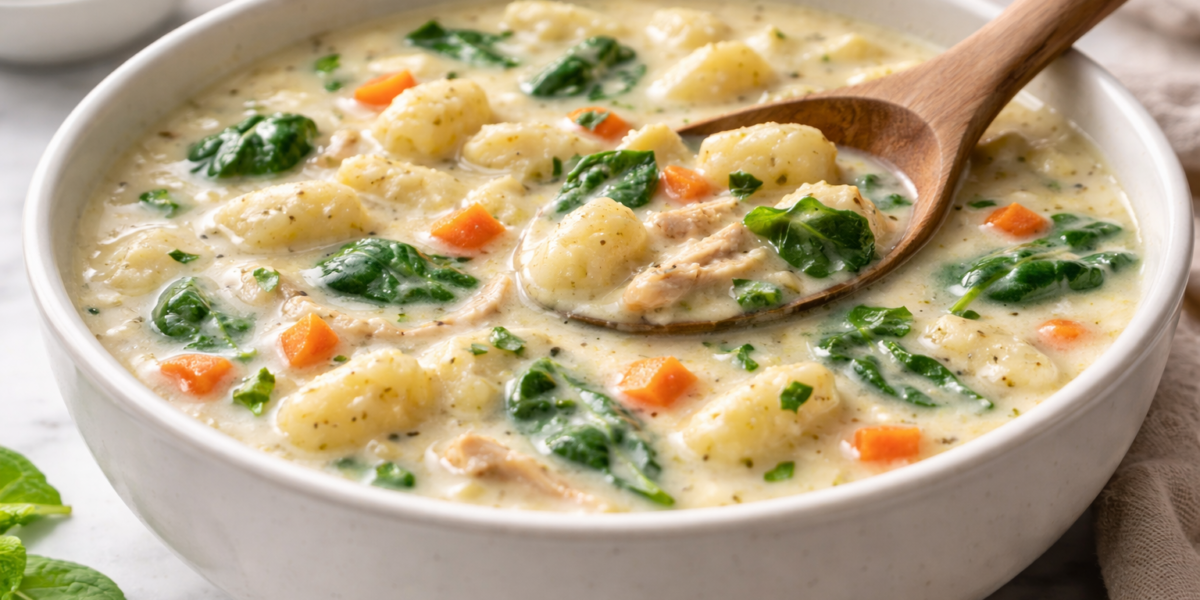
In the realm of casual Italian-American dining, few dishes have garnered a cult following as intense as the Olive Garden Gnocchi Soup recipe. Known formally as Chicken & Gnocchi, this soup is a masterclass in textural contrast—pairing the pillowy softness of potato dumplings with a velvety, cream-based broth and the earthy bite of fresh spinach.
However, the home cook often encounters a common pitfall: a soup that is either too thin and watery or so thick that it resembles a heavy gravy rather than a refined bisque. Achieving the “restaurant-grade” consistency requires a nuanced understanding of starch gelatinization and dairy stabilization. This guide provides a professional-grade deconstruction of the Olive Garden Gnocchi Soup recipe, ensuring your kitchen produces a version that arguably surpasses the original.
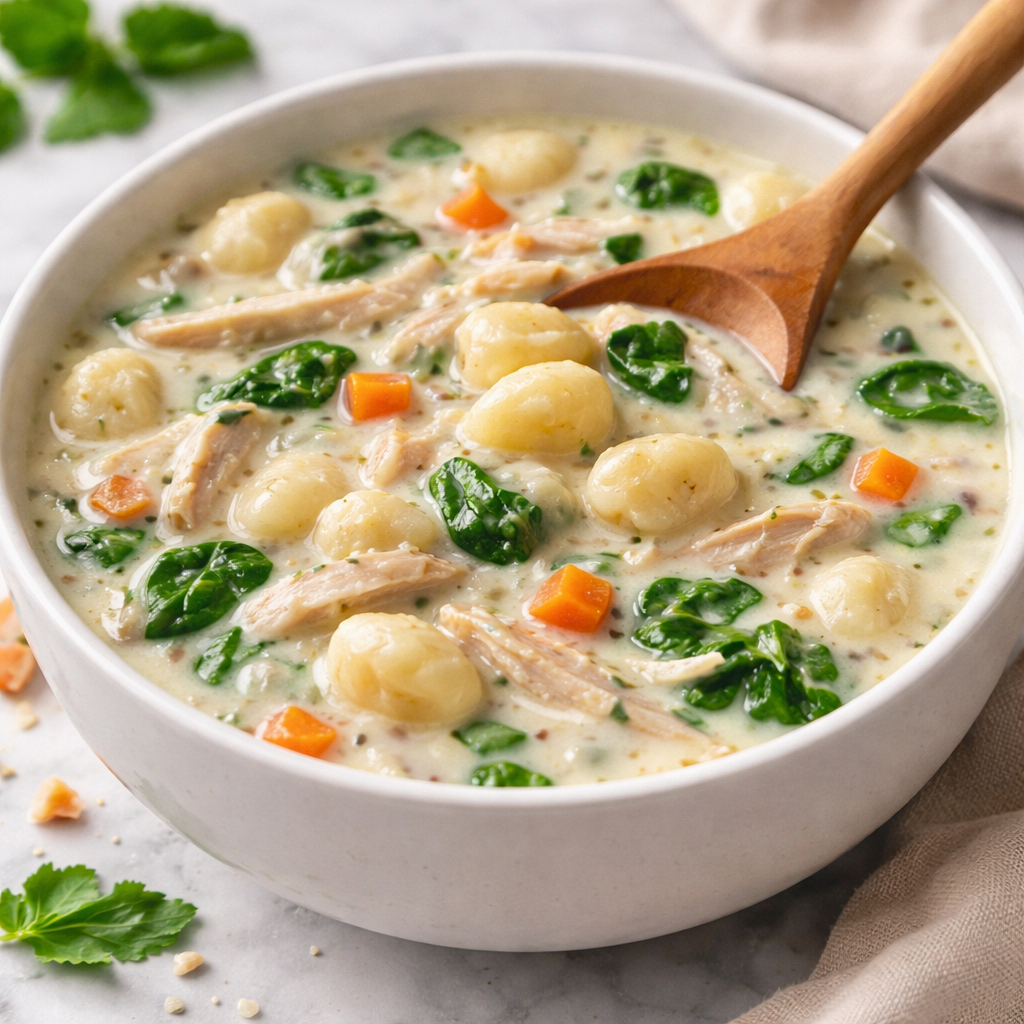
Ingredient Breakdown: The Role of the Essentials
Every component in this gnocchi soup recipe serves a specific functional purpose. To skip or substitute without understanding these roles is to risk the structural integrity of the dish.
1. Potato Gnocchi (The Texture Anchor)
While you can make gnocchi from scratch, this recipe is optimized for high-quality, shelf-stable, or refrigerated potato gnocchi. These dumplings are essentially “starch sponges.” Their role is to absorb the savory flavors of the broth while providing a chewy, soft counterpoint to the liquid.
2. The Mirepoix: Onion, Celery, and Carrots
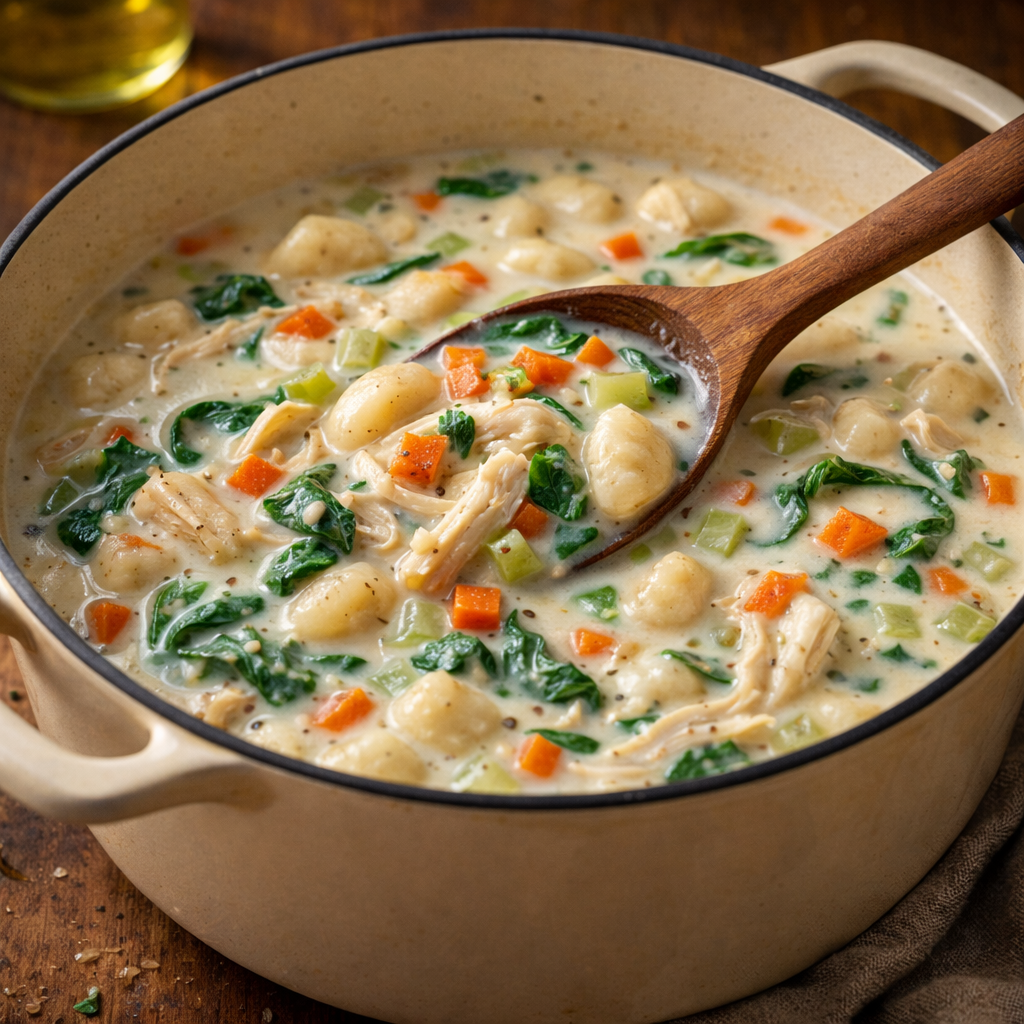
This is the aromatic foundation. In the Olive Garden Gnocchi Soup recipe, the carrots are often shredded rather than diced. This is a strategic choice; shredded carrots distribute more evenly, adding sweetness and a vibrant orange hue to the cream base without disrupting the “pillowy” mouthfeel of the gnocchi.
3. All-Purpose Flour (The Thickening Agent)
This soup utilizes a roux-based thickening method. The flour coats the sautéed vegetables and, when combined with butter, creates a paste that prevents the dairy from separating (curdling) when subjected to heat.
4. Heavy Cream vs. Half-and-Half
For the authentic, indulgent mouthfeel of the Olive Garden Gnocchi Soup recipe, a 50/50 blend of heavy cream and whole milk is ideal. The fat in the cream provides “clash resistance,” allowing the soup to remain smooth even if it reaches a light simmer.
5. Fresh Baby Spinach
Spinach is added at the very end. Its role is twofold: it provides a pop of color and a necessary hit of iron-rich bitterness that cuts through the intense richness of the cream and butter.
Preparation Strategy: The “Staged” Approach
The secret to a successful gnocchi soup is timing. If the gnocchi sit in the boiling broth for too long, they release excess starch and become gummy, eventually disintegrating.
- The Protein Prep: Use rotisserie chicken or pre-cooked chicken breast. In a professional kitchen, the chicken is often “pulled” or finely diced. This ensures that every spoonful of soup contains a balanced ratio of protein, dumpling, and vegetable.
- Temperature Management: Ensure your cream and milk are at room temperature before adding them to the hot broth. Introducing ice-cold dairy to a boiling pot can cause a thermal shock that breaks the emulsion, leading to a “grainy” texture.
- The Sauté Sequence: Start with the onions and celery. The carrots go in last because they are shredded and cook almost instantly.
Cooking Instructions
1. The Aromatic Base
In a large Dutch oven or heavy-bottomed stockpot, melt 4 tbsp of unsalted butter over medium heat. Add 1 cup of finely diced onion and ½ cup of diced celery. Sauté for 5 minutes until translucent. Add 1 cup of shredded carrots and 2 cloves of minced garlic, cooking for an additional 2 minutes.
2. The Roux Foundation
Sprinkle ¼ cup of all-purpose flour over the sautéed vegetables. Stir constantly for 2 minutes. This “cooks out” the raw flour taste but stops before the roux turns brown. You want a “blond” roux to keep the soup a pristine ivory color.
3. The Liquid Integration
Slowly whisk in 2 cups of chicken stock. Add the liquid in small increments, stirring until a smooth paste forms before adding more. This prevents lumps. Once the stock is integrated, pour in 2 cups of whole milk and 1 cup of heavy cream.
4. The Simmer and Seasoning
Season with 1 tsp dried thyme, ½ tsp salt, and ½ tsp black pepper. Bring the mixture to a very gentle simmer—do not let it reach a rolling boil.
5. The Gnocchi and Chicken
Add 1 lb of potato gnocchi and 2 cups of shredded cooked chicken. The gnocchi will initially sink. Simmer for 3–5 minutes. Once the gnocchi float to the surface, they are cooked.
6. The Finish
Stir in 2 cups of fresh baby spinach. The residual heat will wilt the leaves in approximately 30 seconds. Taste and adjust seasoning. For a professional touch, add a pinch of freshly grated nutmeg to enhance the creaminess.
Flavor & Texture Indicators
A perfect Olive Garden Gnocchi Soup recipe should be judged by these three markers:
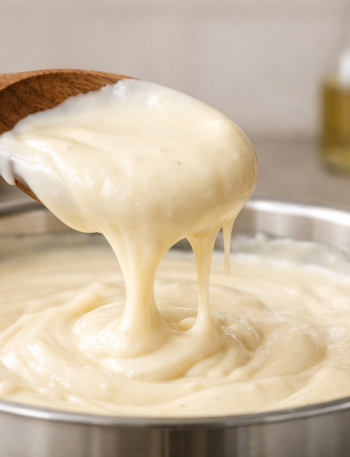
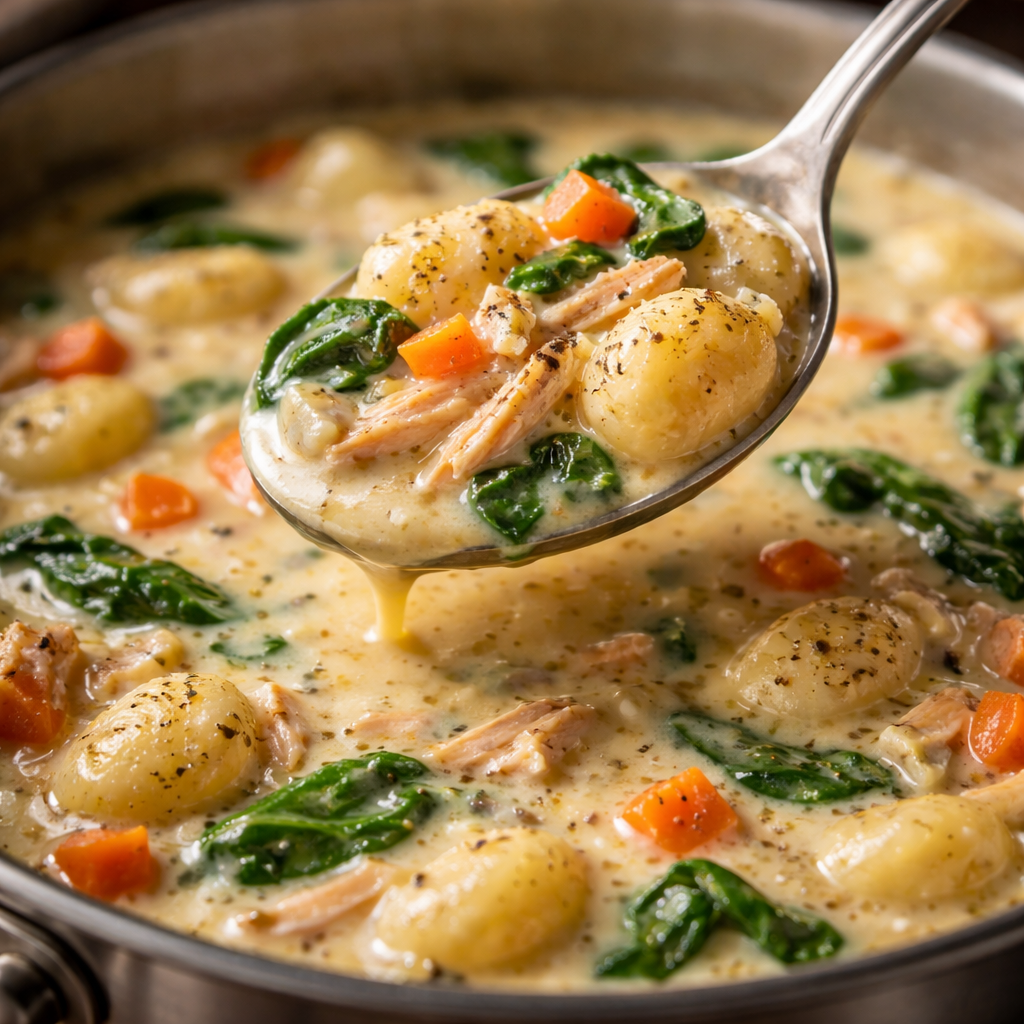
- The “Coat-the-Spoon” Test: Dip a metal spoon into the soup. The broth should coat the back of the spoon in a solid, opaque layer. If it runs off like water, it needs more reduction; if it looks like paste, add a splash of stock.
- The Dumpling Integrity: The gnocchi should be soft enough to cut with a spoon but should still have a distinct “bounce” when bitten.
- Color Saturation: The soup should be off-white with distinct specks of green (spinach) and orange (carrots). A greyish tint usually indicates the garlic or onions were burnt during the sauté phase.
Adjustments for Different Skill Levels
For the Beginner
Focus on the heat. Cream-based soups are unforgiving of high temperatures. Keep your burner on “Medium-Low” once the dairy is added. If you see large bubbles breaking the surface, turn the heat down immediately.
For the Intermediate Cook
Focus on the “Fond.” Before starting the vegetables, sear raw chicken thighs in the pot, then remove them and use the rendered fat and browned bits (fond) to sauté your onions. This adds a “roasted” depth of flavor that the standard Olive Garden Gnocchi Soup recipe lacks.
For the Advanced Artisan
Try making “Ricotta Gnocchi” from scratch. Ricotta-based dumplings are lighter and more “cloud-like” than potato-based versions, offering an ultra-premium experience that transforms the dish from a casual lunch to a fine-dining starter.
Storage & Shelf Life
Because of the gnocchi’s high starch content and the dairy base, storage requires specific care.
- Refrigeration: Store in an airtight container for up to 3 days. Note that the gnocchi will continue to absorb liquid as the soup sits, so the leftovers will likely be much thicker.
- The Reheating Hack: Do not microwave this soup on high. Place it in a saucepan over low heat and add ¼ cup of chicken stock or milk to loosen the broth. Stir constantly to re-emulsify the fats.
- Freezing: We do not recommend freezing this gnocchi soup recipe. The gnocchi will become mushy upon thawing, and the cream base is likely to “break” or separate, resulting in an unappealing texture.
Authentic Mexican Soup Recipes
Reader Questions
Q: Can I make this in a Slow Cooker? A: Yes, but with a caveat. Cook the vegetables, stock, and chicken on “Low” for 4 hours. Add the cream, milk, and gnocchi only in the last 30 minutes of cooking. Adding the dairy too early in a slow cooker often leads to curdling.
Q: My soup is way too thick. What should I do? A: This is common as the gnocchi release starch. Simply whisk in more chicken stock, ½ cup at a time, until the desired consistency is reached. Remember to check your seasoning again, as adding stock will dilute the salt and herbs.
Q: Can I use frozen spinach instead of fresh? A: You can, but ensure you thaw it and squeeze every drop of water out of it first. If you add “wet” frozen spinach, it will turn the beautiful white broth a murky green color.
Q: Is there a gluten-free version of this recipe? A: Absolutely. Use a gluten-free flour blend for the roux and ensure your gnocchi are specifically labeled gluten-free (many are made with wheat flour as a binder). The mechanics of the recipe remain the same.