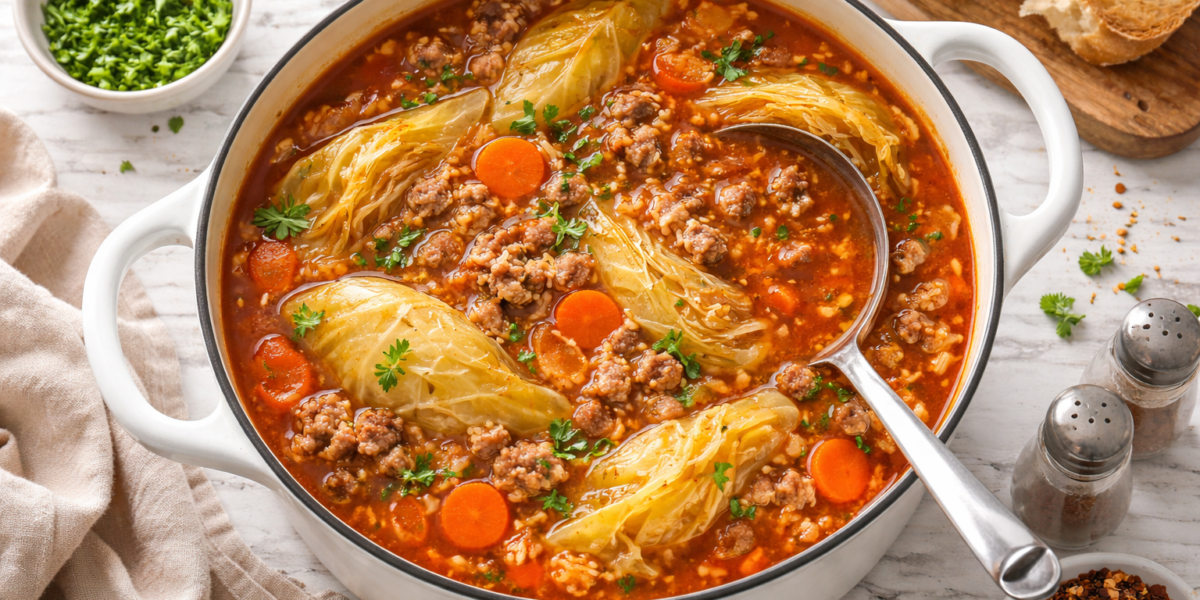
Cabbage Roll Soup Recipe The most pervasive frustration when craving traditional Eastern European comfort food is the sheer time commitment required. We have all been there: standing over a steaming pot, trying to peel cabbage leaves without tearing them, par-boiling rice, and meticulously rolling meat mixtures into individual bundles. It is a three-hour labor of love that often feels inaccessible on a busy Tuesday night. Furthermore, traditional rolls can sometimes cook unevenly, leaving you with a soggy exterior and a dense, dry center.
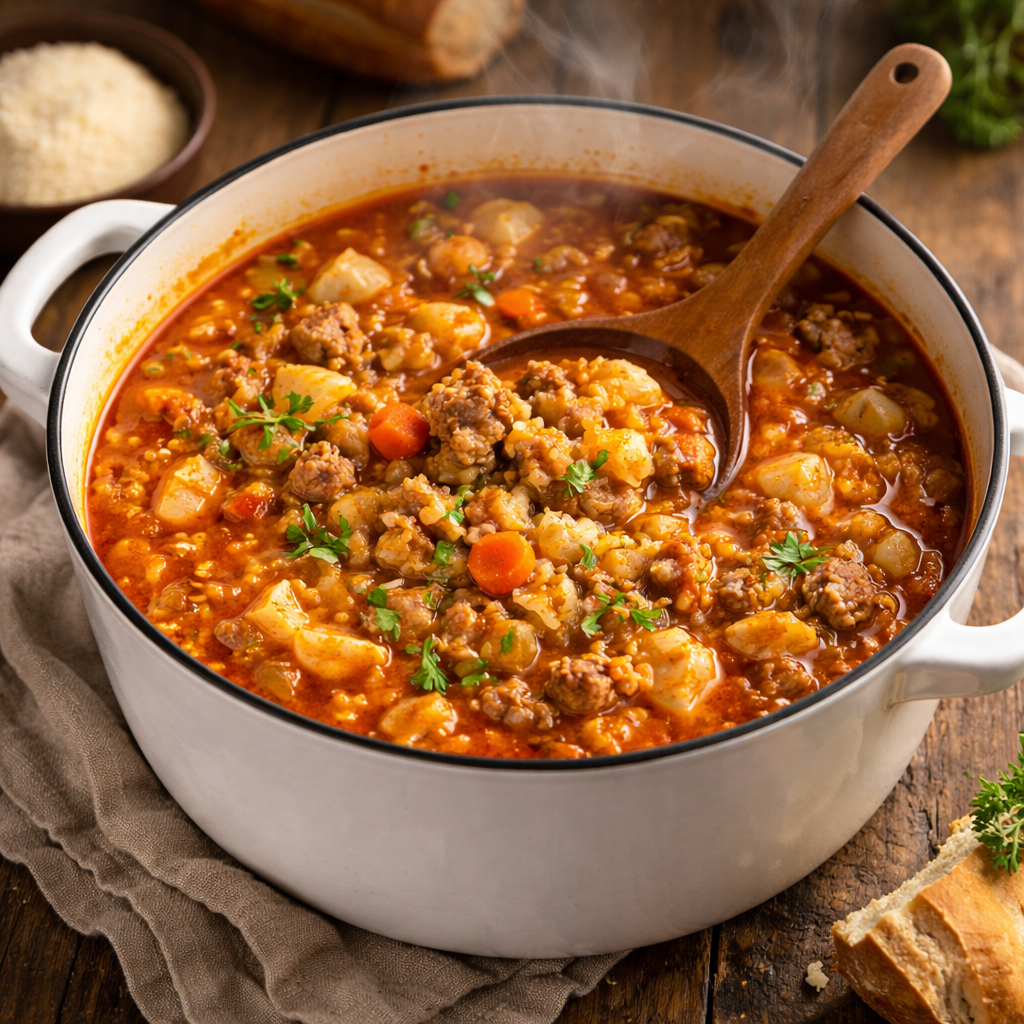
The cabbage roll soup recipe—often affectionately called “unstuffed cabbage soup”—is the professional solution to this culinary bottleneck. By deconstructing the roll into a cohesive, one-pot savory stew, you achieve the exact flavor profile of the original dish in a fraction of the time. This guide focuses on the technical execution of a cabbage roll soup recipe, ensuring you maintain the structural integrity of the vegetables while developing a rich, tomato-based broth that tastes like it has simmered for days.
Why This Recipe Works
This cabbage roll soup recipe succeeds because it treats the ingredients as individual flavor contributors rather than just components of a wrap.
- Maillard Reaction Optimization: In traditional rolls, the meat is steamed inside the cabbage. In this soup version, we brown the ground protein directly in the pot first. This creates “fond” (browned bits), which adds a deep, savory complexity to the base of the soup.
- Layered Acidity: Traditional cabbage rolls rely heavily on tomato sauce. This recipe uses a “triple-threat” tomato approach—paste for depth, crushed for body, and diced for texture—balanced with a hint of brown sugar and apple cider vinegar to mimic the classic sweet-and-sour profile.
- Controlled Texture: By adding the cabbage in stages or at a specific thickness, we solve the “mushy vegetable” problem. The cabbage remains tender-crisp, providing a satisfying “bite” that mimics the layered texture of a roll.
- Starch Integration: Cooking the rice directly in the broth allows the grains to release a small amount of starch, which naturally thickens the soup into a hearty, velvet-like consistency without the need for flour or cornstarch.
Ingredients & Measurements
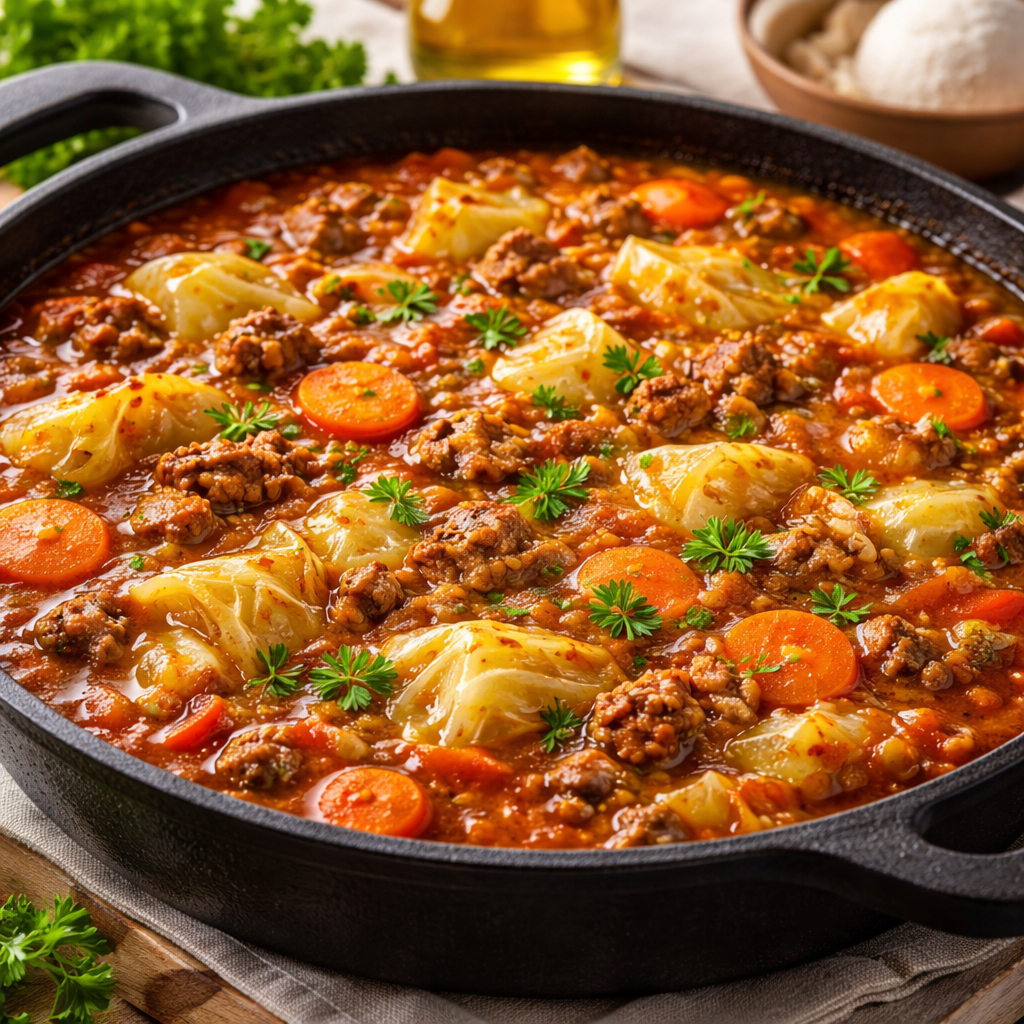
For a large stockpot of this cabbage roll soup recipe, the balance between the hearty greens and the savory broth is critical.
The Protein and Produce
- 1.5 lbs Lean Ground Beef (or a Beef/Pork Blend): Using a 85/15 blend provides enough fat for flavor without making the soup greasy.
- 1 Large Green Cabbage (approx. 2 lbs): Chopped into 1-inch squares. Avoid pre-shredded coleslaw mix, as it is too thin and will dissolve.
- 1 Large Yellow Onion: Diced.
- 3 Medium Carrots: Sliced into coins.
- 3 Cloves Garlic: Minced.
The Broth and Flavor Base
- 6 cups Low-Sodium Beef Broth: This allows you to control the salt levels.
- 28 oz Crushed Tomatoes: For a thick, rich base.
- 15 oz Diced Tomatoes: To provide texture.
- 3 tbsp Tomato Paste: For concentrated umami.
- 1/2 cup Uncooked Long-Grain White Rice: Or pre-cooked rice added at the end.
- 2 tbsp Brown Sugar & 2 tbsp Apple Cider Vinegar: To create the signature sweet-and-sour finish.
Spices and Herbs
- 1 tsp Smoked Paprika: Adds a subtle “old world” smokiness.
- 1 tsp Dried Thyme & 2 Bay Leaves.
- Salt and Freshly Cracked Black Pepper: To taste.
- Fresh Parsley or Dill: For garnish.
Step-by-Step Cooking Guide
1. The Savory Foundation
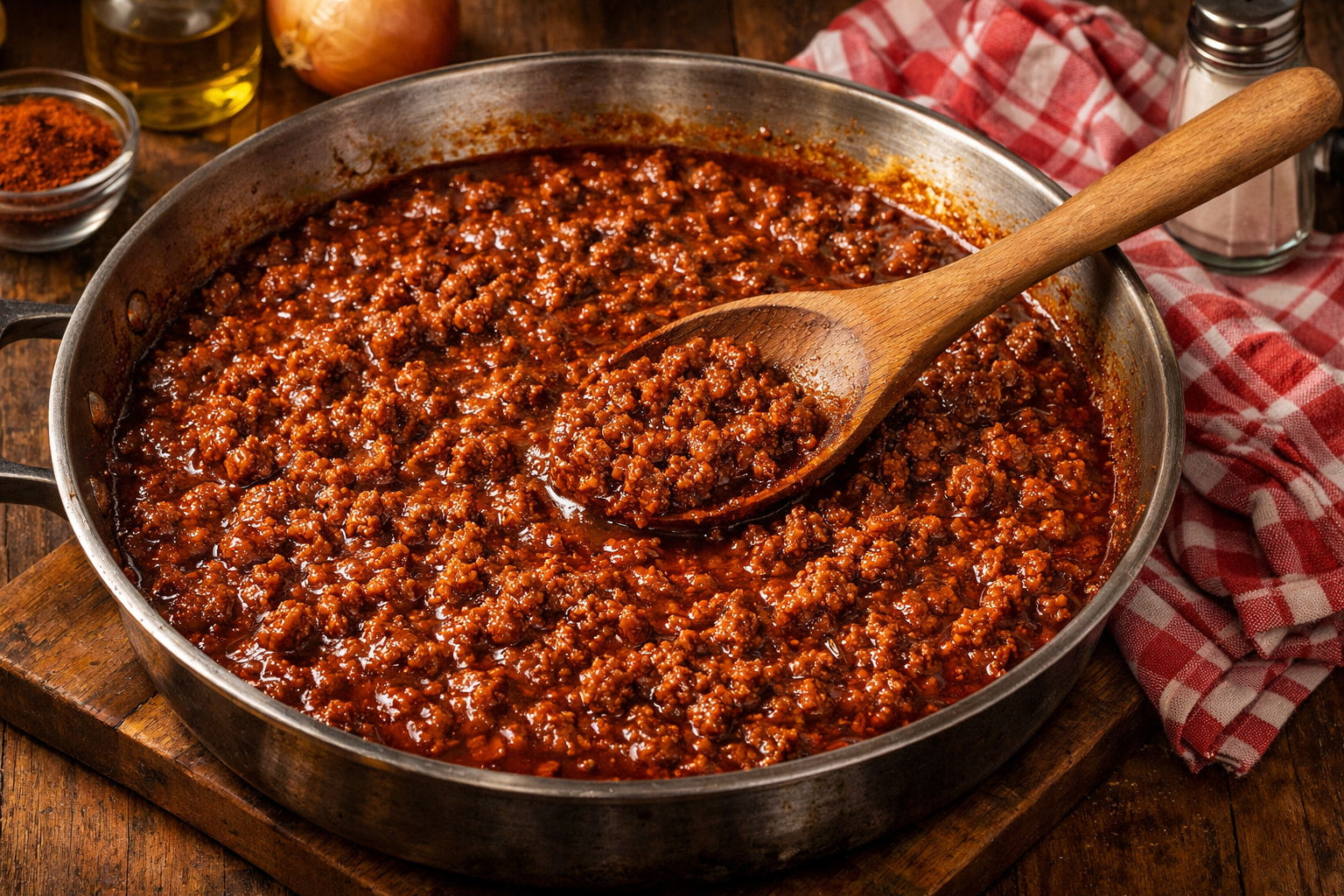
In a large, heavy-bottomed stockpot or Dutch oven, brown the ground beef over medium-high heat. Use a wooden spoon to break the meat into small crumbles. As the meat browns, the fat will render out. Once cooked through, drain all but one tablespoon of the excess fat.
2. Sautéing the Aromatics
Add the diced onions and sliced carrots to the pot with the beef. Sauté for 5–7 minutes until the onions are translucent and the carrots begin to soften. Stir in the minced garlic and tomato paste, cooking for another 2 minutes. You want the tomato paste to turn a dark brick-red; this “toasting” of the paste removes the raw metallic taste.
3. Building the Broth
Pour in the beef broth, crushed tomatoes, and diced tomatoes (with their juices). Add the brown sugar, apple cider vinegar, smoked paprika, thyme, and bay leaves. Stir well, ensuring you scrape the bottom of the pot to release any browned bits of meat—this is where the flavor lives in a cabbage roll soup recipe.
4. The Cabbage and Rice
Add the chopped cabbage and the uncooked rice to the pot. At first, it may seem like there is too much cabbage, but it will wilt significantly as it cooks. Stir to submerge as much cabbage as possible. Bring the mixture to a gentle boil.
5. The Gentle Simmer
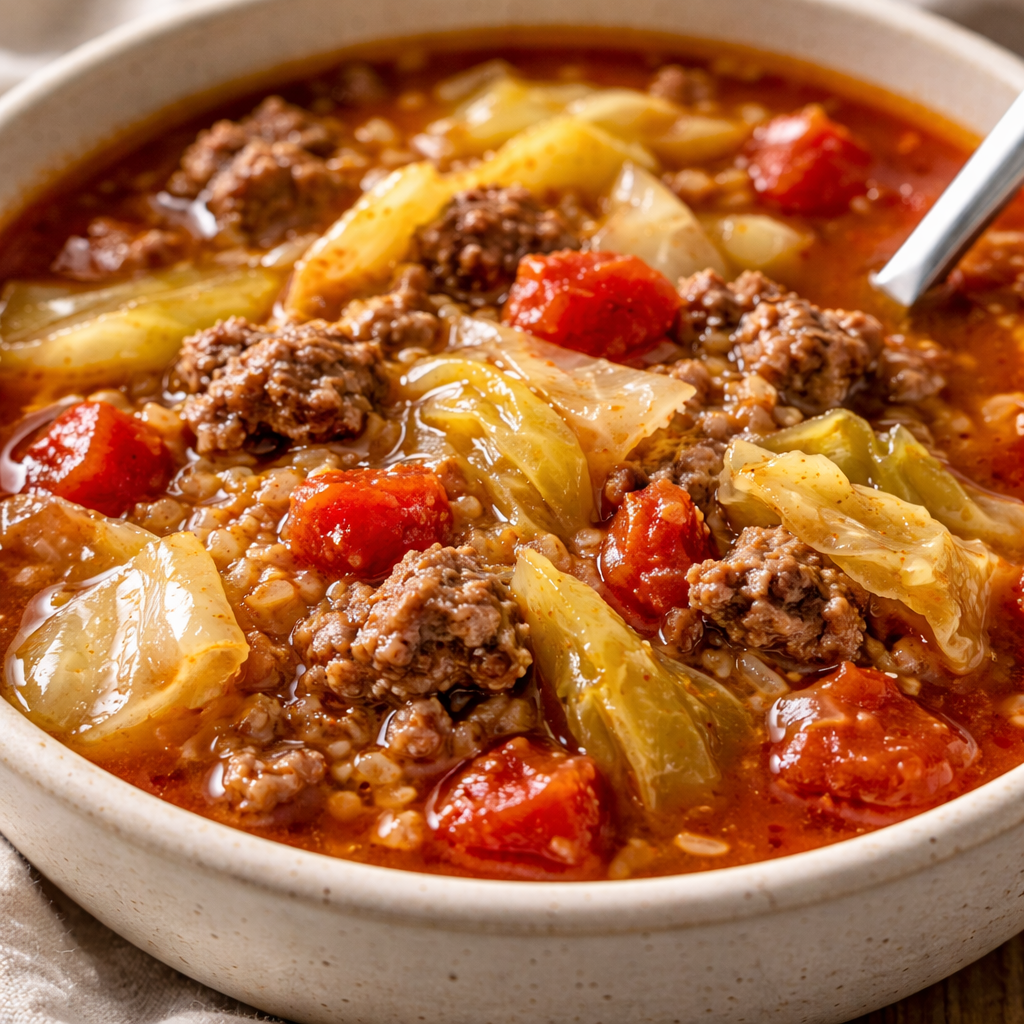
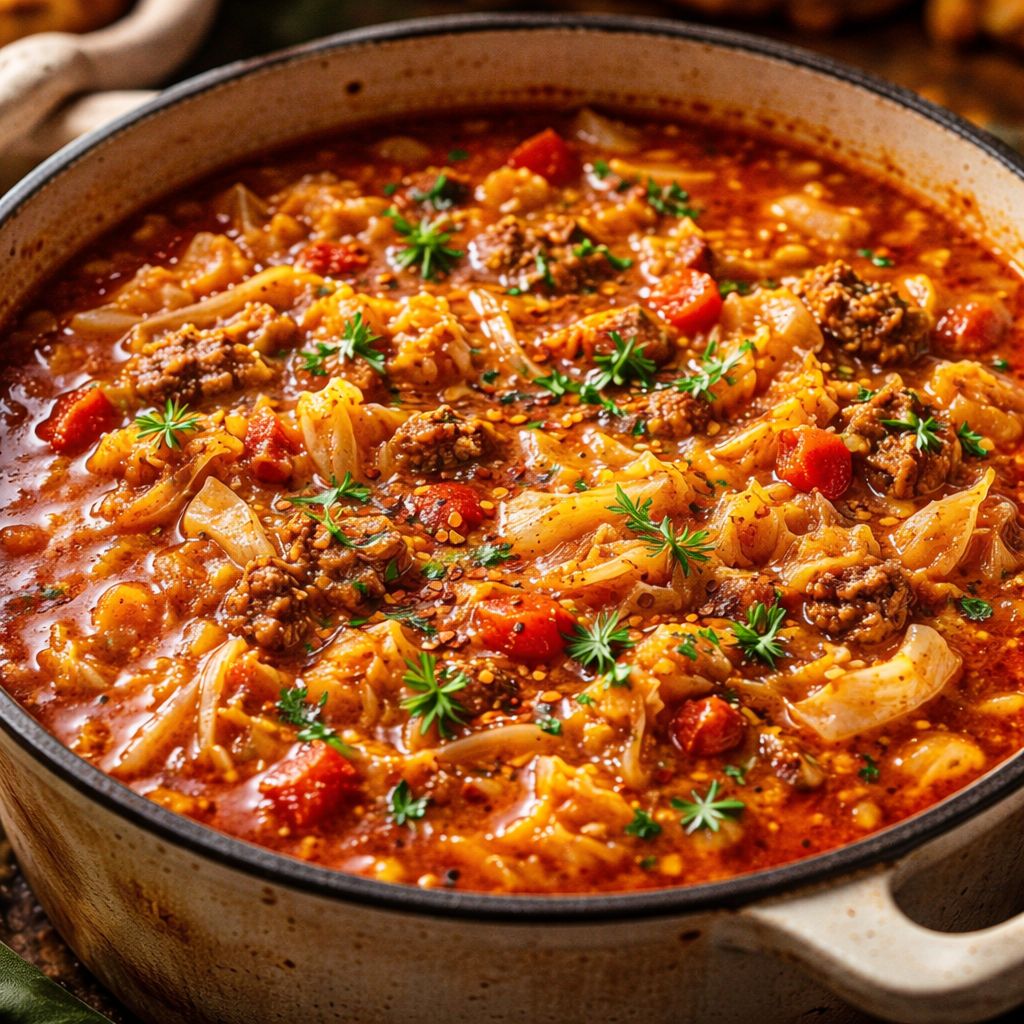
Reduce the heat to low, cover the pot with a tight-fitting lid, and simmer for 25–30 minutes. You are looking for two indicators: the rice should be tender, and the cabbage should be soft but not falling apart.
6. Adjusting and Resting
Remove the bay leaves. Taste the broth. If it is too acidic, add a pinch more brown sugar; if it needs “brightness,” add a teaspoon of vinegar. Let the soup rest for 10 minutes before serving. This allows the flavors to “set” and the rice to reach its final texture.
Common Mistakes to Avoid
- Overcooking the Rice: If you use instant rice or over-simmer the soup, the rice will absorb all the liquid and turn into a thick porridge. If you plan on having leftovers, consider cooking the rice separately and adding a scoop to each bowl.
- Chopping Cabbage Too Thin: Avoid thin, julienned strips. For a professional cabbage roll soup recipe, 1-inch chunks are necessary to survive the simmering process.
- Ignoring the Fat: If you don’t drain the beef fat after browning, the soup will develop an unappealing orange oil slick on top.
- Skipping the Acid: The apple cider vinegar is what makes this taste like a “cabbage roll” rather than just a “vegetable beef soup.” Do not skip it.
Timing & Doneness Indicators
Serving Suggestions
A cabbage roll soup recipe is a complete meal, but the right garnishes bring it to life:
- The Creamy Contrast: A dollop of full-fat sour cream in the center of the bowl is non-negotiable for an authentic experience.
- Fresh Herbs: Fresh dill or parsley adds a bright, grassy finish that cuts through the rich tomato base.
- The Bread Side: Serve with a thick slice of toasted rye bread or sourdough to mop up the remaining broth.
- The Vinegar Kick: For those who love a tart soup, serve with a side of extra cider vinegar or pickled peppers.
FAQ: Solving Your Soup Frustrations
Q: Why is my cabbage roll soup so thick? It looks more like a stew. A: The rice acts as a natural thickener and continues to absorb liquid even after the heat is off. If the soup becomes too thick, simply stir in an extra cup of beef broth or water when reheating.
Q: Can I make this in a Slow Cooker? A: Yes. Brown the meat and sauté the onions first (crucial for flavor). Add everything except the rice to the slow cooker and cook on low for 6–7 hours. Add cooked rice at the very end to prevent it from turning into mush.
Q: Is this cabbage roll soup recipe freezer-friendly? A: Yes and no. The base and the meat freeze beautifully. However, rice and cabbage can become quite soft after thawing. For the best results, freeze the soup without the rice, and add fresh rice when you reheat the dish.
Q: How can I make this recipe “low carb”? A: Simply omit the rice and the brown sugar. You can replace the rice with riced cauliflower (added in the last 5 minutes) and use a keto-friendly sweetener to maintain that classic sweet-and-sour balance.