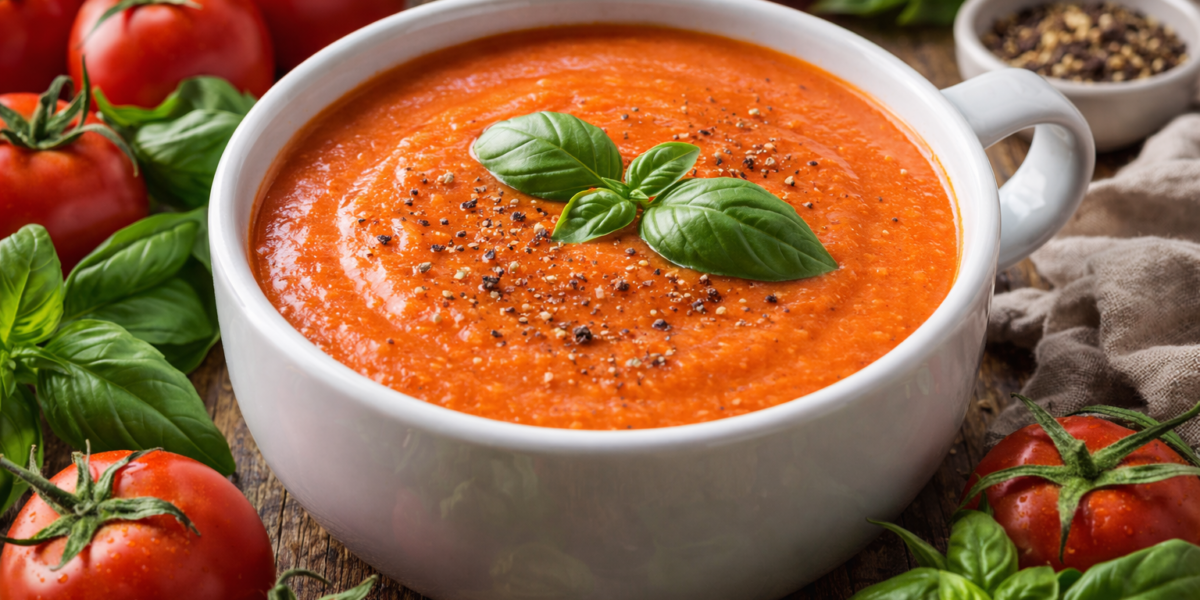
Creamy Tomato Soup Recipe The most persistent frustration when preparing a creamy tomato soup recipe at home is the “separation anxiety” of the broth. We have all experienced it: you simmer your tomatoes and aromatics, add a splash of heavy cream, and instead of a vibrant, velvet-like bisque, you end up with a watery red liquid featuring unappealing white curdles. Or worse, the soup carries a harsh, metallic “tinny” aftertaste from the canned tomatoes that no amount of salt seems to fix.
Achieving a restaurant-quality homemade tomato soup requires a departure from the “dump-and-simmer” method. To create a soup that is truly creamy—meaning it has a stable, homogenized emulsion—you must understand the relationship between acidity, fat, and thermal blending. This guide deconstructs the science of the best creamy tomato soup recipe, focusing on the Maillard reaction of aromatics and the “slow-temper” dairy technique to ensure a flawless, decadent result every time.
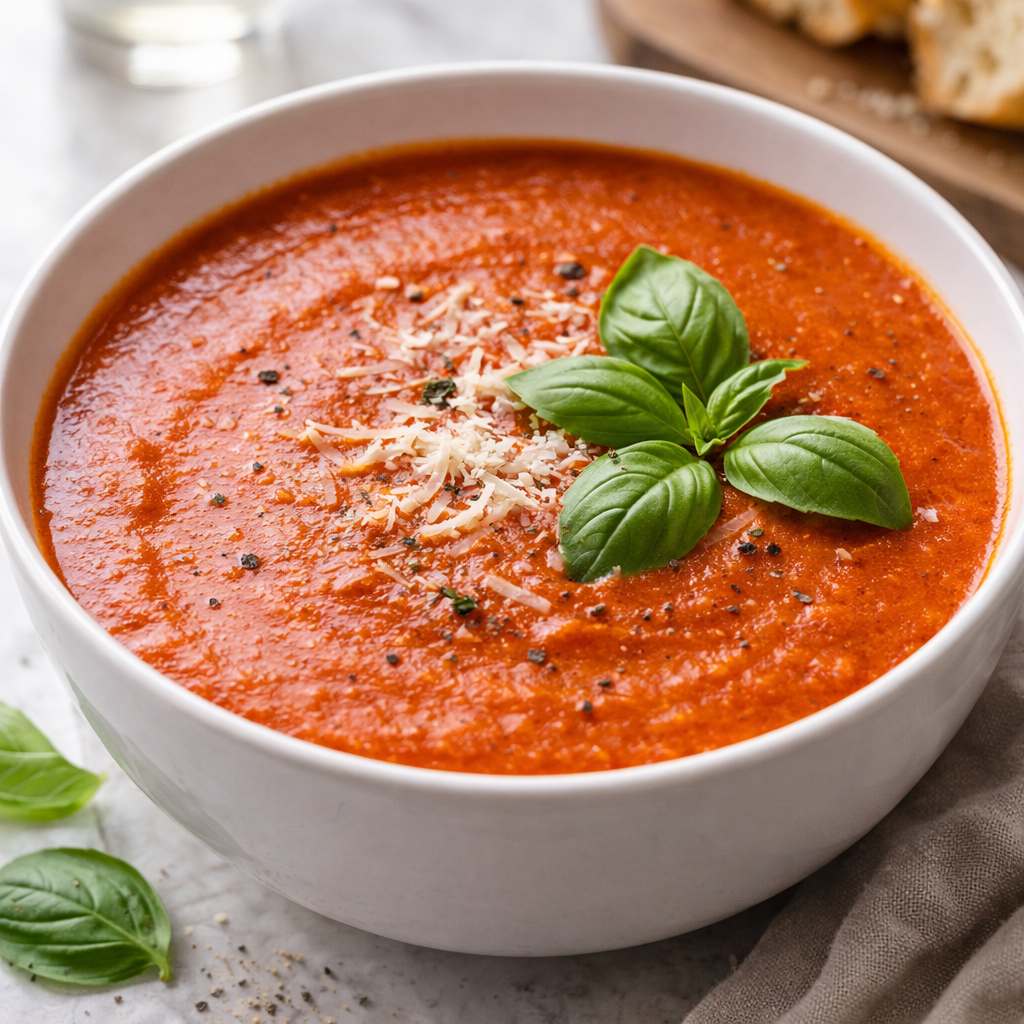
Why This Recipe Works
This easy creamy tomato soup recipe succeeds by treating the tomato not as a watery base, but as a concentrated flavor source that must be “unlocked” through heat.
- Aromatic Caramelization: Most recipes call for sweating onions. We take it further by caramelizing the onions and carrots until they develop natural sugars. This provides a structural sweetness that counters the tomato’s acidity without relying solely on white sugar.
- The Tomato Paste “Toast”: We fry the tomato paste in olive oil before adding the liquid. This removes the raw, metallic taste and deepens the color to a rich, burnt orange.
- Starch-Free Thickening: Instead of using a flour-based roux, which can dull the vibrant tomato flavor, this recipe relies on the pectin in the tomatoes and the high-speed blending of vegetables to create body.
- The Emulsion Bridge: By using a high-fat heavy cream and tempering it into the hot soup, we prevent the proteins from denaturing (curdling), resulting in a stable, silky mouthfeel.
Ingredients & Measurements
For a professional yield of this creamy tomato soup, the quality of your canned goods is the single most important variable.
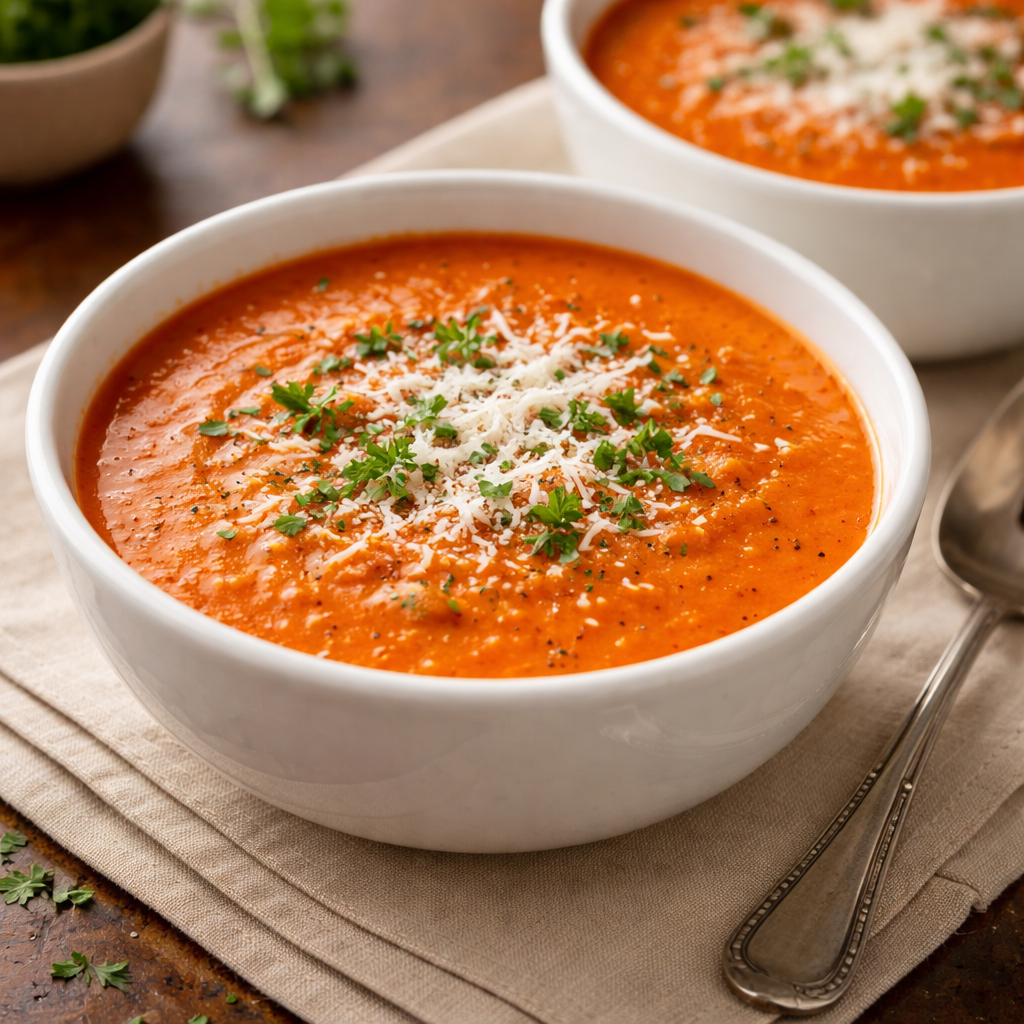
The Tomato Core
- 28 oz San Marzano Whole Peeled Tomatoes: These are the gold standard. They are less acidic and meatier than standard plum tomatoes. Do not use pre-crushed tomatoes, as they often contain lower-quality fruit.
- 3 tbsp Tomato Paste: For concentrated umami and color.
The Aromatic Base
- 2 tbsp Extra Virgin Olive Oil & 1 tbsp Unsalted Butter: The butter adds a dairy note from the start, while the oil prevents burning.
- 1 Large Yellow Onion: Diced.
- 1 Medium Carrot: Finely grated. The carrot is the “secret weapon” for natural sweetness.
- 4 Cloves Garlic: Minced.
The Liquids and Seasoning
- 2 cups Low-Sodium Chicken or Vegetable Broth: Provides the savory framework.
- 1/2 cup Heavy Cream: Use at least 36% milkfat for the best emulsion.
- 1/4 cup Fresh Basil Leaves: To be blended in at the end.
- 1 tsp Dried Oregano & 1/2 tsp Crushed Red Pepper Flakes.
- 1 tbsp Honey or Brown Sugar: To balance the final pH.
Step-by-Step Cooking Guide
1. The Sweetening Sauté
In a large Dutch oven or heavy-bottomed pot, melt the butter with the olive oil over medium heat. Add the onions and grated carrots. Sauté for 10–12 minutes. You aren’t just looking for translucency; you want the edges to turn golden. This is where the depth of your creamy tomato soup recipe is born.
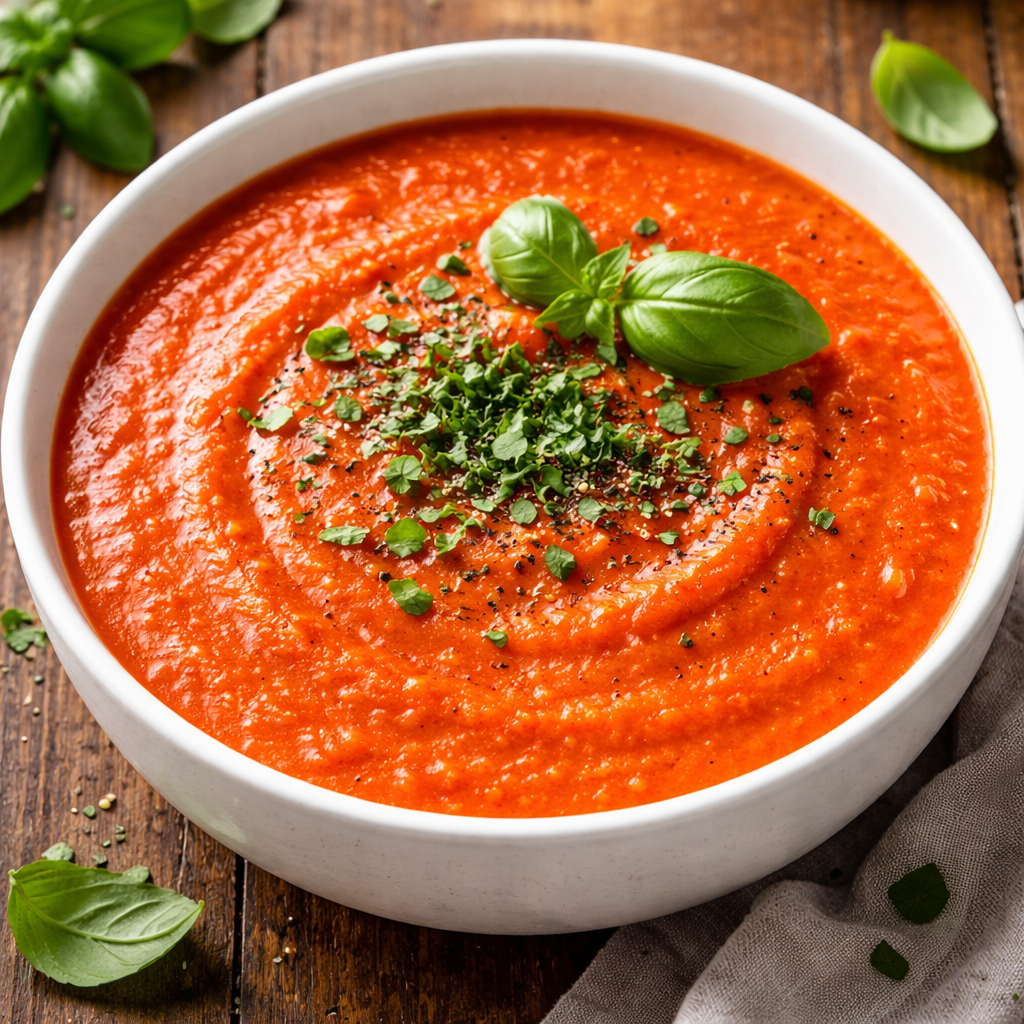
2. The Umami Boost
Add the minced garlic and tomato paste. Stir constantly for 2–3 minutes. The paste will darken and begin to stick slightly to the bottom of the pot. This “fond” is concentrated flavor.
3. The Deglaze and Simmer
Pour in the San Marzano tomatoes (with their juices) and the broth. Use a wooden spoon to break up the whole tomatoes into smaller chunks. Add the oregano and red pepper flakes. Bring to a boil, then immediately reduce the heat to low. Cover and simmer for 25–30 minutes.
4. The High-Speed Transformation
Remove the pot from the heat. If using an immersion blender, blend directly in the pot until no chunks remain. For a truly professional silky tomato soup, transfer the mixture to a high-speed stand blender. Caution: Only fill the blender halfway and hold the lid down with a towel to prevent steam-pressure “explosions.” Add the fresh basil leaves during this blending stage.
5. The Tempering Technique
Return the blended soup to the pot over low heat. In a small bowl, take a ladle of the hot soup and whisk it into your heavy cream. This “tempering” warms the cream gradually. Slowly pour the tempered cream back into the main pot, stirring constantly.
6. The Final Balance
Taste the soup. If it’s too tart, add the honey. Add salt and black pepper gradually. The salt will “wake up” the tomato flavors that were muted during the simmer.
Common Mistakes to Avoid
- Boiling After Adding Cream: Once the heavy cream is in the soup, never let it reach a rolling boil. High heat will break the emulsion and cause the dairy to separate.
- Using Canned “Diced” Tomatoes: Diced tomatoes are treated with calcium chloride to help them keep their shape. This means they won’t break down properly, leading to a “grainy” soup even after blending.
- Skipping the Sieve: If you want a 5-star restaurant texture, pass the blended soup through a fine-mesh sieve (chinois). This removes any stray tomato seeds or herb fibers.
- Under-Seasoning: Tomatoes need a surprising amount of salt to reach their peak flavor. If the soup tastes “hollow,” it almost always needs more salt.
Timing & Doneness Indicators
Serving Suggestions
A creamy tomato soup recipe is only as good as its accompaniments. Here are the professional pairings:
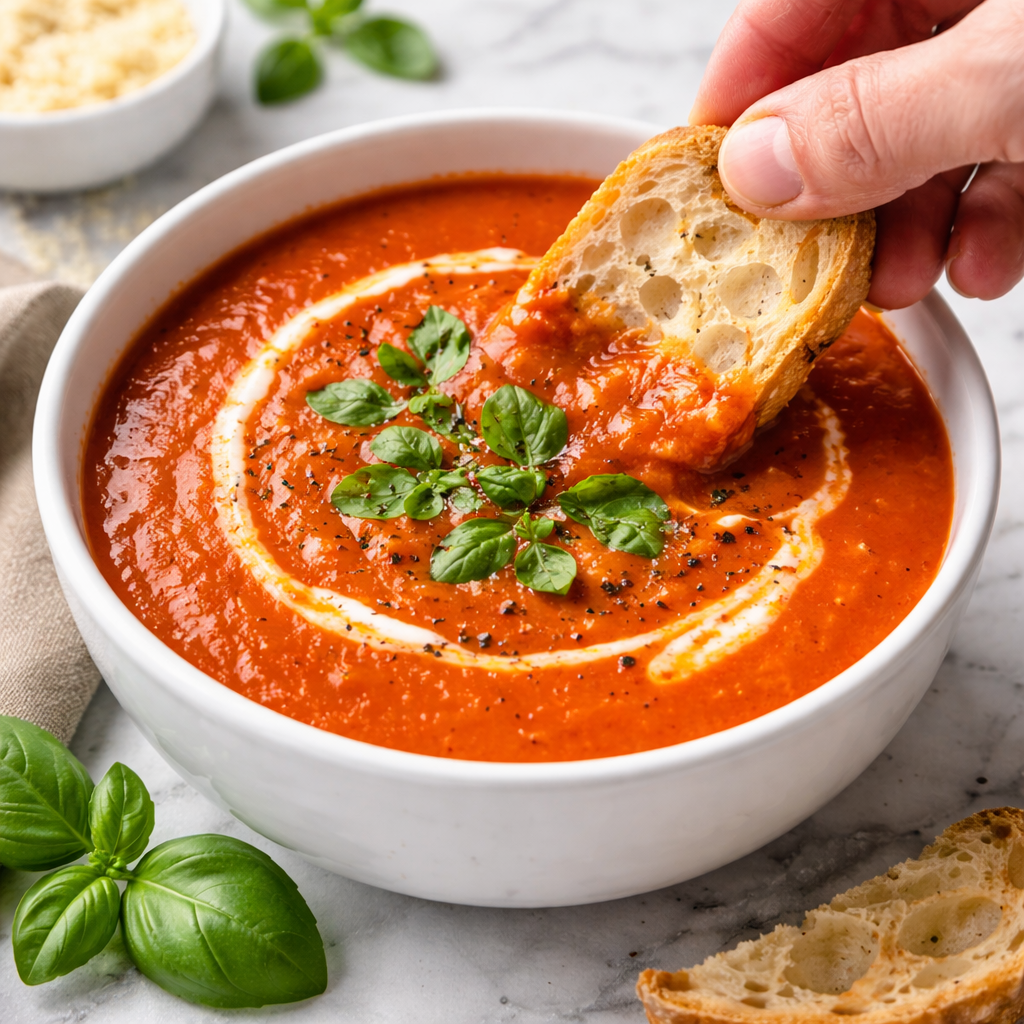
- The Classic Grilled Cheese: Use a combination of sharp cheddar and gruyère on sourdough bread. The nuttiness of the gruyère complements the basil in the soup.
- Parmesan Crisps: If you’re looking for a low-carb option, bake small piles of grated Parmesan until crispy and use them as “croutons.”
- The Herb Oil Drizzle: Whisk together some olive oil and finely chopped basil, then drizzle a “swirl” over the top of each bowl for a gourmet look.
- Puff Pastry Spoons: Cut puff pastry into spoon shapes and bake until golden for a whimsical dipping tool.
Homemade Cabbage Roll Soup Recipe
FAQ: Solving Your Tomato Soup Frustrations
Q: My soup is too thin! How can I thicken it without flour? A: The best way to thicken a homemade tomato soup is to simmer it uncovered for an extra 10 minutes before adding the cream. This evaporates the water and concentrates the solids. Alternatively, blend in a small piece of stale sourdough bread; the starches will integrate seamlessly.
Q: Can I make this creamy tomato soup recipe vegan? A: Absolutely. Replace the butter with more olive oil and swap the heavy cream for full-fat canned coconut milk or a cashew-based cream. The coconut milk adds a subtle sweetness that works beautifully with the tomatoes.
Q: Why does my soup taste like a tin can? A: This happens when the tomato paste isn’t “toasted” long enough or if you’re using low-quality canned tomatoes. A pinch of baking soda can help neutralize the metallic acidity, but the best fix is the 3-minute tomato paste sauté (Step 2).
Q: Can I freeze this soup? A: We recommend freezing the soup before adding the heavy cream. Dairy can sometimes grain up when thawed. Freeze the tomato base for up to 3 months, then add the fresh cream and basil when you reheat it.
Q: Is this soup gluten-free? A: As written, this creamy tomato soup recipe is naturally gluten-free. Just ensure your broth/stock doesn’t contain hidden gluten thickeners.