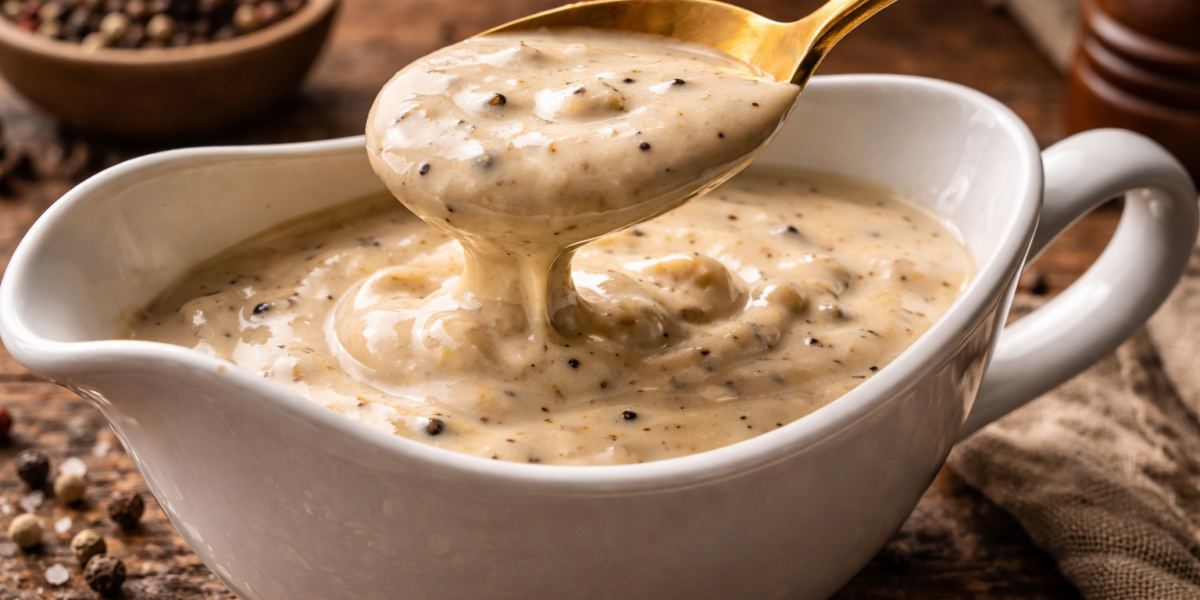
Peppercorn Sauce Recipe The most pervasive frustration when preparing a peppercorn sauce recipe at home is the “curdle and split” phenomenon. We have all been there: you have invested in a high-quality cut of beef, seared it to perfection, and begun your sauce, only for the cream to separate into an unappealing oily mess or for the peppercorns to remain so hard they threaten your dental work. Most home-cooked versions lack that glossy, velvet-like “clinging” quality found in high-end French bistros, resulting in a sauce that is either too watery or overwhelmingly acrid.
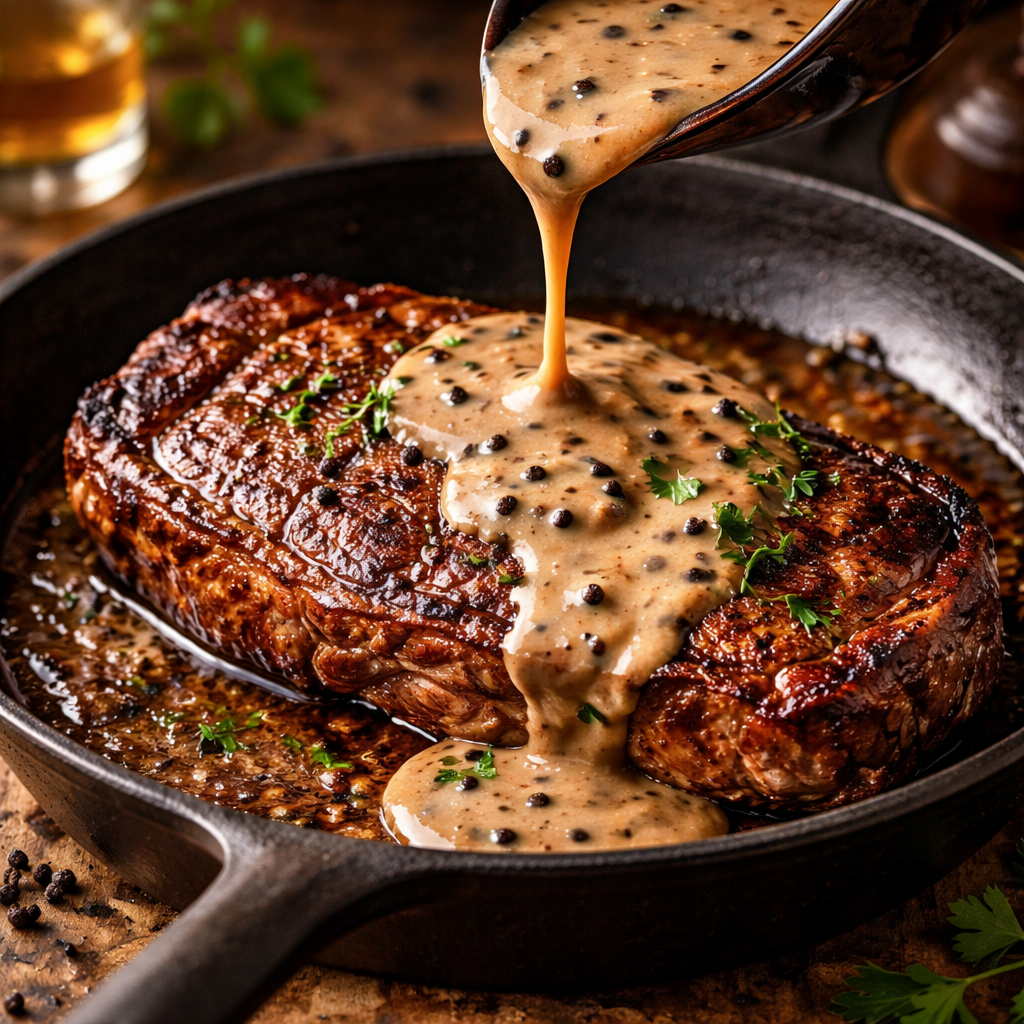
Achieving a restaurant-quality steak peppercorn sauce—traditionally known as Sauce au Poivre—requires a fundamental understanding of emulsification and deglazing. This guide deconstructs the science of the best peppercorn sauce recipe, focusing on the “fond” extraction method and the temperature-controlled reduction of heavy cream. By mastering these professional techniques, you can transform a simple pan-fry into a sophisticated, soul-warming feast.
Why This Recipe Works
This creamy peppercorn sauce recipe succeeds by utilizing a multi-layered approach to flavor and texture.
- Deglazing the Fond: We don’t make this sauce in a clean pan. By utilizing the “fond”—the browned proteins left behind after searing meat—we build a savory foundation that no store-bought stock can replicate.
- The “Crushed, Not Ground” Philosophy: Whole peppercorns provide a different chemical experience than pre-ground pepper. By coarsely crushing them, we release volatile oils that provide a “warm” heat rather than a “sharp” sting.
- Cognac/Brandy Reduction: The alcohol in brandy acts as a solvent, pulling out flavor compounds from the peppercorns and meat drippings that water or broth alone cannot reach.
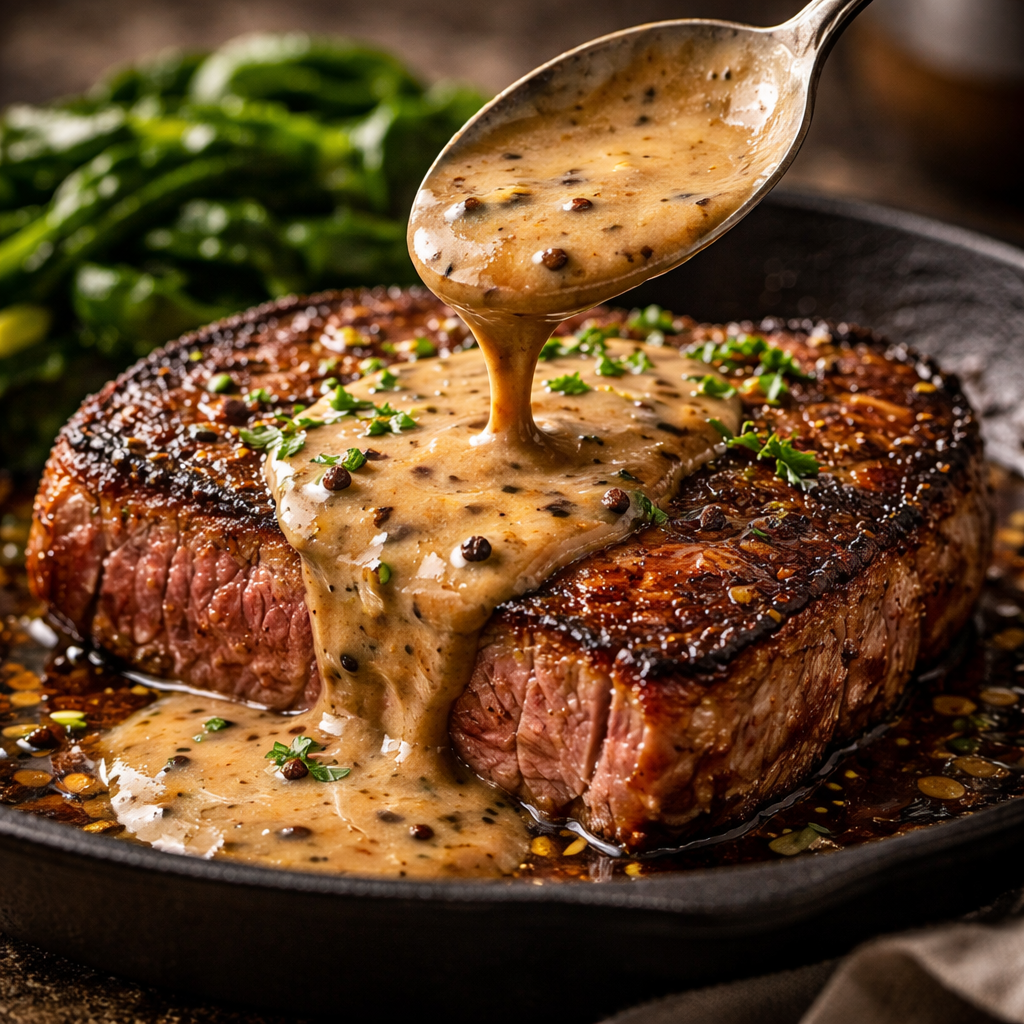
- Gelatinous Body: By using a combination of high-quality beef stock and heavy cream, we create a natural thickener. As the stock reduces, its collagen turns into gelatin, providing that iconic “nappe” consistency (the ability to coat the back of a spoon).
Ingredients & Measurements
For a professional-grade peppercorn sauce, the choice of spice and liquid is the difference between mediocre and masterpiece.
The Spice Core
- 2 tbsp Whole Black Peppercorns: For an authentic bite. You can also use a “Four-Peppercorn Blend” (black, white, green, and pink) for a more complex, floral aroma.
- 1/2 tsp Sea Salt: To be added at the end, as the reduction concentrates saltiness.
The Aromatic Base
- 1 tbsp Unsalted Butter & 1 tsp Neutral Oil: The oil prevents the butter from burning during the initial sauté.
- 1 Small Shallot: Finely minced. Shallots provide a delicate sweetness that garlic or onions cannot match.
- 1 Clove Garlic: Minced (optional, for an extra savory kick).
The Liquids
- 1/4 cup Cognac or Brandy: This is the soul of the sauce. For a non-alcoholic version, use extra beef stock with a teaspoon of Worcestershire sauce.
- 3/4 cup High-Quality Beef Stock: Preferably a “demi-glace” or a bone broth with high gelatin content.
- 1/2 cup Heavy Cream: Use full-fat cream (at least 36% milkfat) to ensure a stable emulsion.
Step-by-Step Cooking Guide
1. The Peppercorn Preparation
Place the whole peppercorns in a heavy-duty plastic bag and crush them with the bottom of a heavy skillet or a rolling pin. You want varied sizes—some fine dust and some larger, cracked pieces. This ensures a multi-dimensional heat profile in your peppercorn sauce.
2. The Sauté and Extraction
After searing your steak, remove the meat from the pan to rest. Pour off the excess rendered fat but do not wipe the pan. Add the butter and shallots. Sauté over medium heat for 2–3 minutes, using a wooden spoon to scrape up the browned bits (the fond).
3. The Flambé or Deglaze
Remove the pan from the heat source (especially if using gas). Pour in the brandy. If you are comfortable, you can flambé the alcohol with a long lighter to burn off the “harshness” quickly. Otherwise, return to the heat and simmer until the liquid has reduced by half and no longer smells strongly of raw alcohol.
4. The Stock Reduction
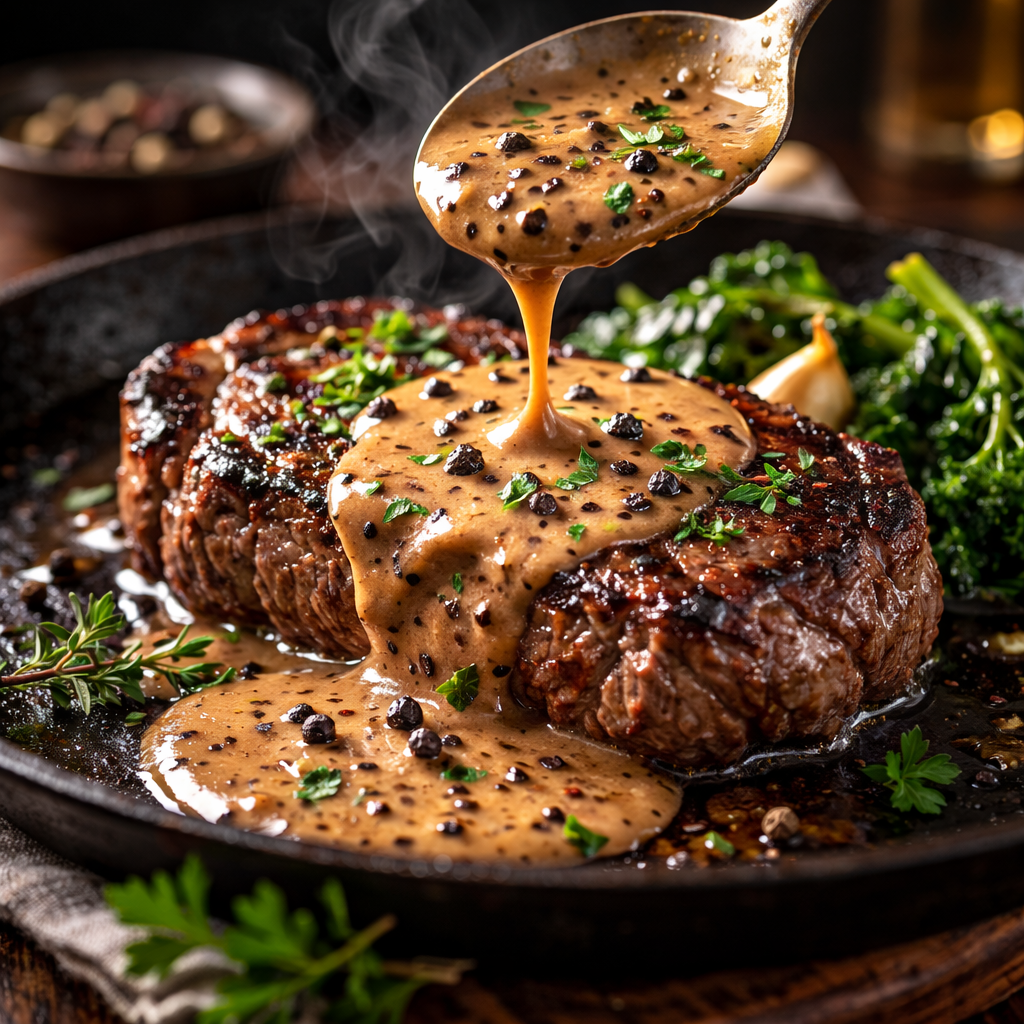
Add the crushed peppercorns and the beef stock. Increase the heat to medium-high and let the mixture boil down. This is the most critical stage of the peppercorn sauce recipe. You want the liquid to reduce until it is thick enough to lightly coat the bottom of the pan—about 5–7 minutes.
5. The Cream Integration
Lower the heat to medium-low. Whisk in the heavy cream. Simmer gently. You will see the sauce transition from a dark brown to a beautiful, silky café-au-lait color. Continue to simmer until the sauce reaches your desired thickness.
6. The Final Seasoning
Taste the sauce before adding salt. Because the stock and the fond have reduced, they may already be quite salty. Stir in any juices that have collected on the plate from your resting steak for an extra boost of flavor.
Common Mistakes to Avoid
- Using Pre-Ground Black Pepper: This will result in a sauce that is gritty, unpleasantly spicy, and lacks the aromatic depth of fresh, cracked peppercorns.
- Boiling the Cream: Once the cream is added, avoid a rolling boil. High heat can cause the dairy proteins to separate from the fat, leading to a “broken” sauce.
- Skipping the Shallots: While they seem small, shallots provide the essential sweetness needed to balance the aggressive heat of the pepper and the acidity of the brandy.
- Not Reducing the Stock Enough: If your sauce is watery, you likely didn’t allow the beef stock to concentrate. Be patient during Step 4.
Timing & Doneness Indicators
Serving Suggestions
A homemade peppercorn sauce is the ultimate partner for protein, but its utility extends further:
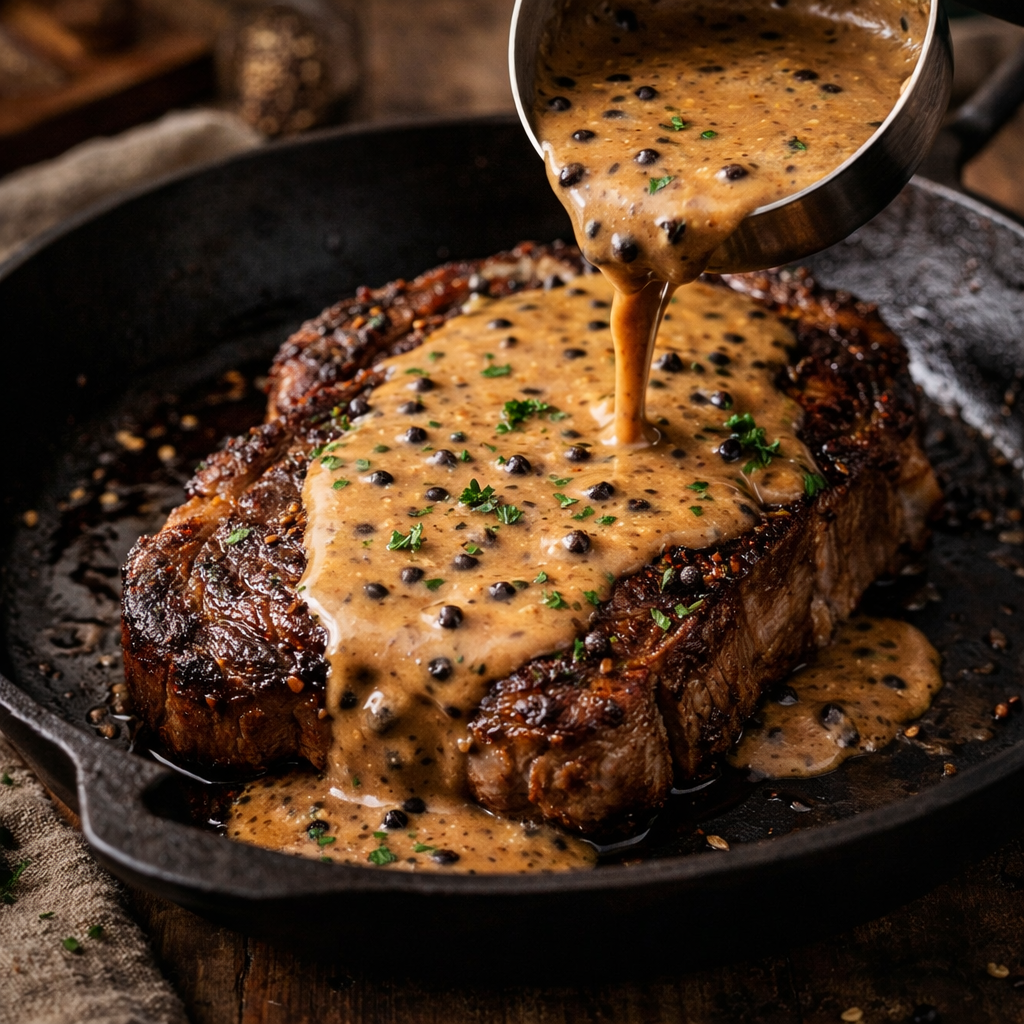
- The Classic Steak: Perfect for Filet Mignon, Ribeye, or New York Strip. Pour the sauce over the meat or serve in a warmed ramekin on the side.
- The Chicken Upgrade: This sauce transforms a simple pan-seared chicken breast into a gourmet meal.
- The “Frites” Experience: Serve with crispy, salted French fries. The combination of the hot, salty potato and the creamy, spicy sauce is a bistro staple.
- Roasted Root Vegetables: Drizzle over roasted carrots or parsnips to add a savory, sophisticated edge to your side dishes.
FAQ: Solving Your Sauce Frustrations
Q: My peppercorn sauce is too thin! How can I thicken it quickly? A: Continue to simmer it on low heat to allow more moisture to evaporate. If you are in a rush, whisk in a “beurre manié” (equal parts softened butter and flour mashed together). This will thicken the sauce instantly without creating lumps.
Q: I don’t have brandy or cognac. What else can I use? A: Bourbon or dark rum provide a similar sweetness. If you want to avoid alcohol entirely, use a mixture of beef stock and a splash of balsamic vinegar or lemon juice to provide that necessary acidic “brightening” effect.
Q: The peppercorns are still too hard and crunchy. What went wrong? A: If you prefer softer peppercorns, you can use green peppercorns in brine. They are much softer and provide a milder, more “herbal” heat. If using dried black peppercorns, ensure you crush them finely or allow them to simmer in the stock for at least 6–8 minutes to rehydrate.
Q: My sauce is too salty. Can I save it? A: Add a little more heavy cream or a teaspoon of unsalted butter. The fat will coat the palate and dampen the perception of salt. Avoid adding more salt until the very last second of the cooking process.
Q: Can I make this peppercorn sauce recipe ahead of time? A: Yes, though it is best fresh. Store in the fridge for up to 3 days. When reheating, do so over very low heat and add a splash of milk or water to loosen the consistency, as the gelatin in the stock will cause the sauce to “set” like jelly when cold.