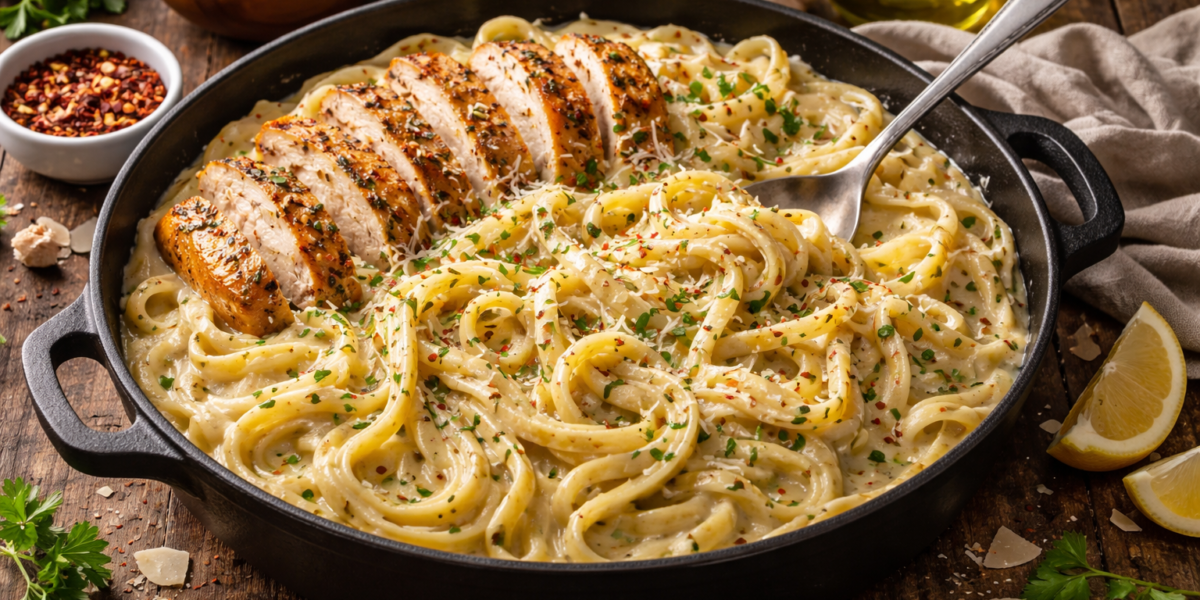
The most persistent frustration when preparing a chicken fettuccine Alfredo recipe at home is the “broken sauce” catastrophe. We have all experienced it: you spend time searing the perfect chicken and boiling the pasta, only to have your creamy sauce separate into a grainy, oily mess or clump into a thick, unappealing paste. Most home-cooked versions struggle because they rely on high-heat boiling or pre-shredded cheeses that contain anti-clumping starches, both of which are the enemies of a smooth emulsion.
Achieving a restaurant-quality homemade Alfredo sauce requires a departure from the “dump-and-stir” method. To get that iconic, velvet-like coating that clings to every strand of pasta, you must master the science of temperature control and starch integration. This guide deconstructs the best chicken fettuccine Alfredo recipe, focusing on the “emulsion bridge” technique to ensure your sauce remains silky from the first bite to the last.
Why This Recipe Works
This easy chicken fettuccine Alfredo recipe succeeds by utilizing professional Italian-American techniques that prioritize stability and flavor depth.
- Starch-Stabilized Emulsion: We don’t just drain the pasta; we utilize the “liquid gold” (starchy pasta water). The starch acts as a natural emulsifier, binding the heavy fats from the butter and cream to the carbohydrates of the pasta.
- The “Zero-Boil” Dairy Method: High heat denatures dairy proteins, causing separation. Our method involves melting the cheese into a warm, not boiling, cream base, ensuring the sauce stays cohesive and glossy.
- Pan-Seared Fond Extraction: By searing the chicken in the same pan used for the sauce, we capture the “fond”—the caramelized protein bits. This provides a savory “umami” backbone that balances the richness of the dairy.
- Friction Finishing: The final step involves tossing the pasta vigorously in the sauce away from direct heat. This mechanical action develops the sauce’s structure without risking a thermal break.
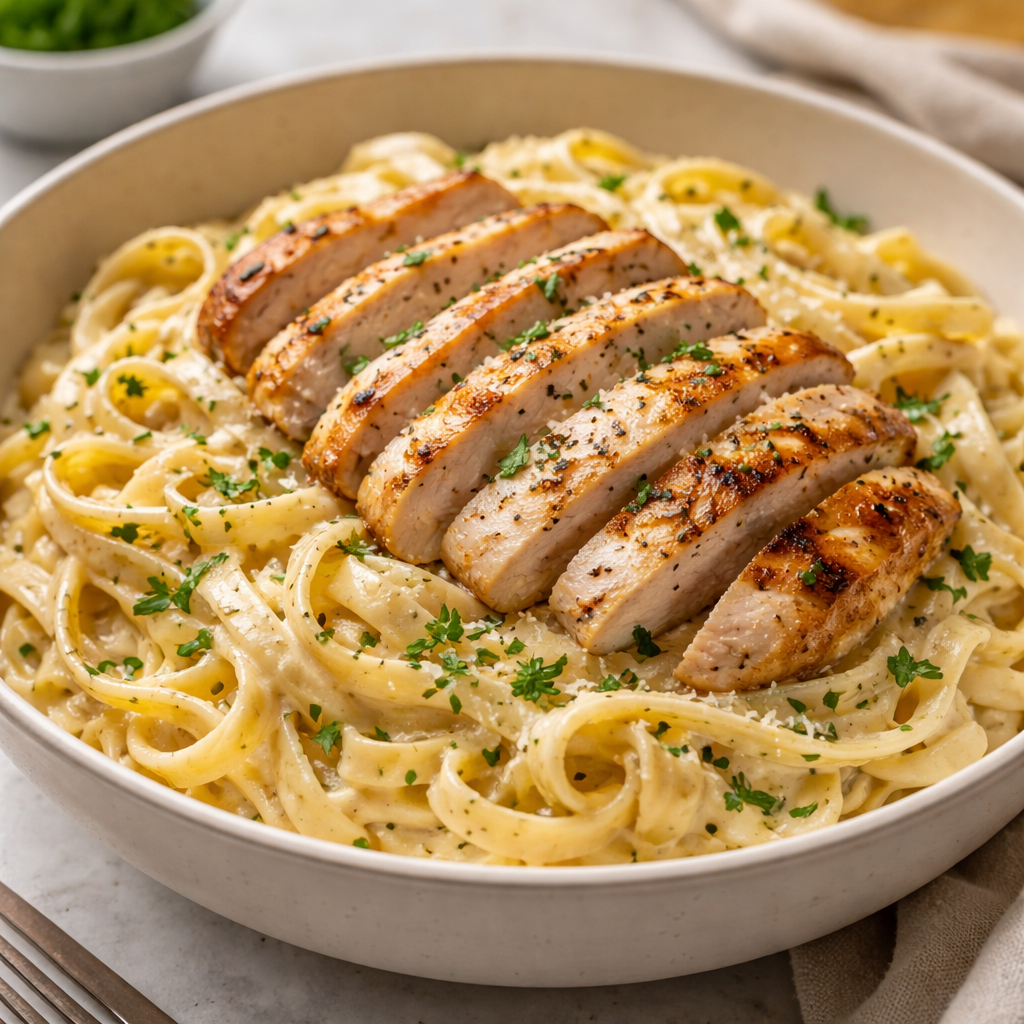
Ingredients & Measurement
For a professional-grade chicken Alfredo, the quality of the Parmesan and the fat content of the cream are your two most critical variables.
The Foundation
- 1 lb Fettuccine Pasta: Look for a high-quality bronze-cut pasta; the rough surface helps the sauce “grip” the noodle.
- 1.5 lbs Boneless Skinless Chicken Breasts: Sliced into 1-inch thick strips for even searing.
- 1/2 cup Reserved Pasta Water: Essential for the final emulsion.
The Sauce Components
- 1 cup Heavy Cream: Do not substitute with half-and-half or milk. You need the 36% milkfat to prevent curdling.
- 1/2 cup Unsalted Butter: Use high-quality European-style butter if possible for a richer flavor.
- 1.5 cups Freshly Grated Parmesan Cheese: You must grate this yourself from a wedge. Pre-shredded cheese is coated in cellulose, which will make your sauce grainy.
- 3 Cloves Garlic: Finely minced.
Seasoning and Aromatics
- 1 tbsp Avocado Oil: For searing the chicken at high heat.
- 1 tsp Kosher Salt & 1/2 tsp White Pepper: White pepper provides heat without the black specks, keeping the sauce pristine.
- Fresh Parsley: Finely chopped for garnish.
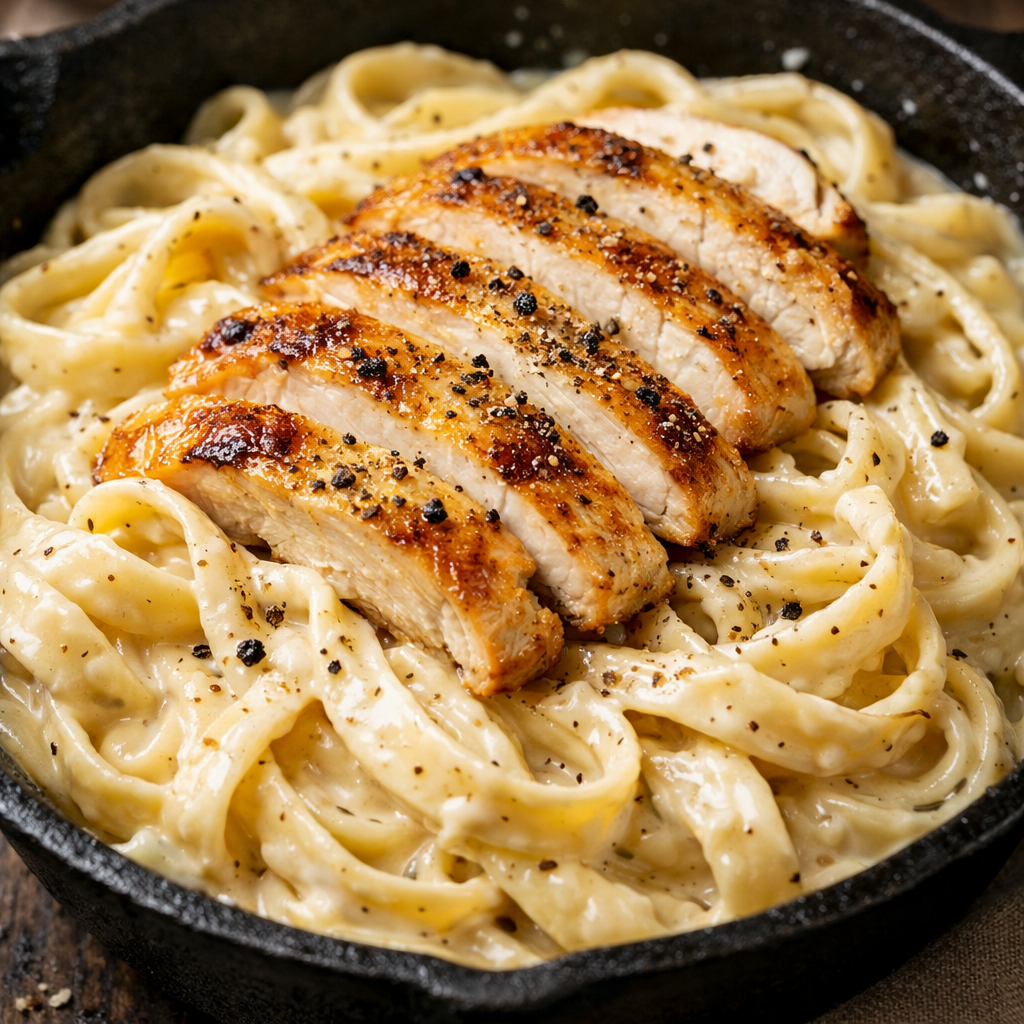
Step-by-Step Cooking Guide
1. The Chicken Sear (The Flavor Base)
Season your chicken strips heavily with salt and pepper. Heat the avocado oil in a large, heavy-bottomed skillet over medium-high heat. Sear the chicken for 5–6 minutes per side until golden brown and cooked through (internal temp of 165°F). Remove the chicken to a plate and tent with foil. Do not wash the pan.
2. The Pasta “Al Dente” Precision
Bring a large pot of heavily salted water to a boil. Add the fettuccine and cook for 1–2 minutes less than the package instructions. The pasta should be flexible but have a firm, white “core” when bitten. Before draining, scoop out 1 cup of the starchy water.
3. Building the Garlic Butter Foundation
Lower the skillet heat to medium-low. Add the butter to the chicken drippings. Once melted, add the minced garlic and sauté for only 45–60 seconds. You want the garlic to smell fragrant and “sweet,” not brown or toasted.
4. The Cream Reduction
Pour the heavy cream into the skillet. Use a wooden spoon to scrape the bottom of the pan, loosening the savory chicken bits (the fond). Increase the heat slightly until the cream reaches a gentle simmer—never a rolling boil. Let it reduce for 3–4 minutes until it slightly thickens.
5. The Parmesan Melt
Turn the heat to the lowest setting. Gradually whisk in the freshly grated Parmesan cheese, one handful at a time. Whisk constantly in a circular motion. The sauce will transition from a liquid to a thick, pale-gold velvet.
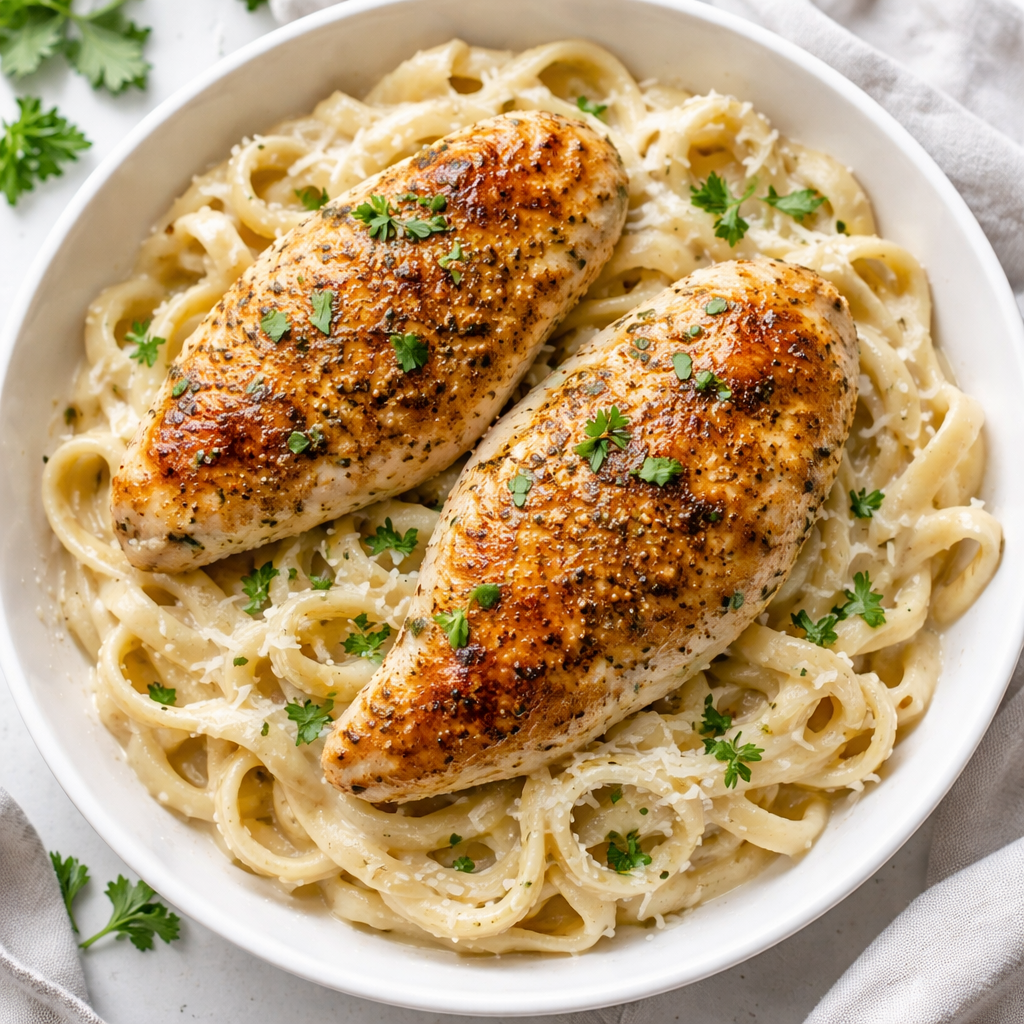
6. The Marriage of Pasta and Sauce
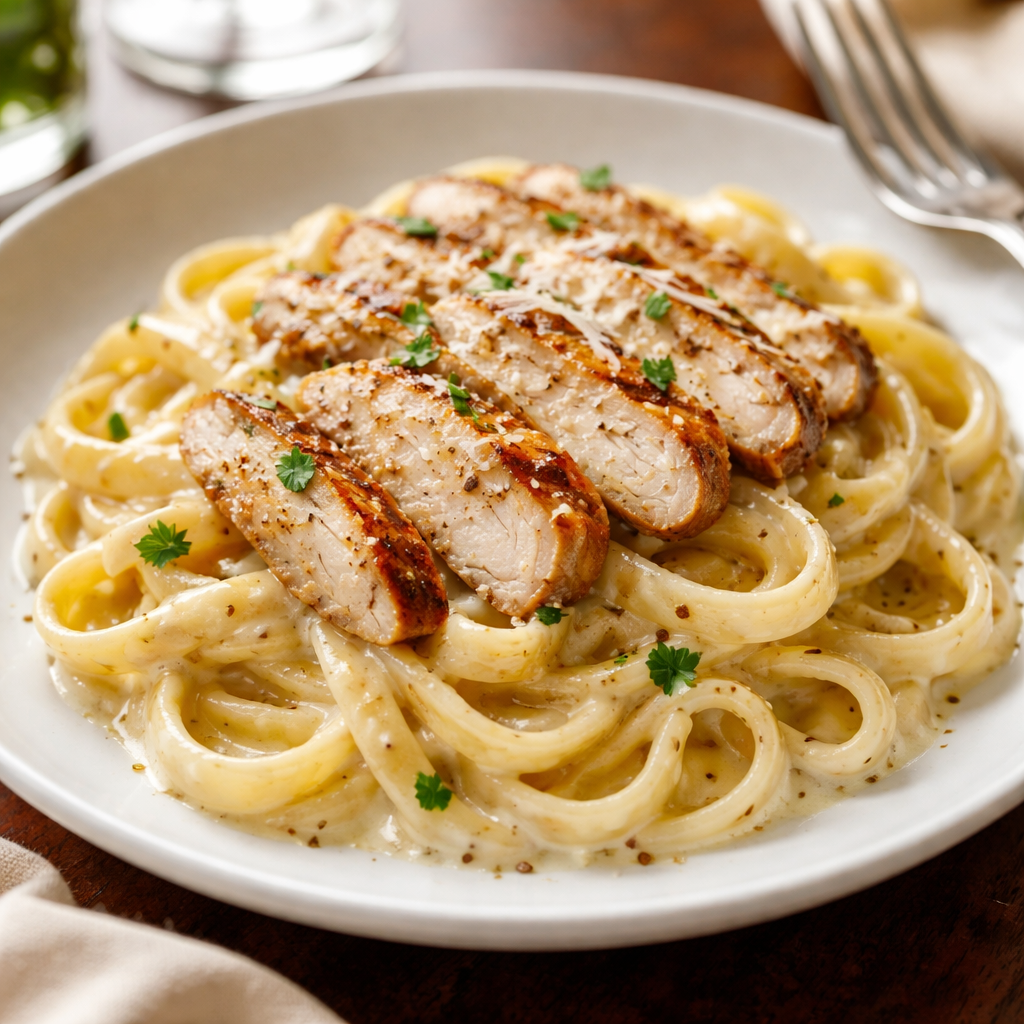
Add the drained fettuccine and the seared chicken back into the skillet. Pour in 1/4 cup of the reserved pasta water. Using tongs, toss the pasta vigorously for 60 seconds. The friction and the starch in the water will cause the sauce to “tighten” and lacquered onto the noodles. If the sauce is too thick, add more pasta water a tablespoon at a time.
Common Mistakes to Avoid
- Using Pre-Grated Cheese: This is the #1 cause of grainy Alfredo sauce. The cornstarch/cellulose in bagged cheese will not melt; it will merely clump.
- Boiling the Sauce After Adding Cheese: Once the Parmesan is in, high heat will cause the proteins to seize and the oil to separate. Keep the heat at a “whisper.”
- Rinsing the Pasta: Rinsing removes the starch needed to bind the sauce. Go directly from the pot to the skillet.
- Adding Too Much Garlic: While garlic is delicious, an overabundance can overpower the delicate, nutty notes of the Parmesan and butter.
Timing & Doneness Indicators
Serving Suggestions
A creamy chicken fettuccine Alfredo recipe is a rich, indulgent meal that pairs best with elements that provide a “crunch” or a “zing”:
- The Acidic Balance: Serve with a side of steamed broccoli or a crisp Caesar salad. The lemon in the Caesar dressing cuts through the dairy richness.
- The Bread Factor: Garlic crostini or a warm baguette is essential for mopping up any extra sauce.
- The Herb Garnish: A heavy sprinkle of fresh flat-leaf parsley and a few red pepper flakes adds a final layer of brightness.
- The Wine Pairing: A crisp, high-acidity white wine like Pinot Grigio or an un-oaked Chardonnay is the classic sommelier choice.
FAQ: Solving Your Alfredo Frustrations
Q: Why did my Alfredo sauce turn into a ball of cheese? A: This happens if the pan is too hot or the cheese was added too quickly. To fix this, remove the pan from the heat and whisk in a few tablespoons of boiling pasta water. The heat and starch will help the cheese redistribute into the cream.
Q: Can I make this chicken fettuccine Alfredo recipe healthy? A: You can use whole-wheat fettuccine and increase the broccoli-to-pasta ratio. However, avoid using “light” cream or milk; the sauce will not emulsify and will end up watery. It is better to eat a smaller portion of the real version than a large portion of a “broken” one.
Q: My sauce is too thin! How can I thicken it without flour? A: Never use flour or a roux in an Alfredo sauce; it changes the flavor profile into a Béchamel. The best way to thicken it is to add more freshly grated Parmesan and toss the pasta longer. The starch from the pasta is your natural thickener.
Q: Can I use chicken thighs instead of breasts? A: Absolutely. Chicken thighs are more forgiving and stay juicier. Sear them for 6–7 minutes per side until they reach an internal temperature of 175°F.