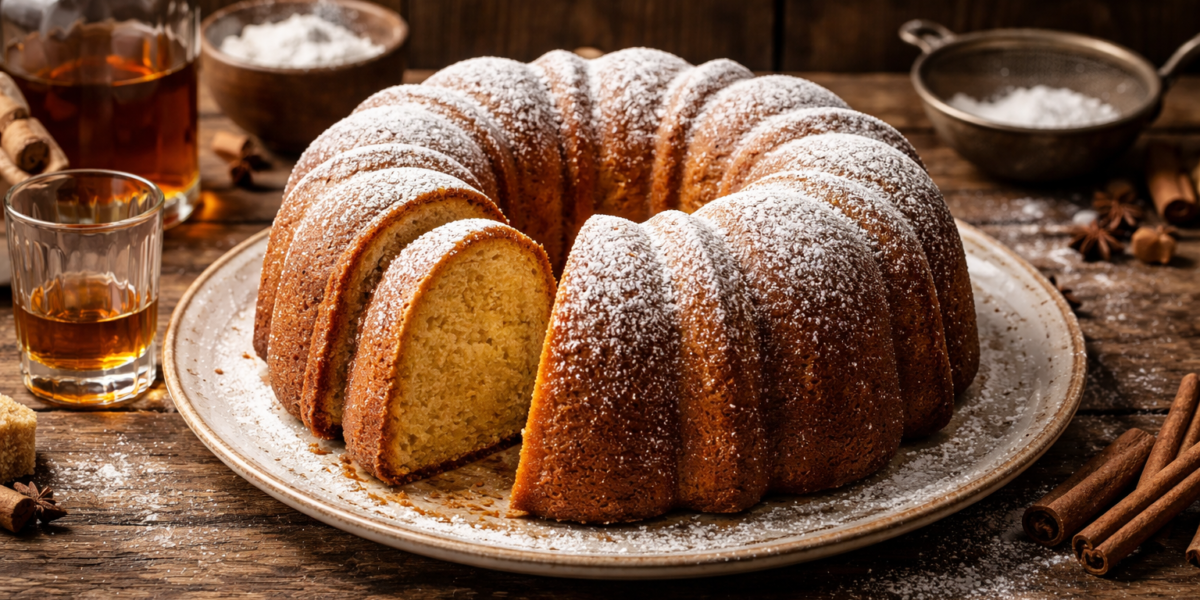
Whiskey Cake Recipe The beauty of a whiskey cake lies in the tension between its rustic, heavy-crumbed roots and the refined, boozy elegance of its finish. This isn’t just a sponge soaked in spirits; it’s a deep, contemplative dessert that relies on the chemical interplay of sugar, fat, and oak-aged alcohol.
Whether you are looking for a showstopper for a dinner party or a reliable “keeping cake” that improves with age, mastering this recipe requires an understanding of moisture management and flavor extraction.
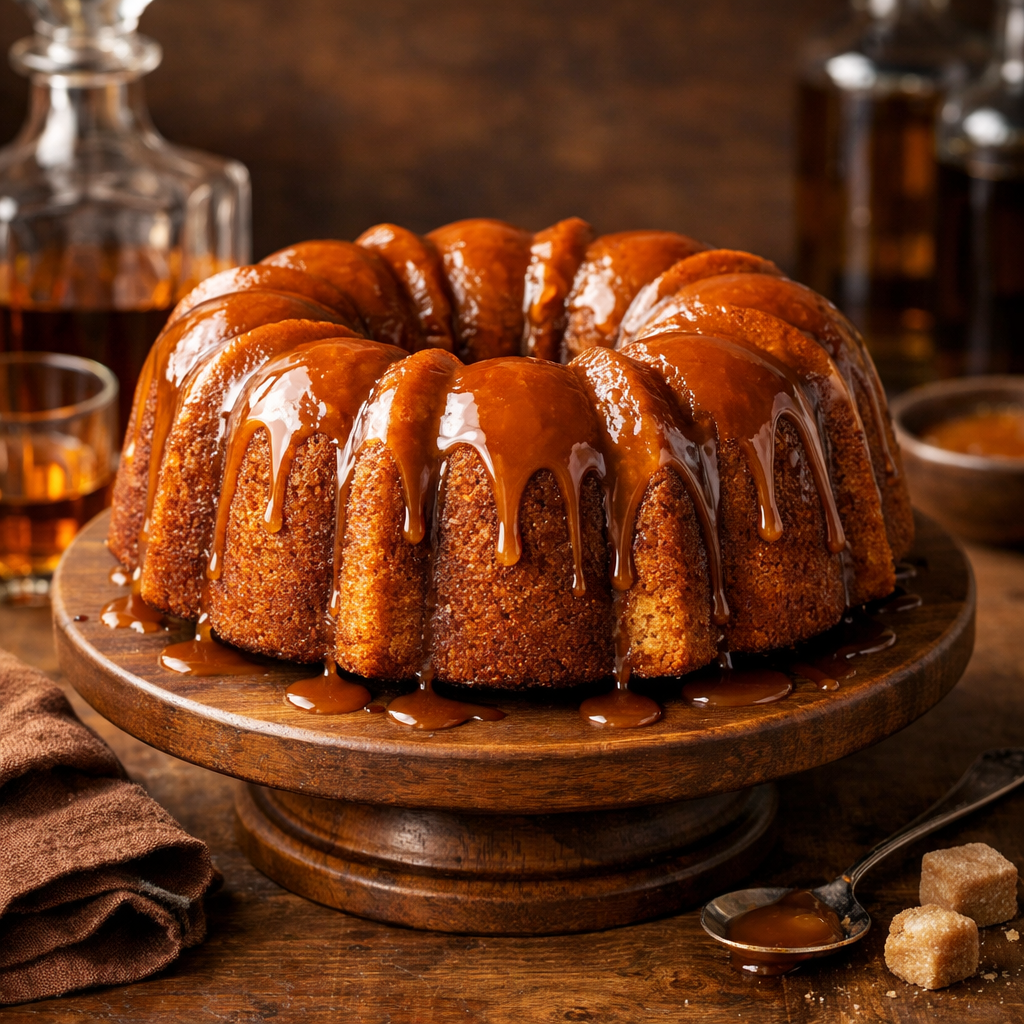
The Ingredient Breakdown: Why They Matter
A great whiskey cake is a sum of its parts, but those parts must be chosen with intention.
- The Whiskey: This is the soul of the dish. I recommend a high-quality Bourbon for its vanilla and caramel notes, or a Rye if you want a spicy, peppery bite to cut through the sugar. Avoid “cooking whiskey”; if you wouldn’t sip it, don’t bake with it.
- The Fat (Unsalted Butter): We use butter not just for flavor, but for its ability to carry the alcohol’s aromatics. Using unsalted allows you to control the seasoning precisely—a crucial factor when working with the naturally salty undertones of certain grains.
- The Acid (Buttermilk or Sour Cream): High-proof alcohol can sometimes toughen the gluten in flour. Adding an acidic dairy element tenderizes the crumb and provides a necessary tang to balance the richness.
- The Sugar (Dark Brown and Granulated): The molasses in dark brown sugar provides a moisture-retaining quality (hygroscopy) that keeps the cake dense and fudgy, while granulated sugar helps with the structural “lift” during the creaming process.
- The Leavening: We use a combination of baking soda and baking powder. The soda reacts immediately with the acidic dairy, providing initial lift, while the powder ensures the cake doesn’t collapse under the weight of the whiskey-soaked crumb.
Preparation Strategy: Setting the Stage
The biggest mistake most home cooks make is rushing the temperature. For this cake to emulsify properly, your butter, eggs, and buttermilk must be at room temperature. If the butter is too cold, it won’t trap the air bubbles needed for a velvety texture. If the eggs are cold, they will seize the butter, resulting in a broken batter that leaks oil in the oven.
Pro Tip: Give yourself a 2-hour lead time to let ingredients sit out. If you’re in a rush, place the eggs in a bowl of warm water for five minutes and microwave the butter in 5-second bursts until it yields to gentle pressure but isn’t melting.
The Recipe: Step-by-Step Instructions
Phase 1: The Cake Base
- Prep the Vessel: Preheat your oven to 325°F (165°C). Liberally grease a 10-cup Bundt pan or a 9-inch springform pan with butter and a dusting of flour or cocoa powder. Tap out the excess.
- Cream the Fats and Sugars: In a stand mixer, beat 1 cup of unsalted butter with 1 cup of granulated sugar and 1 cup of packed dark brown sugar. Do this for at least 4–5 minutes until the mixture looks pale and fluffy.
- The Egg Incorporation: Add 4 large eggs, one at a time. Do not rush this. Wait until each egg is fully integrated before adding the next. This builds the protein structure.
- The Dry and Wet Fold: In a separate bowl, whisk 3 cups of all-purpose flour, 1 teaspoon of kosher salt, and 1 teaspoon each of baking powder and soda. Alternately add the dry ingredients and 1 cup of buttermilk to the butter mixture, starting and ending with the flour.
- The Whiskey Introduction: Fold in ½ cup of your chosen whiskey and 2 teaspoons of pure vanilla extract. The batter should be thick, fragrant, and glossy.
- The Bake: Pour the batter into the pan and smooth the top. Bake for 55–65 minutes. Use a wooden skewer; it should come out with a few moist crumbs, but no wet batter.
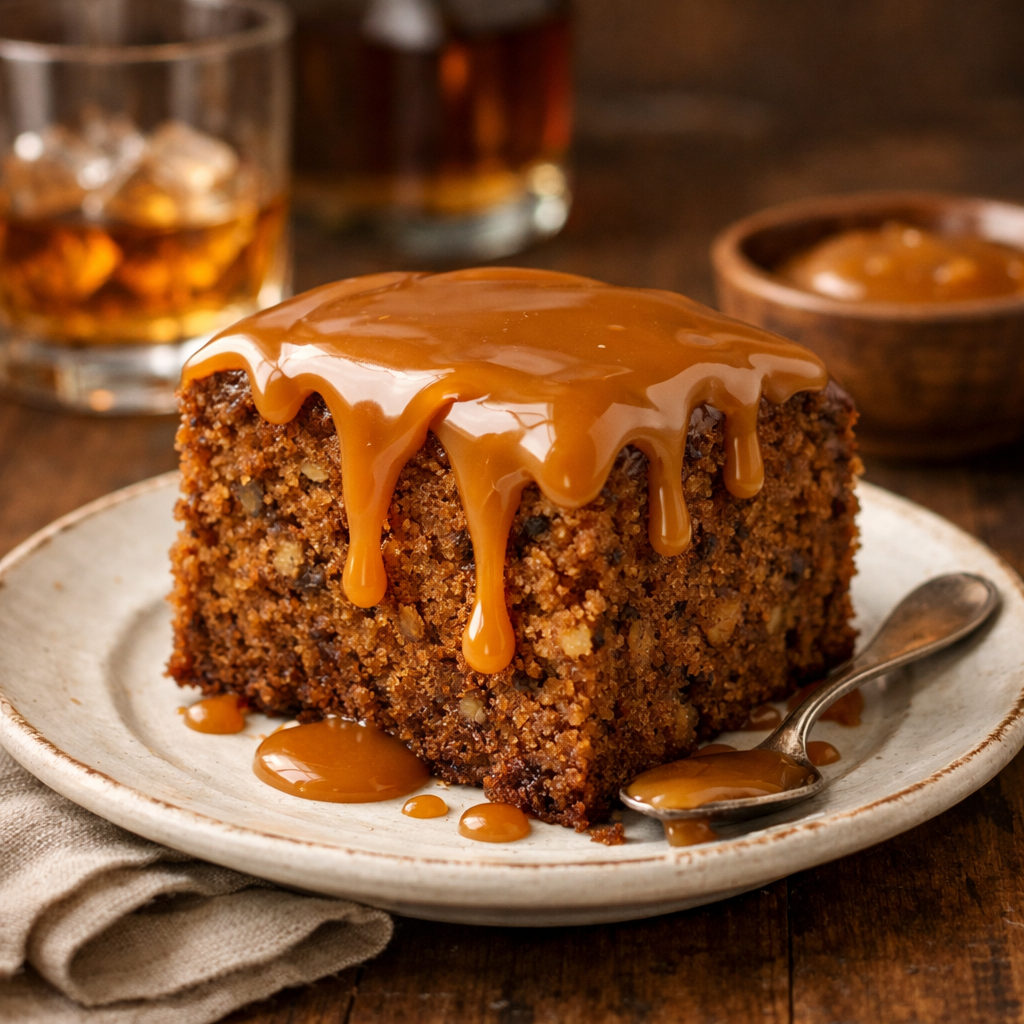
Phase 2: The Whiskey Infusion (The Glaze)
While the cake is in its final 10 minutes of baking, prepare the glaze. This isn’t a topping; it’s a soak.
- In a small saucepan, melt ½ cup butter with 1 cup sugar and ¼ cup water.
- Bring to a simmer for 2 minutes, then remove from heat.
- Stir in ½ cup whiskey. Safety Note: Never add high-proof alcohol to a pot over an open flame; the vapors can ignite.
Flavor & Texture Indicators
When done correctly, the exterior of the cake should have a slight crunch—a caramelized “crust” formed by the sugars reacting with the heat (the Maillard reaction).
The interior should be tight-crumbed and moist, similar to a pound cake but with more “give.” As for the flavor, the whiskey should not burn. Instead, it should taste like toasted oak, maple, and a hint of warmth at the back of the throat. If the cake tastes purely of raw alcohol, it hasn’t been glazed correctly or the whiskey used was too harsh.
Adjustments for Different Skill Levels
- The Novice: Stick to a standard Bundt pan. It’s the most forgiving shape for heat distribution. If you’re worried about the cake sticking, use a “baker’s goop” (equal parts flour, oil, and shortening) to coat the pan.
- The Intermediate: Experiment with “Spirit Pairing.” Add orange zest and a pinch of cloves to the batter to mimic an Old Fashioned cocktail.
- The Advanced: Try a Dual-Temperature Glaze. Apply half the glaze while the cake is hot in the pan to allow deep penetration, then apply the second half after it has cooled and been inverted to create a sticky, professional sheen.
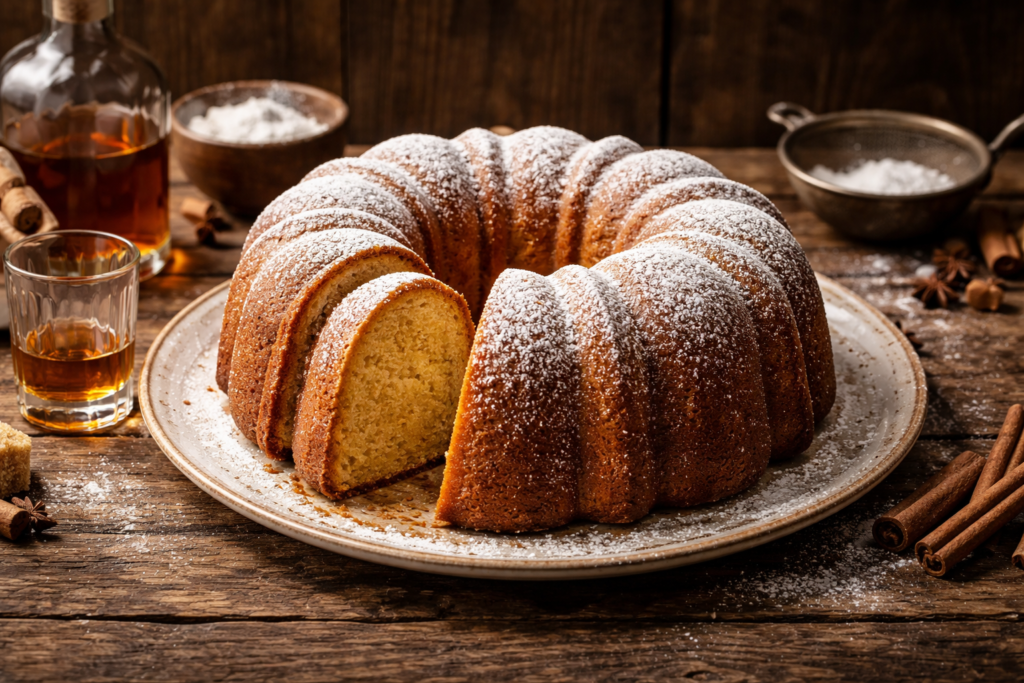
Storage & Shelf Life
Unlike a sponge cake, which dries out by day two, a whiskey cake is a marathon runner.
- Room Temperature: Wrap tightly in plastic wrap. It will stay fresh and actually improve in flavor for up to 4 days. The alcohol acts as a mild preservative and the moisture redistributes.
- Freezing: This cake freezes beautifully. Wrap it in a double layer of plastic followed by foil. It will keep for 3 months. Thaw at room temperature for 6 hours before serving.
Reader Questions
“Can I make this non-alcoholic?” Technically, you can substitute the whiskey with a strong brewed coffee or apple cider, but you lose the specific chemical “lift” and preservation that ethanol provides. It becomes a different cake entirely.
“My cake collapsed in the middle. What happened?” This is usually due to one of two things: over-creaming the butter and sugar (incorporating too much air that the flour couldn’t support) or opening the oven door too early, causing a sudden temperature drop.