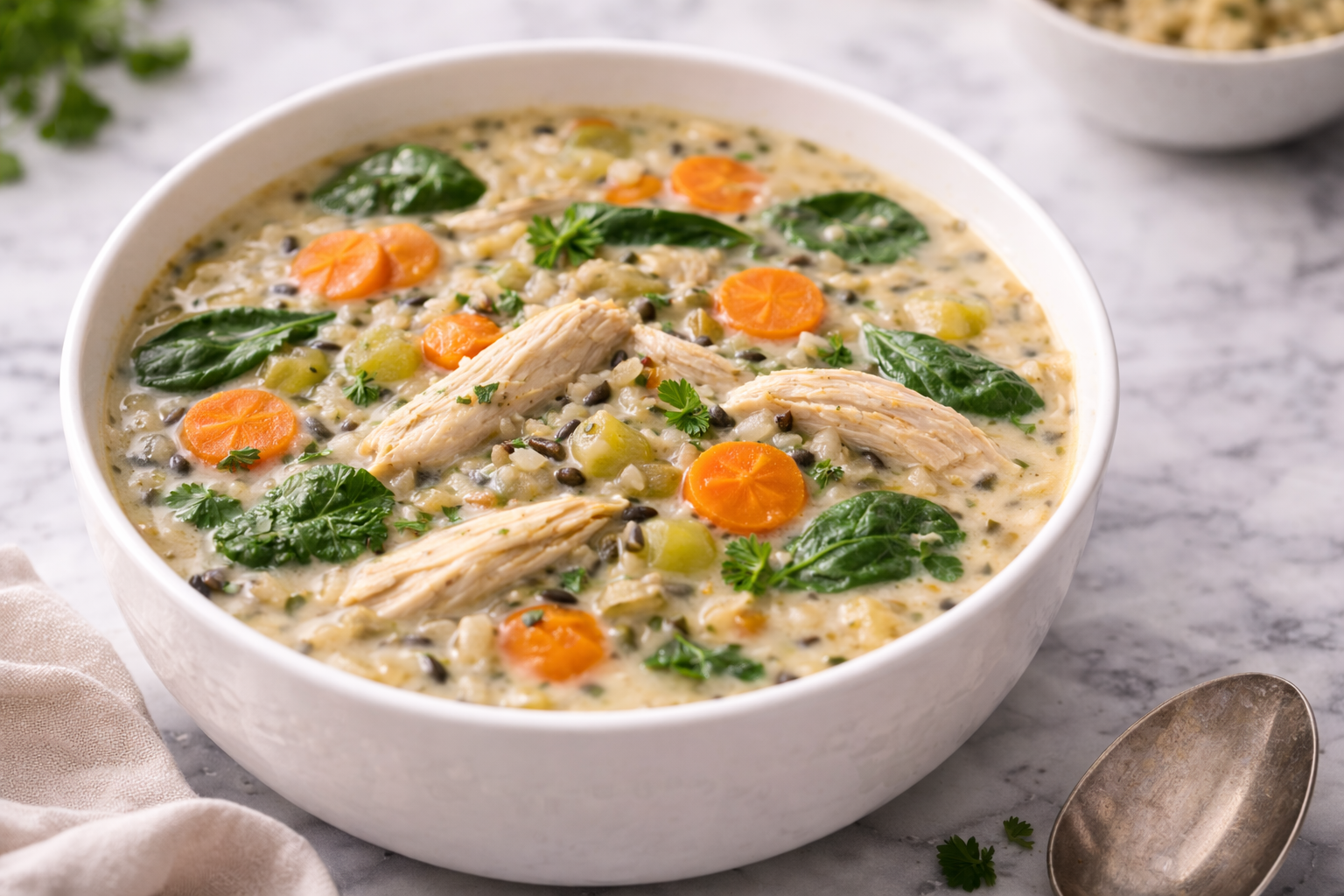
The ultimate frustration with homemade Chicken and Wild Rice Soup recipe isn’t the flavor—it’s the texture. We’ve all been there: you spend an hour hovering over a pot, only to end up with a “soup” that has the consistency of wet concrete because the rice over-absorbed the liquid, or a broth that feels thin and greasy rather than silky and soul-warming.
Most recipes treat wild rice like a standard grain, but it’s actually the seed of a marsh grass. It behaves differently. It’s stubborn, it’s earthy, and if you don’t treat it with respect, it will either stay crunchy or bloat until it ruins your mirepoix. This guide is about mastering that balance—achieving a soup that stays creamy for days without losing its structural integrity.
Why This Recipe Works
Great cooking is usually just a series of small, intentional decisions. Here is why this specific method produces a superior bowl of soup:
- The “Blooming” Technique: By sautéing the wild rice with the aromatics before adding the liquid, we toast the outer hull. This encourages the grains to “bloom” (pop open) evenly, revealing the tender interior without the grain becoming mushy.
- Layered Salting: Instead of dumping salt in at the end, we season the vegetables as they sweat. This draws out moisture and concentrates the natural sugars in the onions and carrots.
- A Controlled Roux: We don’t rely on heavy cream alone for thickness. A light blond roux provides a stable emulsification that won’t “break” or separate when you reheat it the next day.
- Dual-Stage Liquid: We use a combination of high-quality chicken stock and a touch of dry white wine. The acidity in the wine cuts through the richness of the cream, brightening the entire profile.
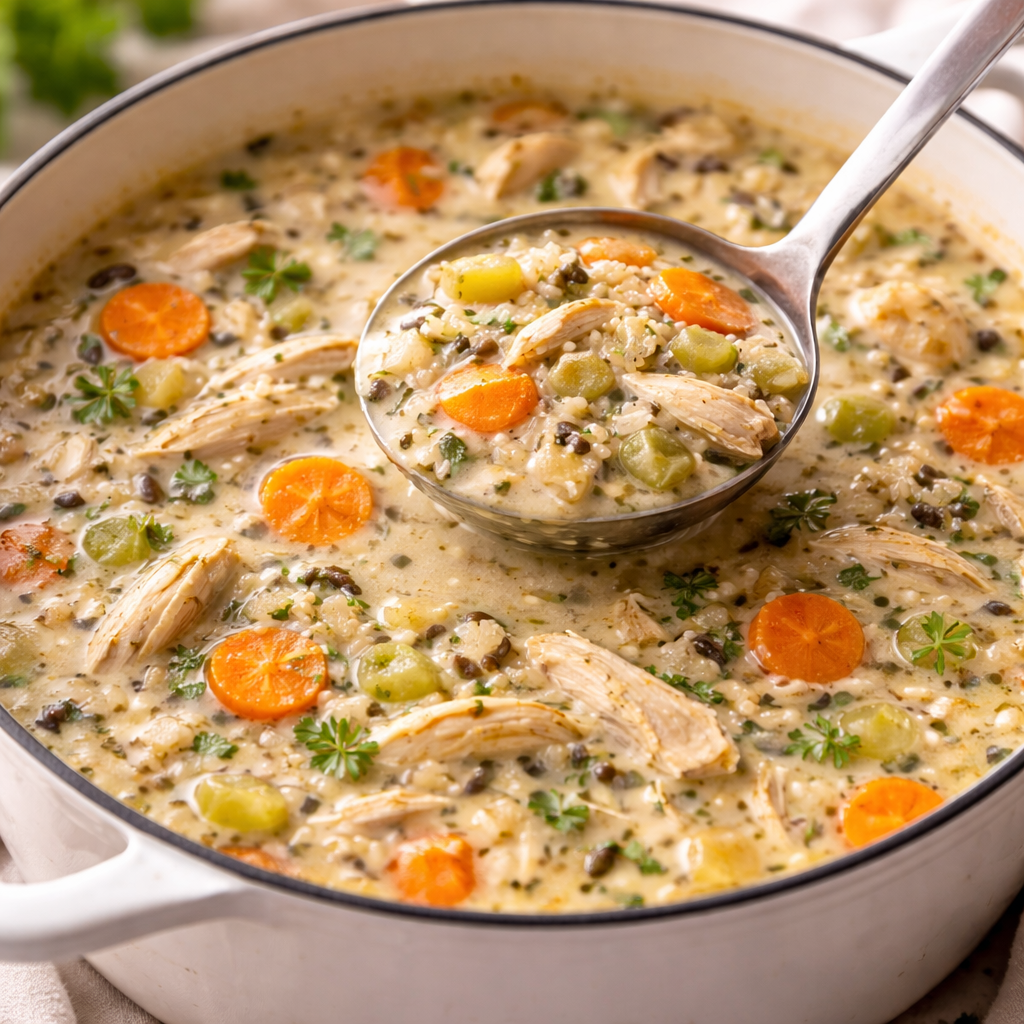
Ingredients & Measurements
Yields: 6 to 8 servings
The Base
- Chicken: 1.5 lbs (700g) boneless, skinless chicken thighs (thighs stay juicy; breasts tend to dry out in a long simmer).
- Wild Rice: 1 cup (160g) 100% true wild rice. Avoid “wild rice blends” if you want the authentic nutty texture.
- Butter: 4 tbsp (56g) unsalted.
- Mirepoix: 2 medium yellow onions (diced), 3 large carrots (peeled and sliced into rounds), 3 stalks celery (thinly sliced).
- Garlic: 4 cloves, minced.
The Aromatics & Liquid
- Chicken Stock: 6 cups (1.4L) low-sodium, high-quality stock.
- White Wine: 1/2 cup (120ml) dry variety like Sauvignon Blanc or Pinot Grigio.
- Herbs: 1 tbsp fresh thyme leaves (or 1 tsp dried), 1 large bay leaf, and 1/2 tsp rubbed sage.
- Flour: 1/4 cup (30g) all-purpose flour (for the roux).
The Finish
- Heavy Cream: 1 cup (240ml).
- Lemon Juice: 1 tsp (freshly squeezed).
- Fresh Parsley: 1/4 cup, chopped.
- Salt & Black Pepper: To taste.
Step-by-Step Cooking Guide
1. The Foundation (Sweating the Aromatics)
In a large Dutch oven or heavy-bottomed pot, melt the butter over medium heat. Once the foaming subsides, add your onions, carrots, and celery.
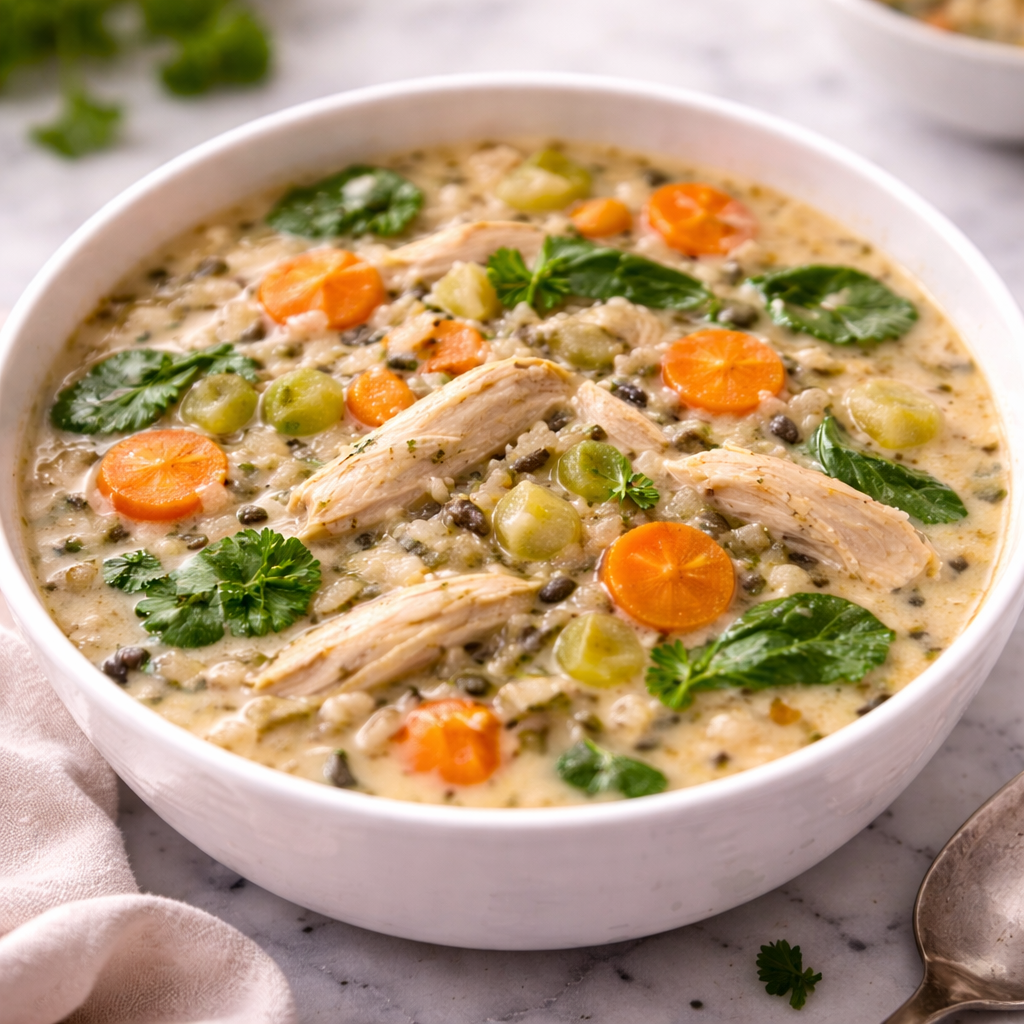
Cooking Science Tip: Add a pinch of salt now. Salt is hygroscopic; it draws water out of the vegetable cells through osmosis. This allows the vegetables to soften and “sweat” in their own juices rather than browning or searing. You want them translucent and fragrant, which usually takes about 8–10 minutes.
2. Toasting the Rice and Flour
Add the wild rice and the minced garlic to the pot. Stir constantly for 2 minutes. You’ll notice the rice smells slightly nutty and the garlic becomes fragrant.
Next, sprinkle the flour over the vegetables and rice. Stir well so the flour coats everything. Cook for another 2 minutes. This “cooks out” the raw flour taste, creating a roux-like coating directly on the ingredients.
3. Deglazing and Simmering
Pour in the white wine. Use a wooden spoon to scrape the bottom of the pot (the fond). Those little brown bits are concentrated flavor. Once the wine has mostly evaporated, slowly whisk in the chicken stock to ensure no flour lumps form.
Add the whole chicken thighs, thyme, bay leaf, and sage. Bring the mixture to a gentle boil, then immediately reduce the heat to low. Cover the pot.
4. The Long Simmer
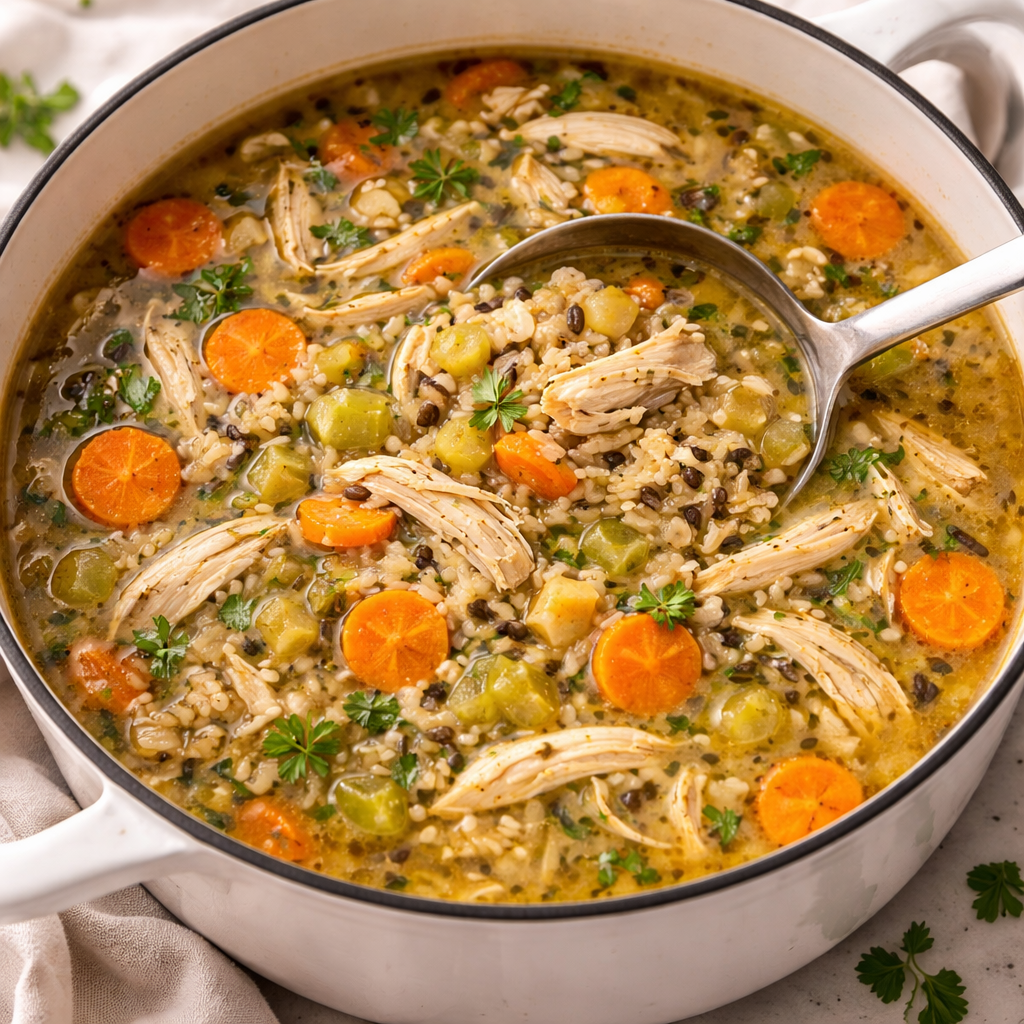
Simmer for 45 to 55 minutes. Wild rice is notoriously slow to cook. You are looking for the grains to “curl” or pop open, showing a white, fluffy interior.
5. Shredding the Chicken
Remove the chicken thighs with tongs and place them on a cutting board. They should be incredibly tender. Use two forks to shred the meat into bite-sized pieces. Return the chicken to the pot.
6. The Creamy Finish
Turn off the heat. Stir in the heavy cream. The residual heat of the soup is enough to warm the cream without risking curdling. Finally, stir in the fresh parsley and that teaspoon of lemon juice. The acid from the lemon is the “secret” ingredient—it wakes up the heavy fats and makes the flavors pop.
Common Mistakes to Avoid
- Using a Rice Blend: Most “Wild Rice Blends” contain white or brown rice that cooks in 20 minutes, while the wild rice takes 50. By the time the wild rice is done, the rest is mush. Use 100% wild rice.
- Boiling the Cream: Never let the soup reach a rolling boil after adding the dairy. High heat can cause the proteins in the cream to clump, resulting in a grainy texture.
- Under-seasoning: Rice and potatoes are starch sponges. They soak up salt. Taste your soup at the very end; it likely needs more salt and pepper than you think.
- Ignoring the “Gloop” Factor: If the soup sits overnight, the rice will continue to absorb liquid. When reheating, add a splash of stock or water to loosen it back to a soup-like consistency.
Timing & Doneness Indicators
Serving Suggestions
This is a heavy, rustic soup, so it pairs best with textures that provide a contrast:
- The Bread: A crusty sourdough or a warm loaf of Dutch oven bread is essential for mopping up the creamy broth.
- The Salad: A bright, acidic side salad with a lemon-tahini dressing or a simple vinaigrette balances the richness of the dairy.
- Garnish: A few extra cracks of black pepper and a sprinkle of fresh chives or microgreens adds a professional, “bistro” look to the bowl.
FAQ
Can I make this in a Slow Cooker? Yes. Add everything except the flour, butter, and cream to the slow cooker. Cook on low for 6–7 hours. To thicken it at the end, make a “slurry” with cornstarch and water (or a stovetop roux) and stir it in with the cream during the last 30 minutes.
Why is my wild rice still crunchy after an hour? Wild rice age matters. Older rice takes longer to hydrate. Also, if your broth is too acidic (too much wine or lemon too early), it can toughen the outer hull. Always add the lemon at the very end.
Can I freeze this soup? Dairy-based soups can be tricky to freeze because the cream can separate and become grainy upon thawing. If you plan to freeze it, follow the recipe up until the point of adding the cream. Freeze the “base.” When you’re ready to eat, thaw, reheat, and stir in the fresh cream then.
Is there a dairy-free alternative? Absolutely. You can substitute the heavy cream with full-fat canned coconut milk. The wild rice and sage are strong enough flavors to mask most of the coconut taste, leaving you with a similarly rich mouthfeel.