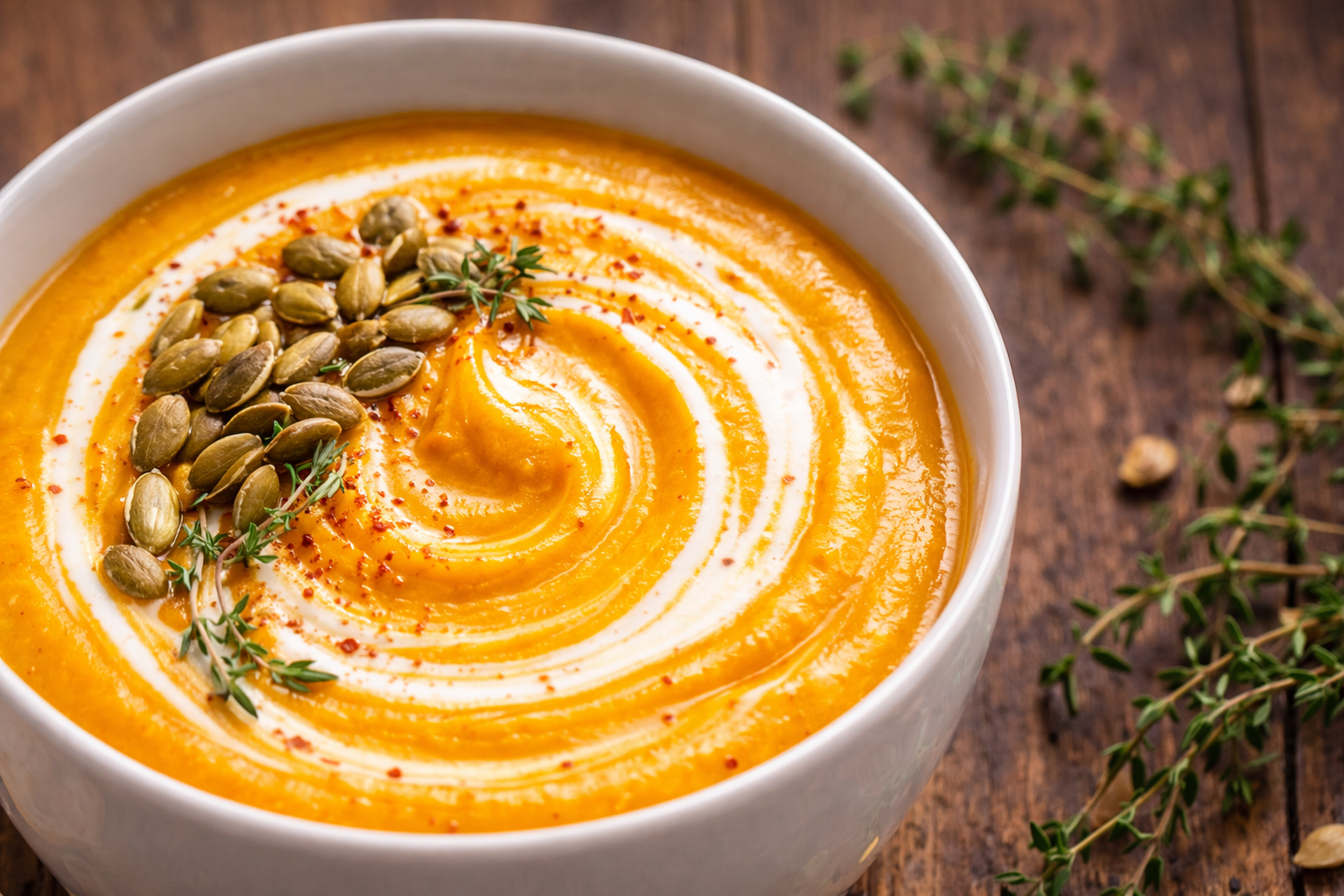
Easy Kurbis Soup Recipe There is a specific kind of disappointment that comes with a bowl of mediocre pumpkin soup. We’ve all been there: it’s either a watery, bland orange liquid that tastes more like a vegetable rinse than a meal, or it’s a cloying, heavy sludge that feels like eating baby food. The “Kürbissuppe” (Pumpkin Soup) found in the kitchens of Germany and Austria is a masterclass in balance, but translating that velvety, nutty depth to the home kitchen can be surprisingly tricky.
The problem usually lies in the treatment of the squash itself. Most people simply boil the pumpkin in stock. This is a mistake. Boiling is a dilutive process; it pulls flavor out and replaces it with water. To make a soup that actually tastes like the essence of autumn, we need to talk about concentration, emulsification, and the specific chemistry of the Hokkaido pumpkin.
Why This Recipe Works
This isn’t just a “toss it in the pot” recipe. We are utilizing three specific culinary pillars to ensure the result is restaurant-grade:
- Maillard Reaction via Roasting: Instead of boiling raw cubes, we roast the pumpkin at high heat. This creates melanoidins—the compounds responsible for that savory, toasted flavor profile.
- The Hokkaido Advantage: We use the Red Kuri (Hokkaido) squash. Unlike the standard Jack-o’-lantern carving pumpkin, which is fibrous and watery, the Hokkaido has a dense, chestnut-like texture and a skin so thin it becomes edible and creamy when blended.
- Fat-Soluble Flavor Extraction: By sautéing our aromatics and spices in butter or high-quality oil before adding liquid, we unlock flavor compounds that water alone cannot touch.
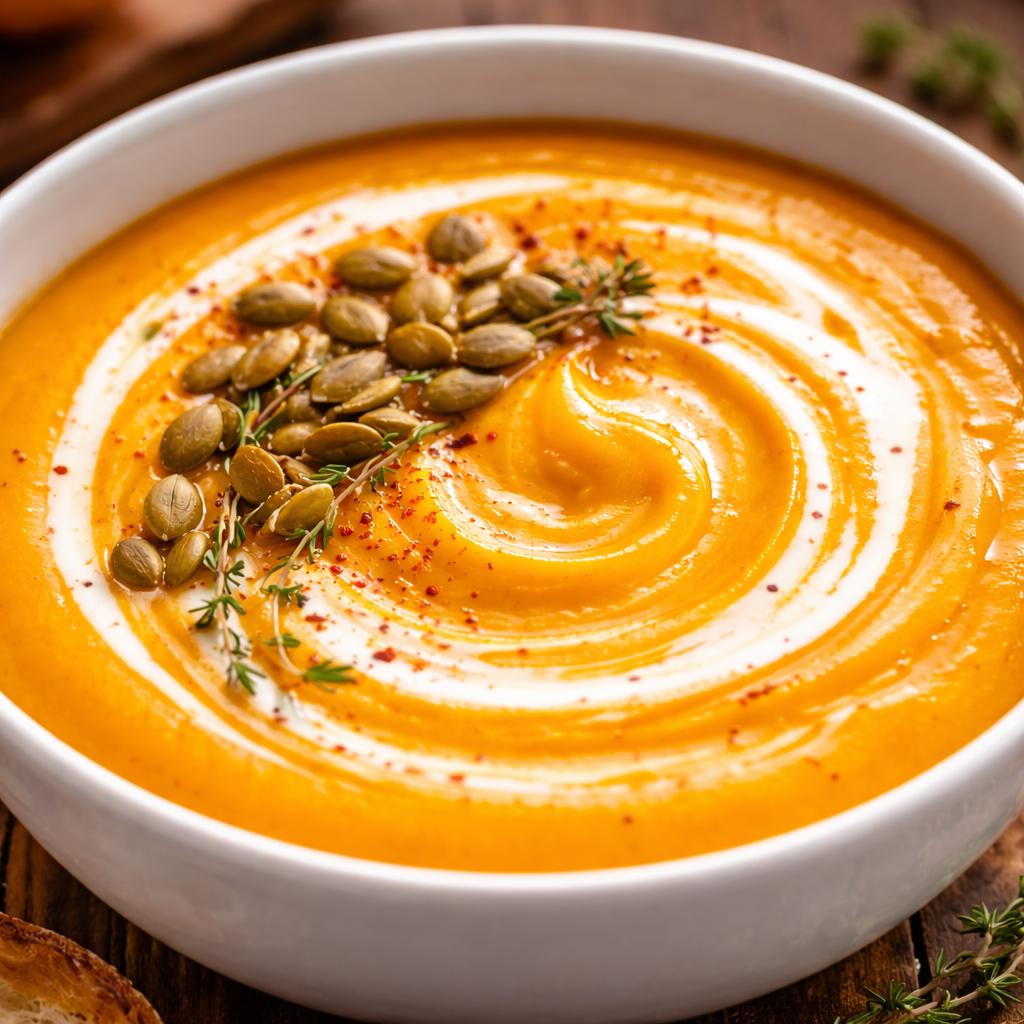
Ingredients & Measurements
Precision matters, but so does the quality of your produce. Look for a squash that feels heavy for its size—this indicates high moisture density and natural sugars.
The Foundation
- 1 medium Hokkaido Squash (approx. 1.2kg): Do not peel it. The skin provides the deep orange color and extra vitamins.
- 2 Large Shallots: Shallots offer a more refined, garlicky sweetness than standard yellow onions.
- 3 cloves Garlic: Smashed, not minced (to prevent burning during the initial sauté).
- 1 medium Carrot: For added glucose, which rounds out the earthy squash.
The Liquids
- 1 Liter High-Quality Vegetable or Chicken Stock: If using store-bought, ensure it is low-sodium so you can control the seasoning.
- 200ml Heavy Cream or Full-Fat Coconut Milk: This provides the mouthfeel.
- 50ml Dry White Wine (optional): A crisp Riesling or Pinot Grigio cuts through the fat with necessary acidity.
The Aromatics & Seasoning
- 20g Fresh Ginger: Finely grated. Ginger provides a “top note” heat that balances the “base note” sweetness of the pumpkin.
- 1 tsp Ground Nutmeg: Freshly grated is transformative here.
- Salt & White Pepper: White pepper is traditional in cream soups to maintain a flawless visual aesthetic without black flecks.
- Cold Butter (2 tbsp): To be whisked in at the very end for a glossy finish (the monter au beurre technique).
Step-by-Step Cooking Guide
1. The Roasting Phase
Preheat your oven to 200°C (400°F). Halve your Hokkaido squash and scoop out the seeds. Slice it into thick wedges—think of them as pumpkin “steaks.” Toss these with a neutral oil and a pinch of salt. Roast for 25–30 minutes.
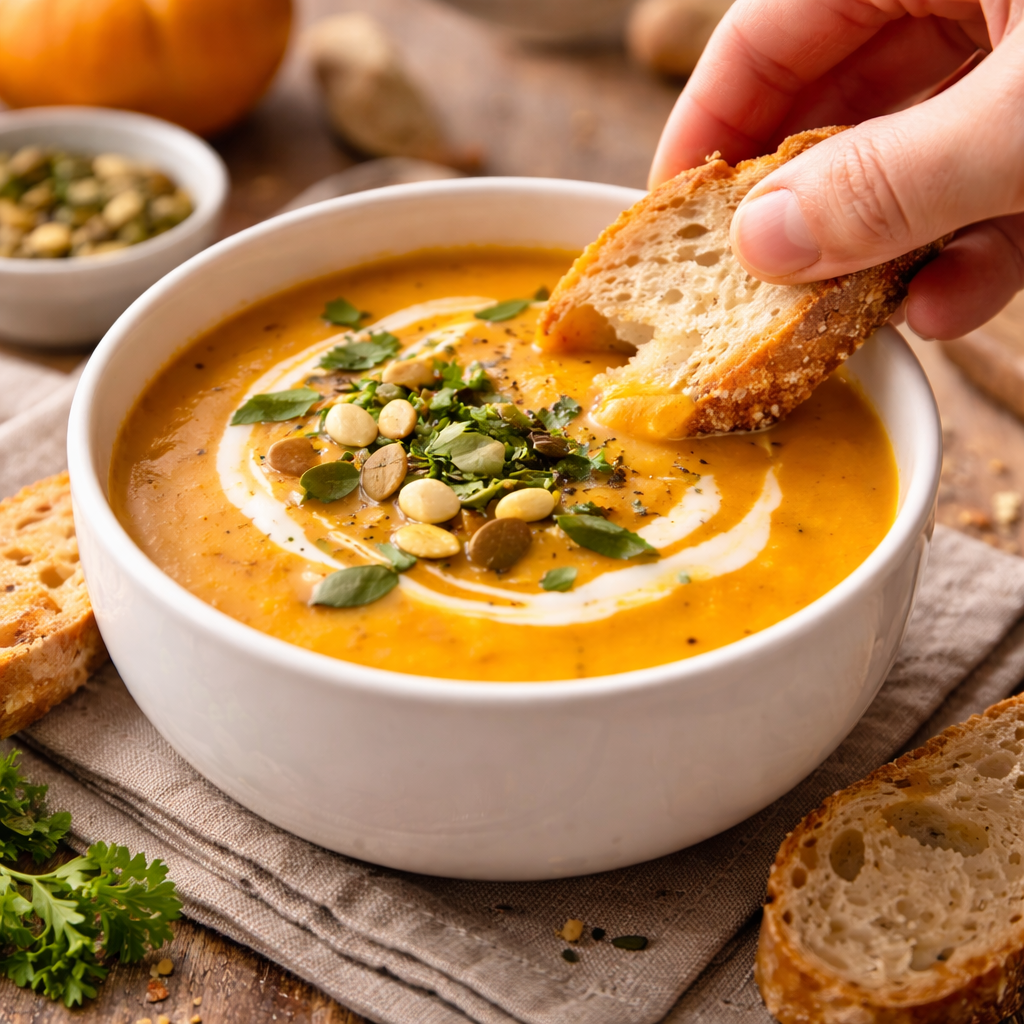
You aren’t just looking for tenderness; you want charred edges. Those brown spots are caramelized sugars that will provide the “umami” backbone of your soup.
2. The Aromatic Base
While the squash roasts, heat a heavy-bottomed Dutch oven over medium heat. Add a splash of oil and your chopped shallots and carrots. Sweat them slowly. The goal is translucency, not browning. Once soft, add the garlic and grated ginger.
3. Deglazing
If you’re using wine, pour it in now. Use a wooden spoon to scrape the bottom of the pot (the fond). Let the wine reduce by half. This removes the harsh alcohol “bite” while leaving the fruity acidity behind.
4. The Simmer
Add your roasted pumpkin wedges directly into the pot. Pour over the stock until the vegetables are just submerged. Cover and simmer for 15 minutes. Even though the pumpkin is roasted, this brief simmer allows the flavors to marry and the fibers to further break down.
5. The Science of the Blend
Remove the pot from the heat. Use a high-speed immersion blender. Pro tip: Do not just pulse. Hold the blender at a slight angle to create a vortex. This incorporates air and emulsifies the fats with the pumpkin starches.
6. The Finish
Return to low heat. Stir in your cream. Finally, turn off the heat and whisk in the two tablespoons of cold butter. This creates a stable emulsion that gives the soup a professional, velvet sheen. Season with nutmeg, salt, and white pepper only at this final stage.
Common Mistakes to Avoid
- Peeling the Hokkaido: You are throwing away flavor and color. The skin of a Hokkaido squash disappears entirely when blended.
- Over-watering: Start with less stock than you think you need. You can always thin a soup out, but thickening a watery soup requires overcooking it or adding unnecessary starches like flour or potato.
- Boiling the Cream: Once you add the dairy, never let the soup reach a rolling boil. High heat can cause the proteins in the cream to denature and “break,” resulting in a grainy texture.
- Under-seasoning: Squash is naturally quite bland. It requires a surprising amount of salt to “wake up” the flavors. Taste at the beginning, middle, and end.
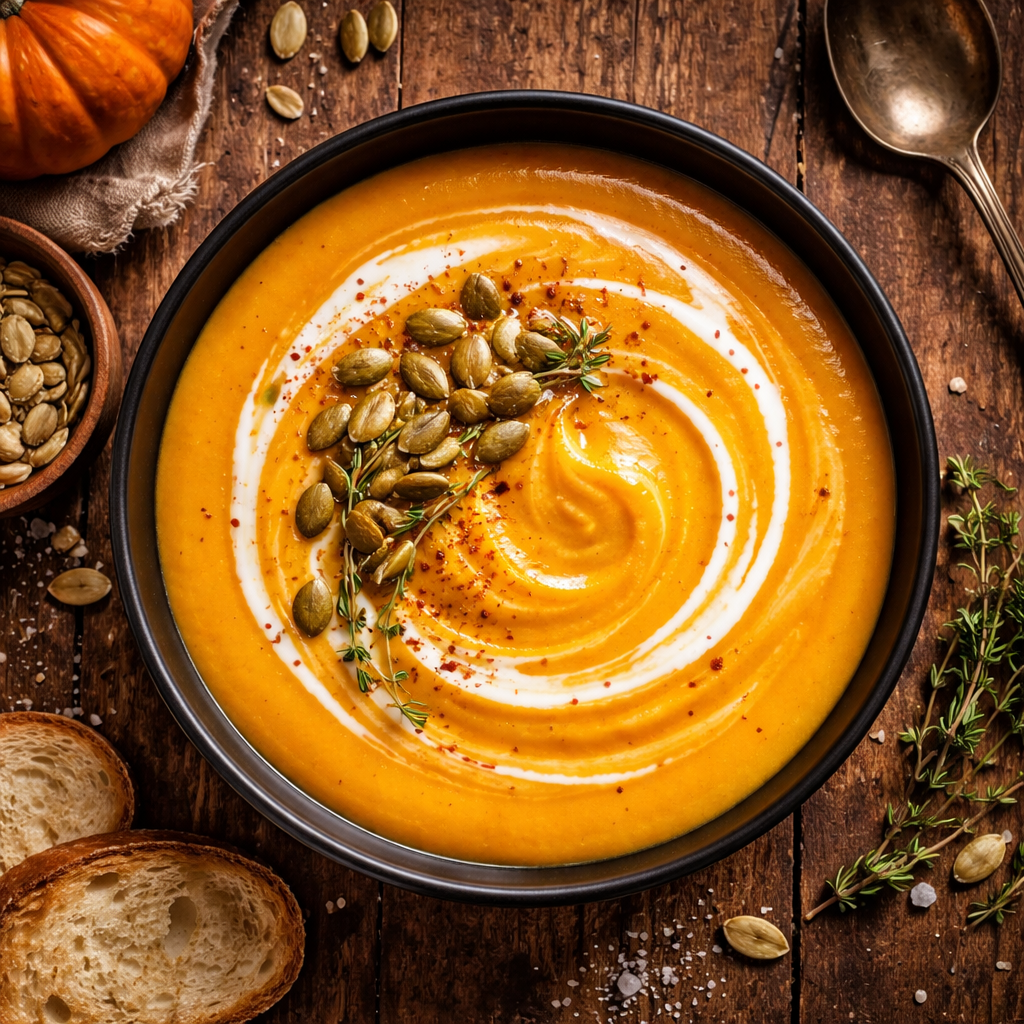
Timing & Doneness Indicators
| Stage | Time | What to Look For |
| Roasting | 25–30 mins | Edges are darkened; flesh gives way instantly to a fork. |
| Sweating | 8–10 mins | Shallots are soft and smell sweet, not pungent. |
| Simmering | 15 mins | Liquid has taken on a deep orange hue. |
| Blending | 2–3 mins | No visible “flecks” of skin; the liquid moves as one silky mass. |
Serving Suggestions
A soup this rich needs texture and contrast.
- The Styrian Classic: Drizzle with authentic Pumpkin Seed Oil (Kernöl). It’s dark green, almost black, and has an intense toasted nut flavor.
- Toasted Seeds: Don’t throw away the seeds from the squash. Clean them, toss with salt and paprika, and roast until they pop.
- Acid Kick: A dollop of Crème fraîche or a tiny squeeze of lime juice right before eating can brighten the entire dish.
- Bread Pairing: Serve with a heavy, seeded sourdough or a dark rye bread to complement the earthy notes.
FAQ: Solving Your Soup Struggles
“Why is my soup bitter?”
This usually happens if the garlic was scorched during the sautéing phase or if the squash was underripe. A tiny pinch of sugar or a splash of honey can balance out bitter notes.
“My soup is too thick. How do I fix it without losing flavor?”
Don’t just add water. Use a bit more stock or even a splash of apple juice. The malic acid in apple juice pairs beautifully with pumpkin.
“Can I make this vegan?”
Absolutely. Substitute the butter with a high-quality olive oil and use full-fat coconut milk instead of heavy cream. The fat content is crucial for the “velvet” texture, so don’t use low-fat alternatives.
“Can I use canned pumpkin puree?”
You can, but you shouldn’t. Canned pumpkin is often a blend of different squashes and lacks the complex sugar profile of a roasted Hokkaido. If you are in a rush, at least sauté the canned puree in butter for 5 minutes to cook out the “tinny” taste.