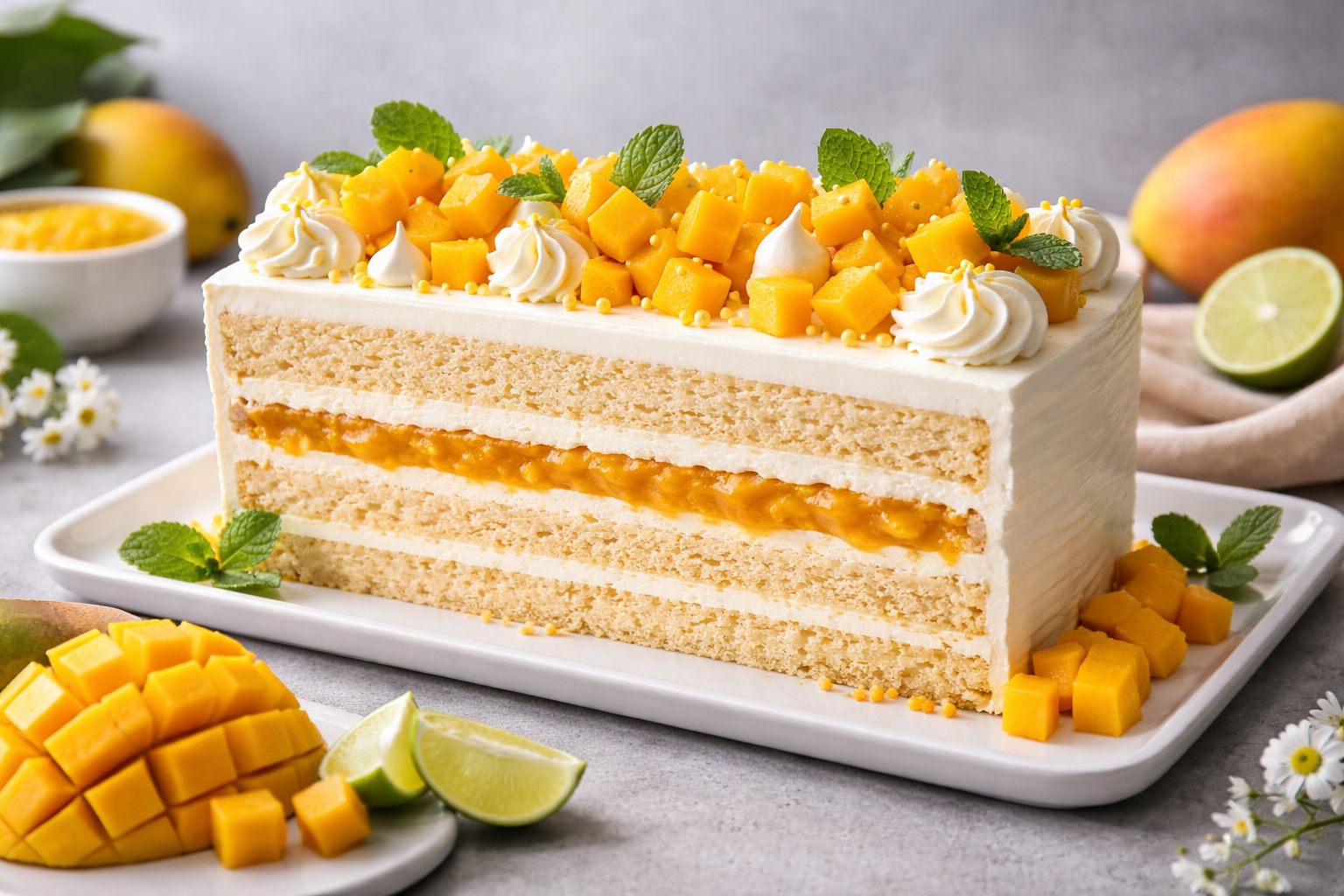
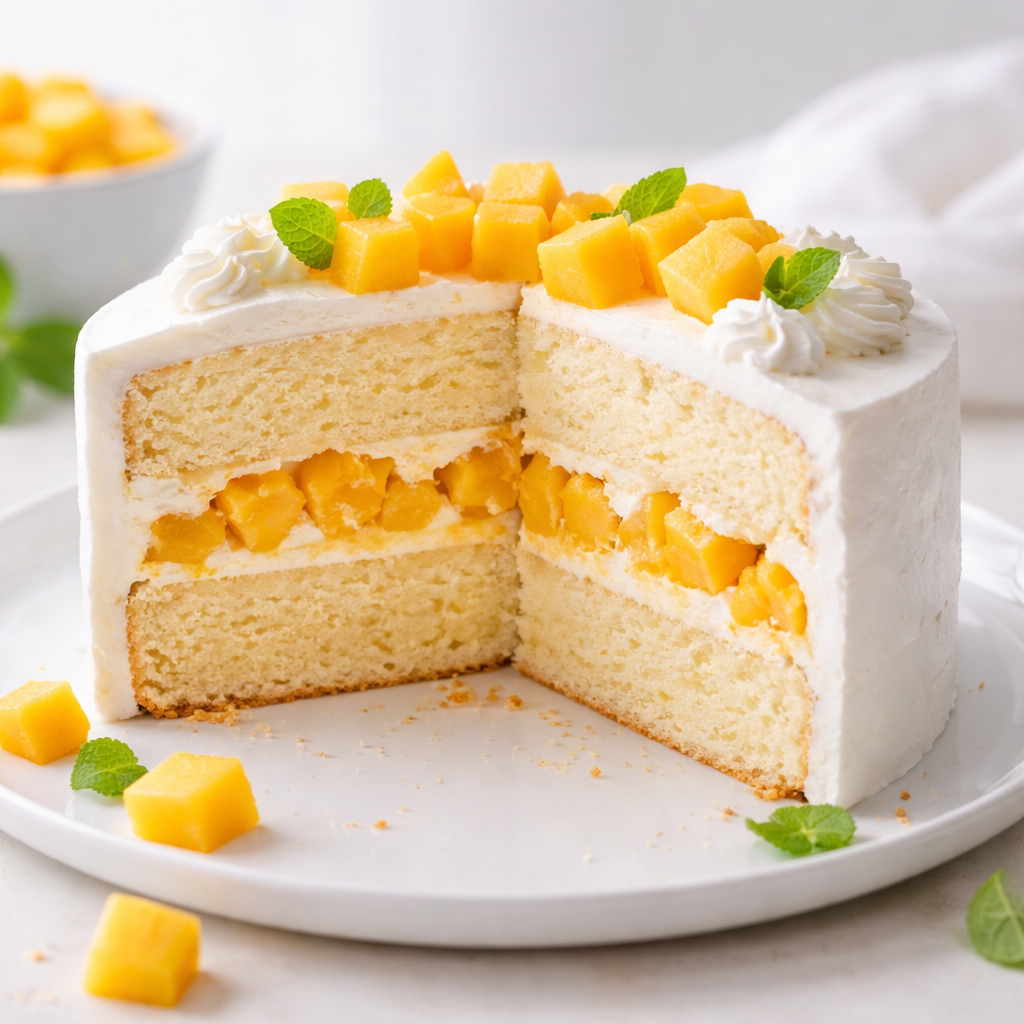
There’s something almost poetic about a perfectly ripe mango. When that golden, fragrant fruit is at its peak, it doesn’t just taste like summer—it tastes like a celebration. As a baker, I’ve always felt that while chocolate is reliable and vanilla is classic, a Mango Cake Recipe is the ultimate crowd-pleaser that feels both exotic and comforting.
Today, I’m sharing my favorite version of this tropical masterpiece. This isn’t just a basic sponge with fruit on top; it’s a moist, tender, sunshine-hued cake infused with fresh puree and topped with a velvety frosting. Whether you’re celebrating a birthday or just making it through a long Tuesday, this cake is the answer.
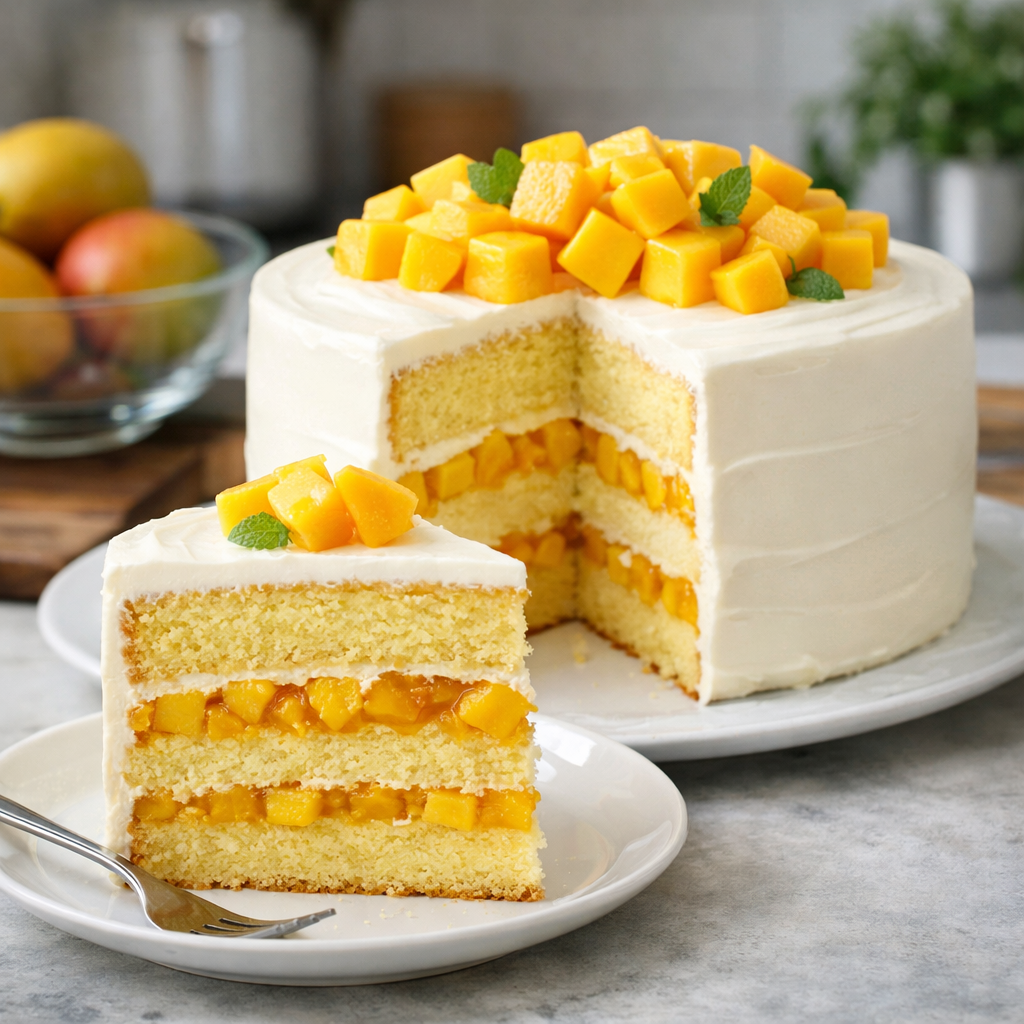
Why This Recipe Works
When developing this Mango Cake Recipe, I wanted to avoid the two biggest pitfalls of fruit-based baking: a soggy crumb and a lack of actual mango flavor. Here is why this specific version hits the mark every single time:
- Fresh Puree Integration: We use real mango puree directly in the batter. This ensures the flavor is baked into the cake, not just sitting on top.
- The Reverse Creaming Method: By mixing the butter into the dry ingredients first, we coat the flour in fat, which inhibits gluten development. The result? A melt-in-your-mouth texture that stays moist for days.
- Balanced Sweetness: Mangoes are naturally high in sugar, so I’ve dialed back the granulated sugar in the sponge to let the floral notes of the fruit shine.
- Versatility: This recipe works beautifully as a layered cake, a simple sheet cake, or even sophisticated cupcakes.
What You Need
To get the best results, use room-temperature ingredients. This ensures the emulsion stays stable and the cake rises perfectly.
For the Mango Sponge
- All-Purpose Flour: 2 ½ cups (315g).
- Granulated Sugar: 1 ½ cups.
- Baking Powder & Baking Soda: A combination for the perfect lift.
- Salt: Just a pinch to balance the sweetness.
- Unsalted Butter: 1 cup (226g), softened.
- Fresh Mango Puree: 1 cup (use Alphonso or Ataulfo mangoes for best flavor).
- Large Eggs: 3, at room temperature.
- Greek Yogurt: ½ cup (adds moisture and a slight tang).
- Vanilla Extract: 1 tsp.
For the Mango Frosting
- Cream Cheese: 8 oz, softened.
- Unsalted Butter: ½ cup, softened.
- Powdered Sugar: 3–4 cups.
- Mango Puree: 2-3 tbsp (thickened).
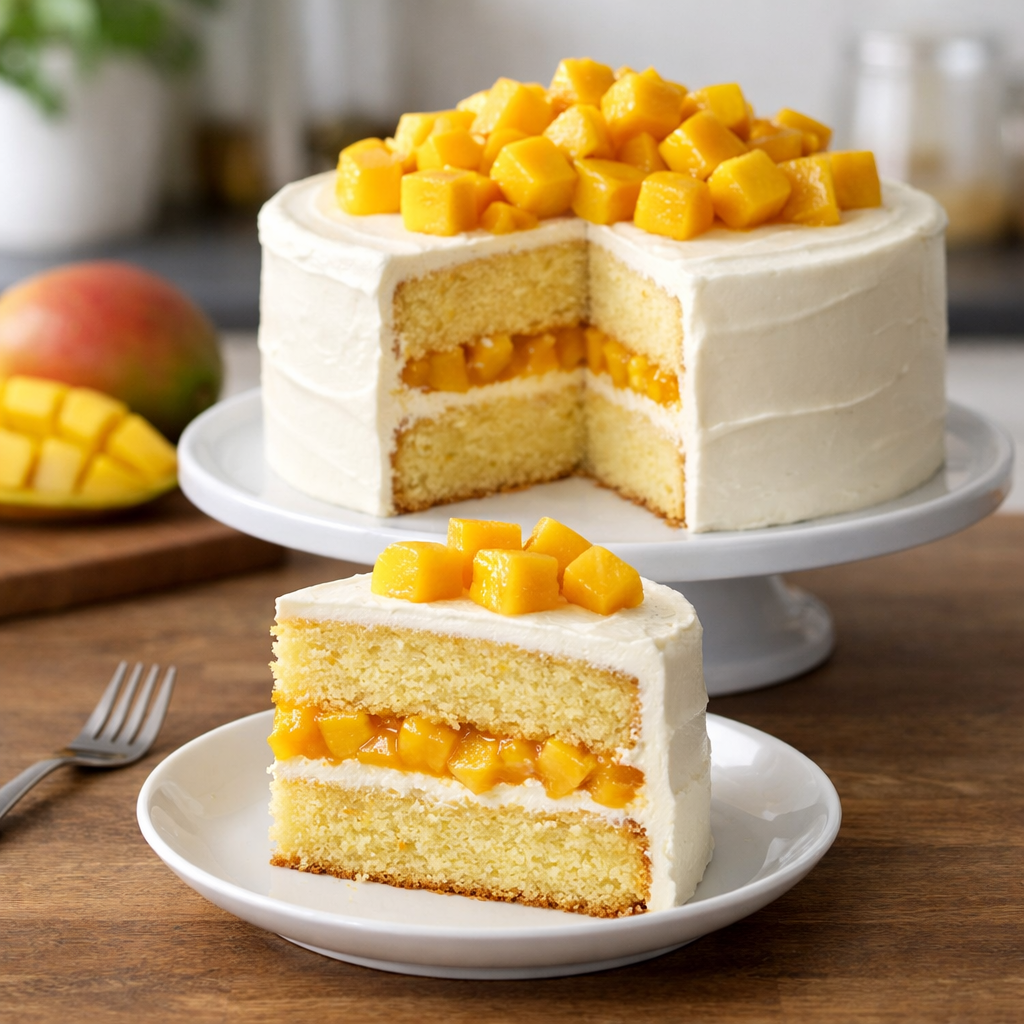
How to Make This Recipe
Making a Mango Cake Recipe from scratch is incredibly rewarding. Follow these steps for a professional finish.
- Prep Your Oven and Pans: Preheat your oven to 350°F (175°C). Grease and flour two 8-inch round cake pans.
- Cream the Base: In a large bowl, whisk your flour, sugar, baking powder, baking soda, and salt. Add the softened butter and mix on low speed until the mixture looks like coarse sand.
- Mix the Wet Ingredients: In a separate jug, whisk together the mango puree, eggs, yogurt, and vanilla.
- Combine: Slowly pour the wet ingredients into the dry mixture while mixing on medium speed. Beat for about 90 seconds to aerate the batter—this creates that lovely structure.
- Bake: Divide the batter evenly between the pans. Bake for 30–35 minutes, or until a toothpick comes out clean.
- Cool: Let the cakes sit in the pans for 10 minutes before transferring them to a wire rack to cool completely. Do not frost a warm cake!
Quick Marinade Tips
Wait—marinade for a cake? Absolutely! If you are using fresh mango chunks between your layers, “marinating” them briefly can elevate the entire experience.
- Citrus Zest: Toss your mango chunks in a little lime juice and lime zest. The acidity cuts through the sugar and makes the mango flavor “pop.”
- Sugar Drawing: Sprinkle a teaspoon of sugar over the fruit 10 minutes before assembling. This draws out the juices, which will soak slightly into the sponge, acting like a natural simple syrup.
- Mint Infusion: For a sophisticated twist, toss the fruit with finely minced mint leaves.
Making Creamy Brothy Rice
While this might seem like an odd addition to a Mango Cake Recipe article, many of my readers love to serve a tropical-themed dinner before the dessert. A “Mango Sticky Rice” inspired side dish or a creamy coconut brothy rice is the perfect precursor.
- Use Jasmine rice for its floral aroma.
- Instead of just water, use a 50/50 split of coconut milk and chicken (or vegetable) broth.
- Simmer with a bruised stalk of lemongrass.
- The starch from the rice creates a “brothy” sauce that mimics the creaminess of the cake’s frosting, making the entire meal feel cohesive.
Best Toppings to Try
A Mango Cake Recipe is a blank canvas. While it’s beautiful on its own, these toppings add texture and visual flair:
- Toasted Coconut Shavings: Adds a crunch and reinforces the tropical vibe.
- Macadamia Nuts: Chopped toasted macadamias provide a buttery, salty contrast.
- Fresh Passion Fruit: The tart seeds of a passion fruit drizzled over the mango frosting are a match made in heaven.
- White Chocolate Shavings: For those who want an extra decadent finish.
Smart Ingredient Swaps
Don’t have everything on hand? Don’t worry. Here is how to adapt this Mango Cake Recipe:
- The Flour: You can swap all-purpose for a 1:1 Gluten-Free baking flour. Just ensure it contains xanthan gum.
- The Fat: If you want a lighter, “oil-based” crumb, replace the butter with ¾ cup of neutral oil (like grapeseed), though you will lose that buttery flavor.
- The Dairy: Use coconut yogurt and a vegan butter substitute for a dairy-free version.
- The Mango: If fresh mangoes aren’t in season, canned Alphonso Mango Pulp is actually preferred by many professional bakers for its consistency and intense color.
Perfect for Meal Prep
You might not think of cake as “meal prep,” but this Mango Cake Recipe is incredibly sturdy.
- The Layers: You can bake the sponges up to two days in advance. Wrap them tightly in plastic wrap and keep them at room temperature (or freeze them for up to a month).
- The Puree: Make a large batch of puree and freeze it in ice cube trays. These are perfect for future cakes, smoothies, or even cocktails.
- Storage: Once frosted, this cake keeps remarkably well in the fridge for up to 4 days. In fact, the flavor often improves on day two as the mango moisture seeps into the crumb.
How to Serve It
Presentation is half the fun!
- Temperature Matters: Serve this cake slightly chilled or at cool room temperature. If it’s too cold, the butter in the frosting will be hard; if it’s too hot, the cake may lose its structural integrity.
- The Slice: Use a sharp, thin knife dipped in hot water (and wiped dry) to get those perfect, clean professional slices.
- Plating: Serve each slice with a dollop of whipped cream and a few extra cubes of fresh mango on the side.
Common Mistakes to Avoid
Even the best bakers run into trouble sometimes. Here is how to keep your Mango Cake Recipe on track:
- Using Stringy Mangoes: Avoid “Haden” or fibrous mangoes. The “strings” will ruin the texture of your batter. Stick to Ataulfo (Honey) or Kent.
- Over-Mixing: Once you add the wet ingredients to the flour, stop mixing as soon as everything is combined. Over-mixing leads to a tough, bready cake.
- Too Much Puree: It’s tempting to add more mango for “extra flavor,” but too much puree adds too much moisture and acid, which can cause the cake to sink in the middle. Stick to the measurements!
- Skipping the Sifting: Mango puree can sometimes have tiny lumps. Sift your dry ingredients and strain your puree if it looks chunky to ensure a silky crumb.
This Mango Cake Recipe is more than just a dessert; it’s a slice of sunshine. It brings a brightness to the table that few other cakes can match. I hope this becomes a staple in your kitchen just as it has in mine.