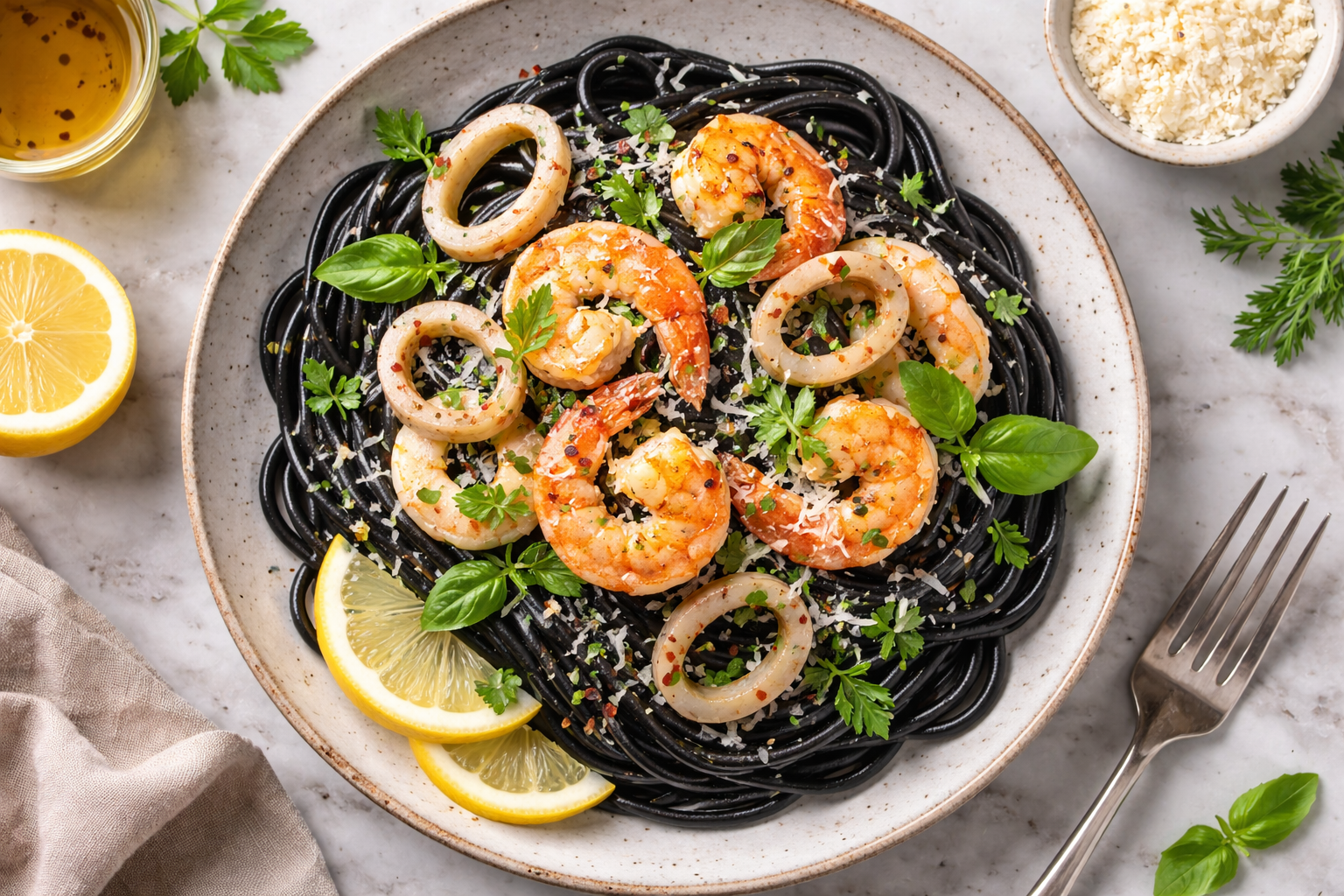
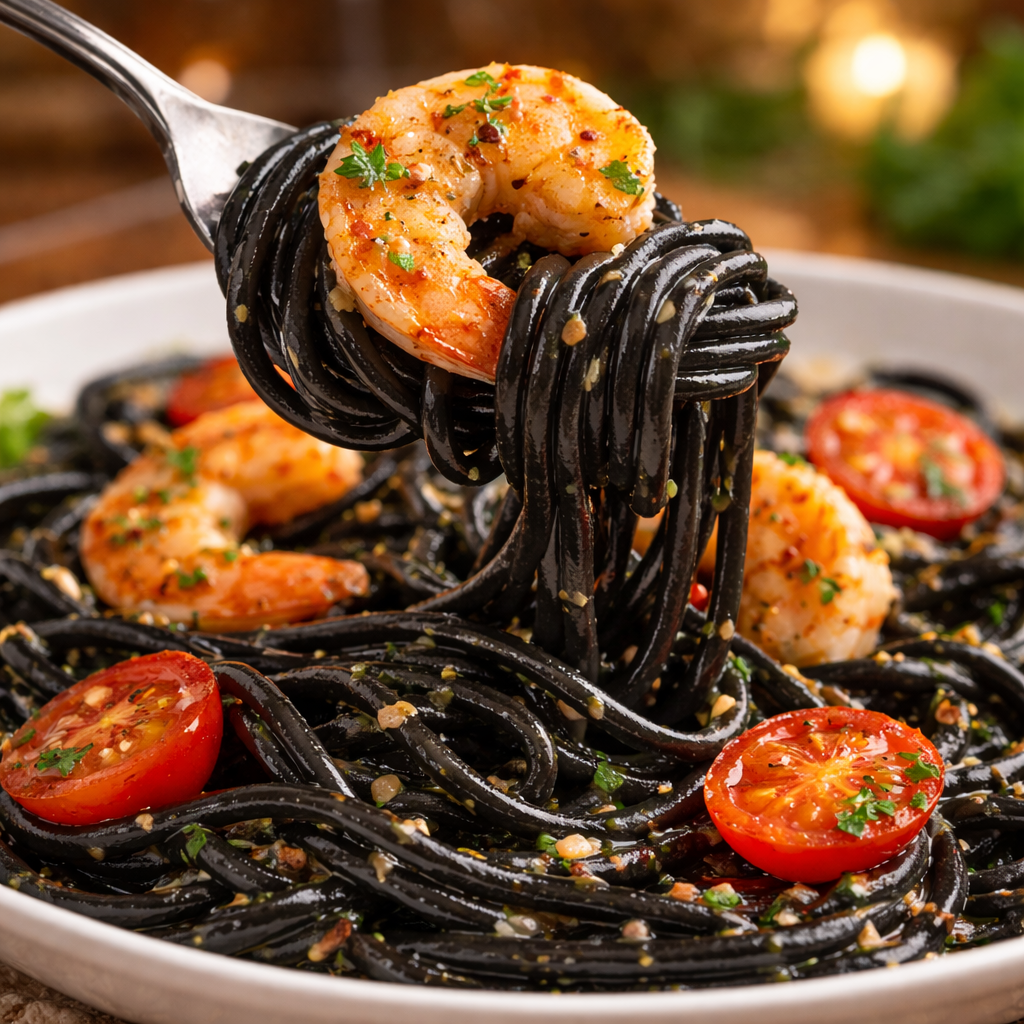
There is something undeniably dramatic about a plate of Squid Ink Pasta Recipe. The deep, obsidian hue of the noodles against the vibrant reds of cherry tomatoes or the pearly white of succulent scallops creates a visual masterpiece before you even take your first bite. I remember the first time I sat at a seaside trattoria in Venice, watching the gondolas glide by, and was served a bowl of this “black gold.” It wasn’t just a meal; it was an atmosphere.
The beauty of a Squid Ink Pasta Recipe lies in its subtle oceanic salinity. Contrary to what some might fear, it doesn’t taste “fishy” in an unpleasant way. Instead, it carries a sophisticated, briny depth—much like the smell of a clean ocean breeze. It’s the ultimate “impress your guests” dish that, surprisingly, comes together in under thirty minutes. Today, I’m walking you through my favorite version: a silky, garlic-butter seafood pasta that highlights the ink’s unique character.
What You Need
To make a truly memorable Squid Ink Pasta Recipe, quality is everything. Because the pasta itself is the star, we want ingredients that complement rather than mask its flavor.
The Pasta
- Squid Ink Spaghetti or Linguine: You can find these dried in specialty grocers, or if you’re feeling adventurous, look for fresh pasta infused with nero di seppia.
- Alternative: Plain pasta and a small jar of pure squid ink (if you want to dye the sauce yourself).
The Seafood
- Large Shrimp or Prawns: Peeled and deveined, tail-on for a prettier look.
- Calamari Rings: Fresh squid rings add a wonderful textural contrast.
The Sauce Base
- Extra Virgin Olive Oil: Use the good stuff here; it’s a primary flavor carrier.
- Garlic: 4–5 cloves, thinly sliced (slivered garlic toasts more evenly than minced).
- Dry White Wine: A Pinot Grigio or Sauvignon Blanc works wonders to deglaze the pan.
- Red Chili Flakes: Just a pinch for a “back-of-the-throat” warmth.
How to Make This Recipe
Creating a restaurant-quality Squid Ink Pasta Recipe is all about timing. You want the pasta to finish cooking exactly when the sauce is ready.
1. Boil the Liquid Gold
Bring a large pot of heavily salted water to a boil. I mean heavily—it should taste like the sea. Drop your squid ink pasta and cook until it is about 1 minute shy of al dente.
2. Sauté the Aromatics
While the pasta boils, heat olive oil in a large skillet over medium heat. Add the sliced garlic and chili flakes. Cook until the garlic is golden and fragrant, but be careful not to let it turn dark brown or bitter.
3. Sear the Seafood
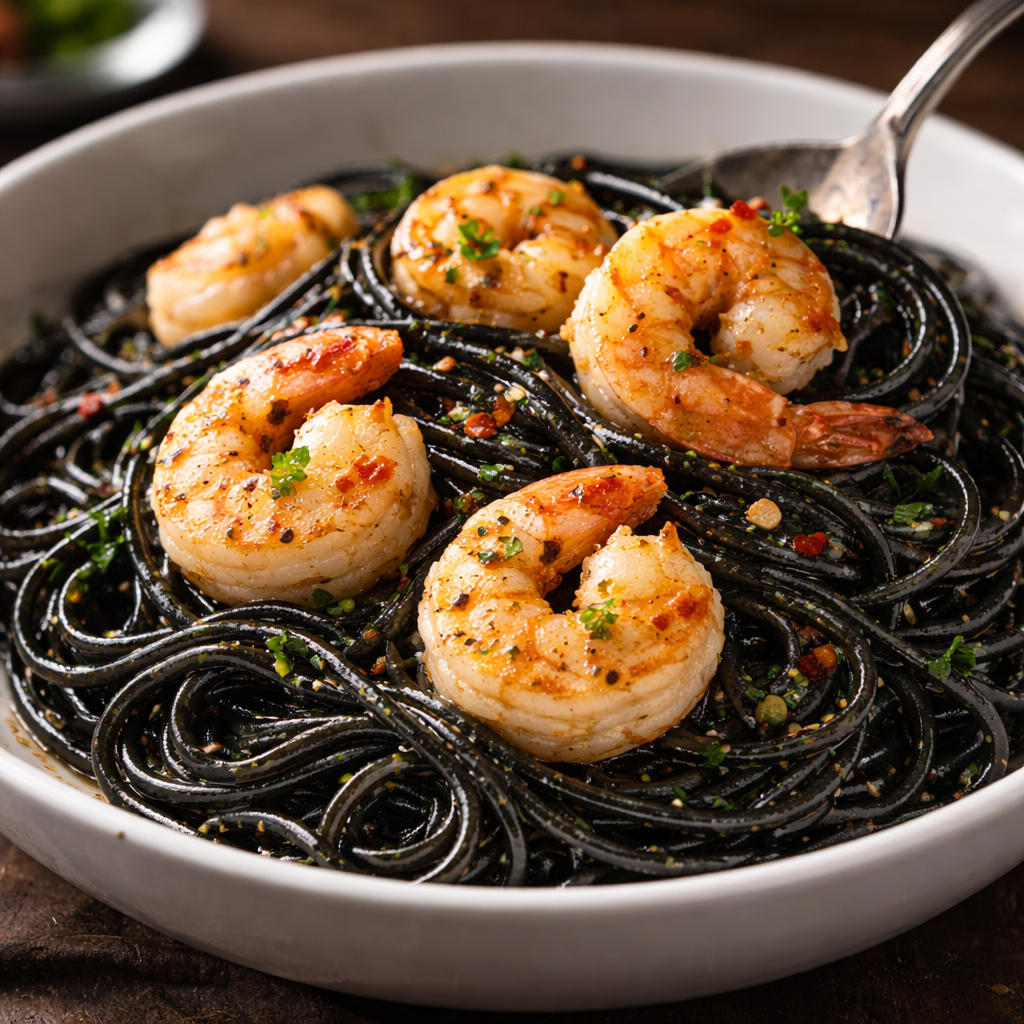
Turn the heat up to medium-high. Add the shrimp and calamari. Sear them for about 2 minutes per side until the shrimp are pink and opaque. Remove the seafood from the pan and set it aside so it doesn’t overcook.
4. Deglaze and Emulsify
Pour the white wine into the skillet, scraping up any flavorful bits from the bottom. Let it reduce by half. Add a ladle of the starchy pasta water to the pan—this is the secret to a silky sauce.
5. The Marriage
Transfer the black pasta directly into the skillet. Toss vigorously. Add a knob of butter and the seafood back in. The starch from the water and the fat from the butter will create a glossy coating over the dark noodles.
Why This Recipe Works
This Squid Ink Pasta Recipe works because it balances umami and acidity. The squid ink provides a deep, savory base that can feel “heavy” on the palate. By deglazing with white wine and finishing with a squeeze of fresh lemon, we cut through that richness.
The visual contrast is also a psychological win. Eating black food is a unique sensory experience that makes a standard weeknight dinner feel like a high-end culinary event. Plus, the structure of the pasta water emulsion ensures that the sauce clings to every strand of the noodles.
Quick Marinade Tips
While the pasta is the lead actor, the seafood needs a supporting role that shines. Even a short 10-minute marinade makes a difference in your Squid Ink Pasta Recipe.
- Lemon Zest & Oil: Toss your shrimp in olive oil and fresh lemon zest before cooking. The oils in the zest are heat-stable and provide a brighter aroma than juice alone.
- A Touch of Paprika: A tiny pinch of smoked paprika on the calamari can bridge the gap between the briny ink and the charred flavor of a hot skillet.
- Garlic Paste: If you want the seafood to be punchy, rub it with a paste of garlic and salt before it hits the pan.
Making Creamy Brothy Rice
Now, you might be wondering why we are talking about rice in a Squid Ink Pasta Recipe article. In Mediterranean and Asian-fusion cooking, squid ink is frequently used to make Arròs Negre (Spanish Black Rice) or black risotto.
If you want to adapt these flavors into a rice dish:
- Use Arborio or Carnaroli rice.
- Toast the rice in olive oil and shallots.
- Slowly add warm seafood stock mixed with a teaspoon of pure squid ink.
- Stir constantly to release the starches, creating a “creamy, brothy” consistency that mirrors the silkiness of the pasta sauce.
Best Toppings to Try
A Squid Ink Pasta Recipe is like a black canvas; it needs a pop of color and texture to truly sing.
- Bottarga: This cured fish roe is the “truffle of the sea.” Shave it over the top for an explosion of salt and luxury.
- Toasted Breadcrumbs (Pangrattato): Sauté panko in olive oil with lemon zest until golden. The crunch against the soft pasta is divine.
- Fresh Parsley: A heavy handful of flat-leaf parsley adds a grassy freshness that lightens the dish.
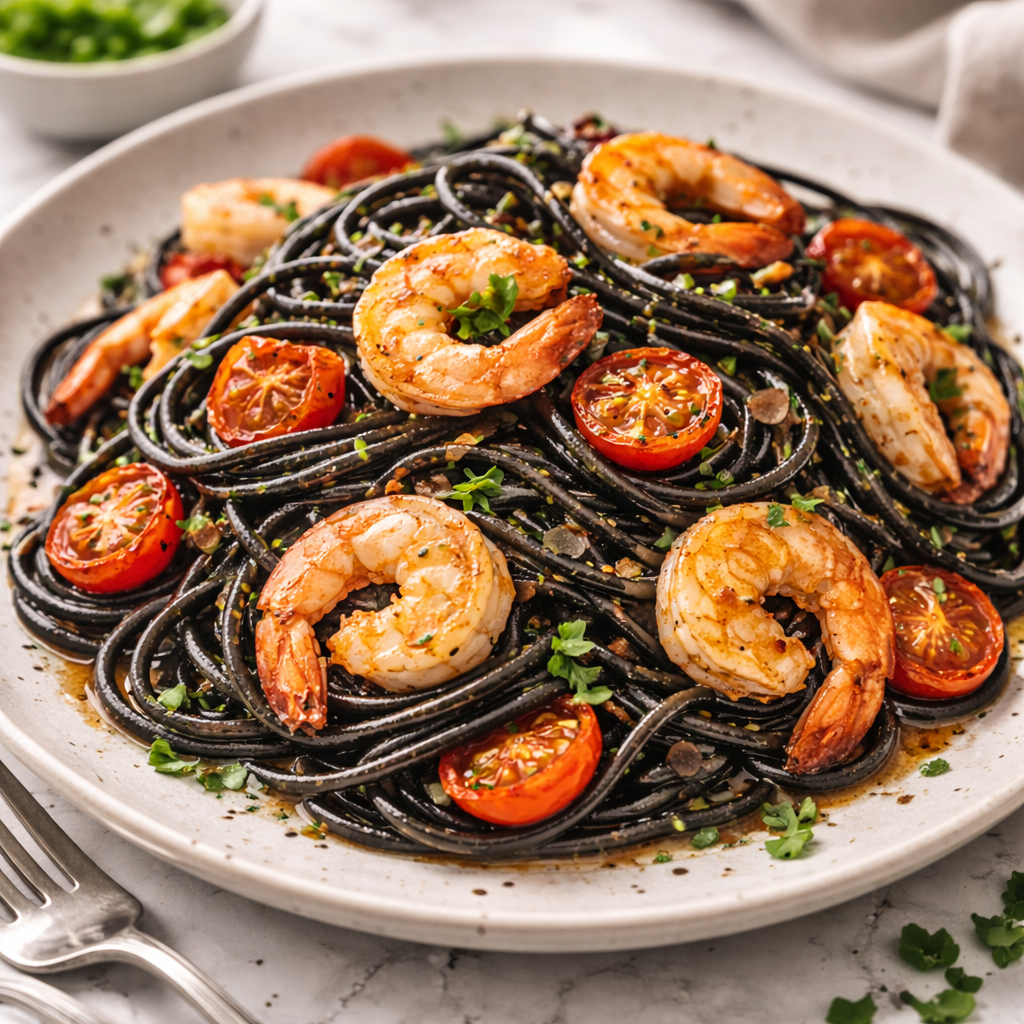
- Cherry Tomatoes: Blister them in the pan for a burst of sweetness and a striking red color.
Smart Ingredient Swaps
Don’t let a missing ingredient stop you from enjoying a Squid Ink Pasta Recipe.
- No White Wine? Use a splash of clam juice or chicken stock with an extra squeeze of lemon for that necessary acidity.
- Vegetarian Version: Swap the seafood for roasted oyster mushrooms or “scallops” made from sliced king oyster mushroom stems.
- Gluten-Free: Look for gluten-free pasta and purchase a separate jar of squid ink to toss with the noodles during the sauce phase.
Perfect for Meal Prep
Usually, seafood pasta is best eaten fresh. However, if you want to prep your Squid Ink Pasta Recipe for a busy week, here is the trick:
The Deconstructed Prep:
- Cook the pasta 2 minutes under al dente, toss in oil, and store.
- Clean and portion your seafood in airtight containers.
- Slice your garlic and parsley ahead of time.
When you are ready to eat, the actual cooking process takes only 5 minutes. This prevents the seafood from becoming rubbery in the microwave and keeps the pasta from getting mushy.
How to Serve It
Serving a Squid Ink Pasta Recipe is all about the “twirl.”
- Use a carving fork and a ladle to create a high, tight nest of black noodles in the center of a wide white bowl.
- Place the pink shrimp and golden garlic slivers on top.
- Drizzle a final line of high-quality finishing oil over the dish.
- Serve with a chilled glass of the same white wine you used for cooking.
Common Mistakes to Avoid
To ensure your Squid Ink Pasta Recipe is a success, keep an eye out for these common pitfalls:
- Overcooking the Pasta: Squid ink pasta can sometimes be more delicate than regular semolina pasta. Check it early!
- Not Saving Pasta Water: I cannot stress this enough. That starchy, salty water is what turns a dry bowl of noodles into a restaurant-style sauce.
- Crowding the Pan: If you put too much seafood in at once, it will steam instead of sear. Cook in batches if necessary.
- Staining: Be careful! Liquid squid ink stains wooden spoons and white aprons. Use stainless steel or silicone tools when working with the ink directly.
Classic Tomato Feta Pasta Recipe
Best Caprese Pasta Salad Recipe