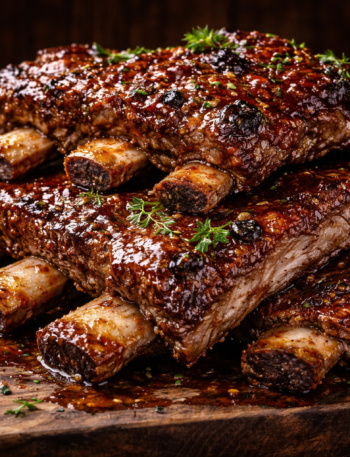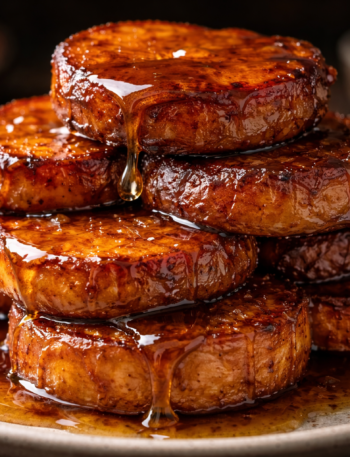
In the world of slow-cooked comfort food, there is a hidden gem that often sits quietly behind the popular ribs and briskets. If you have never experienced a perfectly braised Beef Cheeks Recipe, you are about to discover what many chefs consider the “holy grail” of beef cuts. There is simply no other part of the animal that offers the same level of succulent, gelatinous tenderness.
Beef cheeks are the facial muscles of the cow, and because they are a hardworking muscle, they are naturally tough and lean. However, when treated with the patience of a low-and-slow braise, the connective tissue breaks down into a rich, silky collagen that thickens the sauce and creates meat that literally falls apart at the touch of a fork. It is a sophisticated, deeply flavored dish that feels like a masterpiece but is actually incredibly difficult to mess up once you know the basics.
Why You Should Try This Recipe
The most compelling reason to master a Beef Cheeks Recipe is the unmatched texture. Unlike a standard pot roast, which can sometimes feel “stringy,” beef cheeks become buttery and velvety. They possess a deep, concentrated beef flavor that stands up beautifully to bold red wines and aromatic herbs.
Furthermore, this is a highly economical way to produce a high-end, restaurant-quality meal. While beef cheeks used to be an overlooked “off-cut,” they have gained a cult following because they offer a luxurious dining experience at a fraction of the cost of premium steaks. It’s also the ultimate “set it and forget it” meal. Once the pot is in the oven or the slow cooker, your work is done, and you can let the magic of thermodynamics do the heavy lifting while your house fills with a heavenly aroma.
Ingredients You’ll Need
To get that rich, glossy sauce and tender meat, you’ll need a few pantry staples and a bottle of something good to drink.
- The Star: 2–3 lbs of Beef Cheeks. Look for pieces that are well-trimmed of silver skin if possible.
- The Braising Liquid: 2 cups of a dry red wine (Cabernet Sauvignon or Shiraz work best) and 2 cups of high-quality beef stock.
- The Holy Trinity (Mirepoix): 2 large carrots, 2 stalks of celery, and 1 large brown onion, all finely diced.
- The Aromatics: 4 cloves of garlic (smashed), 2 tablespoons of tomato paste, and a “bouquet garni” consisting of 2 bay leaves, a few sprigs of fresh thyme, and a sprig of rosemary.
- The Fat: 2 tablespoons of olive oil or beef tallow for searing.
- Seasoning: Kosher salt and plenty of freshly cracked black pepper.
- The Finish: A knob of cold butter (to make the sauce shine) and fresh parsley for garnish.
How to Prep Before Cooking
Preparation is the most important step for a successful Beef Cheeks Recipe. If your butcher hasn’t already done so, use a sharp boning knife to remove the silver skin (that tough, shimmery membrane) from the surface of the meat. This membrane doesn’t break down during cooking and can make the meat feel tight.
Next, pat the beef cheeks completely dry with paper towels. Moisture is the enemy of the sear. If the meat is wet, it will steam rather than brown. Once dry, season them generously with salt and pepper on all sides.
Finally, chop your vegetables into small, uniform pieces. Since they will be simmering for hours, they will eventually melt into the sauce, providing body and sweetness. Have your wine and stock measured out and ready to go; braising is a rhythmic process, and you don’t want to be hunting for the corkscrew while your garlic is browning.
Simple Step-by-Step Method
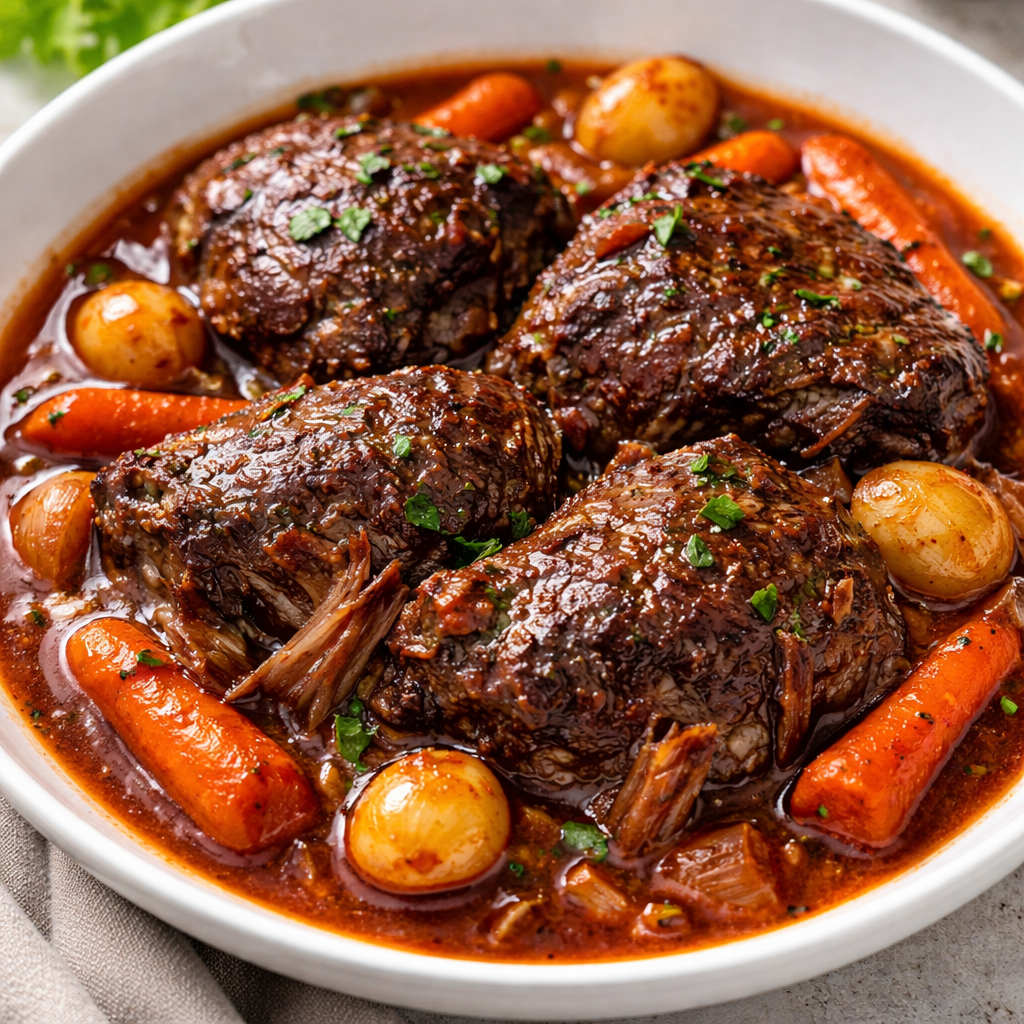
- The Sear: Heat your oil in a heavy-bottomed Dutch oven over medium-high heat. Sear the beef cheeks in batches until they have a dark, caramelized crust on both sides. Don’t rush this step—browned meat equals deep flavor. Remove the meat and set it aside.
- Sauté the Veg: In the same pot (don’t wash it!), toss in the carrots, celery, and onion. Cook for 5–7 minutes until softened. Stir in the garlic and tomato paste, cooking for another 2 minutes until the paste turns a deep brick red.
- The Deglaze: Pour in the red wine. Use a wooden spoon to scrape up all the “fond” (the brown bits) from the bottom of the pot. Let the wine reduce by half.
- The Reunion: Return the beef cheeks to the pot. Add the beef stock and the herbs. The liquid should almost cover the meat.
- The Braise: Cover with a tight-fitting lid. You can cook this on the stovetop on the lowest possible simmer, but for the best results, place it in a 300°F oven for 3.5 to 4 hours.
- The Test: The beef is done when it offers zero resistance to a fork. If it feels “bouncy,” it needs more time.
- The Sauce Reduction: Remove the meat and herbs. Strain the liquid if you want a smooth sauce, or leave the veggies for a rustic feel. Simmer the liquid on the stovetop until it thickens into a glossy gravy. Whisk in a knob of cold butter at the very end for a professional finish.
Best Time to Serve It
This Beef Cheeks Recipe is the ultimate winter warmer. It is the kind of dish you want to serve on a Sunday evening when the rain is hitting the windows and you have nowhere else to be.
It is also an incredible “wow” dish for dinner parties. Because beef cheeks are still considered a bit “exotic” to the average home cook, serving them shows a level of culinary curiosity. Plus, since the dish is actually better when made a day in advance, it allows you to be a relaxed host who isn’t stuck in the kitchen when guests arrive.
Tips for Better Flavor
- The Wine Rule: Never cook with a wine you wouldn’t drink. The flavors will concentrate as the sauce reduces, so a bitter or “off” wine will ruin the entire dish.
- The Chill: If you have time, make this the day before. Let it cool in the fridge overnight. The fat will solidify on top (making it easy to remove), and the flavors of the herbs and wine will penetrate deeper into the meat.
- Don’t Skimp on the Sear: That dark crust on the meat is what gives the sauce its mahogany color and savory depth. If the meat looks grey, the sauce will taste flat.
- Bone Broth: If you can find actual bone broth rather than standard boxed stock, use it. The extra gelatin will make the sauce even more luxurious.
Easy Recipe Variations
While a red wine braise is the classic Beef Cheeks Recipe, you can easily pivot:
- Mexican Barbacoa Style: Swap the wine for beef broth and a splash of apple cider vinegar. Add dried guajillo chilies, cumin, and cloves. Shred the meat and serve in tacos.
- Guinness Braised: Use a stout beer instead of wine for a deeper, slightly bitter, and chocolatey undertone.
- Asian Fusion: Braise with soy sauce, star anise, ginger, and a splash of Shaoxing wine. Serve over coconut rice.
- Slow Cooker Version: Follow the searing and deglazing steps, then transfer everything to a slow cooker and cook on “Low” for 8–10 hours.
How to Store Leftovers
Beef cheeks are the gift that keeps on giving.
Storage: Store the meat submerged in its braising liquid in an airtight container. It will keep in the refrigerator for up to 4 days. In fact, it often tastes better on day two or three.
Freezing: This dish freezes beautifully. Place the meat and sauce in a heavy-duty freezer bag. It will stay perfect for up to 3 months.
Reheating: To maintain the texture, reheat slowly in a saucepan over medium-low heat. Avoid the microwave, as it can cause the delicate collagen-rich meat to toughen or explode.
Serving and Presentation Tips
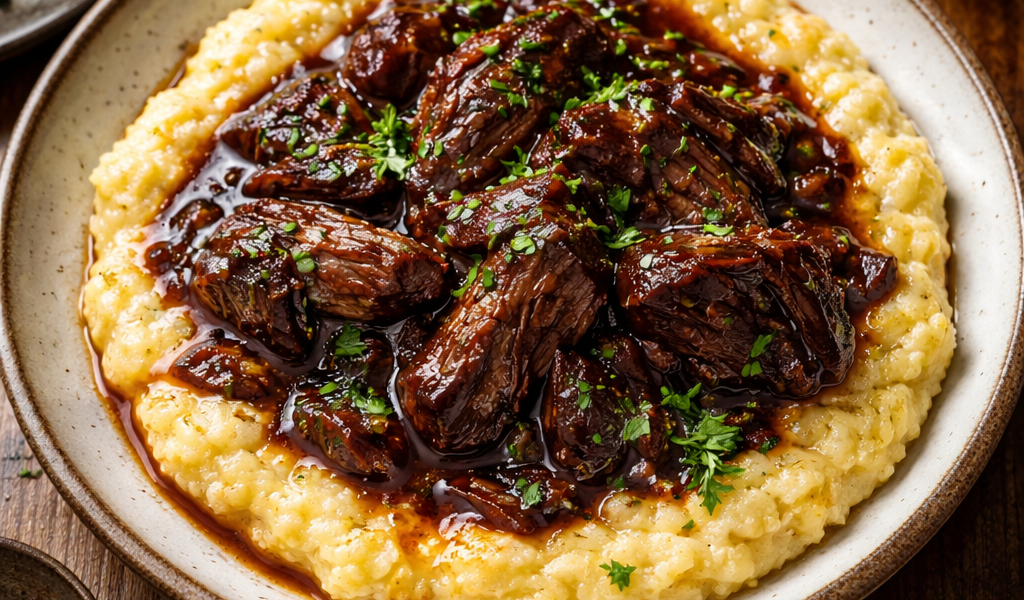
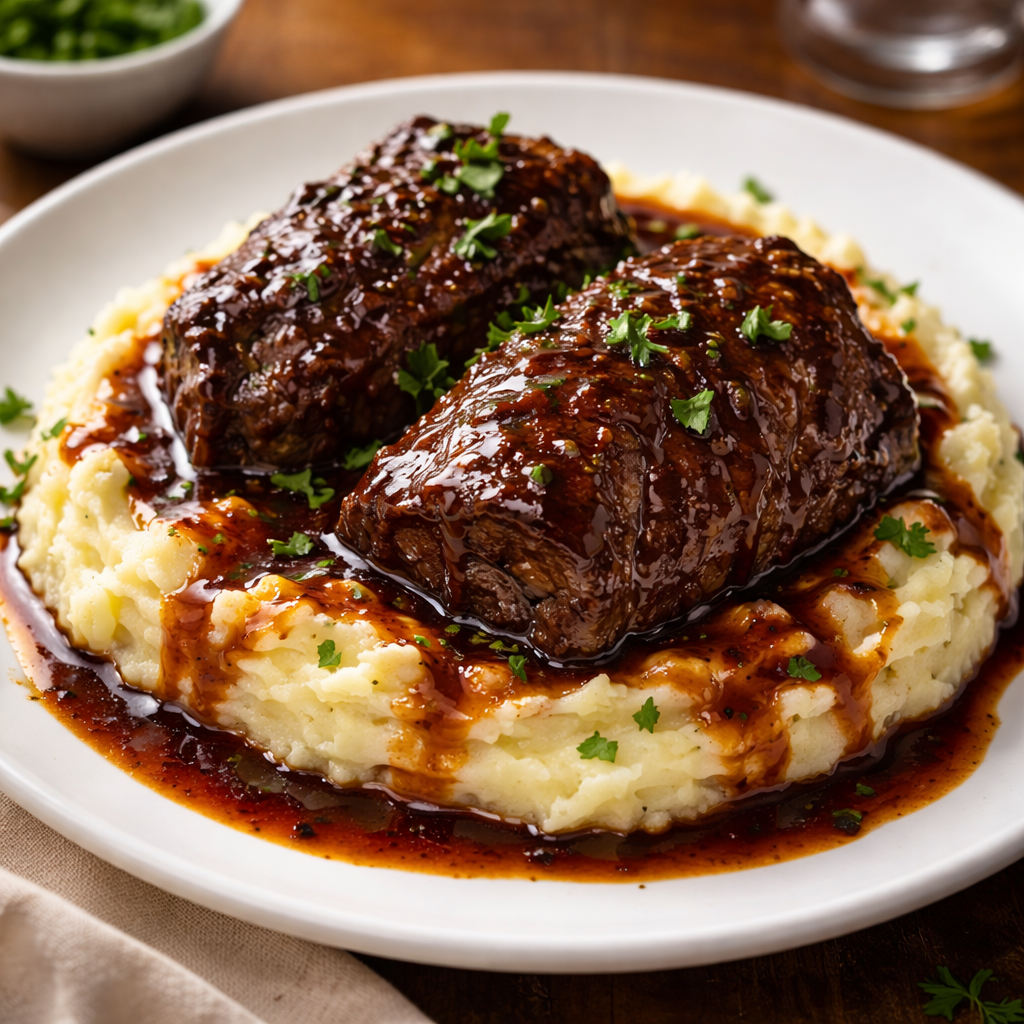
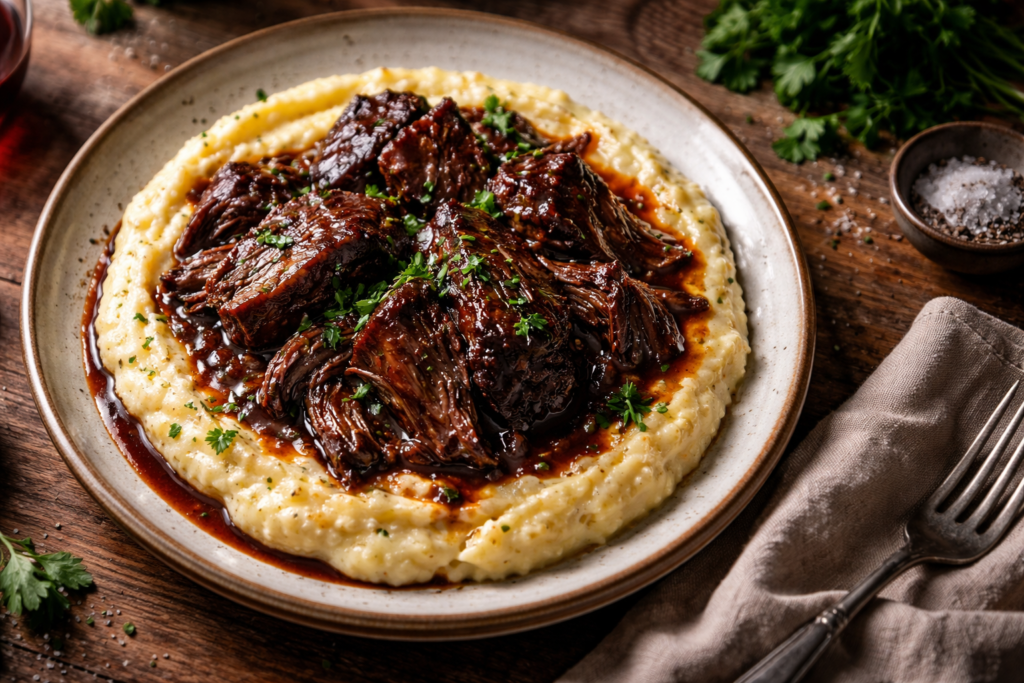
To do justice to this Beef Cheeks Recipe, you need a base that can absorb all that incredible sauce. Creamy mashed potatoes are the gold standard, but buttery polenta or parmesan risotto are also magnificent choices.
For presentation, place a generous scoop of your base in a shallow bowl. Place one or two beef cheeks on top and ladle the glossy reduction over the meat. Garnish with a bright pop of fresh gremolata (lemon zest, garlic, and parsley) to cut through the richness of the beef. A side of roasted root vegetables or sautéed broccolini provides the perfect textural contrast.
Common Mistakes and Fixes
- Mistake: Cooking too fast. If you boil the meat on high heat, the muscle fibers will tighten and become tough. Fix: Keep the temperature low. Braising is a marathon, not a sprint.
- Mistake: Sauce is too thin. If your braising liquid looks like soup rather than gravy. Fix: Remove the meat and boil the liquid vigorously on the stovetop to reduce and thicken it. You can also use a tiny bit of cornstarch slurry if you’re in a rush.
- Mistake: Too much fat. Beef cheeks can be fatty. Fix: Use a spoon to skim the oil off the surface of the sauce, or use a fat separator.
- Mistake: Undercooking. If the meat is hard to chew. Fix: Put it back in! Beef cheeks are almost impossible to overcook as long as there is liquid in the pot. If it’s tough, it simply hasn’t finished its transformation yet.
Mastering this Beef Cheeks Recipe will change the way you look at the butcher’s counter. It is a lesson in patience, a celebration of deep flavors, and quite possibly the most satisfying meal you will ever cook.