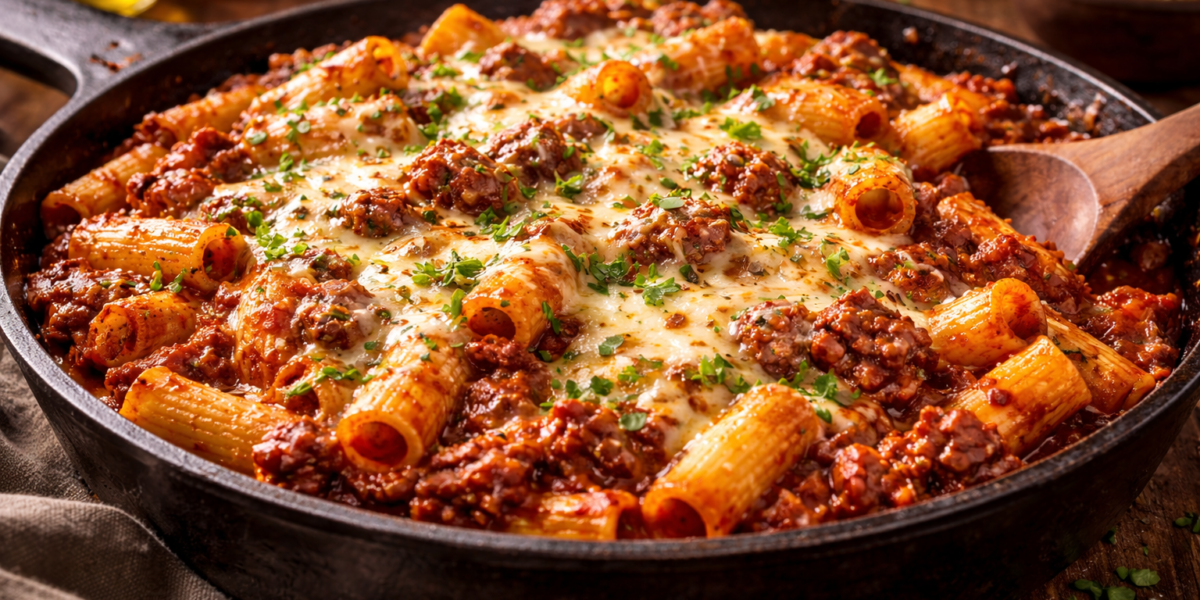
Ground Beef Pasta Recipes In the vast world of home cooking, few dishes offer the comfort, versatility, and universal appeal of a ground beef pasta recipe. It is the quintessential weeknight savior—a dish that can be whipped up in under thirty minutes yet possesses the depth of flavor usually reserved for slow-simmered Sunday sauces.
Whether you call it a “cheeseburger pasta,” a “quick Bolognese,” or simply a “beefy noodle bake,” the intersection of savory browned protein and al dente starch is a culinary gold mine. This guide focuses on a one-pot ground beef pasta technique. This method isn’t just about saving on the dishes; it is a strategic approach to flavor concentration and starch utilization that creates a silky, cohesive sauce that clings to every noodle.
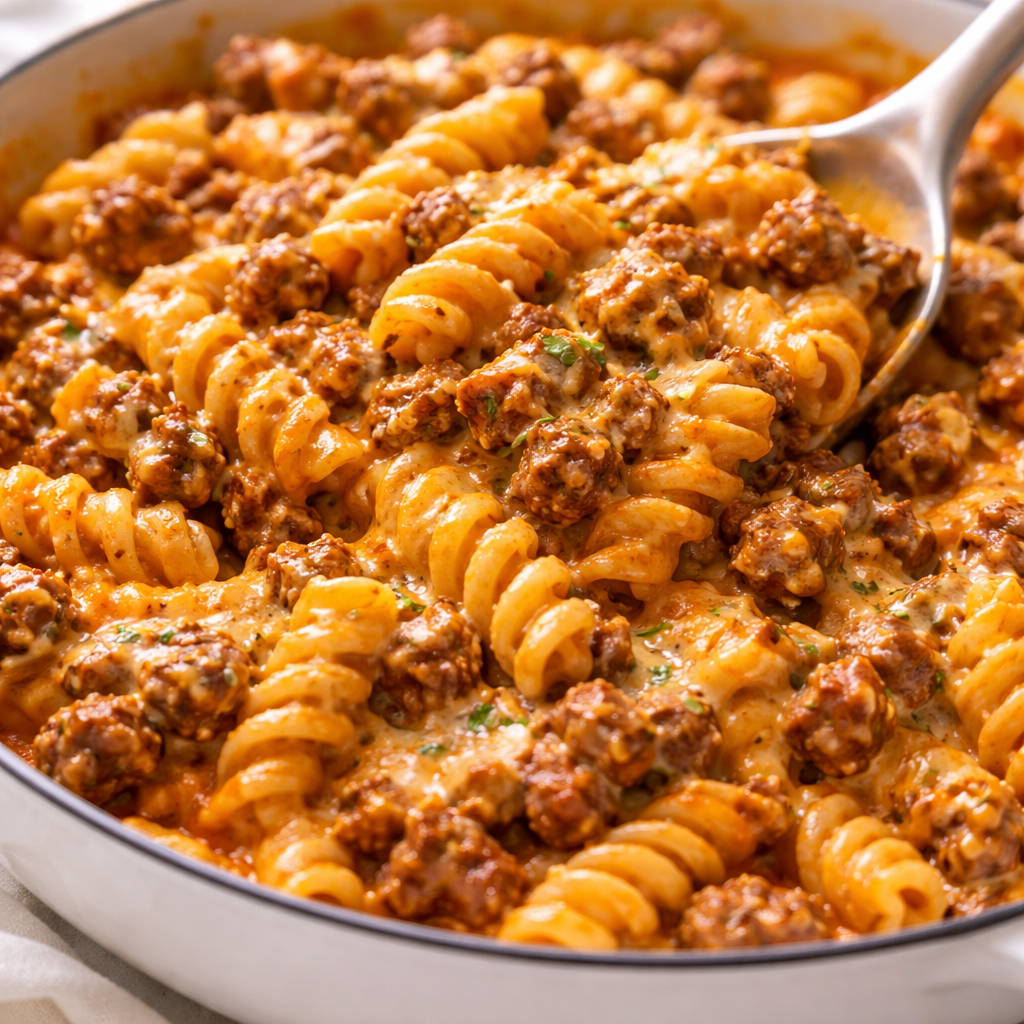
Traditional vs. This One-Pot Method
When we look at the evolution of the ground beef pasta recipe, two primary schools of thought emerge. Both have their merits, but understanding the difference is key to mastering the kitchen.
The Traditional Method (Separate Boiling)
The classic approach involves boiling pasta in a large pot of salted water while simultaneously browning the beef and aromatics in a separate skillet.
- The Benefit: This allows for perfect control over the pasta’s texture. You can drain the noodles the second they hit al dente.
- The Drawback: You often lose the “starchy water” unless you remember to save a cup. Furthermore, the sauce and the pasta are essentially two separate entities forced to live together at the very end.
The Modern One-Pot Method (Infusion Cooking)
Our featured method involves browning the meat and then cooking the dry pasta directly in the sauce and beef broth.
- The Benefit: As the pasta cooks, it releases its starches directly into the sauce. This creates a natural emulsion, making the sauce incredibly creamy without needing excessive heavy cream or butter. The pasta also absorbs the beefy, aromatic flavors of the broth, seasoning the noodle from the inside out.
- The Drawback: It requires more attention to liquid ratios to ensure the pasta doesn’t become mushy or the pot doesn’t run dry.
The Essential Ingredients List
To execute a high-quality ground beef pasta recipe, you need a balance of fat, acid, and aromatics. Here is your grocery list:
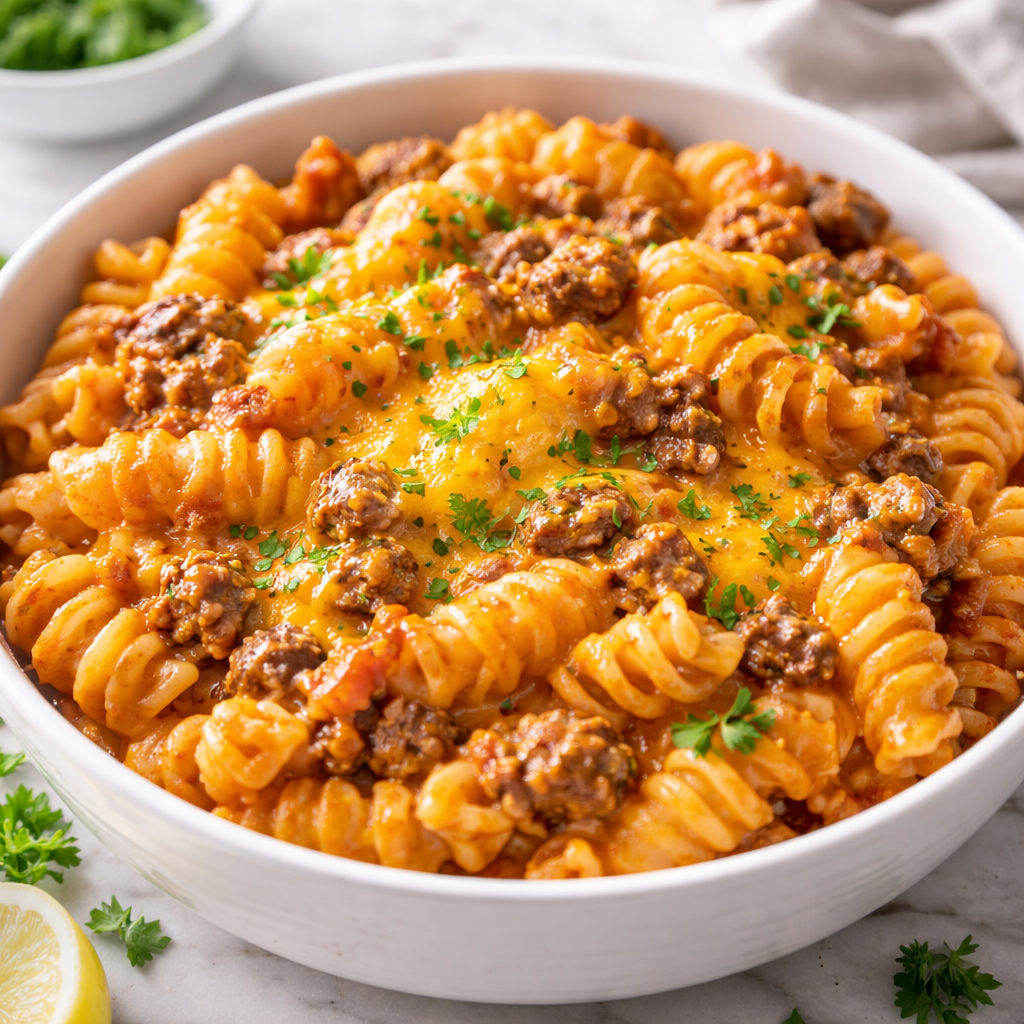
The Core Components
- 1 lb Ground Beef: Ideally 85/15 or 90/10 lean-to-fat ratio. This provides enough fat for flavor without making the dish greasy.
- 12 oz Dry Pasta: Short shapes like Penne, Rotini, or Rigatoni are best for this method as they hold the beef in their crevices.
- 3 cups Beef Broth: This is the liquid gold that will cook your pasta.
The Aromatics & Flavor Builders
- 1 Medium Yellow Onion: Finely diced to provide sweetness.
- 3 Cloves Garlic: Minced for that essential savory punch.
- 1 Bell Pepper (Optional): Finely diced for color and a subtle vegetal sweetness.
- 2 tbsp Tomato Paste: This provides a concentrated, “cooked-all-day” tomato flavor.
- 1 can (15 oz) Tomato Sauce or Crushed Tomatoes: For the base of your red sauce.
The Seasoning Matrix
- 1 tbsp Italian Seasoning: Usually a blend of oregano, basil, and thyme.
- 1 tsp Smoked Paprika: To enhance the “beefiness” and add a subtle grill-like aroma.
- Salt and Black Pepper: To taste.
- Red Pepper Flakes: For those who enjoy a hint of heat.
The Finishers
- 1 cup Shredded Sharp Cheddar or Mozzarella: For that classic “beef pasta” melt.
- Fresh Parsley: For a bright, herbaceous finish.
Stepwise Cooking: The Master Guide
1. The Maillard Phase (The Sear)
Set a large, deep skillet or Dutch oven over medium-high heat. Add your ground beef. Pro Tip: Don’t break it up too small immediately. Let it sit for 2–3 minutes to get a dark brown crust. This browning (the Maillard reaction) is where the deep flavor lives. Once browned, drain excess grease if necessary, but keep about a tablespoon for flavor.
2. The Aromatic Sweat
Add the diced onion and bell pepper to the beef. Sauté for 4–5 minutes until the onions are translucent and slightly golden. Stir in the garlic and tomato paste. Cook for another 60 seconds. You want the tomato paste to turn from bright red to a dark rust color; this removes the “raw” metallic taste.
3. The Deglaze
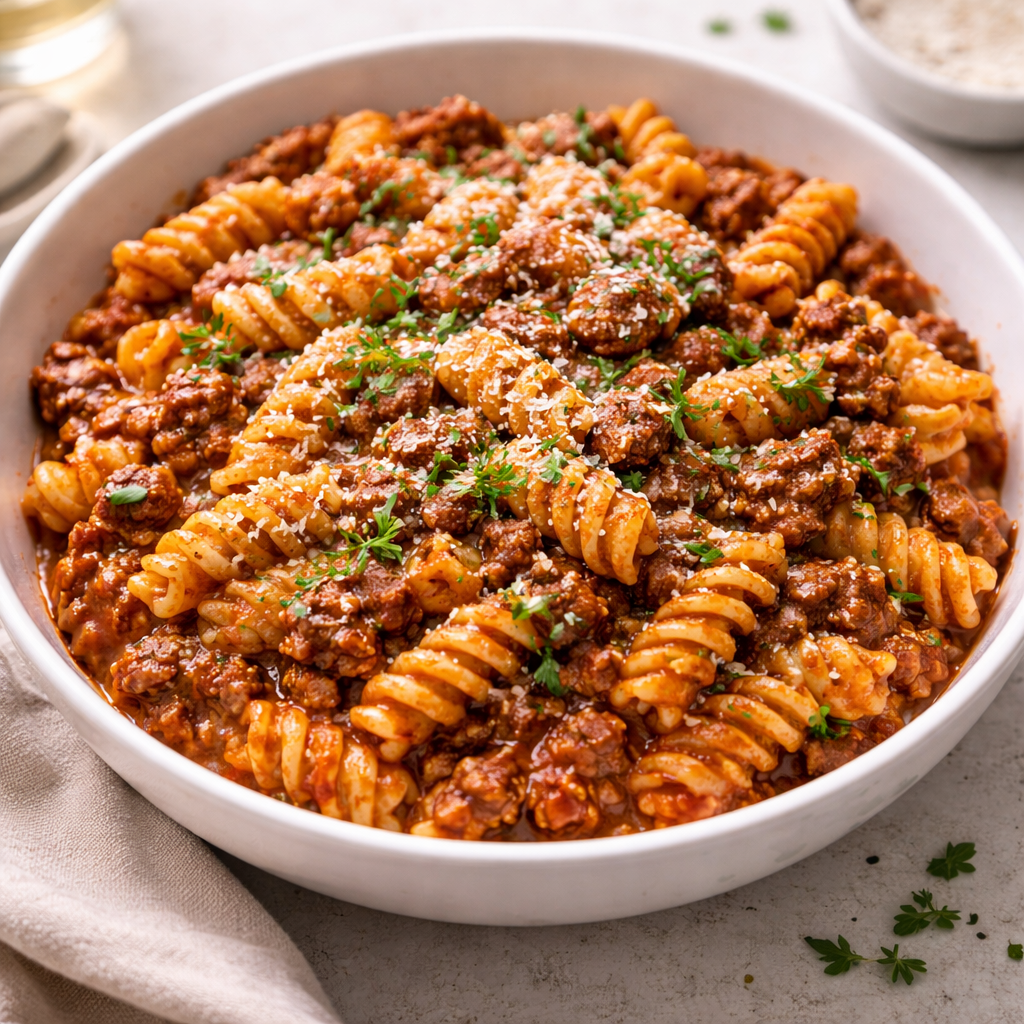
Pour in about 1/2 cup of the beef broth. Use a wooden spoon to scrape the bottom of the pan to release the fond (the flavorful brown bits stuck to the bottom). This ensures no flavor is wasted.
4. The Liquid Integration
Add the remaining beef broth, the tomato sauce, and your seasonings (Italian seasoning, paprika, salt, and pepper). Stir to combine.
5. The Pasta Submersion
Pour the dry pasta directly into the skillet. Stir it so the noodles are mostly submerged in the liquid. Bring the mixture to a boil.
6. The Controlled Simmer
Once boiling, reduce the heat to low. Cover the pan with a tight-fitting lid. This traps the steam, ensuring the pasta on top cooks at the same rate as the pasta on the bottom. Simmer for 10–12 minutes. Note: Stir the pot every 3 or 4 minutes to prevent the pasta from sticking to the bottom of the pan.
7. The Final Emulsion
After the timer goes off, remove the lid. Most of the liquid should be absorbed, leaving a thick, glossy sauce. If it’s too thick, add a splash of water. If it’s too thin, simmer uncovered for another 2 minutes.
8. The Cheese Fold
Turn off the heat. Sprinkle the shredded cheese over the top. Cover for 1 minute to allow it to melt, then gently fold the cheese into the pasta. Garnish with fresh parsley.
Why This Method Produces Better Results
Modern culinary science favors the one-pot ground beef pasta recipe for a very specific reason: Amylose and Amylopectin.
When pasta is boiled in a large pot of water, these starches are washed away and drained down the sink. In our one-pot method, these starches stay in the pan. They act as natural thickeners and emulsifiers. This is why the sauce feels “creamy” and “clinging” even if you don’t add heavy dairy.
Furthermore, because the pasta is absorbing broth rather than plain water, the flavor is uniform. Every bite of the noodle tastes like beef, tomato, and garlic, rather than just being a plain flour-and-water vessel for a separate sauce.
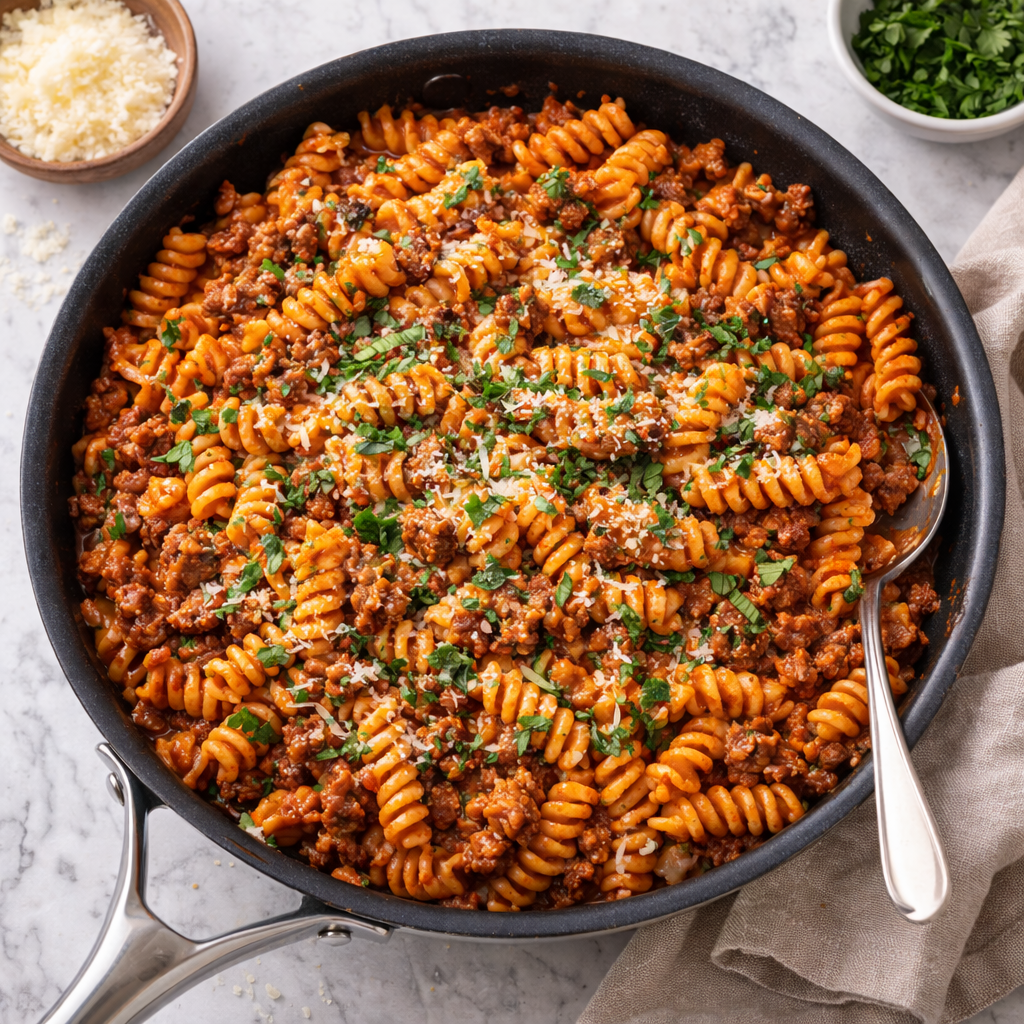
Adjustments for Personal Preference
The beauty of a ground beef pasta recipe is its adaptability. You can pivot the flavor profile with just a few small changes:
- The Healthy Swap: Use ground turkey or chicken instead of beef. If you do this, add 1 tablespoon of olive oil to the pan, as poultry is leaner and more prone to sticking.
- The Veggie Boost: Stir in two cups of fresh baby spinach during the final 2 minutes of cooking. The residual heat will wilt the spinach perfectly without making it slimy.
- The Creamy Deluxe: Stir in 4 ounces of cream cheese or a 1/2 cup of heavy cream at the very end (with the shredded cheese) for a “stroganoff-style” richness.
- The Spicy Kick: Swap the Italian seasoning for taco seasoning and use pepper jack cheese for a “Taco Pasta” variation.
Storage and Reheating Tips
Ground beef pasta is a champion of the “Leftover Olympics.” It often tastes better the next day as the flavors have more time to penetrate the pasta.
- Refrigeration: Store in an airtight container for up to 4 days.
- Freezing: You can freeze this dish for up to 3 months. However, be aware that the pasta may soften slightly upon thawing.
- The Pro Reheat: When reheating in the microwave or on the stove, add a tablespoon of water or broth. Pasta continues to absorb liquid as it sits in the fridge. Adding a little moisture prevents the dish from being dry or oily when reheated.
Easy Ground Beef and Rice Recipes
FAQ: Solving Your Cooking Frustrations
Q: My pasta is still crunchy, but the liquid is gone. What do I do? A: Don’t panic. Simply add another 1/2 cup of hot water or broth, stir, and cover. Continue simmering for another 3 minutes. This usually happens if your stove heat was a bit too high, causing the liquid to evaporate faster than the pasta could cook.
Q: Why is my beef pasta greasy? A: This usually happens if you use a high-fat beef (like 73/27) and don’t drain the fat after browning. If you see pools of oil, you can use a folded paper towel and a pair of tongs to “dab” the excess grease out of the pan before adding the broth.
Q: Can I use whole wheat pasta? A: Yes! However, whole wheat pasta usually requires about 20% more liquid and a slightly longer simmer time (3–5 minutes extra). Keep an eye on the pot and add a splash more broth if needed.
Q: Does the pasta shape matter? A: Absolutely. For a ground beef pasta recipe, avoid long, thin noodles like Spaghetti or Linguine in a one-pot setting. They tend to clump together and cook unevenly. Stick to “short” shapes like Shells, Elbows, or Fusilli.