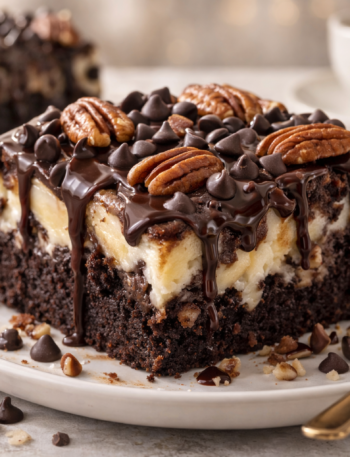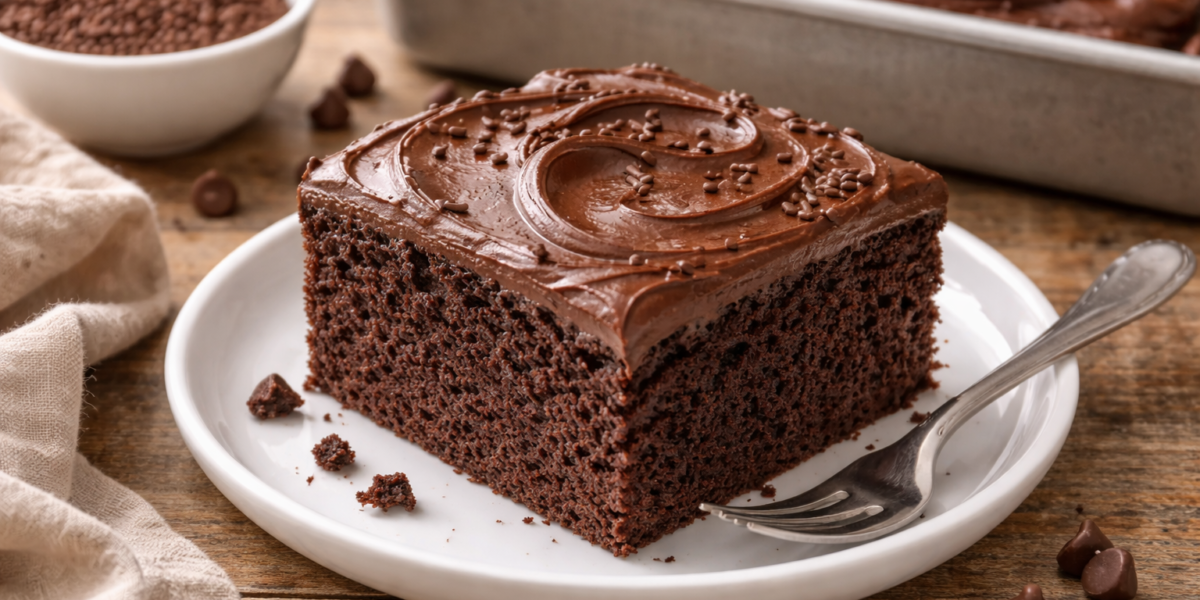
The Wacky Cake recipe—also known as “Depression Cake” or “Crazy Cake”—is a marvel of culinary pragmatism. Born out of the necessity of the 1930s, when dairy and eggs were either prohibitively expensive or strictly rationed, this recipe bypasses the traditional rules of patisserie. There is no creaming of butter, no whipping of egg whites, and no complex emulsification.
Instead, the Wacky Cake relies on a foundational chemical reaction between an acid and a base to achieve a crumb that is remarkably moist, dark, and tender. To the uninitiated, it looks like a kitchen experiment gone wrong; to the professional, it is a brilliant application of food science that produces one of the most reliable vegan chocolate cakes in the modern repertoire.
Ingredient Breakdown: The Functional Roles
In a standard cake, eggs provide structure and butter provides moisture and flavor. In a Wacky Cake, we must replace those functions using shelf-stable alternatives.
1. All-Purpose Flour (Structure)
Flour provides the gluten framework. In this recipe, we keep the mixing to a minimum to ensure the gluten remains “short,” resulting in a tender, melt-in-the-mouth texture rather than a bread-like chew.
2. Dutch-Processed Cocoa Powder (The Flavor Engine)
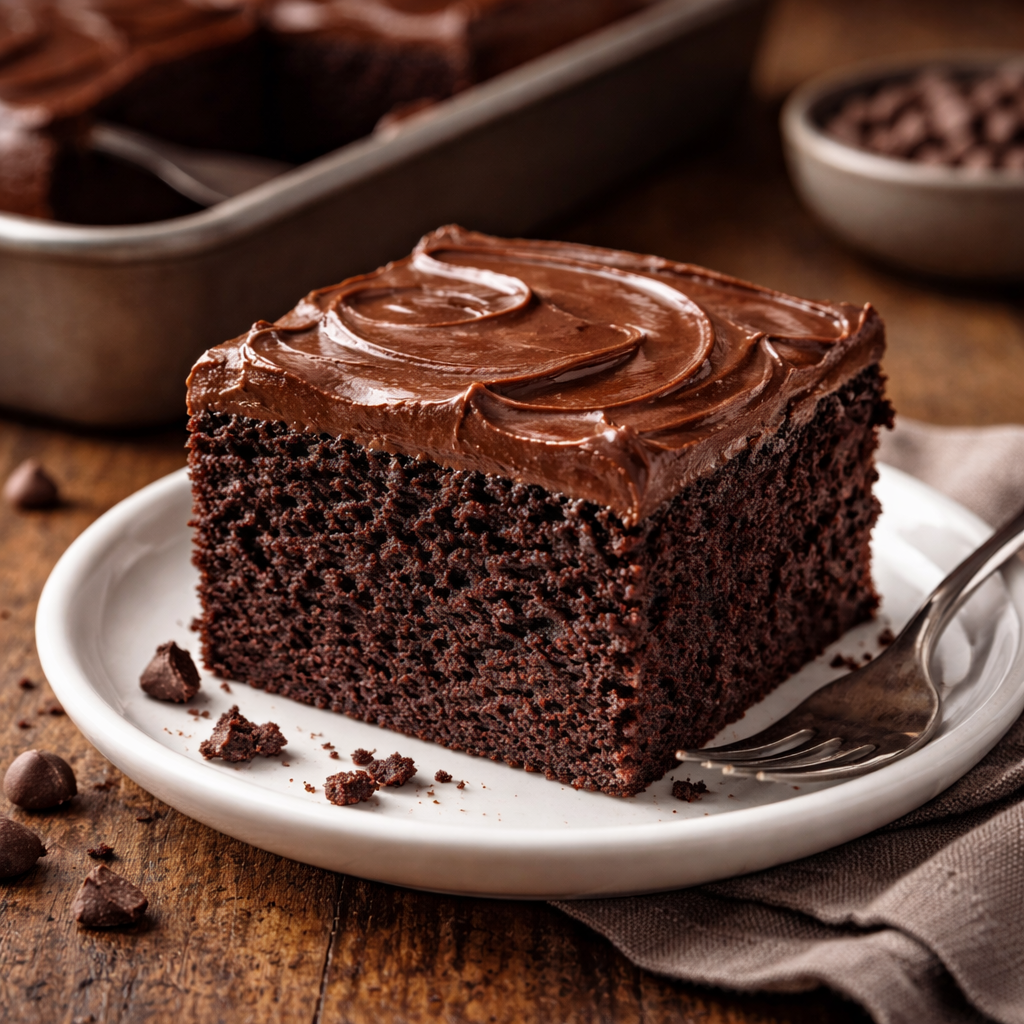
Because this cake lacks the richness of butter, the cocoa powder does the heavy lifting. Using a Dutch-processed cocoa—which has been treated with an alkalizing agent—yields a darker color and a smoother, less acidic chocolate profile.
3. Granulated Sugar (Hygroscopy)
Beyond sweetness, sugar is essential for moisture. Sugar is hygroscopic, meaning it attracts and holds onto water molecules, ensuring the cake remains “tacky” and moist for days.
4. Baking Soda and Distilled White Vinegar (The Leavening Duo)
This is the “wacky” core of the recipe. When the sodium bicarbonate (baking soda) meets the acetic acid (vinegar), it immediately produces carbon dioxide gas ($CO_2$). These bubbles become trapped in the flour’s structure, causing the cake to rise without the need for eggs.
5. Neutral Vegetable Oil (The Lipid)
Butter solidifies at room temperature, which can sometimes make cakes feel dry. Vegetable oil remains liquid, providing a consistent “mouthfeel” and ensuring the cake stays soft even when refrigerated.
6. Vanilla Extract and Salt (The Enhancers)
Salt suppresses bitterness and amplifies the perception of sweetness, while vanilla provides a floral background that rounds out the sharp edges of the cocoa.
Preparation Strategy: The One-Pan Philosophy
The traditional preparation of Wacky Cake is unique because it is mixed directly in the baking pan. This isn’t just a gimmick to save on washing up; it prevents the premature escape of $CO_2$ bubbles.
- Sifting is Mandatory: Because you are mixing in a flat pan rather than a deep bowl, you cannot whisk aggressively to remove lumps. Sift your dry ingredients directly into the pan to ensure a uniform crumb.
- The Three-Well Method: This is the hallmark of the recipe. You will create three indentations in the dry mixture—one large and two small—to keep the reactive liquids separate until the final stir.
Cooking Instructions
1. Sift and Level
Preheat your oven to 350°F (175°C). In an ungreased 9×9-inch square baking pan, sift together 1 ½ cups flour, 1 cup sugar, 3 tbsp cocoa, 1 tsp baking soda, and ½ tsp salt. Level the surface with a spatula.
2. Create the Wells
Using a spoon, make one large hole and two small holes in the dry mixture.
- In the large hole, pour 5 tbsp vegetable oil.
- In one small hole, pour 1 tsp white vinegar.
- In the other small hole, pour 1 tsp vanilla extract.
3. The Activation
Pour 1 cup of room-temperature water (or cold coffee for a deeper flavor) over the entire surface. Using a fork or a small whisk, stir the ingredients starting from the center and moving outward. Stir only until the streaks of flour disappear. The batter will begin to bubble slightly—this is your leavening agent at work.
4. The Bake
Immediately place the pan in the oven. Bake for 28–32 minutes. The cake is done when a wooden skewer inserted into the center comes out with just a few moist crumbs attached. Avoid over-baking, as the lack of eggs makes this cake prone to drying out if left in the heat too long.
Flavor & Texture Indicators
A successful Wacky Cake possesses a very specific set of sensory traits:
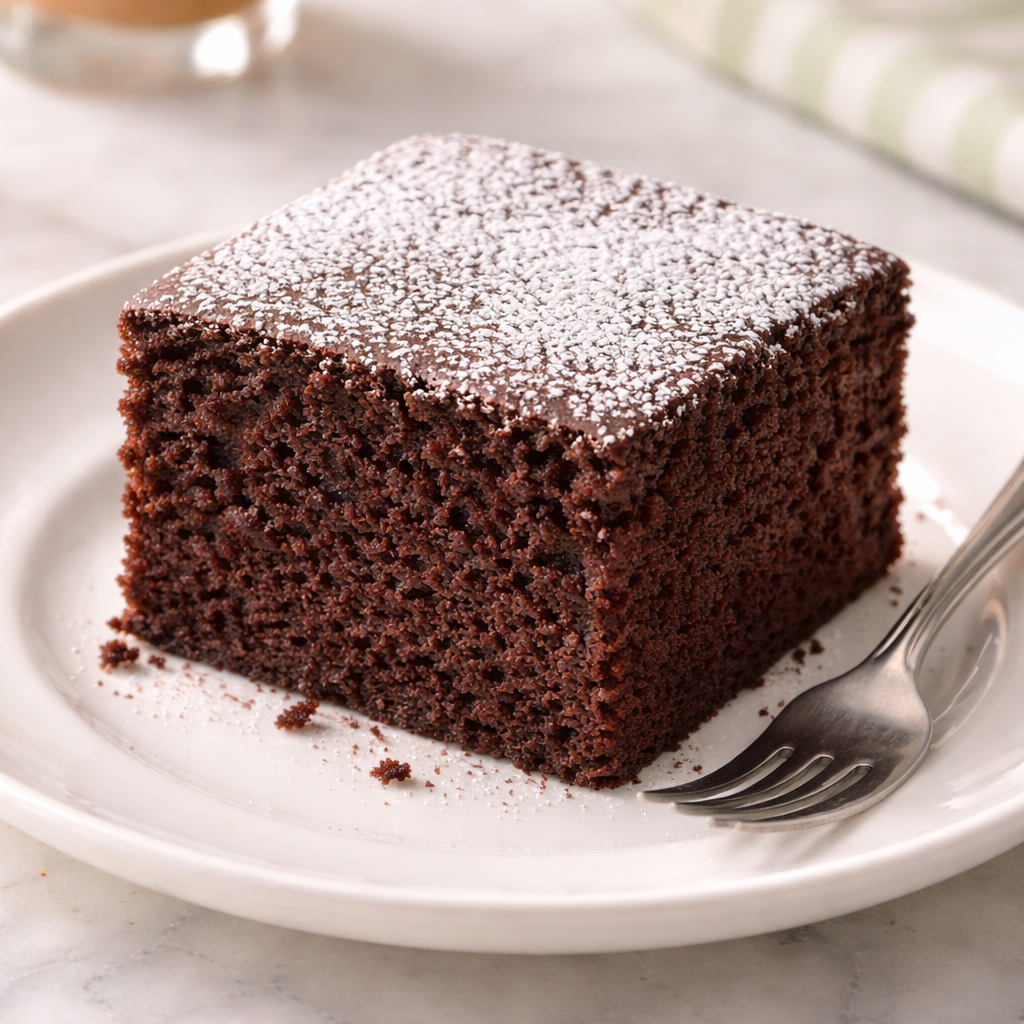
- The Crumb: It should be fine-pored and exceptionally soft. Because there are no egg proteins to “toughen” the structure, the cake should feel almost fragile.
- The Visuals: The top should be matte and slightly cracked. Unlike butter cakes, it won’t have a high-gloss sheen.
- The Flavor: It is a “clean” chocolate flavor. Without the masking effect of dairy, the cocoa notes are very prominent.
Adjustments for Different Skill Levels
The Beginner
Focus on the “No-Stir” rule. Beginners often over-mix the batter in the pan, trying to get it perfectly smooth. A few tiny lumps are better than a rubbery cake. Let the chemistry do the work.
The Intermediate
Swap the water for hot coffee. The heat “blooms” the cocoa powder, releasing deeper flavor compounds that are otherwise dormant. Additionally, try adding a half-cup of chocolate chips to the dry mix for pockets of molten chocolate.
The Advanced
Experiment with the acid. While white vinegar is traditional, Apple Cider Vinegar adds a subtle fruity undertone, and Balsamic Vinegar can create a sophisticated, complex chocolate profile that mimics expensive artisanal tortes.
Storage & Shelf Life
The Wacky Cake is arguably the longest-lasting sponge in the culinary world.
- Room Temperature: Wrapped tightly in plastic or kept in a cake dome, it stays moist for 5 to 6 days.
- Refrigeration: While most cakes dry out in the fridge, the oil base of the Wacky Cake keeps it supple for up to 8 days.
- Freezing: This cake freezes beautifully. Because it lacks eggs, it doesn’t become “rubbery” upon thawing. It can be frozen for up to 3 months.
Reader Questions
“Why didn’t my cake rise? It’s as flat as a brownie.”
This is almost always due to old baking soda. Baking soda loses its potency over time. To test yours, drop a pinch into a teaspoon of vinegar; if it doesn’t fizz violently, it’s time for a new box. Alternatively, you may have waited too long to put the pan in the oven after mixing, allowing the gas to dissipate.
“Can I use a different oil, like olive oil?”
Yes, but be mindful of the flavor. A neutral oil (canola or vegetable) is standard. Extra virgin olive oil will add a distinct peppery, fruity note. If you enjoy that combination with chocolate, it can be quite sophisticated.
“Does it have to be white vinegar?”
White vinegar is used because it has a neutral flavor profile. You can use Apple Cider Vinegar, but avoid Malt Vinegar or strong red wine vinegars, as their distinct flavors will clash with the cocoa.
“Is this cake vegan?”
Naturally, yes. As long as your sugar isn’t processed with bone char (if that is a concern) and your cocoa is pure, the Wacky Cake is an accidental vegan masterpiece.