Bearnaise Sauce recipe If you have ever sat down at a high-end steakhouse and marveled at that creamy, yellow, herb-flecked sauce draped over your filet mignon, you have encountered the king of condiments. Welcome to the definitive guide on mastering a Bearnaise sauce recipe. For a beginner, the French mother sauces can seem like an intimidating mountain to climb, but once you understand the basic physics of how ingredients bond together, you will realize that this Bearnaise sauce recipe is entirely within your reach.
A Bearnaise sauce recipe is essentially a child of Hollandaise. While Hollandaise is simple, lemon-forward, and buttery, Bearnaise is its sophisticated cousin—infused with the sharp, aromatic notes of tarragon, shallots, and black pepper. It is the ultimate “power-up” for your home cooking, capable of transforming a simple grilled chicken breast or a piece of poached salmon into a five-star dining experience. In this article, we are going to strip away the culinary jargon and give you a practical, step-by-step walkthrough to ensure your first Bearnaise sauce recipe is a total triumph.
What This Recipe Is
At its heart, a Bearnaise sauce recipe is an emulsion. If you remember middle school science, you know that oil and water do not naturally mix. In this recipe, we are forcing clarified butter (the fat) to bond with vinegar and egg yolks (the water-based liquids).
To keep these two enemies friendly and combined, we use egg yolks as the peacekeeper. Egg yolks contain lecithin, a natural emulsifier that holds the butter and vinegar together in a thick, velvety suspension. The “Wacky” part of a Bearnaise sauce recipe is the flavor base: a reduction of vinegar, wine, and herbs that provides a sharp, tangy contrast to the rich, heavy butter. It is a balance of opposites—fat and acid, heat and herb.
Kitchen Tools Required
One of the reasons beginners struggle with a Bearnaise sauce recipe is that they try to use the wrong tools. You don’t need a professional kitchen, but you do need a few specific items to manage the heat.
- A Small Saucepan: This is for making your “reduction” (the concentrated flavor liquid).
- A Double Boiler or a Heat-Proof Glass Bowl: We do not cook Bearnaise directly over a flame. We use the steam from a pot of simmering water to gently warm a bowl sitting on top. This prevents the eggs from scrambling.
- A Fine-Mesh Strainer: To remove the solid bits of shallot and peppercorn from your reduction, leaving you with a smooth sauce.
- A Balloon Whisk: You will be doing a fair amount of whisking. A sturdy, comfortable whisk is your best friend in any Bearnaise sauce recipe.
- A Damp Kitchen Towel: Pro tip—roll this into a “donut” shape on your counter and set your bowl inside it. This holds the bowl steady so it doesn’t spin while you whisk with one hand and pour butter with the other.
Ingredients
To make enough sauce for 4 people, you will need the following. Don’t worry if these seem specific; they are the keys to an authentic Bearnaise sauce recipe.
The Flavor Reduction
- 1/4 cup White Wine Vinegar: Provides the sharp “snap.”
- 1/4 cup Dry White Wine: (Like Sauvignon Blanc) adds depth.
- 1 Small Shallot: Finely minced.
- 2 tablespoons Fresh Tarragon: Chopped (Dried works, but fresh is far superior for a Bearnaise sauce recipe).
- 1 teaspoon Crushed Black Peppercorns: For a gentle, earthy heat.
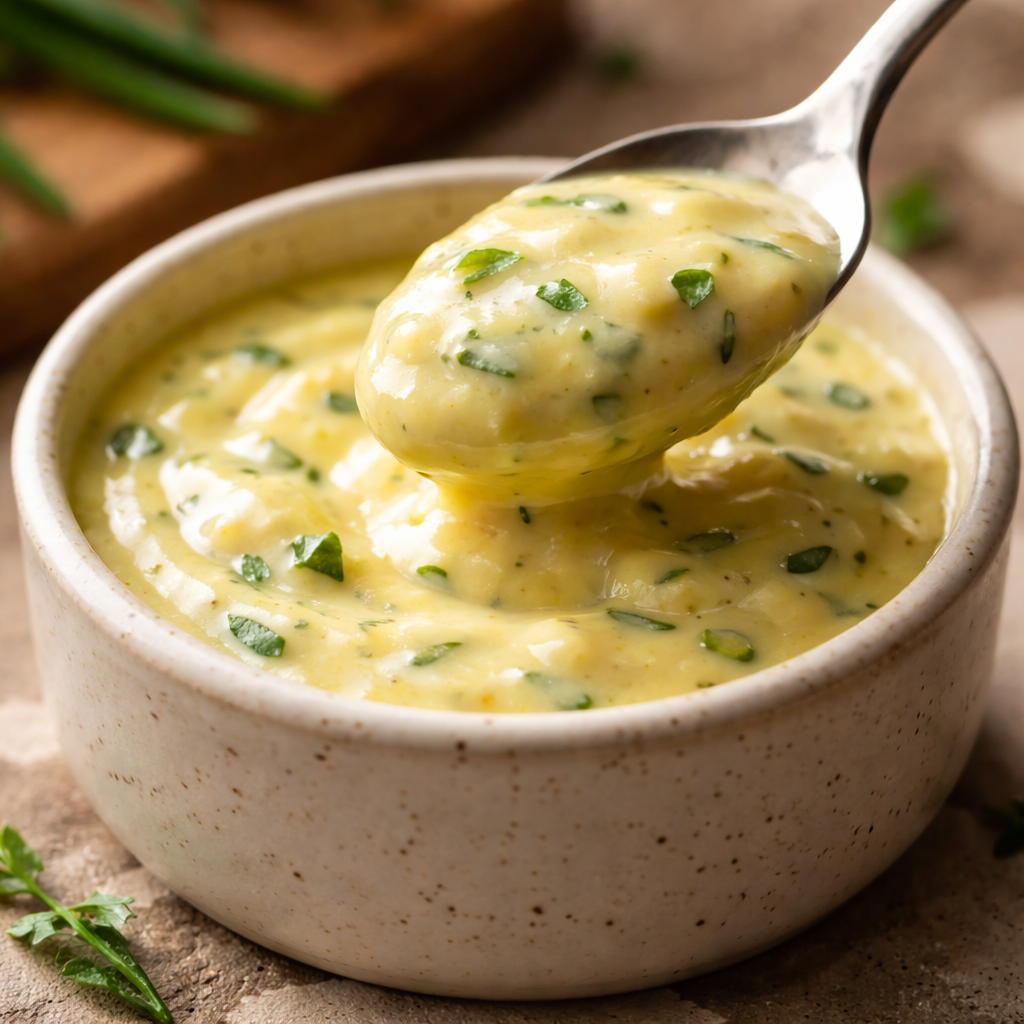
The Sauce Body
- 3 Large Egg Yolks: Room temperature is best.
- 1 cup (2 sticks) Unsalted Butter: We will turn this into “clarified butter” or “ghee” for the smoothest texture.
- A Pinch of Salt: To taste.
- 1 tablespoon Fresh Chervil or Extra Tarragon: For the final garnish.
Preparation Walkthrough
Before you turn on the stove, you must do your “Mise en Place” (everything in its place). A Bearnaise sauce recipe moves fast, and if you have to stop to chop a shallot while your eggs are cooking, the sauce will break.
1. Clarify the Butter
Place your two sticks of butter in a small pot over low heat. Let it melt completely without stirring. You will see three layers: white foam on top, clear yellow oil in the middle, and white milk solids at the bottom. Skim off the foam with a spoon. Carefully pour the clear yellow oil (the clarified butter) into a measuring cup, leaving the white milk solids behind. Keep this butter warm, but not boiling hot.
2. Prepare the “Bain-Marie”
Fill a medium pot with about 2 inches of water and bring it to a very gentle simmer. You want small bubbles, not a rolling boil. Ensure that when you place your glass bowl on top, the bottom of the bowl does not touch the water. The eggs should be cooked by steam, not direct contact with boiling water.
Cooking Process Explained Clearly
Now we enter the heart of the Bearnaise sauce recipe. Take a deep breath—you can do this!
Phase 1: The Reduction
In your small saucepan, combine the vinegar, wine, shallots, half of the tarragon, and the peppercorns. Bring this to a simmer over medium heat. You want to boil it down until only about 1.5 to 2 tablespoons of liquid remain. It will look like a thick, syrupy concentrate. Strain this liquid into your glass bowl and discard the solids.
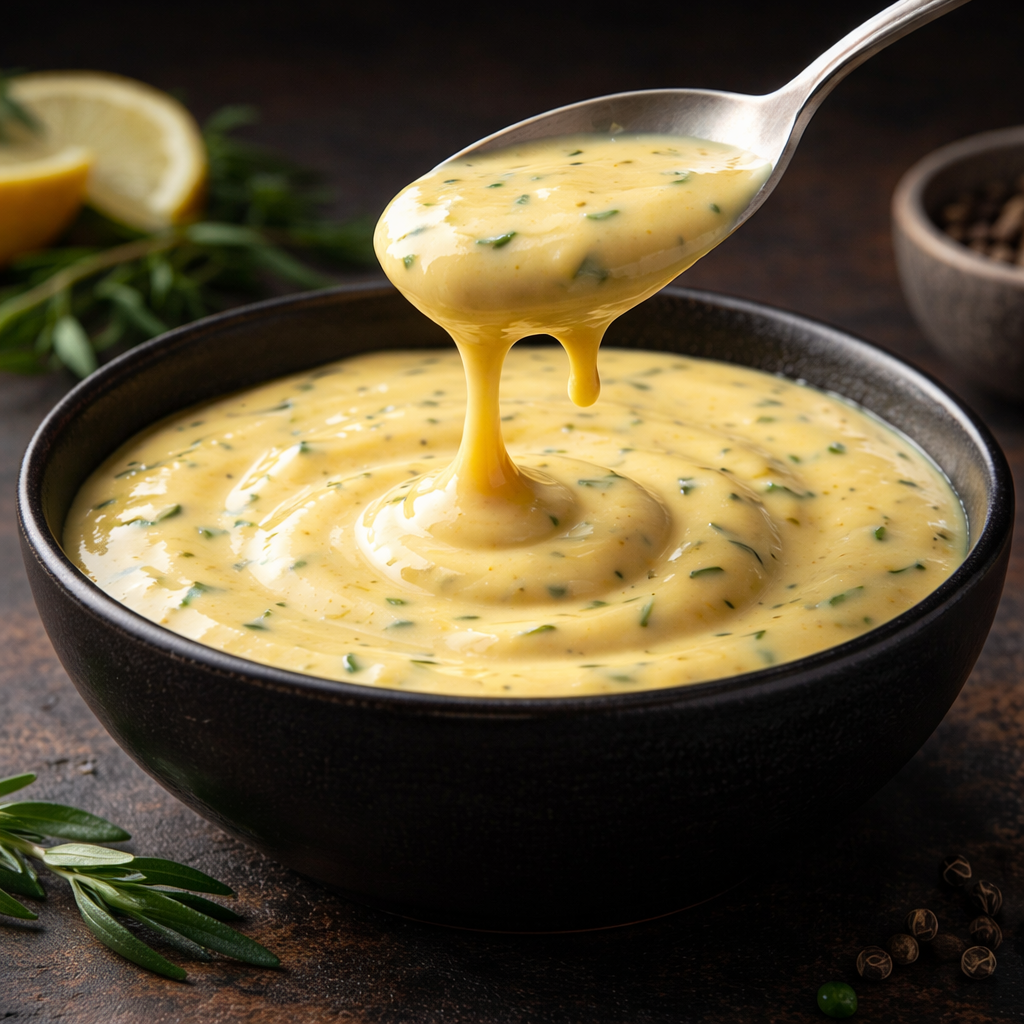
Phase 2: The Egg Foam
Add your 3 egg yolks to the strained reduction in the glass bowl. Place the bowl over your simmering pot of water. Start whisking immediately and don’t stop. You are looking for the eggs to become pale yellow, frothy, and thick enough that the whisk leaves a “trail” in the bowl. This usually takes about 2 to 4 minutes. If the bowl feels too hot, lift it up for a few seconds to let some steam escape.
Phase 3: The Emulsion (The Magic Moment)
This is the most critical part of the Bearnaise sauce recipe. While whisking constantly, begin adding your warm clarified butter to the egg mixture.
The Golden Rule: Start with a few drops at a time. Whisk until it is fully incorporated. Then, a tiny drizzle. Once the sauce begins to look thick and glossy like mayonnaise, you can pour in a thin, steady stream. If you pour too fast, the sauce will “break” and turn into a greasy mess.
Phase 4: Final Seasoning
Once all the butter is in, remove the bowl from the heat. Stir in your remaining fresh tarragon and a pinch of salt. Taste it—it should be buttery, tangy, and incredibly smooth.
How to Know It’s Done
A successful Bearnaise sauce recipe result will have a very specific “feel” to it:
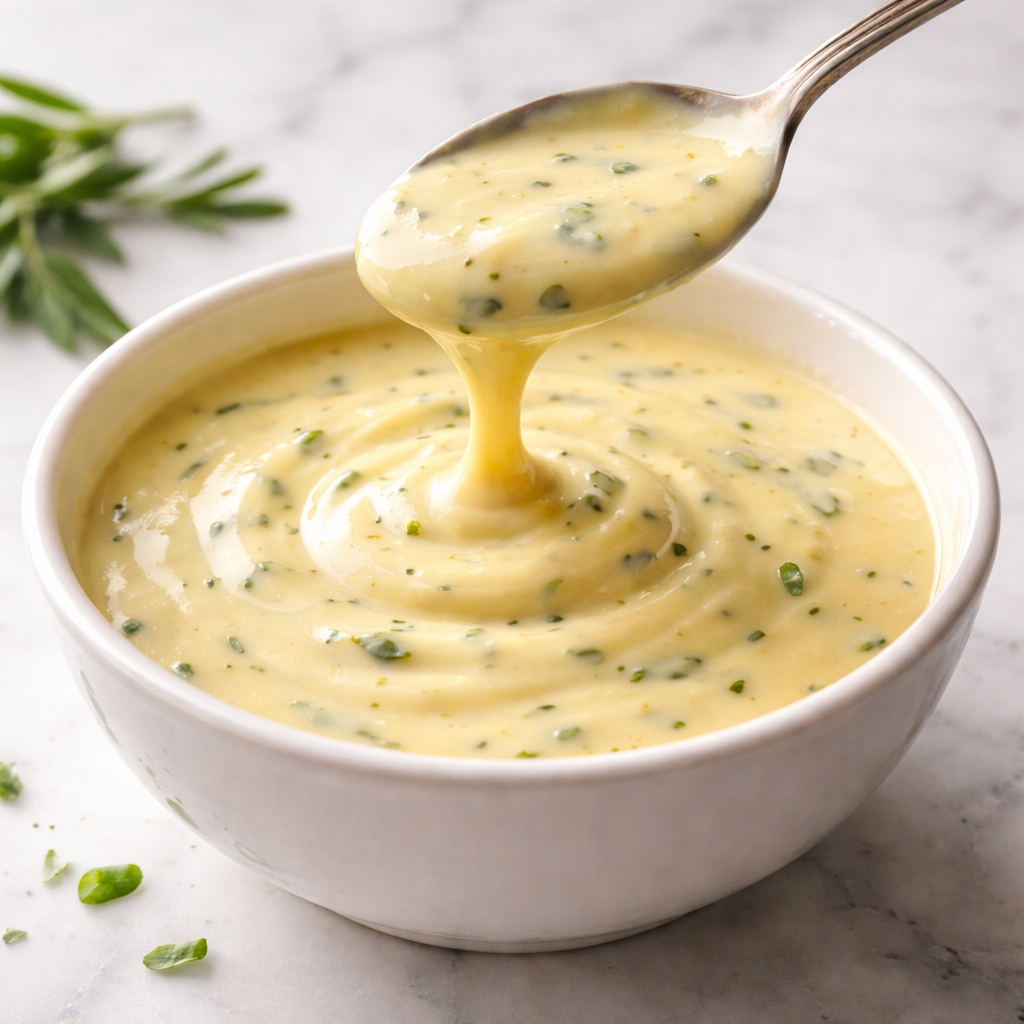
- Consistency: It should be thick enough to hold its shape on a spoon but fluid enough to pour slowly. If it looks like thick pudding, it might be a bit overcooked or too cold.
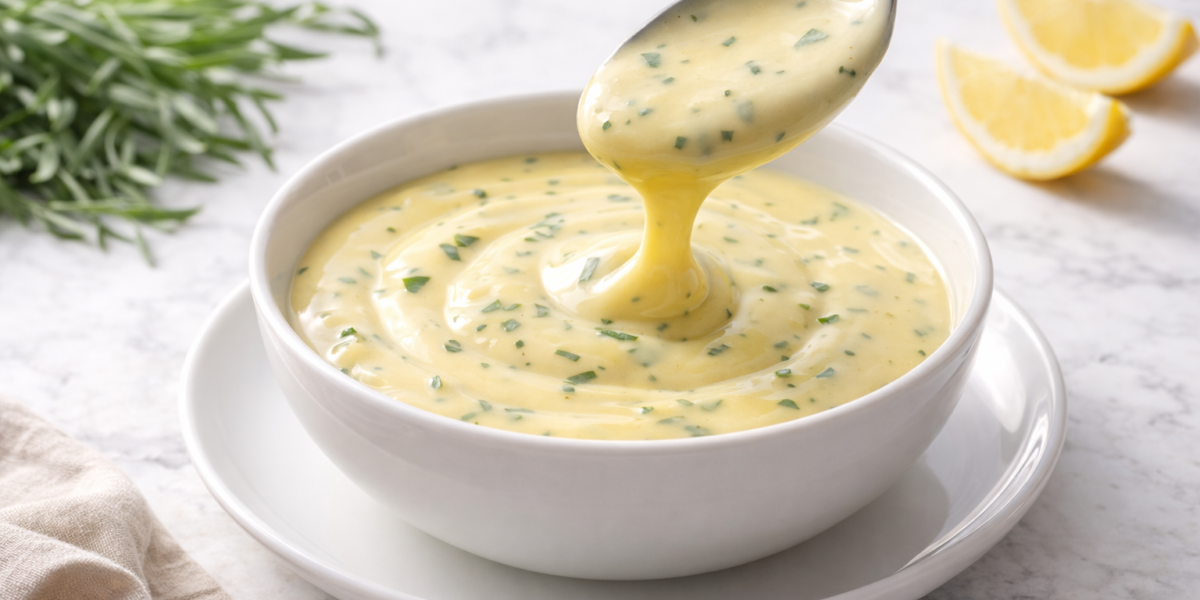
- The Ribbon Test: Lift your whisk out of the sauce. The sauce should fall back into the bowl in a “ribbon” that sits on the surface for a second before disappearing.
- The Gloss: A perfect Bearnaise sauce recipe result will have a beautiful, satin-like shine. If it looks dull, it needs a tiny bit more whisking or warmth.
- The Temperature: It should be warm (like a baby’s bathwater), not hot. If it’s hot enough to burn your tongue, you have likely scrambled the eggs.
Troubleshooting Section
Don’t panic! Even professional chefs occasionally struggle with a Bearnaise sauce recipe. Here is how to fix the most common beginner problems:
“My sauce is thin and watery!”
- The Cause: You likely didn’t whisk the egg yolks long enough before adding the butter, or you added the butter too quickly.
- The Fix: Take a fresh egg yolk and put it in a clean bowl with a teaspoon of warm water. Whisk it until frothy over the steam. Now, very slowly, whisk your thin, failed sauce into this new yolk. It will act as a “reset button” for your emulsion.
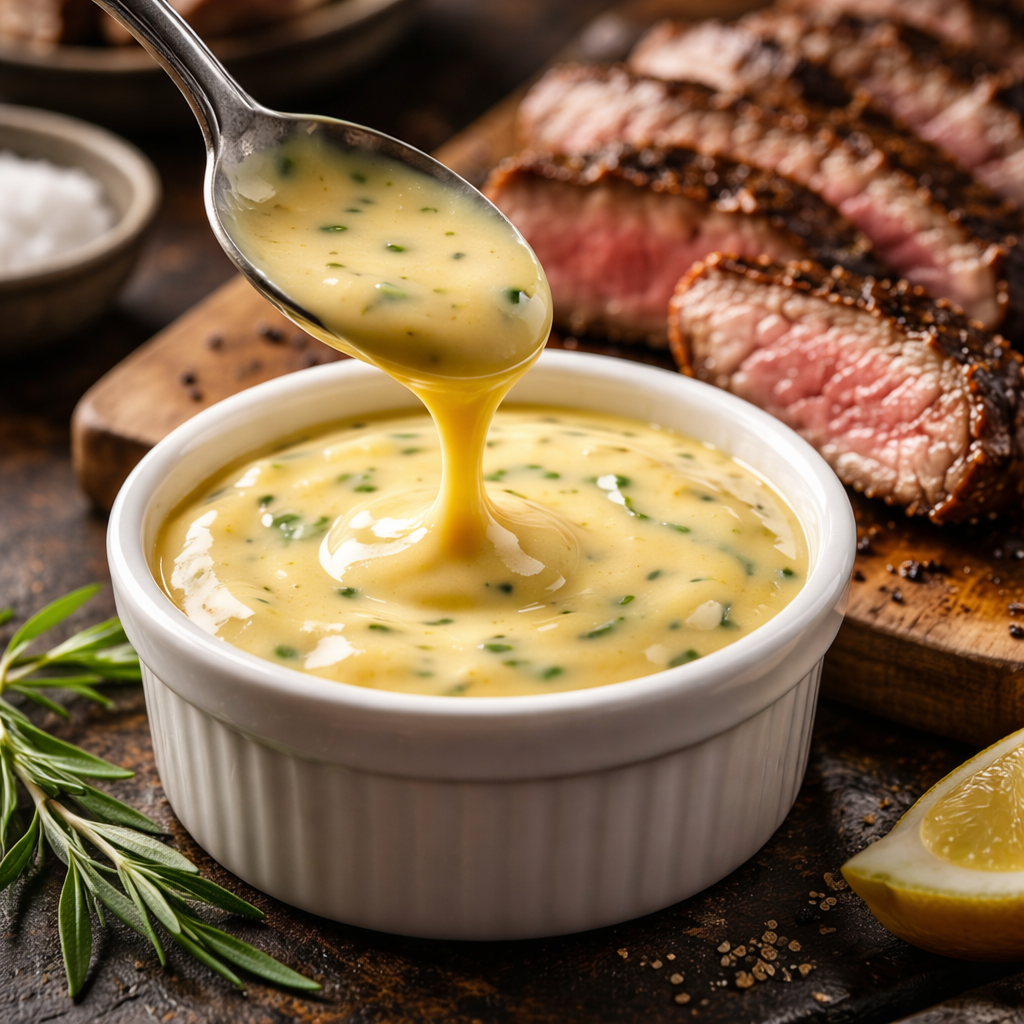
“My sauce has ‘broken’ (it looks oily and curdled)!”
- The Cause: The butter was too hot, or you added it too fast.
- The Fix: Add a teaspoon of boiling water to a clean bowl and whisk a small amount of the broken sauce into it. Once it starts to come back together, slowly whisk in the rest. Alternatively, an ice cube can sometimes “shock” the fat back into place.
“My eggs have scrambled!”
- The Cause: The heat was too high.
- The Fix: Unfortunately, once the proteins in the egg have cooked into solid clumps, you cannot un-cook them. You will need to strain the sauce through a very fine sieve to remove the clumps, or start over. (But hey, now you know the limit of the heat!)
Quick FAQ
Q: Can I make this Bearnaise sauce recipe in a blender? A: Yes! To make a “Cheater’s Bearnaise,” put your reduction and eggs in a blender. With the blender running on low, slowly drizzle in very hot (not clarified) butter. It’s not as “noble” as the whisked version, but it works great for a quick weeknight meal!
Q: Can I reheat the sauce if it gets cold? A: This is tricky. You cannot put it back on high heat or in the microwave. The best way is to place the sauce in a bowl over warm (not boiling) water and whisk gently until it loosens up.
Q: How long does Bearnaise sauce stay fresh? A: Because it contains eggs that are only partially cooked, a Bearnaise sauce recipe should be eaten within an hour or two of making it. It does not store well in the fridge, as the butter will solidify and the texture will be ruined.
Q: What do I do if I don’t have fresh tarragon? A: Tarragon is what makes Bearnaise, Bearnaise. If you can’t find it, you are technically making Hollandaise. However, you can use dried tarragon in the reduction, just use half as much as you would fresh.
Q: Is there a substitute for white wine vinegar? A: You can use lemon juice in a pinch, but the flavor will be more like a Hollandaise. Apple cider vinegar is a decent second choice, though it changes the color slightly.