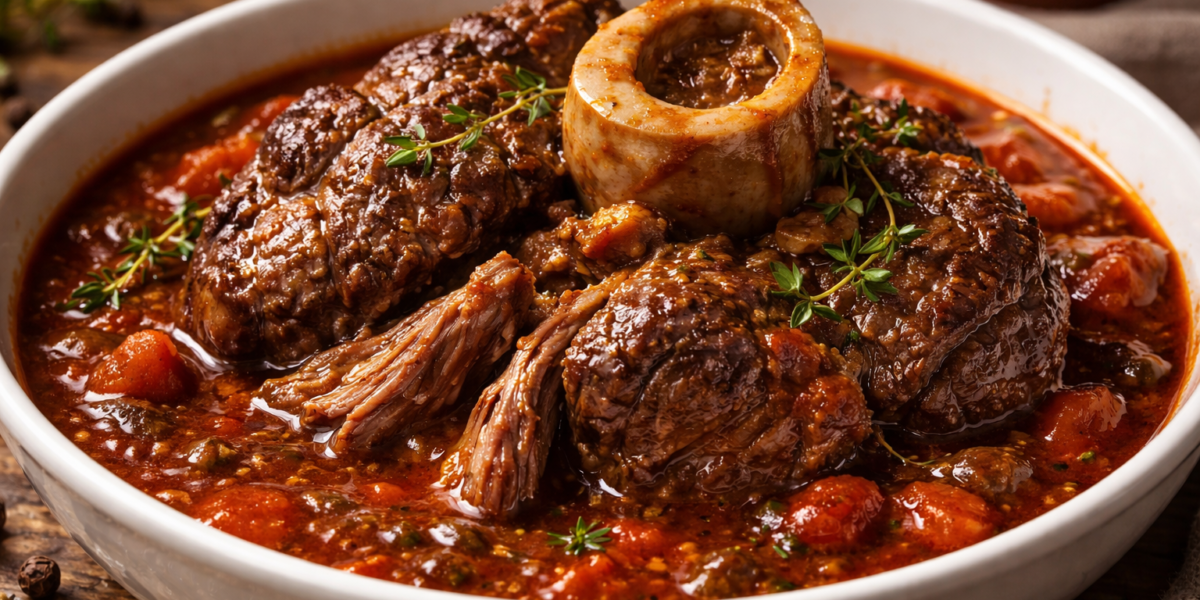
Beef Shank Recipes The most persistent frustration when dealing with beef shank recipes is the “shoe-leather” result. We have all been there: lured in by the beautiful marbling and the promise of a rich, marrow-filled center, only to end up with meat that is stringy, tough, and impossible to chew. Because the shank is a hard-working muscle from the leg of the cow, it is packed with connective tissue and collagen. If you treat it like a steak, it will fail every time.
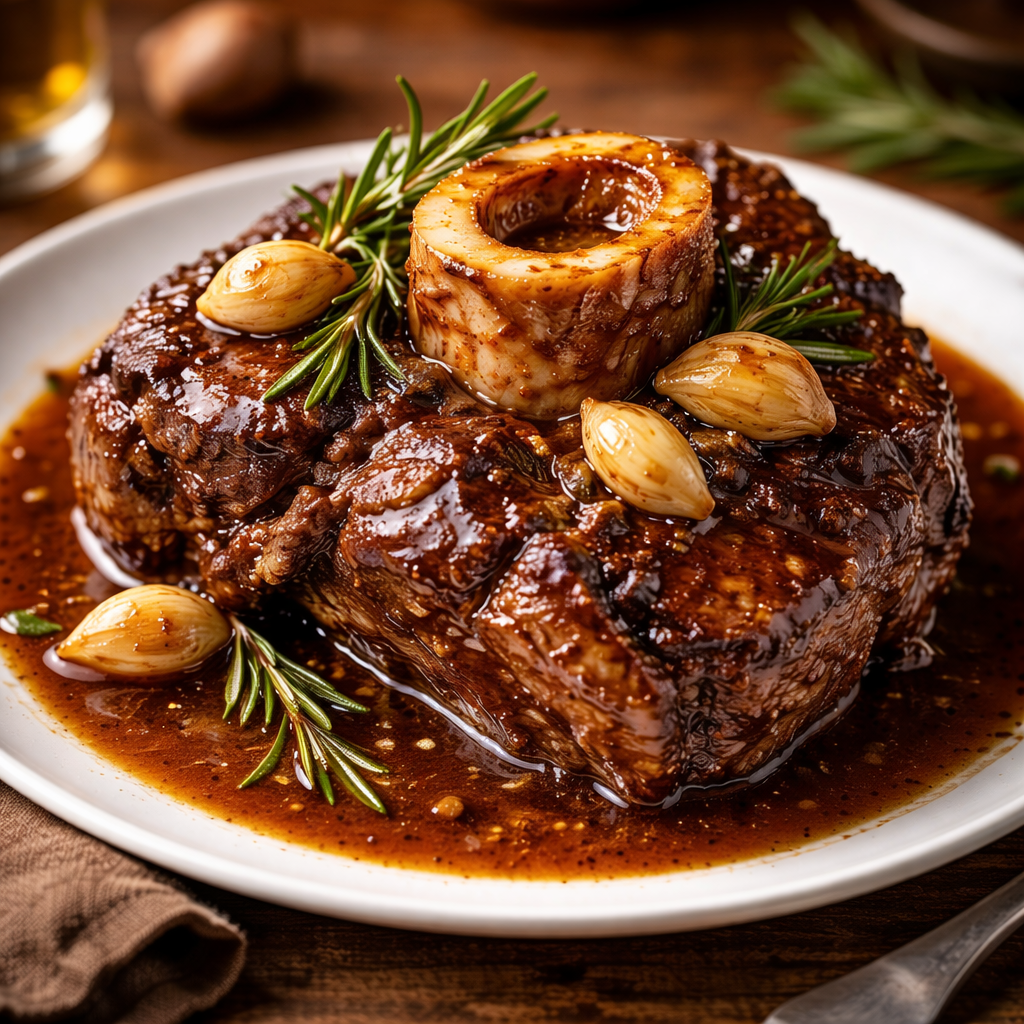
The secret to a professional-grade beef shank recipe lies in the science of collagen conversion. When subjected to low, steady, moist heat over several hours, that tough white connective tissue doesn’t just soften—it physically transforms into gelatin. This process creates a “melt-in-your-mouth” texture and a sauce with a luxurious, lip-smacking body that no other cut of beef can replicate.
This guide focuses on a classic Red Wine Braised Beef Shank, a technique-heavy approach that ensures your dinner is a succulent masterpiece rather than a mechanical struggle.
Why This Recipe Works
This braised beef shank recipe succeeds by utilizing a multi-stage flavor extraction process.
- Bone-In Marrow Enrichment: By keeping the central bone intact, we allow the marrow to render directly into the braising liquid. This adds a level of buttery richness and “mouthfeel” that boneless cuts simply cannot achieve.
- The “Two-Sided” Sear: We apply a heavy crust to the meat before braising. This Maillard reaction creates the savory complexity (fond) that serves as the flavor base for the entire sauce.
- Acidic Breakdown: The use of dry red wine and tomato paste provides the necessary acidity to help weaken the muscle fibers during the long simmer, speeding up the tenderizing process.
- Gelatinous Thickening: Unlike a stew thickened with flour (roux), this recipe relies on the natural gelatin from the shanks to thicken the sauce. This results in a cleaner, more intense beef flavor.
Ingredients & Measurements
For a professional yield that serves four, precision in your aromatics is key to balancing the “heaviness” of the beef.
The Protein
- 4 Thick-Cut Beef Shanks (Osso Buco style): Aim for 1.5 to 2 inches thick. Each should weigh approximately 12–16 oz.
- 3 tbsp Avocado Oil or Ghee: These have high smoke points, essential for a proper sear.
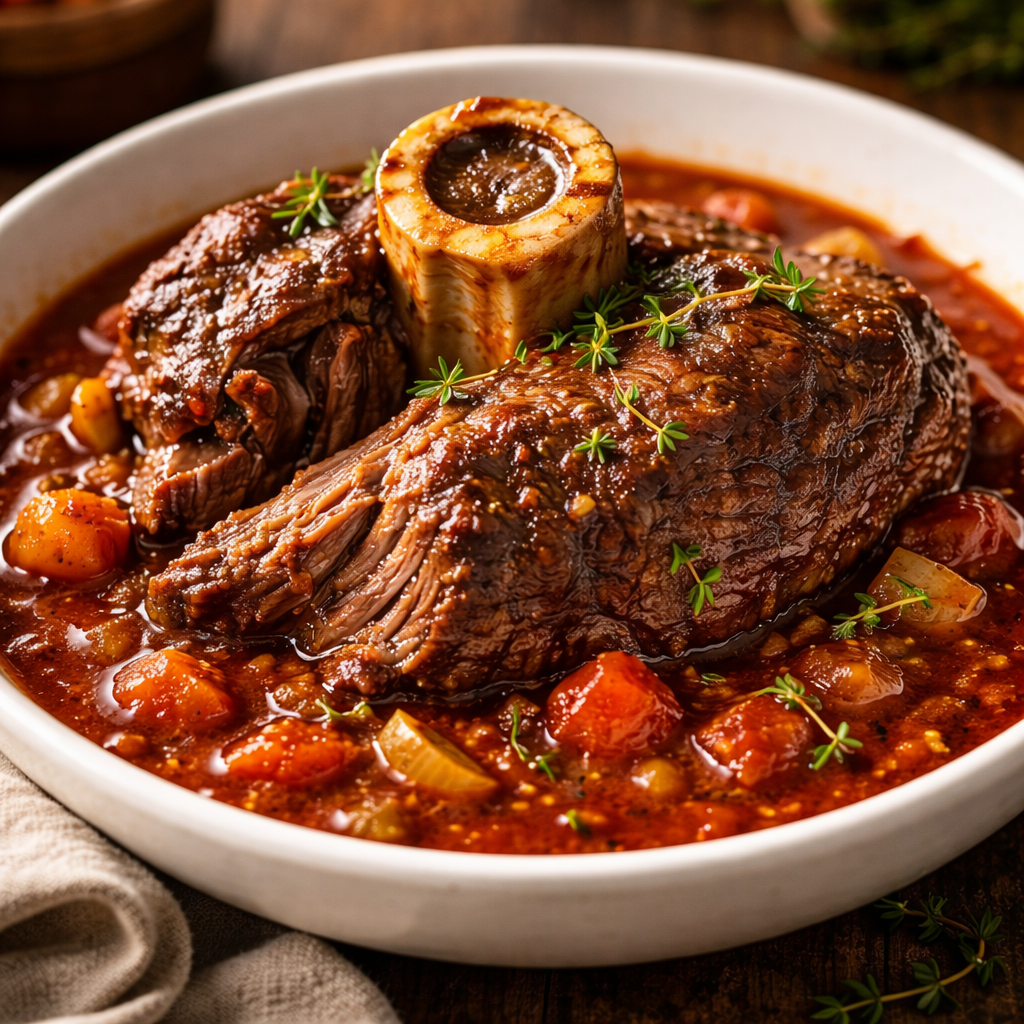
The Braising Base (The Mirepoix)
- 2 Large Carrots: Diced.
- 2 Stalks Celery: Diced.
- 1 Large Yellow Onion: Diced.
- 4 Cloves Garlic: Smashed and peeled.
- 2 tbsp Tomato Paste: For concentrated umami.
The Liquids and Herbs
- 2 cups Dry Red Wine: Cabernet Sauvignon or Merlot work best. Avoid “cooking wine” which is high in sodium.
- 3 cups Beef Bone Broth: Higher protein content in bone broth leads to a better sauce.
- 3 Sprigs Fresh Thyme & 2 Bay Leaves.
- 1 tsp Peppercorns: Whole.
Step-by-Step Cooking Guide
1. The Tempering and Tying
Remove the shanks from the fridge 30 minutes before cooking. Pat them bone-dry with paper towels. Pro Tip: Tie a piece of kitchen twine around the circumference of each shank. This prevents the meat from falling off the bone during the long braise, ensuring a beautiful presentation.
2. The Aggressive Sear
Season the shanks heavily with kosher salt. In a large Dutch oven, heat the oil over medium-high heat. Sear the shanks for 5–7 minutes per side. You are looking for a dark, mahogany crust. If you don’t hear a violent sizzle, the pan isn’t hot enough. Remove the meat and set it aside.
3. Sautéing the Aromatics
Lower the heat to medium. Add the carrots, celery, and onions to the beef fat. Sauté for 8 minutes until the onions are soft and golden. Stir in the tomato paste and garlic, cooking for another 2 minutes until the paste turns a dark brick-red.
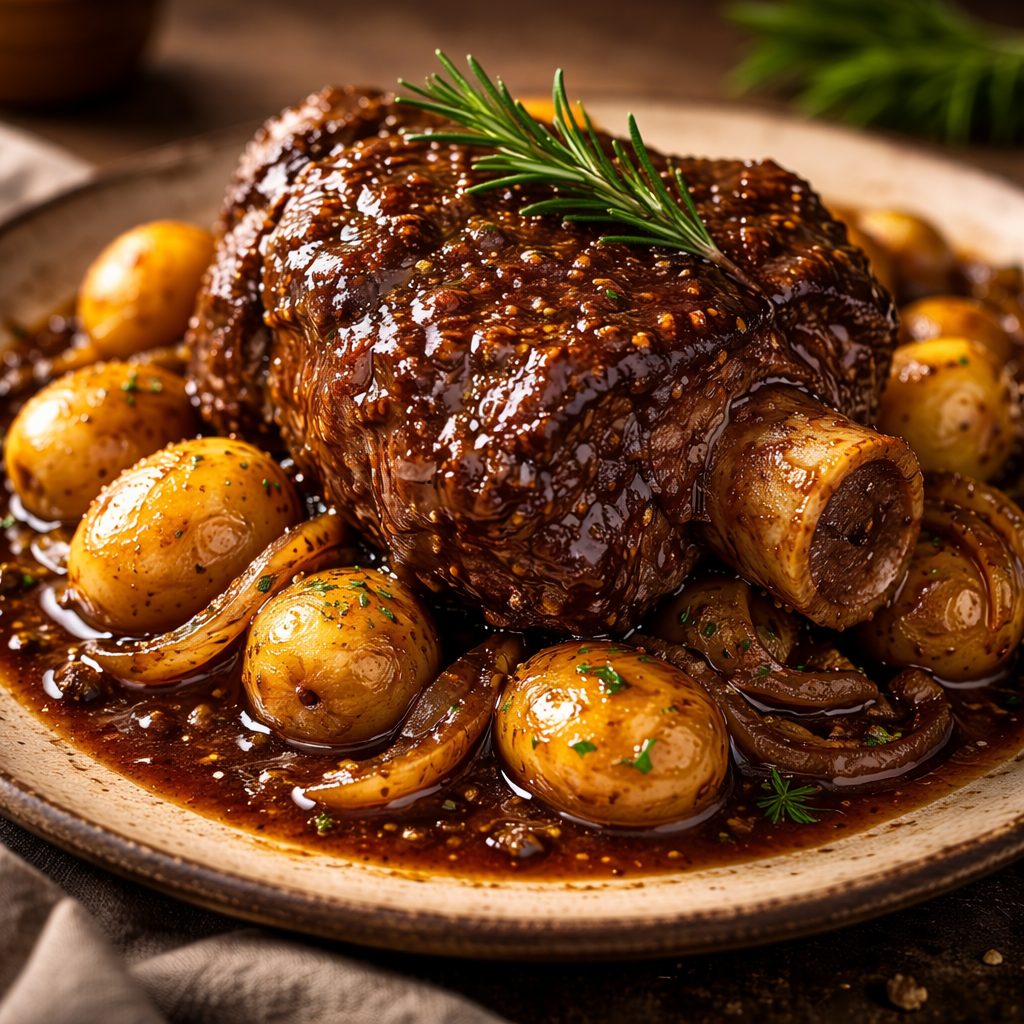
4. The Deglaze
Pour in the red wine. Use a wooden spoon to scrape the bottom of the pot vigorously. Those browned bits (the fond) contain the concentrated essence of the beef. Let the wine reduce by half; this burns off the harsh alcohol and leaves behind the fruity, acidic notes.
5. The Long Braise
Return the shanks to the pot. Add the beef broth, thyme, bay leaves, and peppercorns. The liquid should cover about 3/4 of the meat. Bring to a simmer, then cover with a tight-fitting lid. Transfer to a 300°F (150°C) oven or simmer on the lowest stovetop setting for 3 to 4 hours.
6. The Sauce Finish
Once the meat is fork-tender, carefully remove the shanks. Strain the liquid through a fine-mesh sieve into a saucepan, discarding the soggy vegetables. Simmer the liquid over medium heat for 10 minutes to reduce it into a glossy, thick glaze. Pour over the shanks and serve.
Common Mistakes to Avoid
- Boiling, Not Simmering: If you see large, aggressive bubbles, the heat is too high. High heat makes muscle fibers seize and become tough. You want “lazy” bubbles.
- Adding Salt Too Early: The braising liquid reduces significantly. If you salt the broth perfectly at the beginning, it will be a “salt bomb” by the end. Season the meat, but wait to season the final sauce.
- Skipping the Sear: Without the sear, the meat will taste “boiled” and gray. The sear is where the flavor depth is built.
- Removing the Lid: Every time you peek, you lose the steam that is vital for breaking down the collagen. Trust the timer.
Timing & Doneness Indicators
Serving Suggestions
A beef shank recipe provides a very rich, heavy protein, so it needs “anchors” to ground it:
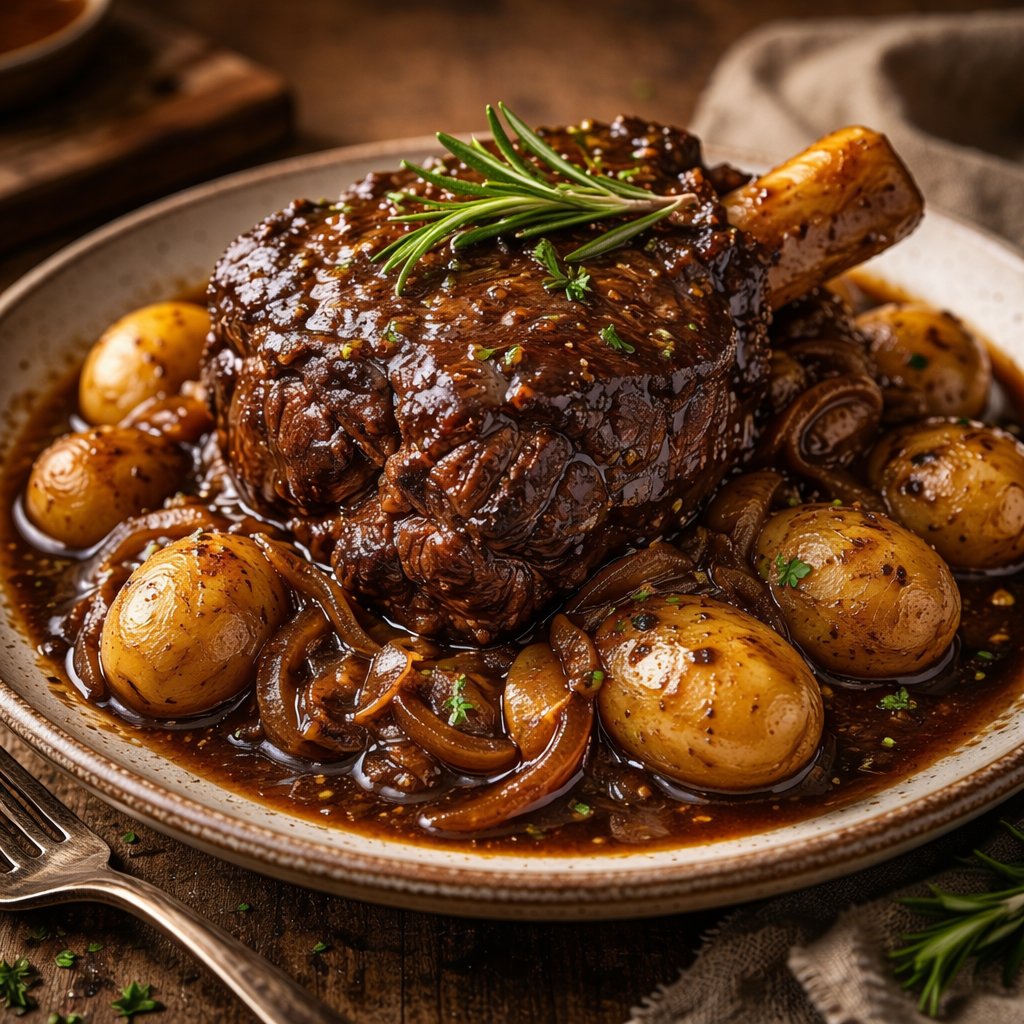
- The Starch: Serve over a bed of Creamy Polenta or Garlic Mashed Potatoes. These act as a sponge for the gelatinous sauce.
- The Brightness: In Italy, Osso Buco is served with Gremolata (a mix of lemon zest, garlic, and parsley). This “zing” is essential to cut through the fatty richness.
- The Bread: Always serve with crusty sourdough. You will want it to scoop the marrow out of the center of the bone—it’s the “butter of the gods.”
FAQ: Solving Your Beef Shank Frustrations
Q: Why is my beef shank still tough after 3 hours? A: It simply hasn’t cooked long enough. Unlike a steak, you cannot “overcook” a shank in the traditional sense; you can only “under-braise” it. If it’s tough, it means the collagen hasn’t melted yet. Give it another 30–60 minutes.
Q: Can I make this beef shank recipe in an Instant Pot? A: Yes. Follow the searing and deglazing steps, then cook on “High Pressure” for 75 minutes with a natural pressure release. While faster, the sauce won’t be quite as reduced as the oven method.
Q: There is a lot of oil on top of my sauce. How do I fix it? A: Beef shanks are fatty. Use a wide spoon to skim the oil off the surface, or use a “fat separator” cup. Alternatively, make the recipe a day in advance; the fat will solidify on top in the fridge, making it easy to pop off in one piece.
Q: Can I use white wine instead? A: Yes. White wine (like a dry Pinot Grigio) creates a lighter, more floral version of this dish. This is actually the traditional “Osso Buco in Bianco” style.