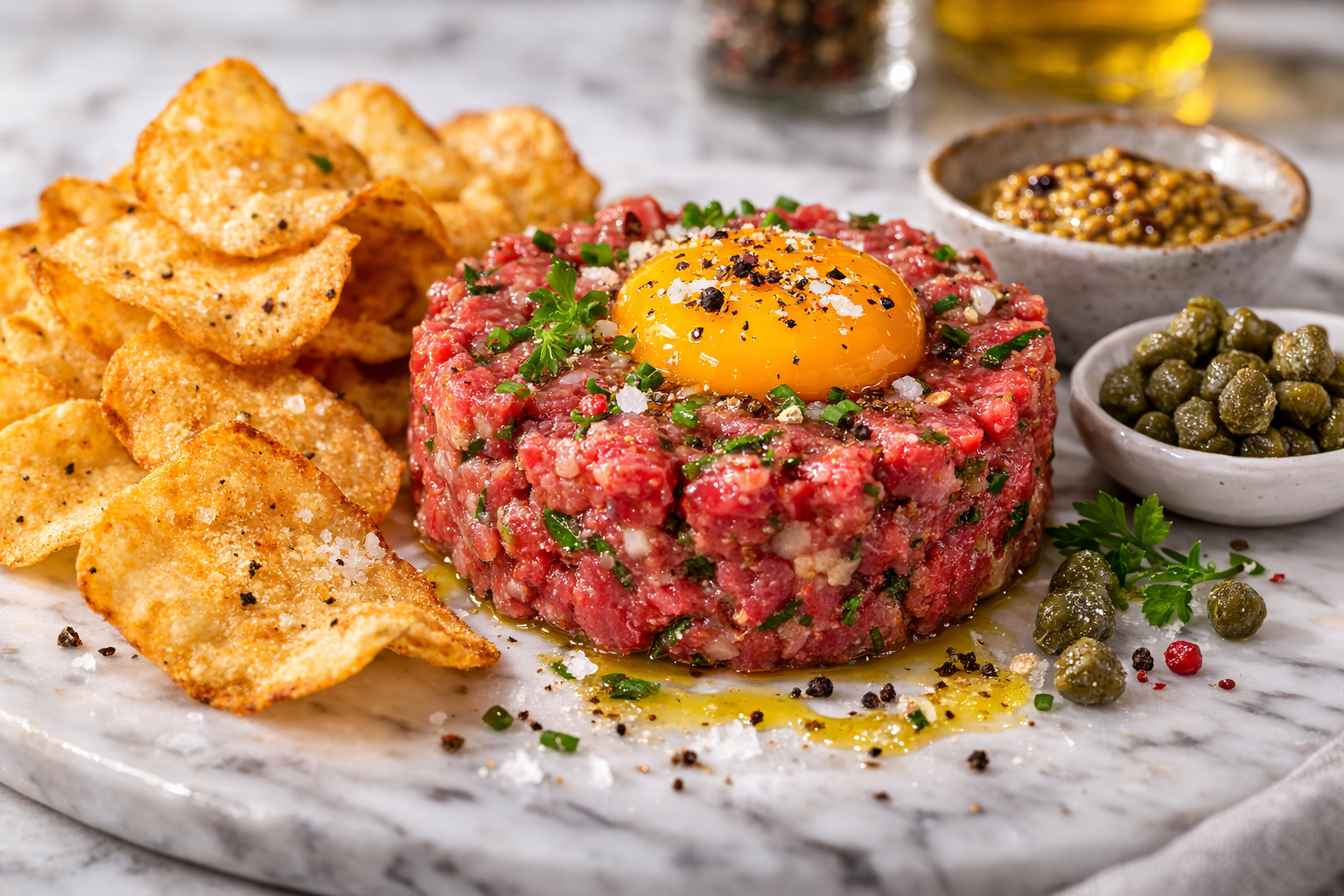
There is a specific kind of magic that happens in a kitchen when you decide to prepare a classic French bistro staple. Among the most revered of these dishes is the Beef Tartare Recipe. For many, the idea of eating raw beef can feel a bit daring, but for the culinary enthusiast, it represents the ultimate expression of ingredient purity.
When done correctly, a great Beef Tartare Recipe isn’t just “raw meat.” It is a delicate, silky, and deeply savory experience where the natural sweetness of high-quality beef is amplified by bright acidity, salty capers, and the rich velvetiness of a fresh egg yolk. It’s a dish that demands respect for your ingredients and a sharp knife, but once you master it, you’ll have a world-class appetizer in your repertoire that never fails to impress.
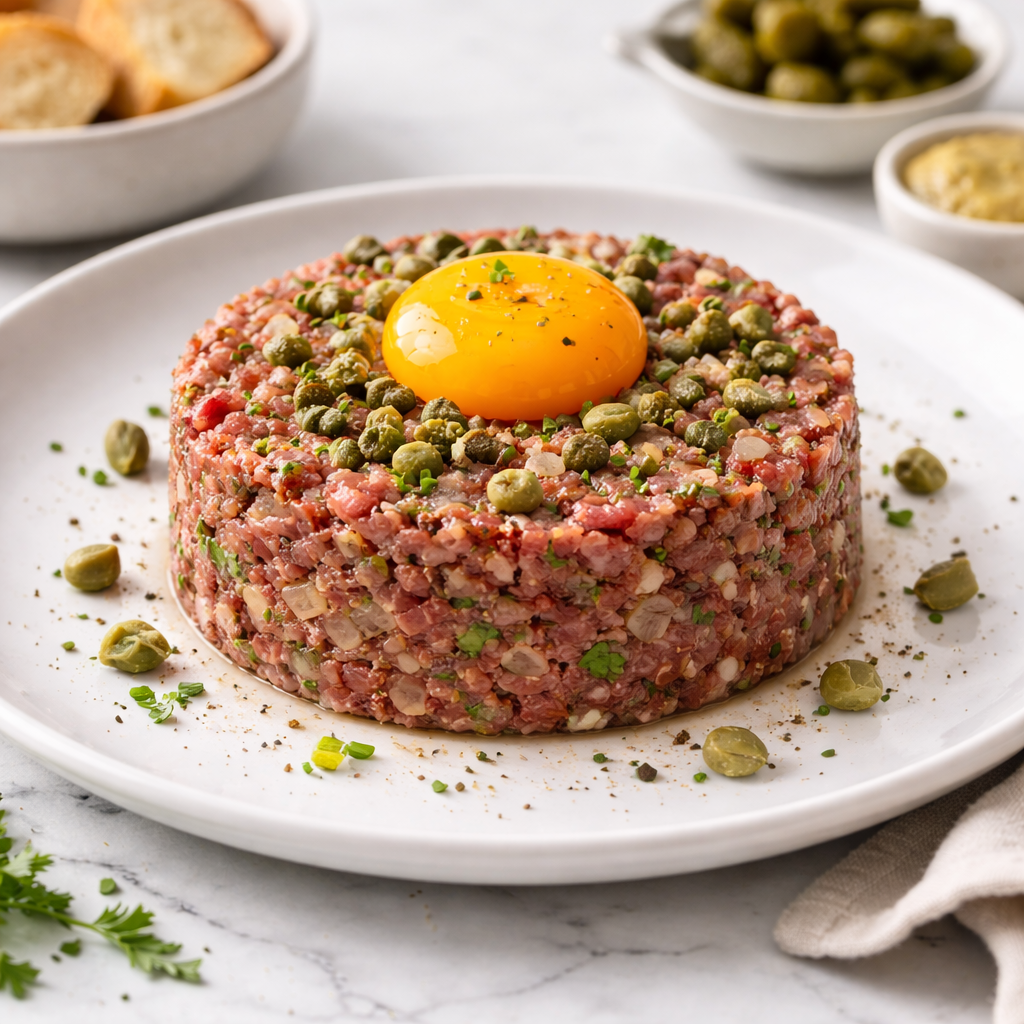
What You Need
The most important thing to remember about any Beef Tartare Recipe is that there is nowhere for low-quality ingredients to hide. Because we aren’t cooking the meat, every component must be top-tier.
The Beef (The Star)
- Beef Tenderloin or Eye of Round: You want a lean cut with minimal gristle. I personally prefer beef tenderloin for its buttery texture.
- Freshness is King: Buy your meat from a trusted butcher on the day you plan to serve it. Tell them you are making a Beef Tartare Recipe so they give you the freshest cut available.
The Aromatics and Acids
- Shallots: These provide a much more delicate, sophisticated bite than red or white onions.
- Capers: For that essential salty, briny pop.
- Cornichons: These tiny French pickles add a necessary crunch and acidity.
- Fresh Parsley: To bring a hit of herbaceous green color and flavor.
The Bind and Heat
- Dijon Mustard: Adds a sharp, creamy tang.
- Worcestershire Sauce: For deep, fermented umami notes.
- Tabasco or Hot Sauce: Just a few drops to provide a back-of-the-throat warmth.
- Extra Virgin Olive Oil: Use the good stuff here; it helps emulsify the dressing.
- Egg Yolks: High-quality, pasteurized organic eggs are best.
How to Make This Recipe
Precision is your best friend when executing a Beef Tartare Recipe. Follow these steps to ensure a safe and delicious result.
- The Chill Factor: About 30 minutes before you start, put your beef in the freezer. You don’t want it frozen solid, just firm. This makes hand-chopping much easier and keeps the meat at a safe temperature.
- Hand-Chopping: Never use a food processor! Use a very sharp chef’s knife to cut the beef into thin slices, then strips, then tiny cubes (about 1/8th of an inch). You want texture, not a paste.
- The Mise en Place: Finely mince your shallots, capers, and cornichons. Consistency in size ensures that no single ingredient overwhelms a bite.
- Mixing the Dressing: In a chilled stainless steel bowl, whisk together the mustard, Worcestershire, olive oil, hot sauce, and seasonings.
- The Assembly: Gently fold the chopped beef and the minced aromatics into the dressing. Taste and adjust with salt and pepper immediately.
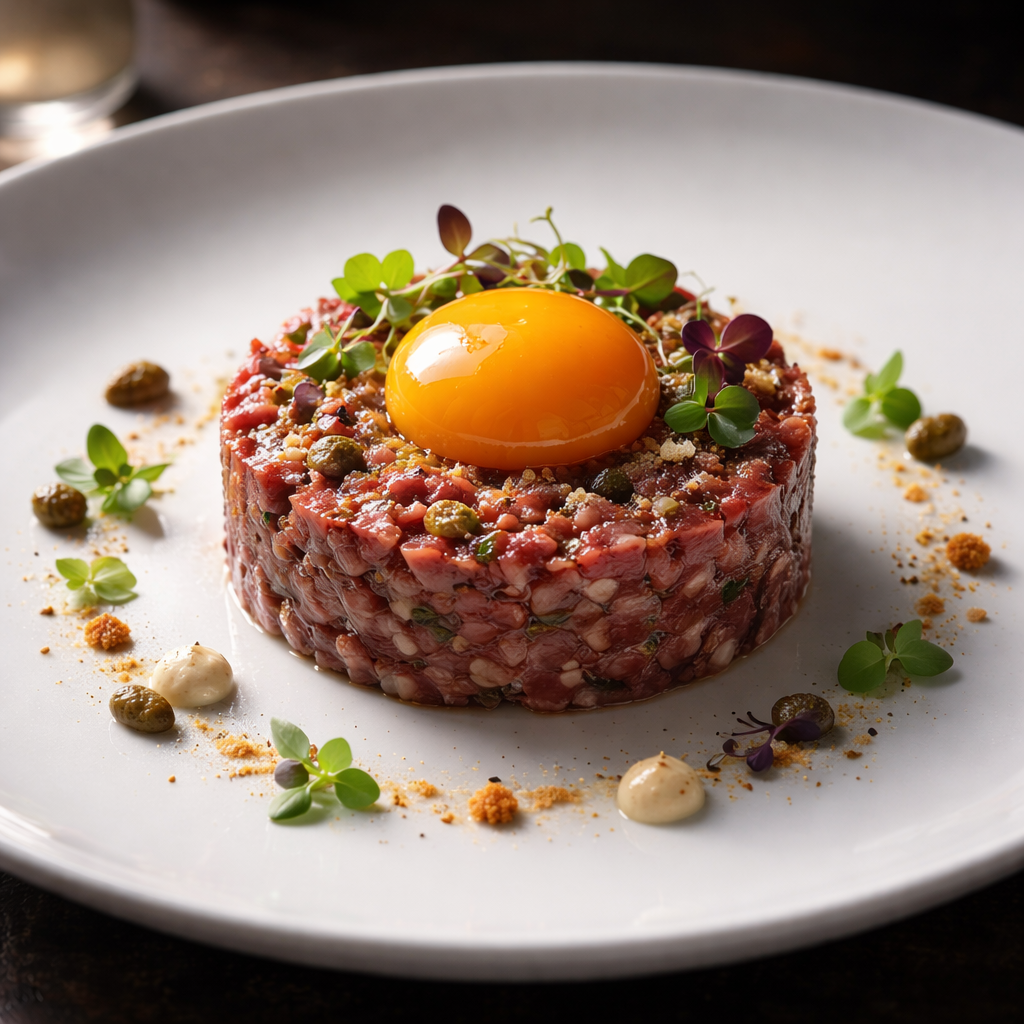
- Plating: Use a ring mold to press the mixture onto a plate. Create a small indentation on top to hold the raw egg yolk.
Why This Recipe Works
This particular Beef Tartare Recipe works because it balances the “fat” of the beef and egg yolk with high-contrast “bright” notes. The vinegar from the cornichons and the sharp bite of the Dijon mustard cut through the richness of the tenderloin.
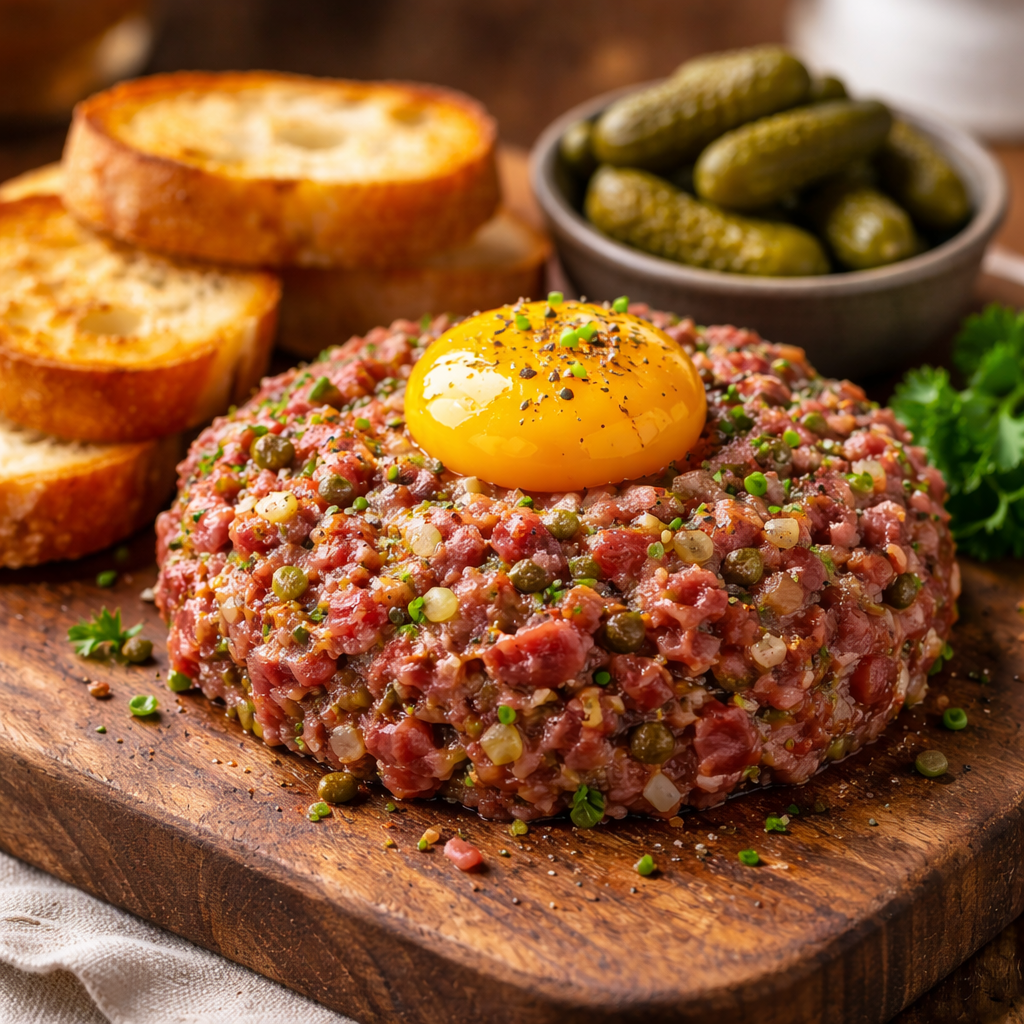
Additionally, by hand-cutting the meat rather than grinding it, you preserve the cell structure of the beef. This results in a cleaner mouthfeel and prevents the dish from feeling heavy or “mushy.” It’s a textural masterpiece that celebrates the contrast between the soft meat and the crunchy garnishes.
Quick Marinade Tips
While we don’t “cook” the meat in a Beef Tartare Recipe, the dressing acts as a quick marinade that seasons the protein from the outside in.
- Season at the Last Second: Salt draws out moisture. To keep your tartare looking vibrant and red rather than gray and watery, don’t mix the salt into the beef until right before you plate it.
- Cold Equipment: Keep your mixing bowl and your plates in the fridge. A cold environment keeps the fat in the beef stable and ensures the flavors stay crisp.
- Acid Control: If you like an extra-zingy tartare, add a squeeze of fresh lemon juice just before serving.
Making Creamy Brothy Rice
In some modern fusion variations of a Beef Tartare Recipe, chefs have begun serving the cold, seasoned beef alongside a warm, comforting side to create a temperature contrast. A side of Creamy Brothy Rice is an excellent companion.
- Toast Arborio rice in a pan with a little butter and shallots.
- Slowly add warm beef broth, one ladle at a time, stirring constantly.
- The goal is a texture that is “soupy” yet rich—halfway between a risotto and a thick porridge.
- Finish with a splash of cream and fresh cracked pepper. The warmth of the rice highlights the cool, herbal notes of the beef.
Best Toppings to Try
Once you have your base Beef Tartare Recipe down, you can start experimenting with toppings to add layers of luxury:
- Truffle Oil or Shaved Truffles: For an earthy, decadent aroma.
- Quail Eggs: These are smaller and more delicate than chicken eggs, making them perfect for individual portions.
- Potato Chips: Many high-end restaurants now serve tartare with thick-cut kettle chips instead of bread for an extra salty crunch.
- Radish Sprouts: For a peppery, fresh finish and a beautiful visual pop.
Smart Ingredient Swaps
If you find yourself missing an item for your Beef Tartare Recipe, these swaps will keep the spirit of the dish alive:
- The Beef: If you can’t find tenderloin, a very well-trimmed top sirloin or eye of round works perfectly. Just ensure you remove every bit of silver skin.
- The Acid: No cornichons? Use finely diced pickled red onions or even green olives for a different briny profile.
- The Spice: If Tabasco isn’t your thing, try a small amount of prepared horseradish. It provides a “nasal” heat that pairs beautifully with beef.
Perfect for Meal Prep
I will be honest: a Beef Tartare Recipe is generally not something you “meal prep” in the traditional sense of cooking for the week. Raw meat has a very short shelf life once seasoned. However, you can prep the components:
- Prep the Aromatics: You can mince the shallots, capers, and herbs up to 24 hours in advance and keep them in airtight containers.
- The Dressing: Mix your mustard, oil, and spices ahead of time.
- The Meat: Do not chop the meat until you are ready to eat. Once the surface area of the beef is increased by chopping, it oxidizes quickly. Keep the steak whole until the very last minute.
How to Serve It
Presentation is half the battle with a Beef Tartare Recipe.
- The Classic Way: Serve with toasted baguette slices (crostini) that have been rubbed with a raw clove of garlic.
- The Modern Way: Serve it in “lettuce cups” for a low-carb, refreshing twist.
- The Pairing: A crisp, dry white wine like a Sancerre or a light-bodied red like a Beaujolais works wonders to cleanse the palate between bites of rich beef.
Common Mistakes to Avoid
To ensure your Beef Tartare Recipe is a success, avoid these frequent flubs:
- Using Pre-Ground Beef: Never use store-bought ground beef. It is handled differently than whole muscle cuts and carries a much higher risk of bacteria. Always hand-cut a whole steak.
- Letting it Sit: Once the beef is mixed with the acidic dressing, it will begin to “cook” (much like ceviche). Serve it immediately to maintain that beautiful bright red color.
- Under-Seasoning: Raw beef requires a surprising amount of salt and pepper to truly “wake up” the flavors. Don’t be afraid to taste as you go!