Burger Sauce Recipe If you have ever bitten into a world-famous restaurant burger and wondered why it tastes so much better than the ones you make at home, the secret isn’t just the meat. It is the sauce. A high-quality burger sauce recipe is the bridge that connects the savory beef, the sharp cheese, and the fresh vegetables, turning a dry sandwich into a cohesive, mouth-watering experience.
For a beginner, the idea of making your own condiments might seem intimidating. You might worry about balancing flavors or “breaking” a sauce. However, this burger sauce recipe is designed to be foolproof. There is no actual cooking over a stove involved; instead, we focus on the art of the “cold emulsion.” By the end of this guide, you will have mastered a professional-standard burger sauce recipe that will make your backyard cookouts the talk of the neighborhood.
What This Recipe Is
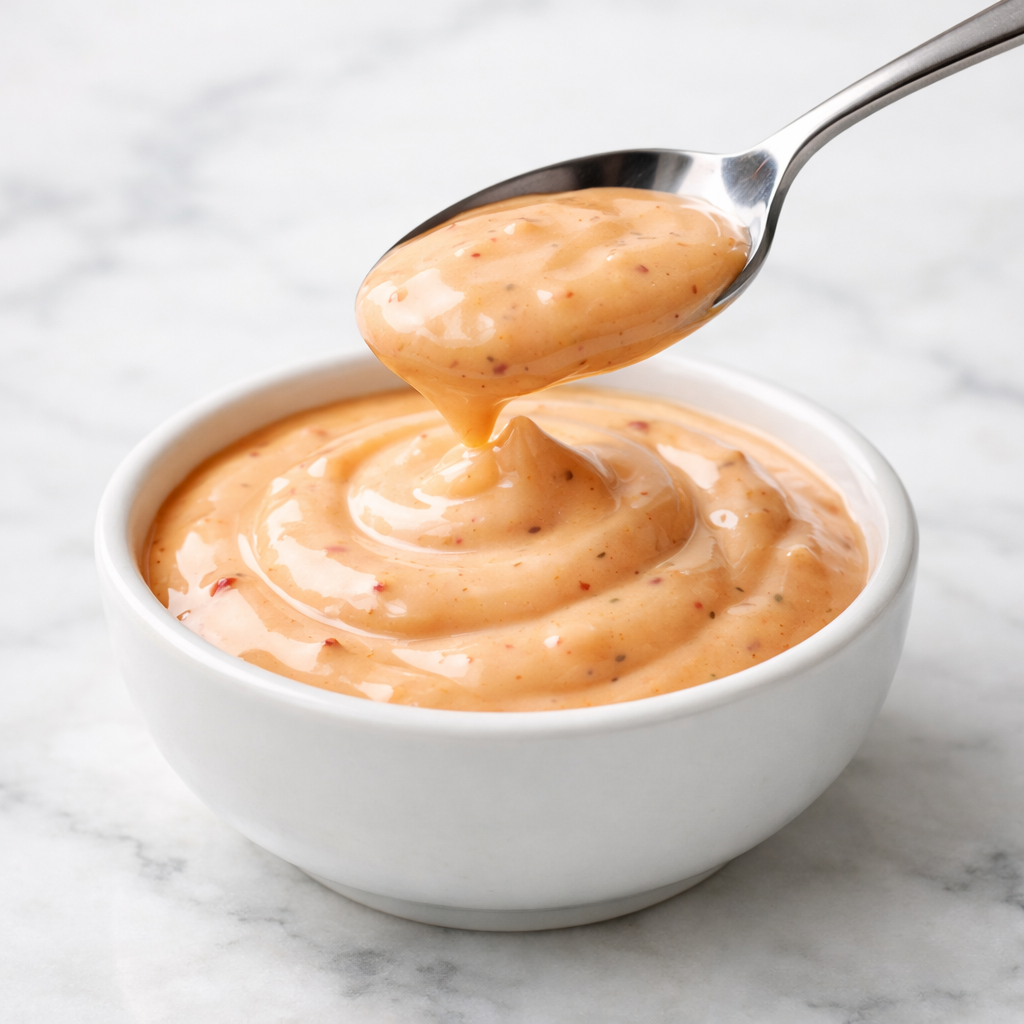
Think of this burger sauce recipe as the refined, grown-up version of the “special sauce” you find at major fast-food chains. While those commercial versions are often loaded with preservatives and excess sugar, our homemade burger sauce recipe relies on fresh acidity and high-quality fats.
Technically, this is a mayonnaise-based condiment. Its primary job is to provide moisture and “umami” (a savory depth of flavor). Because beef is rich in fat, this burger sauce recipe uses vinegar and mustard to cut through that richness, preventing the meal from feeling too heavy. It is creamy, slightly tangy, a little bit sweet, and carries a subtle smoky finish.
Kitchen Tools Required
One of the best things about this burger sauce recipe is that it requires absolutely no specialized equipment. You likely already have everything you need in your kitchen drawers.
- A Medium Mixing Bowl: Glass or stainless steel is preferred. Some plastics can retain the smell of onions or garlic from previous meals, which might interfere with the delicate balance of your burger sauce recipe.
- A Small Whisk or Silicone Spatula: A whisk is excellent for ensuring the spices are evenly distributed, but a simple spoon will work in a pinch.
- Measuring Spoons: Accuracy is key for beginners. Once you’ve made this burger sauce recipe a few times, you’ll be able to “eyeball” the measurements, but for now, stick to the spoons.
- A Tight-Sealing Glass Jar: (Like a Mason jar). This is for storage. A sealed container keeps the aromatics in the sauce and prevents it from picking up “fridge smells.”
- A Fine-Mesh Grater (Optional): If you choose to use fresh onion instead of onion powder, a grater helps turn the onion into a paste so you don’t have large, crunchy chunks in your smooth sauce.
Ingredients
To make about 1.5 cups of the sauce—enough for roughly 8 to 10 large burgers—you will need the following ingredients. Each one plays a specific role in the burger sauce recipe.
The Creamy Base
- 1 Cup Real Mayonnaise: Use a high-quality, full-fat brand. This provides the “body” of the sauce.
The Flavor Anchors
- 3 Tablespoons Yellow Mustard: This provides the bright yellow color and the necessary vinegar “tang.”
- 2 Tablespoons Tomato Ketchup: Adds a hint of sweetness and helps the sauce achieve that classic salmon-pink hue.
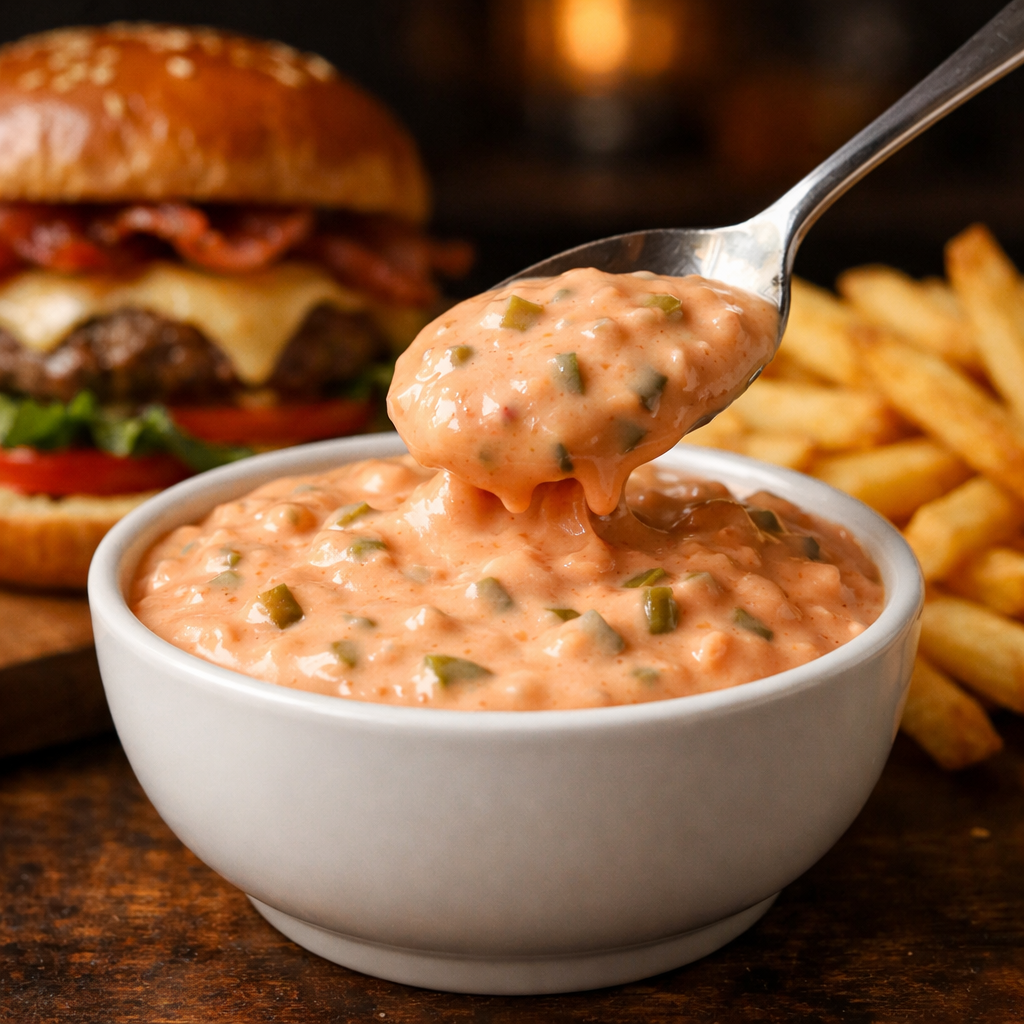
- 2 Tablespoons Finely Minced Sweet Pickles or Relish: This is the “crunch” factor. It provides small bursts of acidity that wake up your taste buds.
The Spice Matrix
- 1 Teaspoon Smoked Paprika: This is the “secret” to the professional flavor. It adds a woody, grilled aroma without adding actual heat.
- 1 Teaspoon Garlic Powder: Provides an even, savory background.
- 1 Teaspoon Onion Powder: Offers a concentrated sweetness that fresh onions can’t always match.
- 1/2 Teaspoon White Vinegar: Just a touch more acid to ensure the burger sauce recipe isn’t too heavy.
- A Pinch of Salt and Cracked Black Pepper: To taste.
Preparation Walkthrough
Before you start mixing, the most important step in any burger sauce recipe is the “prep.” This is where you ensure the textures are correct.
- Prep the Relish: If you are using whole sweet pickles instead of pre-made relish, chop them as finely as possible. You want the pieces to be about the size of a grain of rice. If the pieces are too big, they will fall out of the sauce; if they are too small, you lose the textural contrast.
- Mise en Place: Line up your measuring spoons and open all your jars. This burger sauce recipe moves quickly, and having everything ready prevents you from losing track of what you’ve already added.
- The “Dab” Test: If your relish is very watery, put it in a paper towel and give it a gentle squeeze. Excess pickle juice can make your burger sauce recipe runny, and we want it to stay thick enough to sit on top of a hot burger patty without melting away immediately.
Cooking Process Explained Clearly
Since this is a “cold” burger sauce recipe, the “cooking” actually happens through a process called infusion.
Step 1: The Base Blend
Put the mayonnaise into your mixing bowl. Add the mustard and ketchup. Use your whisk to stir these together until the color is perfectly uniform. You shouldn’t see any white streaks of mayo or yellow streaks of mustard.
Step 2: Adding the Solids
Fold in your minced pickles or relish. By adding them now, you ensure they get fully coated in the fat of the mayonnaise, which helps preserve their crunch.
Step 3: The Spicing
Sprinkle the smoked paprika, garlic powder, and onion powder over the top. Beginner Tip: Don’t just dump the spices in one clump. Sprinkling them evenly over the surface makes it much easier to whisk them in without creating “spice pockets” that taste like chalk.
Step 4: The Final Tang
Add your white vinegar. Stir everything one last time. At this point, the sauce might look a little bit “thin,” but don’t worry—the next step fixes that.
Step 5: The Chill (The Real “Cooking” Time)
Transfer the mixture into your glass jar and seal the lid. Place it in the refrigerator for at least 30 minutes, though 2 hours is better.
- Why this works: During this time, the dry spices (garlic, onion, paprika) absorb moisture from the mayo and rehydrate. This softens their texture and allows their flavors to bleed into the sauce. A burger sauce recipe tasted immediately after mixing will taste “raw” and disjointed; a chilled one tastes like a single, harmonious flavor.
How to Know It’s Done
Because there is no internal temperature to check, you have to rely on your senses to know if your burger sauce recipe is a success.
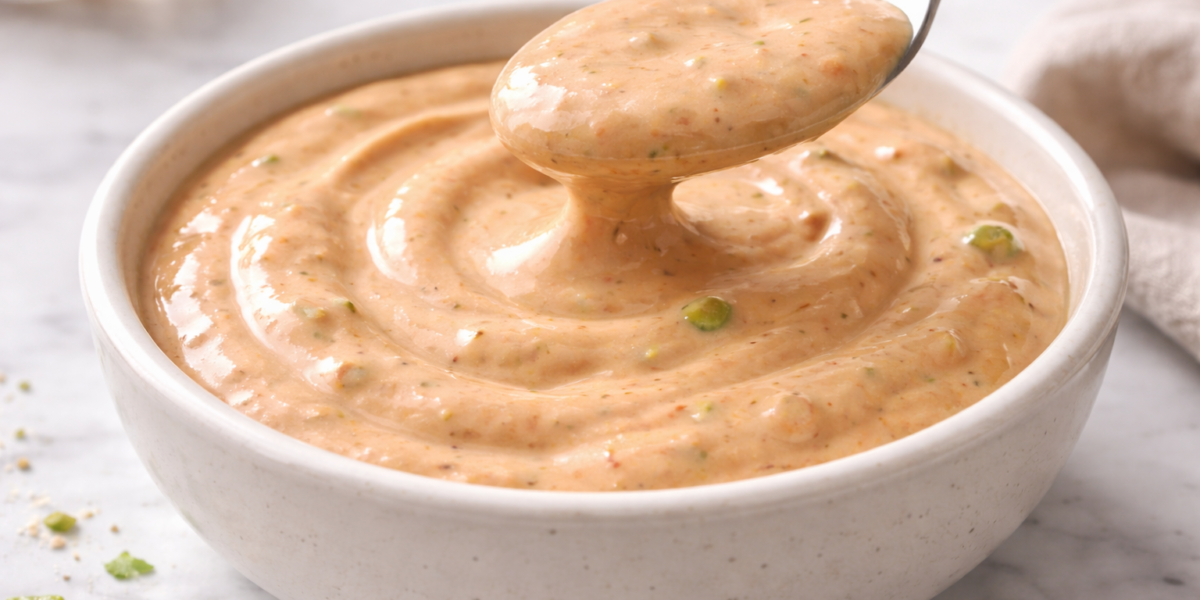
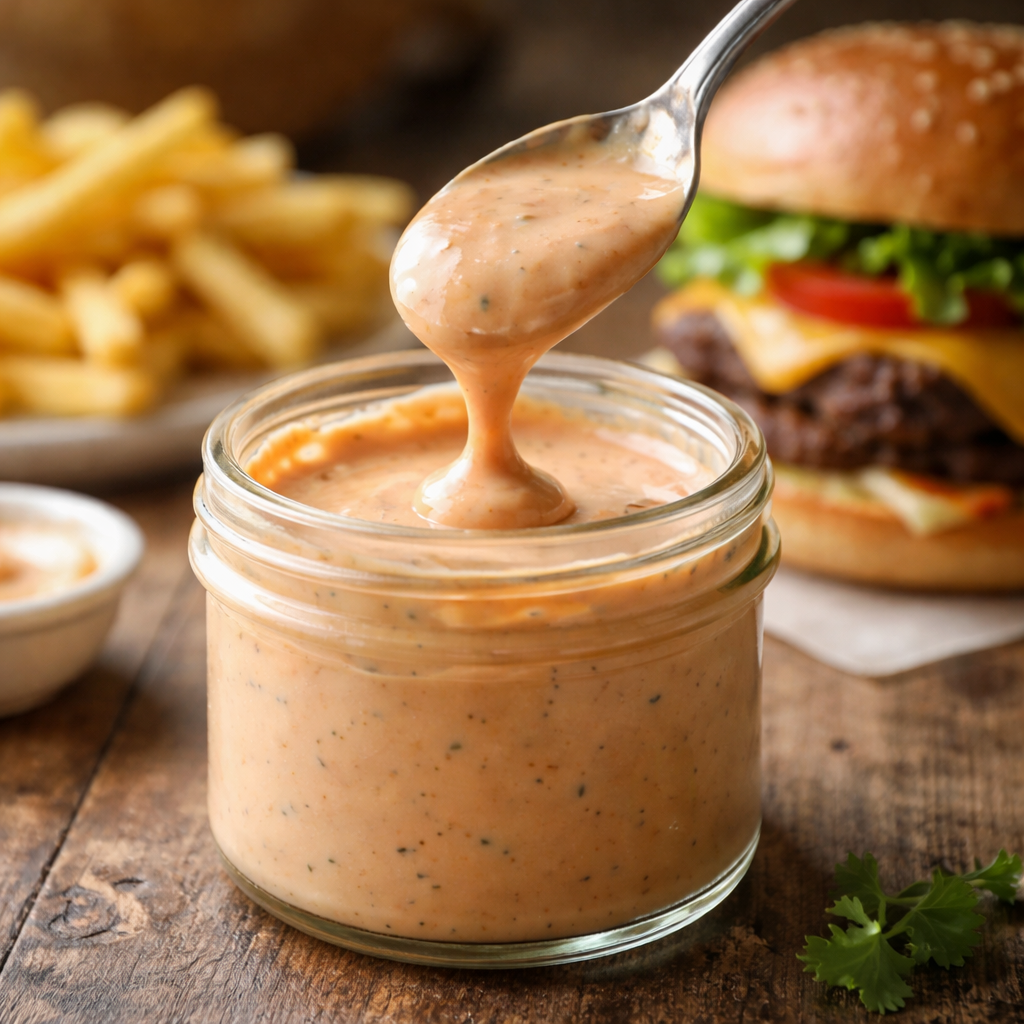
- The “Spoon Test”: Dip a spoon into the sauce and pull it out. The sauce should coat the back of the spoon thickly. If it runs off immediately, it is too thin. If it stays in a thick, stable layer, it is perfect.
- The Color Check: The sauce should be a pale, creamy orange-pink with visible red specks from the paprika and green specks from the relish.
- The Taste Balance: Take a small taste. You should first notice the creaminess, followed by a “zing” from the mustard and vinegar, and finally a savory, smoky finish. No single ingredient (like the mustard or the garlic) should overwhelm the others.
Troubleshooting Section
Even the simplest burger sauce recipe can sometimes go wrong. Here is how to fix common beginner mistakes:
“My sauce is too thin/runny!”
- The Cause: Usually too much vinegar or watery relish.
- The Fix: Whisk in another tablespoon of mayonnaise. The fat in the mayo will help emulsify the liquids and thicken the body of the sauce back up.
“It’s way too salty!”
- The Cause: Some brands of mayo and ketchup have more sodium than others.
- The Fix: Add a teaspoon of granulated sugar or a little bit more ketchup. The sweetness will neutralize the perception of salt on your tongue.
“I don’t like pickles/relish. Can I leave them out?”
- The Cause: Personal preference.
- The Fix: If you remove the relish, you lose the acidity. To compensate, add an extra half-teaspoon of vinegar and a finely minced caper or even a dash of celery salt to keep that “zing” alive in your burger sauce recipe.
“It tastes ‘flat’ or boring.”
- The Cause: Not enough acid or salt.
- The Fix: Add a tiny squeeze of fresh lemon juice. Acidity acts like a volume knob for flavor—it wakes up all the other ingredients in the burger sauce recipe.
Quick FAQ
Q: How long does this burger sauce stay fresh? A: Because it contains mayonnaise and vinegar, it is quite stable. It will stay fresh in an airtight container in the refrigerator for up to two weeks. Always use a clean spoon to scoop it out to prevent cross-contamination.
Q: Can I use this for things other than burgers? A: Absolutely! This burger sauce recipe is essentially a “dip-all.” It is incredible as a dipping sauce for french fries, a dressing for a chopped salad, or even a topping for fried fish tacos.
Q: Is this recipe spicy? A: As written, it is very mild. The “kick” comes from the vinegar, not pepper heat. If you want a spicy burger sauce recipe, simply add 1 teaspoon of Sriracha or a pinch of cayenne pepper during the spicing phase.
Q: Can I use fresh garlic and onion instead of powders? A: You can, but be careful. Fresh garlic is much more potent and can become bitter as it sits. If using fresh, use only half a clove of garlic and make sure the onion is grated into a paste. For beginners, the powder version of this burger sauce recipe is much more consistent.
Mastering this burger sauce recipe is a major milestone for any home cook. It proves that you don’t need a professional kitchen to create professional-grade flavors. By following these simple steps, you have moved beyond “just assembly” and into the world of flavor balance.