The pursuit of the perfect creamy mashed potatoes recipe is often thwarted by a single, catastrophic texture: gumminess. We have all experienced it—the heavy, elastic, glue-like substance that results from over-processing or improper temperature management. For many home cooks, the frustration lies in the inconsistency. One day the potatoes are light and fluffy; the next, they are a sticky paste that refuses to yield to the fork.
The problem isn’t usually the potato itself, but rather the way the starch is handled. In this professional-grade guide, we treat the creamy mashed potatoes recipe not as a simple side dish, but as a technical emulsion. By understanding the relationship between starch granules, heat, and fat, you can produce a result that is consistently velvet-smooth and rich, serving as the ultimate canvas for gravies, meats, and roasted vegetables.
Why This Recipe Works
This creamy mashed potatoes recipe prioritizes “Starch Management.” When potatoes are boiled and crushed, they release starch. If they are worked too hard or processed with high-speed blades (like a food processor), that starch becomes glue. This method works because:
- The Cold-Start Simmer: Starting the potatoes in cold water ensures that the exterior doesn’t disintegrate before the interior is cooked, preventing watery, bland mash.
- The Evaporation Phase: By returning the drained potatoes to a hot pot, we “steam off” excess moisture. This ensures the potato cells are thirsty and ready to absorb butter and cream rather than being waterlogged.
- The Temperature Match: We never add cold dairy to hot potatoes. By warming the butter and cream together, we maintain a stable emulsion that keeps the texture silky rather than oily.
- Mechanical Precision: We avoid the blender. Using a ricer or a food mill ensures the potato is extruded into tiny flakes without shearing the starch molecules.
Ingredients & Measurements
To achieve the best results with this creamy mashed potatoes recipe, you must select potatoes with high starch content. Waxy potatoes (like Red Bliss) will never achieve the same fluffiness as starchy ones.
- 3 lbs Yukon Gold or Russet Potatoes: Yukon Golds are preferred for their naturally buttery flavor and medium-starch profile. Russets will provide a fluffier, lighter result.
- ½ cup (1 stick) Unsalted European-Style Butter: High-fat butter (82% butterfat or higher) creates a richer mouthfeel.
- 1 cup Heavy Cream or Whole Milk: For maximum decadence, use heavy cream. For a lighter daily version, whole milk suffices.
- 1 tbsp Kosher Salt (plus more for the water): Salt is essential to bring out the earthy sweetness of the tuber.
- ¼ tsp Freshly Grated Nutmeg: A secret professional touch that enhances the creaminess without making the dish taste like spice.
- White Pepper: To maintain a pristine, white aesthetic without black specks.
Step-by-Step Cooking Guide
1. The Prep and Peel
Peel the potatoes thoroughly, removing any “eyes” or dark spots. Cut them into uniform 1.5-inch chunks. Uniformity is the most overlooked part of any creamy mashed potatoes recipe; if pieces vary in size, you will end up with a mix of overcooked mush and undercooked lumps.
2. The Cold-Water Start
Place the potatoes in a large pot and cover with at least two inches of cold water. Add a generous tablespoon of salt to the water.
3. The Gentle Simmer
Bring the water to a boil, then immediately reduce to a steady simmer. Do not boil them aggressively, as this can cause the outside of the potatoes to slough off. Simmer for 15–20 minutes.
4. The Doneness Test
The potatoes are ready when a paring knife can be inserted into the center of a chunk and it slides out with absolutely no resistance. If the potato “clings” to the knife, it needs more time.
5. The Drying Phase
Drain the potatoes in a colander. Return them to the hot, empty pot over low heat for 60–90 seconds. Shake the pot gently. You will see steam rising and a slight white film forming on the bottom of the pot—this is the excess water evaporating.
6. The Milling
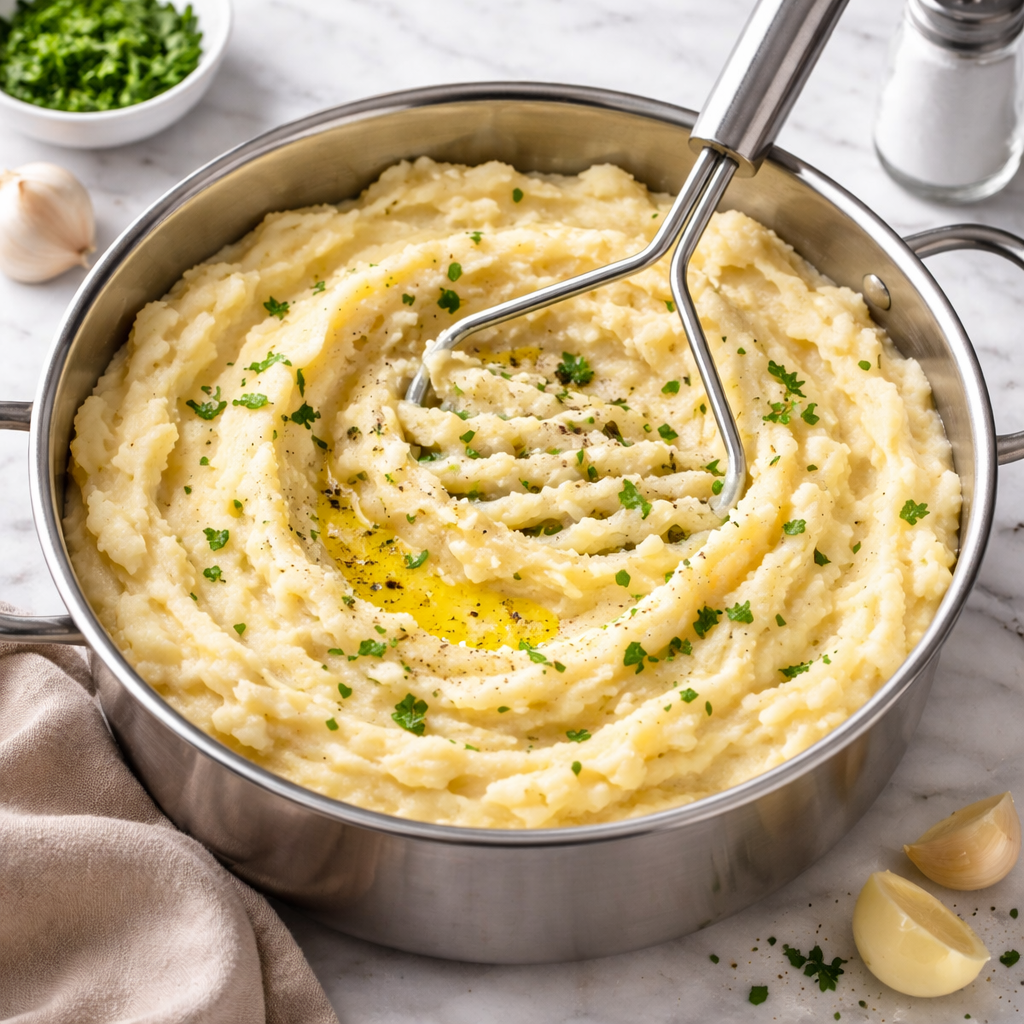
While the potatoes are drying, warm your cream and butter in a small saucepan until the butter is melted and the liquid is steaming but not boiling. Pass the hot potatoes through a potato ricer or a food mill into a clean bowl. This is the single most important step for a professional-grade creamy mashed potatoes recipe.
7. The Fold
Gradually pour the warm cream and butter mixture over the riced potatoes. Use a silicone spatula to fold the liquid in gently. Do not whisk. Add your salt, white pepper, and a pinch of nutmeg. Stop mixing the moment the liquid is incorporated.
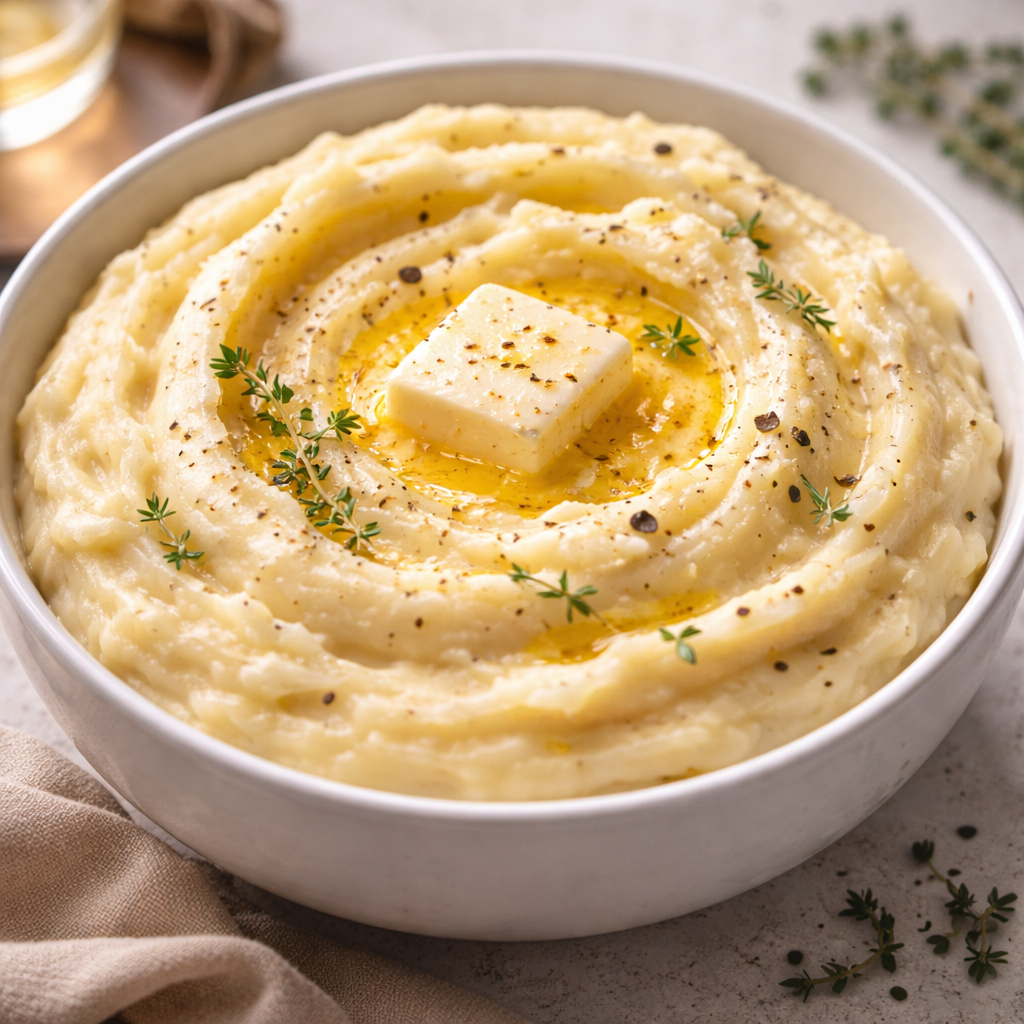
Common Mistakes to Avoid
- Using a Blender or Food Processor: High-speed blades shatter the potato’s starch granules, releasing a “sticky” starch called amylopectin. This is the primary cause of gluey potatoes.
- Adding Cold Butter and Milk: Cold dairy shocks the potato starch and causes it to tighten, leading to a lumpy, inconsistent mash.
- Over-boiling: If the potatoes are cooked until they are falling apart in the water, they have absorbed too much liquid. This results in a “watery” flavor that no amount of butter can fix.
- Skipping the Salt in the Water: Potatoes are incredibly dense. If you only salt at the end, the exterior will be salty while the interior remains bland. Salting the water seasons the potato from the inside out.
Timing & Doneness Indicators
In a creamy mashed potatoes recipe, timing is everything. Use these sensory cues to ensure success:
Serving Suggestions
Once you have mastered the base creamy mashed potatoes recipe, the presentation and pairings elevate the experience.
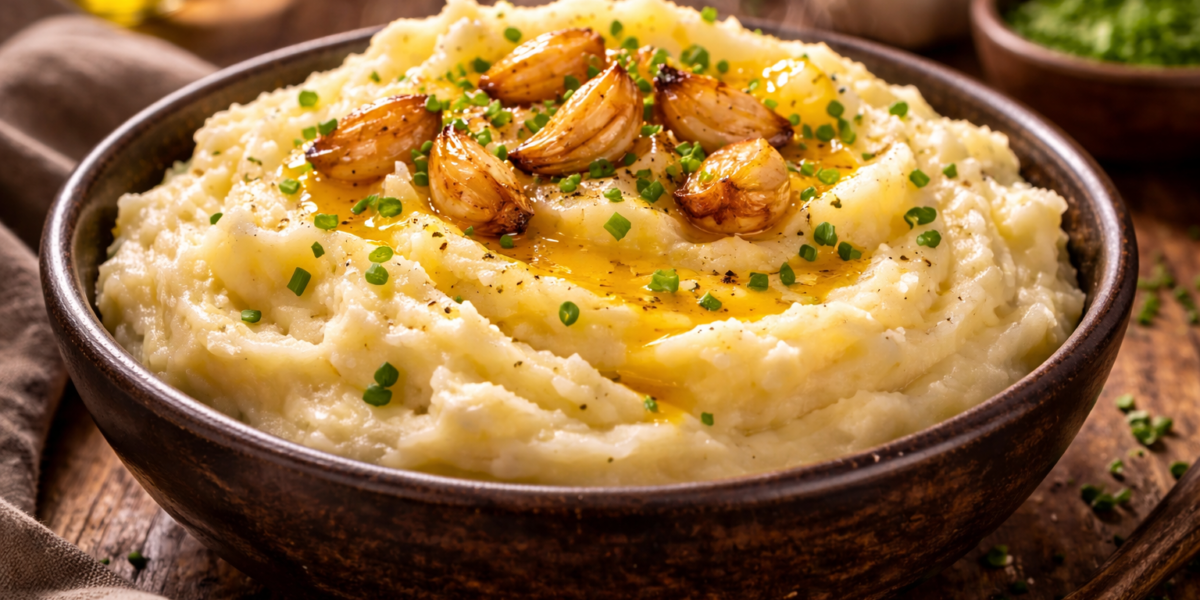
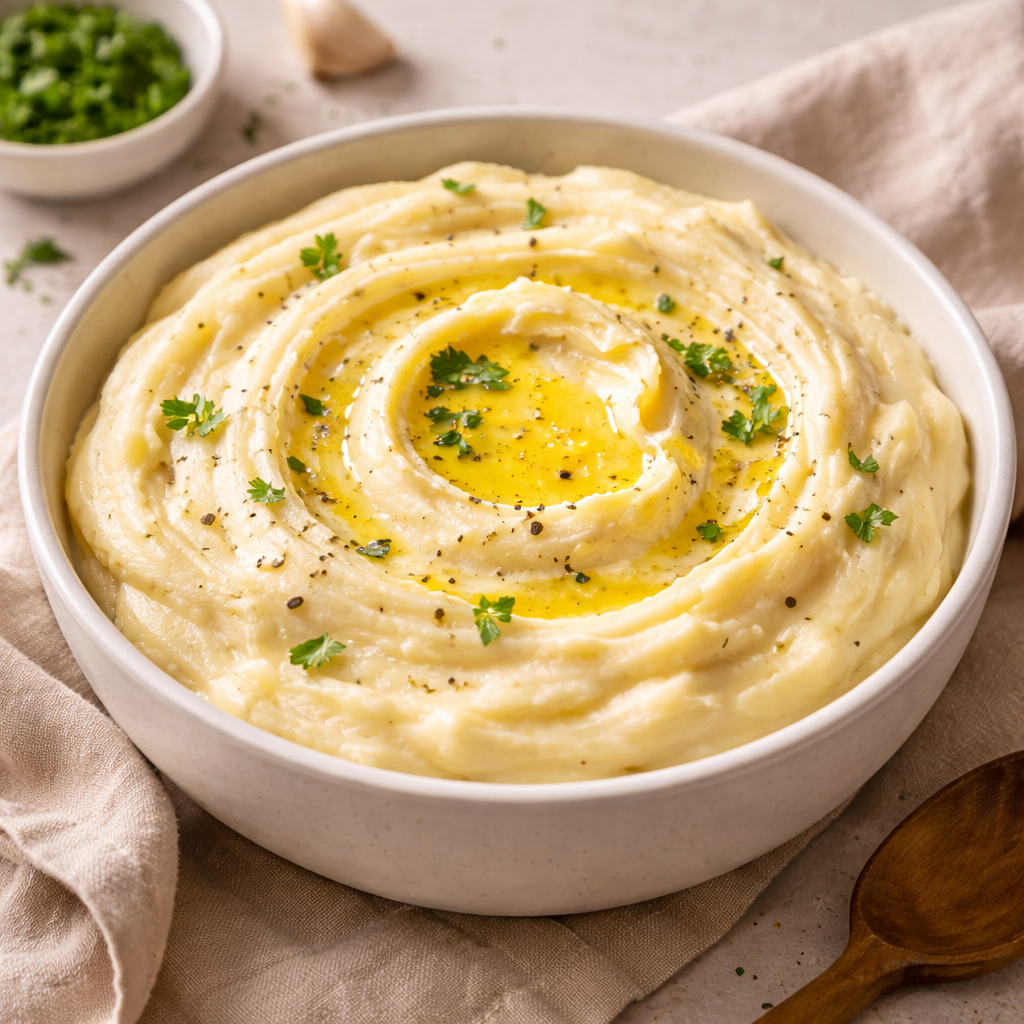
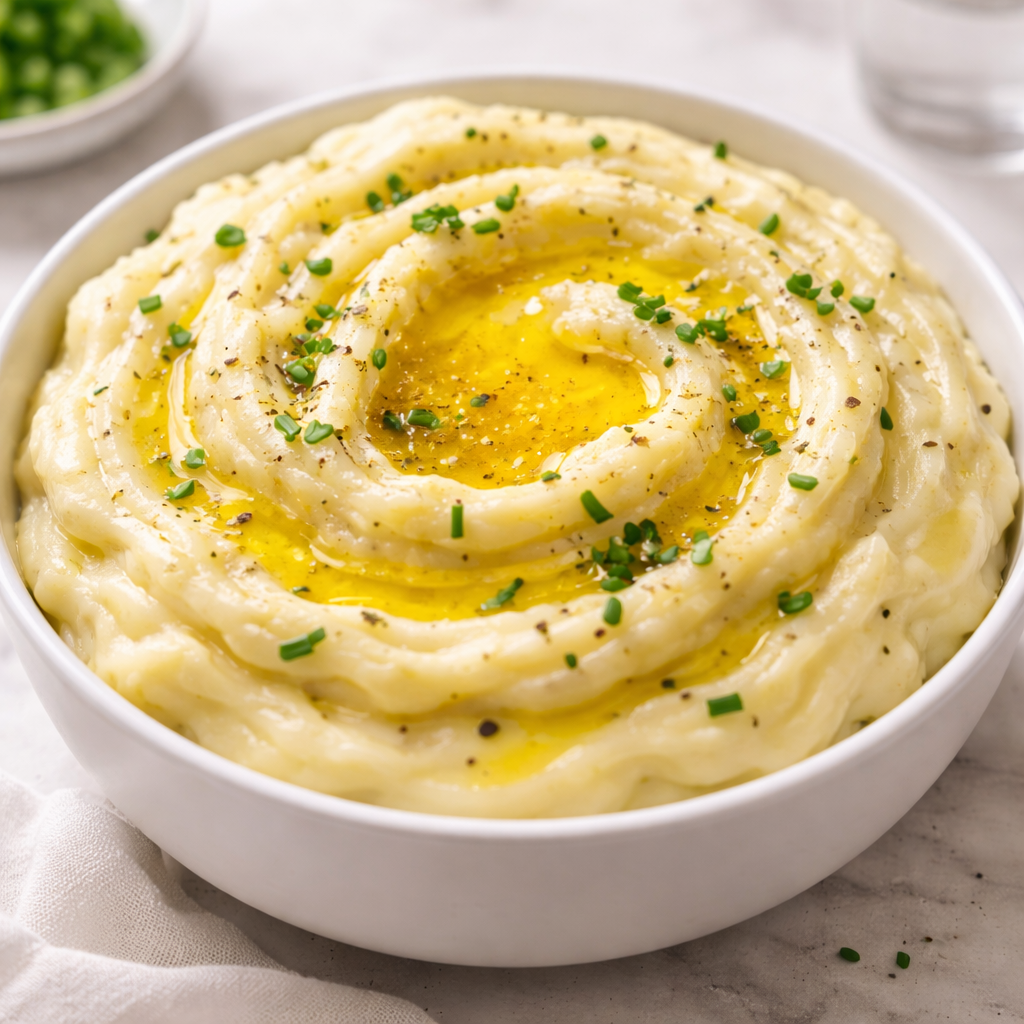
- The Well: Create a deep well in the center of the serving bowl and fill it with melted clarified butter and chopped chives.
- The Pairing: Serve alongside a slow-braised short rib or a pan-seared steak. The high acidity of a red wine reduction or a peppercorn sauce is the perfect foil for the richness of the potatoes.
- The Infusion: For a variation, simmer two cloves of smashed garlic in the cream and butter before straining them out. This provides a ghost-like garlic flavor that haunts the dish without the bite of raw pieces.
Easy Ground Beef and Rice Recipes
FAQ: Solving Your Potato Frustrations
Q: Why are my mashed potatoes always lumpy? A: Lumps occur when potatoes are unevenly cooked or when a hand-masher is used instead of a ricer. To fix this in the future, ensure uniform cutting and use a potato ricer. If you already have lumps, try passing the mash through a fine-mesh sieve (tamis), though this takes significant effort.
Q: Can I make this creamy mashed potatoes recipe ahead of time? A: Yes. You can keep them warm in a slow cooker on the “warm” setting or in a bowl over a pot of simmering water (a bain-marie). If they thicken too much, whisk in a tablespoon of warm milk just before serving.
Q: Is it okay to peel the potatoes the night before? A: Yes, but you must submerge them completely in cold water and store them in the refrigerator. This prevents oxidation (turning brown or grey). Drain and rinse them again before cooking.
Q: Can I use a hand mixer? A: It is risky. If you use a hand mixer, use the lowest speed and stop the very second the potatoes are smooth. Even ten extra seconds of mixing can turn them into a gluey mess.
Q: Why do my potatoes taste “metallic”? A: This sometimes happens if potatoes are stored in the fridge before they are cooked (which turns their starch to sugar) or if they were grown in soil with specific mineral imbalances. Always store raw potatoes in a cool, dark pantry—never the refrigerator.