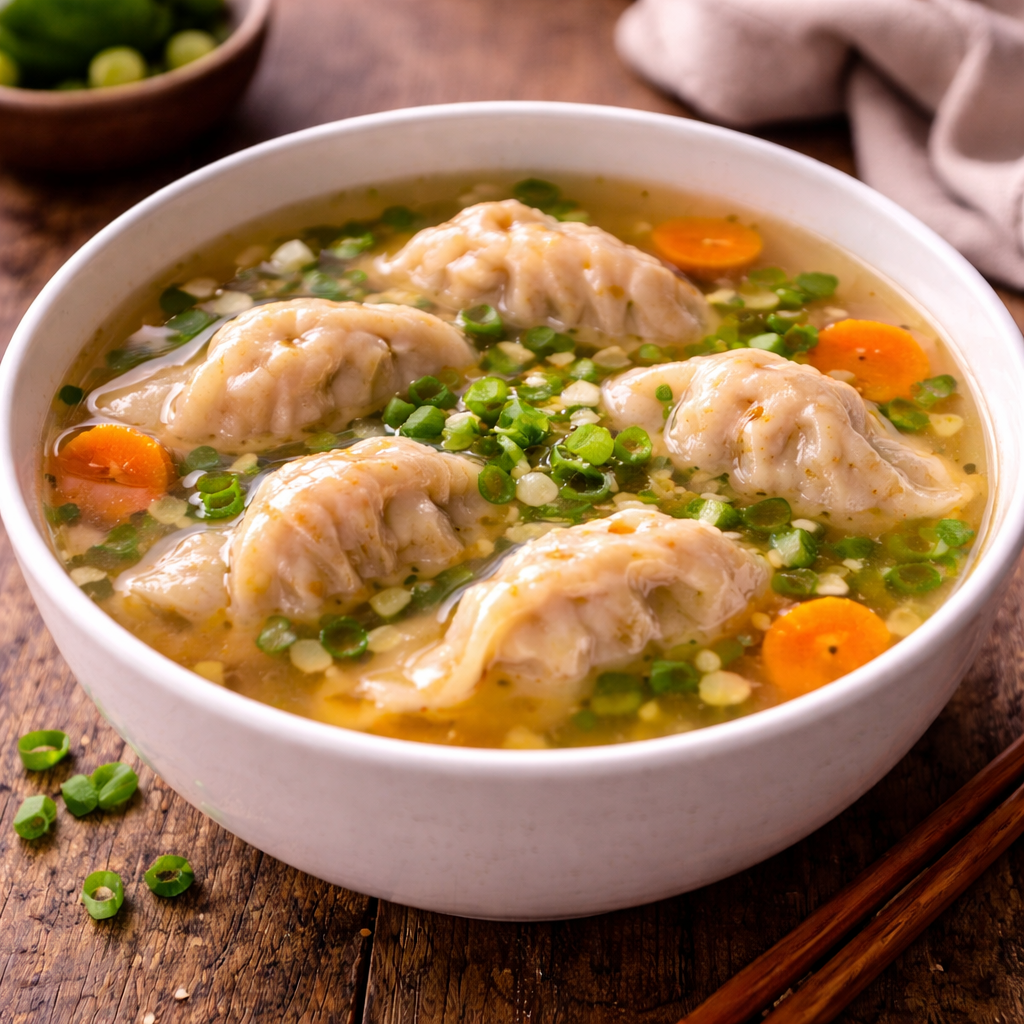
The comfort of a steaming bowl of dumpling soup recipe is universal, yet the experience of making it at home often falls short of expectations. We’ve all been there: you spend an hour meticulously folding dough, only for the dumplings to disintegrate into a cloudy, gummy mess the moment they hit the broth. Or perhaps the filling is flavorful, but the broth tastes like little more than salted water.
The “frustration gap” in home-cooked dumpling soup usually stems from a misunderstanding of structural integrity and flavor extraction. You aren’t just making a soup; you are managing a delicate balance of moisture, starch, and seasoning. This guide is designed to bridge that gap, moving beyond the “throw it in a pot” mentality to help you master a soup that features silk-thin skins, juicy interiors, and a broth with genuine depth.
Why This Recipe Works
Most recipes treat the dumpling and the broth as two unrelated entities. This version treats them as a partnership. Here is the science behind why this method produces a superior bowl:
- The Emulsion Secret: We incorporate a small amount of cold water or stock into the meat filling (a technique known as shui da). This creates a light, sausage-like emulsion that stays juicy inside the wrapper rather than shrinking into a tough, dry pebble.
- The Double-Broth Method: Instead of using just store-bought stock, we “fortify” it with aromatics sautéed in a small amount of fat. This adds lipid-soluble flavors (like those in ginger and scallions) that water alone cannot extract.
- Starch Control: By boiling the dumplings in a separate pot of water before adding them to the final broth, we prevent the soup from becoming thick and murky. This keeps the broth “consommé-clear” and the dumpling skins perfectly “al dente.”
Ingredients & Measurements
Yields: 4-5 Servings (approx. 30-35 dumplings)
For the Dumplings
- Ground Pork: 1 lb (450g) – Aim for 80/20 lean-to-fat ratio. Fat is flavor and moisture.
- Dumpling Wrappers: 1 pack (approx. 35 count) – Use “Hong Kong Style” or thin wonton wrappers for soup.
- Napa Cabbage: 1.5 cups, finely minced.
- Aromatics: 2 tbsp minced ginger, 3 cloves garlic (grated), 3 stalks scallions (whites only).
- Seasoning: 1 tbsp soy sauce, 1 tsp toasted sesame oil, ½ tsp white pepper, 1 tsp salt, 1 tsp sugar.
- The Binder: 1 large egg + 3 tbsp cold chicken stock.
For the Fortified Broth
- Base: 8 cups high-quality chicken stock (preferably low sodium).
- Aromatic Base: 1 tbsp neutral oil, 3 slices of ginger, 2 smashed garlic cloves, 2 whole scallions.
- Seasoning: 1 tbsp light soy sauce, 1 tsp fish sauce (the secret umami bomb), salt to taste.
- Greens: 2 cups baby bok choy or spinach.
Step-by-Step Cooking Guide
1. Prepare the Filling (The “Juiciness” Phase)
Place your ground pork in a large mixing bowl. Add the soy sauce, sesame oil, white pepper, salt, sugar, ginger, and garlic.
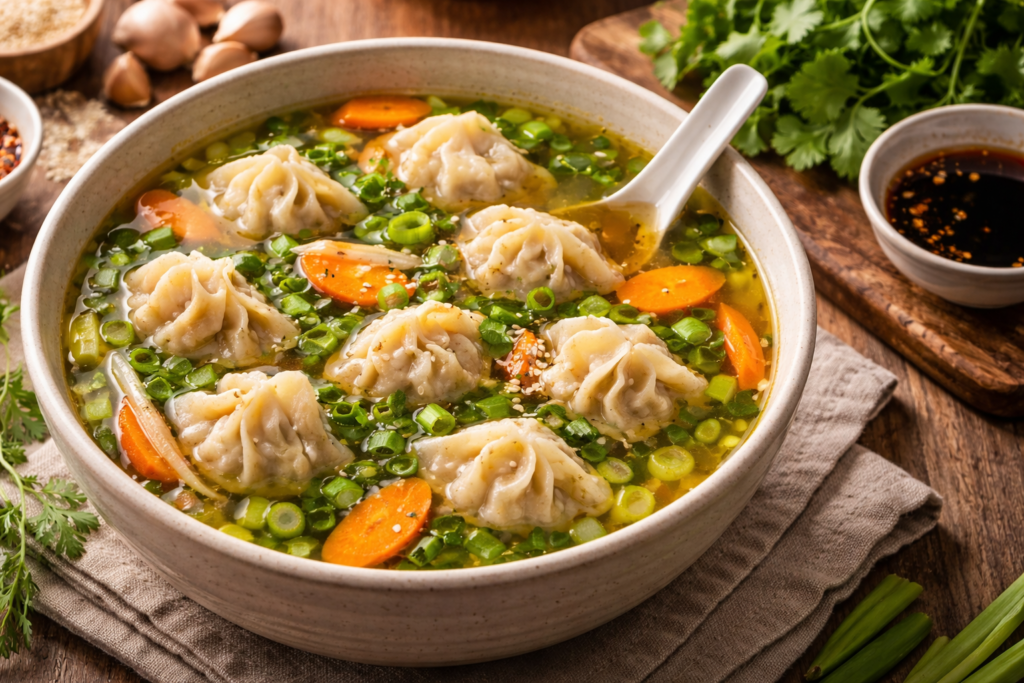
The Technique: Using a pair of chopsticks or a fork, stir the meat in one direction only. Constant clockwise motion helps the protein fibers (myosin) link up, which traps the liquid we’re about to add. Slowly pour in the 3 tablespoons of cold stock and the egg while continuing to stir. Once the meat looks tacky and “fluffy,” fold in the minced cabbage and scallions.
Pro Tip: Let the filling rest in the fridge for 20 minutes. This allows the proteins to set and the flavors to marry, making the dumplings much easier to fold later.
2. The Art of the Fold
Take a wrapper and place about 1 tablespoon of filling in the center. Do not overstuff; an overstuffed dumpling is a burst dumpling.
Dampen the edges of the wrapper with a flick of water. For soup, a simple “Half-Moon” or “Nurse’s Cap” fold works best because it creates pockets that catch the broth. Fold it in half to create a semi-circle, pressing the air out as you seal the edges. If using wonton wrappers, bring the two bottom corners of the triangle together and pinch.
3. Fortifying the Broth
While your dumplings rest, let’s fix the “boring broth” problem. In a large soup pot, heat 1 tablespoon of oil over medium heat. Add the sliced ginger, smashed garlic, and whole scallions. Sauté for 2 minutes until fragrant but not browned.
Pour in the chicken stock. Bring to a simmer, then add the soy sauce and fish sauce. Let this simmer gently for at least 15 minutes. This “infusion” time is what separates professional soup from a quick weeknight version. Just before serving, remove the spent ginger and scallions with a slotted spoon.
4. The Two-Pot Boil
Bring a separate large pot of water to a rolling boil.
Why a separate pot? Dumplings are coated in flour to keep them from sticking. If you boil them directly in your soup, that flour leaches out, turning your beautiful broth into a cloudy, starchy liquid.
Drop the dumplings in batches of 10. Give them a gentle stir immediately so they don’t stick to the bottom. Once they float to the surface, let them cook for another 2–3 minutes.
5. Assembly
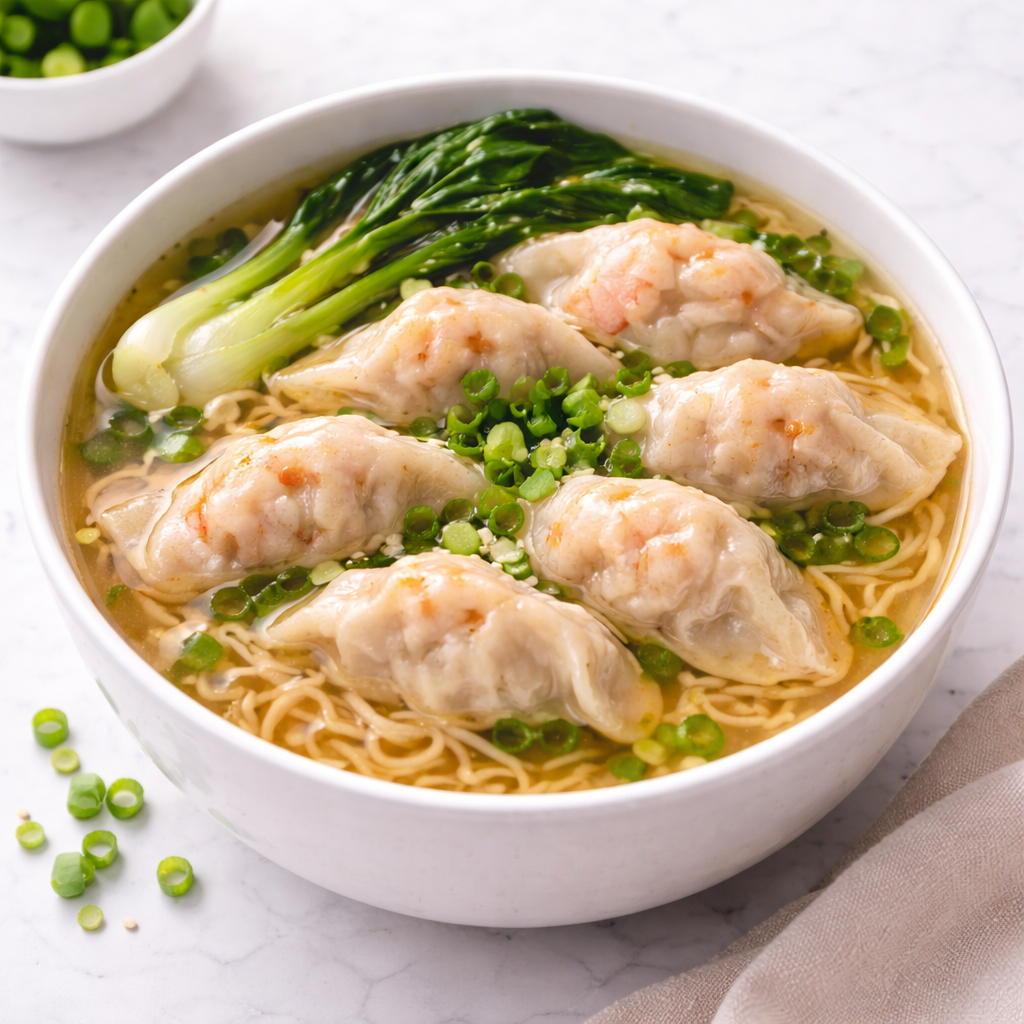
While the dumplings finish, drop your baby bok choy into the simmering broth for 60 seconds—just long enough to wilt but keep its crunch.
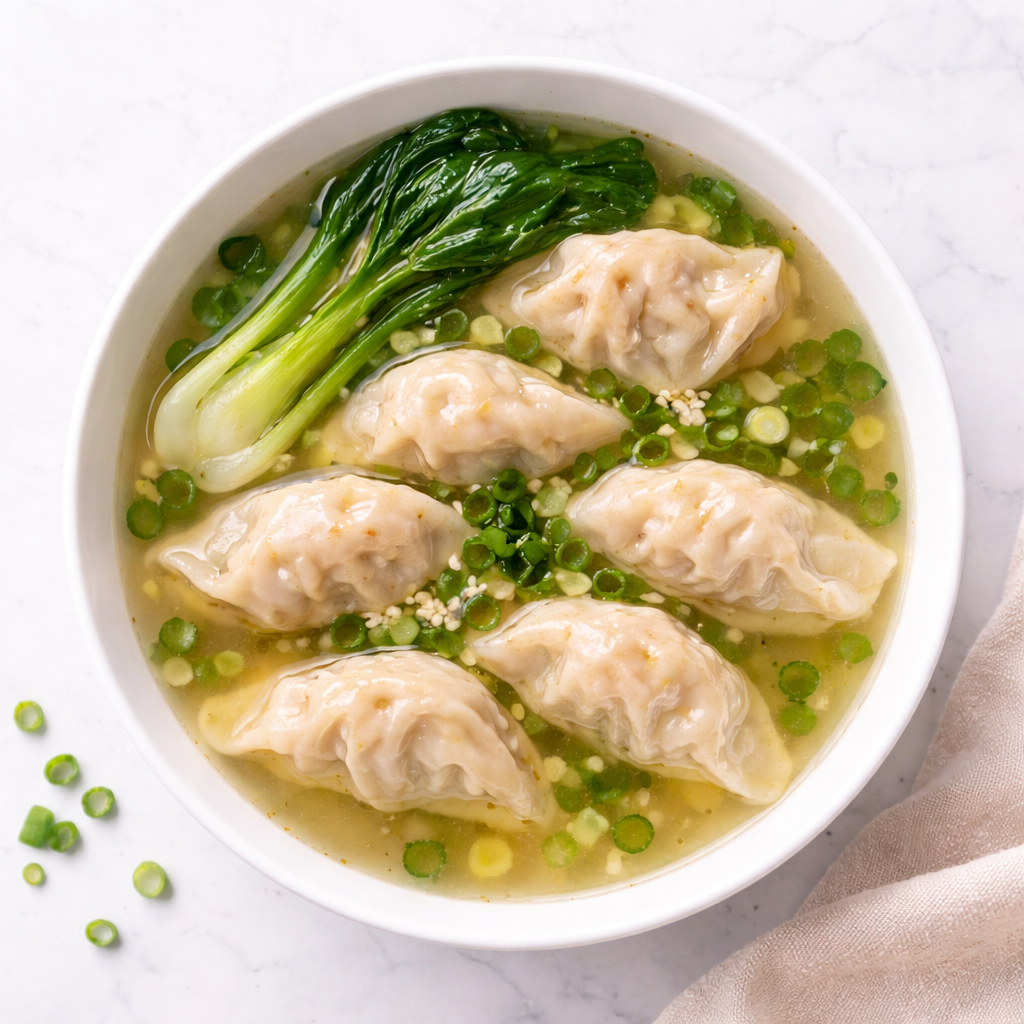
Use a slotted spoon to transfer the cooked dumplings directly from the boiling water into serving bowls. Ladle the fortified broth over them.
Common Mistakes to Avoid
- The “Soggy Bottom”: Leaving filled dumplings on a wooden board for too long before cooking. The moisture from the meat will seep into the wrapper, making it stick and tear. Use a parchment-lined tray dusted with cornstarch.
- Overworking the Broth: Boiling the broth too vigorously. A hard boil will make the broth cloudy and evaporate the delicate aromatics. Keep it at a “lazy bubble.”
- Ignoring the White Pepper: Many home cooks substitute black pepper. Don’t. White pepper has a fermented, floral heat that is foundational to the flavor profile of traditional dumpling soup.
- Crowding the Pot: If you put 30 dumplings in the water at once, the temperature drops significantly. The wrappers will sit in lukewarm water and become mushy before the meat is cooked.
Timing & Doneness Indicators
How do you know it’s actually done without cutting one open and losing all the juice?
- The Float Test: When dumplings rise to the surface, they are 80% of the way there. The air inside the wrapper has expanded.
- The “Puff” Factor: Look for the wrappers to look slightly translucent and “puffed” away from the meat.
- Internal Temperature: If you’re using a meat thermometer, the internal temperature of the pork should reach 160∘F (71∘C).
- The Time: Usually, 3–4 minutes for fresh dumplings and 6–8 minutes for frozen.
Serving Suggestions
A great dumpling soup is a canvas. Enhance it with these textures and flavors:
- Crispy Contrast: Top with fried shallots or garlic chips for a crunch that offsets the soft dumplings.
- The Heat: A spoonful of chili oil (with the bits!) is almost mandatory for those who enjoy a lingering warmth.
- Freshness: A generous handful of chopped cilantro or fresh scallion curls added at the very last second.
- Acid: A few drops of Chinkiang (black) vinegar added to the bowl provides a malty acidity that cuts through the richness of the pork.
FAQ
Q: Can I use frozen dumplings for this recipe? A: Absolutely. Follow the broth fortification steps exactly. Do not thaw the dumplings; drop them straight from the freezer into the boiling water. They will need about 2-3 extra minutes of cook time compared to fresh ones.
Q: My dumplings keep bursting. What am I doing wrong? A: It’s likely one of two things: either you have trapped air bubbles inside the wrapper when sealing, or you are boiling the water too violently. Trapped air expands when heated, acting like a tiny balloon that pops the dough. Ensure a tight seal.
Q: How do I store leftovers? A: This is the most important rule: Store the dumplings and broth separately. If they sit together in the fridge, the dumplings will act like sponges, absorbing all the liquid until they become a giant, bloated mass of dough. Drain the dumplings, toss them in a little sesame oil to prevent sticking, and store in a container. Reheat the broth first, then drop the dumplings in for 30 seconds to warm through.
Q: Can I make the filling with chicken instead of pork? A: Yes, but chicken is leaner and prone to drying out. Use ground chicken thigh rather than breast, and consider adding an extra tablespoon of stock or a teaspoon of cornstarch to the filling to help retain moisture.