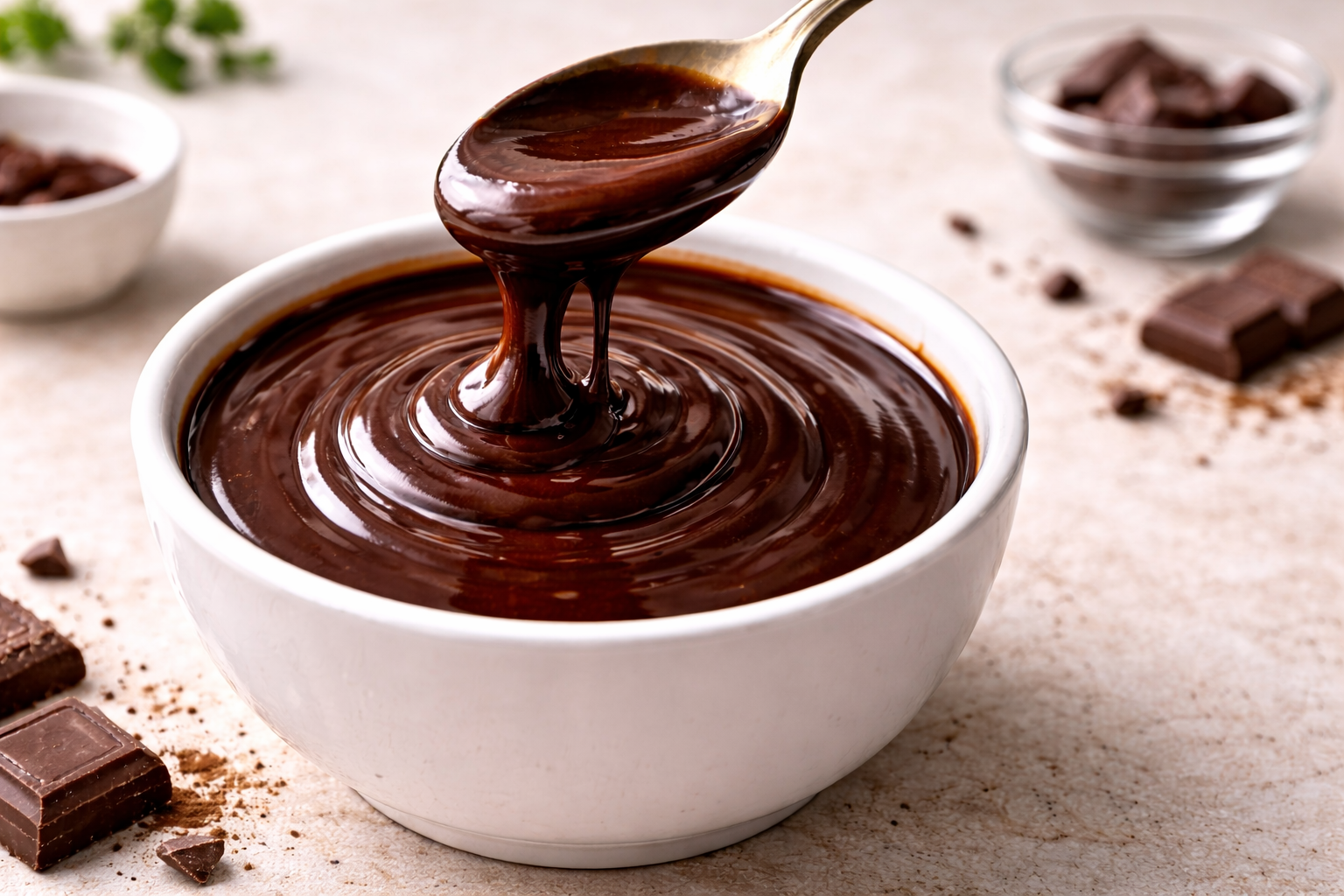
The difference between a “chocolate syrup” and a true “hot fudge” is a matter of physics and fat content. Most bottled syrups are essentially flavored invert sugars—thin, translucent, and destined to disappear into the ice cream the moment they make contact. A professional-grade hot fudge, however, is a stable emulsion. It possesses a distinct structural integrity; it should sit proudly atop a scoop, cooling slightly into a chewy, tacky ribbon that resists the spoon just enough to be satisfying.
Achieving this at home isn’t difficult, but it does require a departure from the “dump and stir” mentality. To make a fudge sauce that rivals the great soda fountains of the early 20th century, you have to manage the crystallization of sugar and the suspension of cocoa solids. When done correctly, the result is a glossy, obsidian-dark sauce with a flavor profile that leans into the bitterness of cocoa and the richness of dairy, rather than the one-dimensional wallop of corn syrup.
Ingredient Breakdown: The Chemistry of the Melt
Every component in a hot fudge sauce recipe serves a structural purpose. If you swap one out without understanding its role, the emulsion will likely break or the texture will turn grainy.
- Heavy Cream (The Vehicle): We use heavy cream (at least 36% milk fat) because its fat globules provide the cushion for the cocoa solids. Water-based sauces are thin; fat-based sauces are opulent. The proteins in the cream also help stabilize the mixture as it boils.
- Dutch-Processed Cocoa Powder: Unlike natural cocoa, Dutch-processed cocoa has been treated with an alkalizing agent to neutralize its acidity. This results in a darker color and a smoother, more mellow flavor that pairs perfectly with dairy. It also dissolves more readily into the liquid, preventing a “sandy” mouthfeel.
- Unsweetened Chocolate (The Body): While cocoa powder provides the flavor, solid unsweetened chocolate provides the “chew.” The cocoa butter in the solid chocolate hardens slightly as it cools on the ice cream, creating that iconic fudge-like consistency.
- Light Corn Syrup (The Interfering Agent): In high-end confectionery, corn syrup is used as an “interfering agent.” It prevents the sucrose molecules in the granulated sugar from bonding together and forming crunchy crystals. This is the secret to a sauce that stays smooth for weeks in the fridge.
- Salt and Vanilla: These are not mere afterthoughts. Salt is the primary contrast to the bitterness of the chocolate, while vanilla extract adds a floral top note that prevents the sauce from tasting “flat.”
- Unsalted Butter: Added at the very end, butter provides the “mirror finish.” It’s an extra hit of fat that ensures the sauce glitters under the kitchen lights.
Preparation Strategy: Temperature and Agitation
Before you turn on the stove, understand that chocolate is temperamental. It scorches easily and hates sudden temperature shocks.
The Mise en Place: Have your chocolate finely chopped. If you throw a large block of chocolate into boiling cream, the outside will scorch before the inside melts. Small, uniform shards ensure a rapid, even melt.
The Choice of Cookware: Use a heavy-bottomed saucepan. Thin stainless steel pans develop “hot spots” that can caramelize the sugars unevenly or burn the milk solids in the cream. A heavy pot distributes heat laterally, giving you a more forgiving window of time.
Agitation Control: While you need to whisk to incorporate the cocoa powder, you should switch to a heat-proof silicone spatula once the mixture starts to simmer. Over-whisking at high temperatures can incorporate too much air, leading to bubbles that ruin the glassy aesthetic of the finished fudge.
Cooking Instructions: The Precision Method
This process takes about fifteen minutes, but the majority of that time is spent watching the bubbles.
Phase 1: The Slurry
- In your heavy-bottomed saucepan, combine 1 cup of heavy cream, 1/2 cup of light corn syrup, 1/3 cup of packed dark brown sugar, and 1/3 cup of Dutch-processed cocoa powder.
- Whisk these together over medium heat before the mixture gets hot. You want to ensure the cocoa powder is fully hydrated and there are no dry clumps.
Phase 2: The Boil
- Increase the heat slightly to medium-high. Bring the mixture to a gentle, rolling boil.
- Once it boils, reduce the heat to maintain a steady simmer. Let it cook for 3 to 5 minutes. During this time, the water content in the cream is evaporating, and the sugars are beginning to “thread.” This is where the sauce gains its thickness. Do not leave the stove; dairy-based syrups can boil over in a matter of seconds.
Phase 3: The Enrichment
- Remove the pan from the heat entirely. This is crucial—residual heat is enough to finish the job without risking a scorched bottom.
- Immediately add 4 ounces of finely chopped unsweetened chocolate and 4 tablespoons of cold, cubed unsalted butter.
- Let the pan sit undisturbed for 2 minutes. This allows the chocolate to soften gently.
- Using your spatula, stir in slow, circular motions starting from the center and working your way out. As the fats emulsify, the sauce will transform from a murky brown to a deep, shimmering onyx.
- Stir in 1 tablespoon of pure vanilla extract and a generous pinch of kosher salt.
Flavor & Texture Indicators
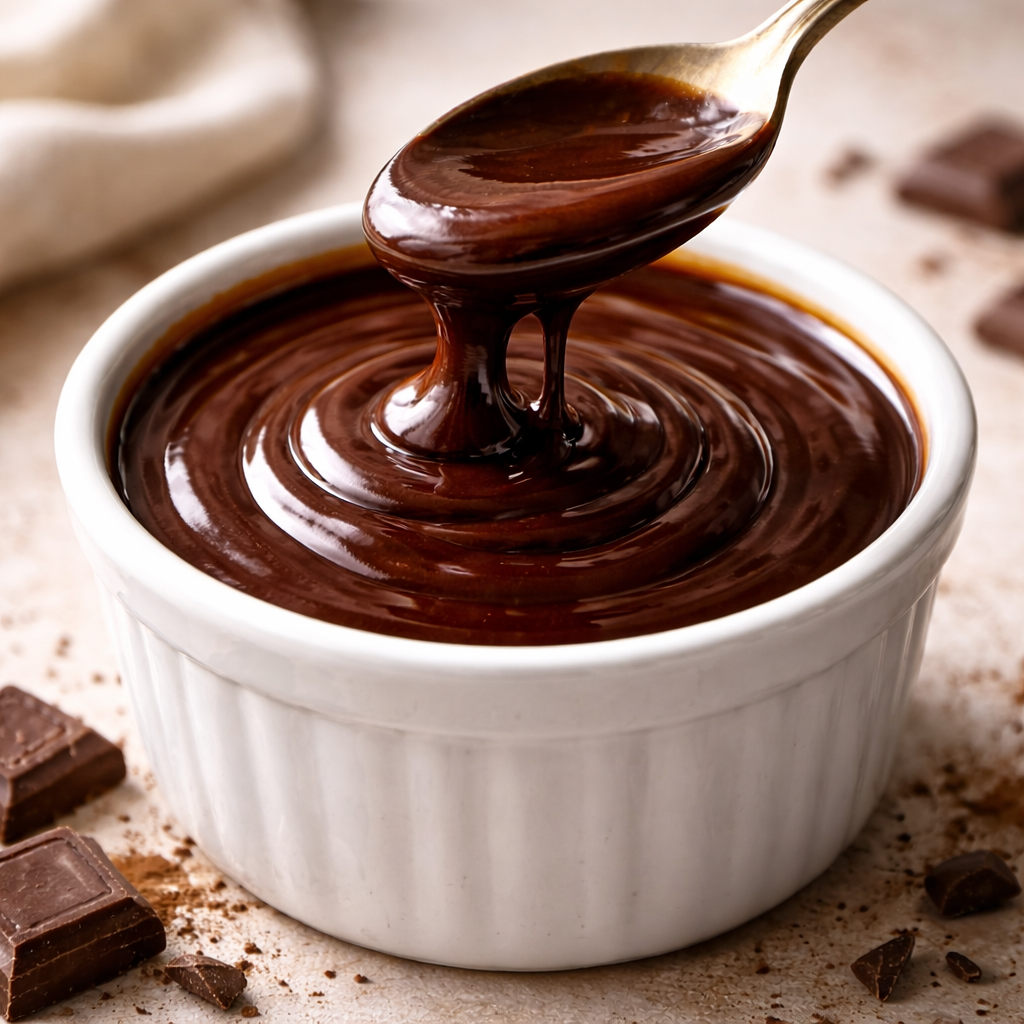
A perfect hot fudge should be viscous but pourable.
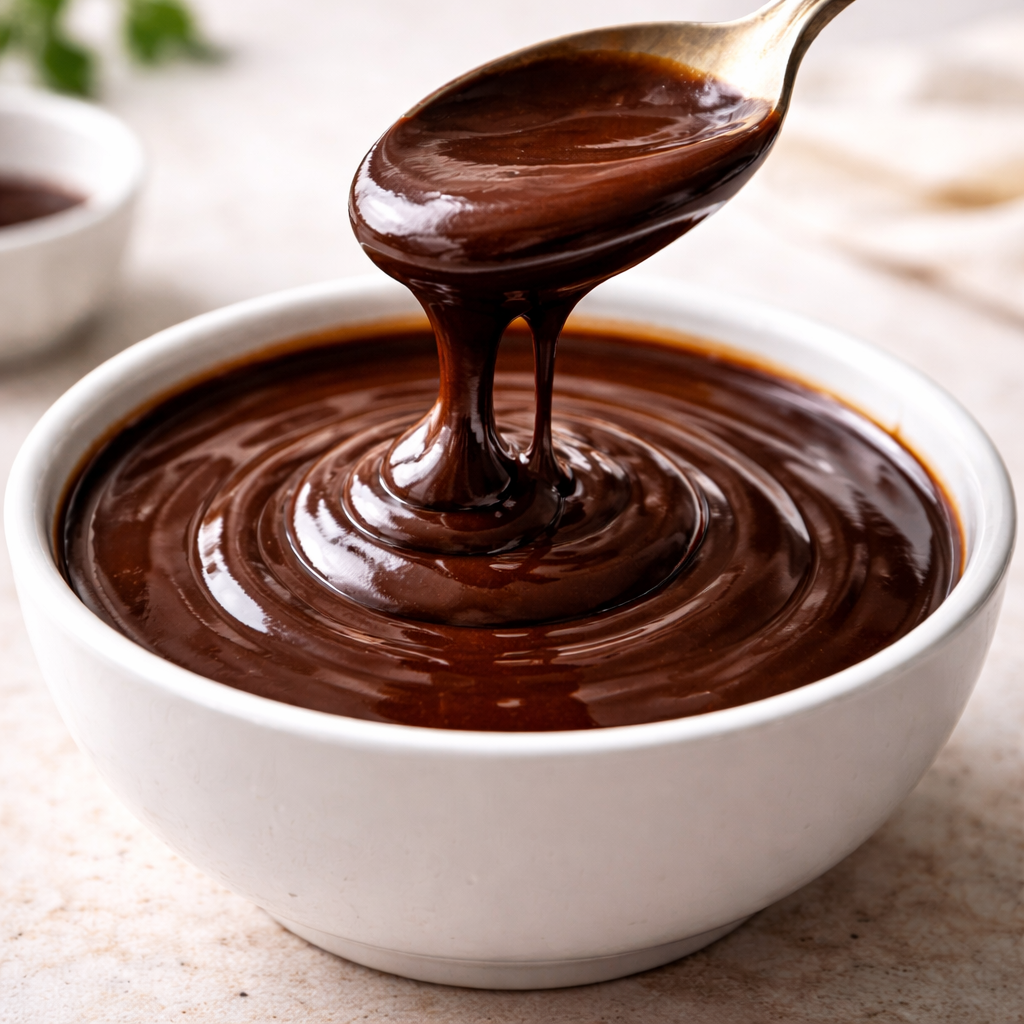
- The Spoon Test: Dip a metal spoon into the sauce and pull it out. The fudge should coat the spoon thickly. Run your finger through the coating; the line should remain sharp and distinct without the sauce running back to fill the gap.
- The Gloss: If the sauce looks dull or matte, it likely needs more butter or a bit more agitation to finish the emulsion. A successful sauce should have a reflective quality.
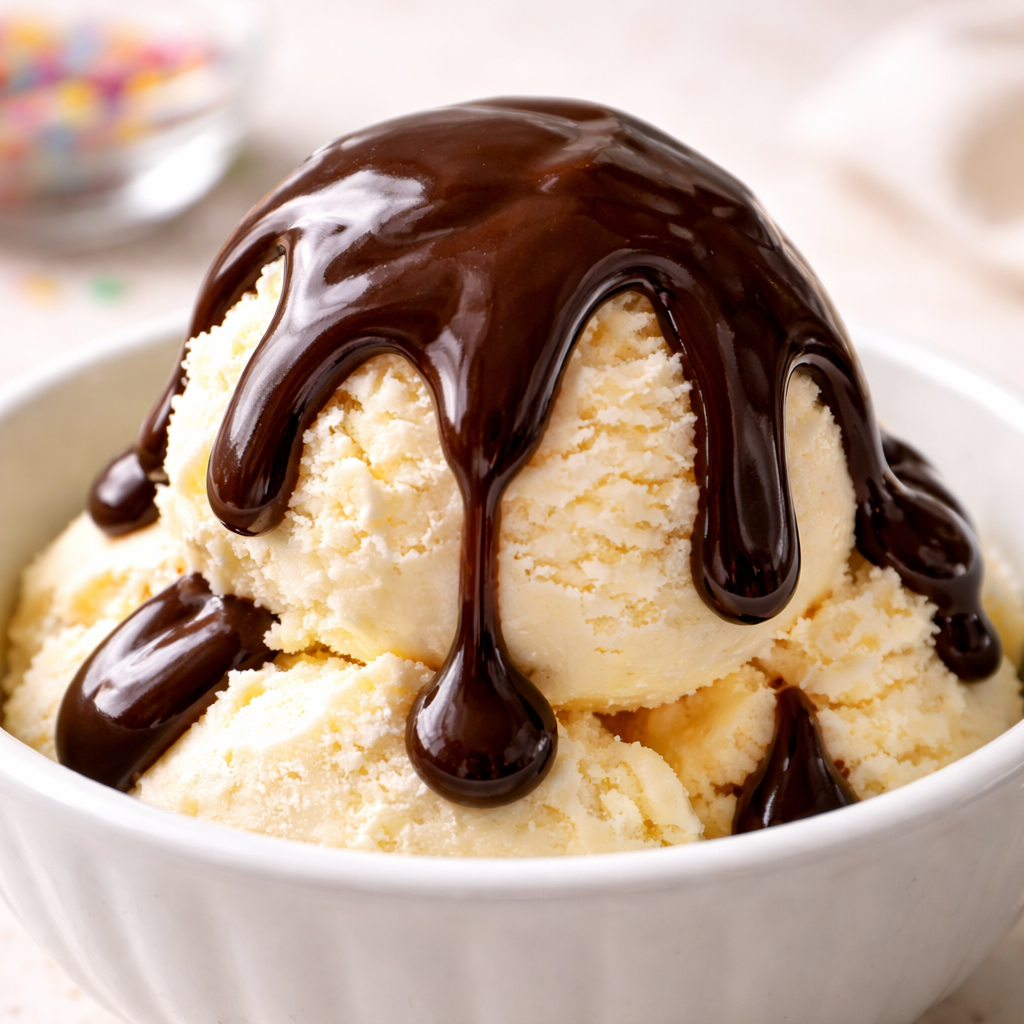
- The Chew: Once the sauce hits cold ice cream, it should thicken within 30 seconds. It shouldn’t become hard like a “magic shell” (which relies on coconut oil), but it should have a fudgy, malleable texture that stretches slightly when pulled with a spoon.
Adjustments for Different Skill Levels
- The Beginner: If you are worried about burning the chocolate, use a Double Boiler (a bowl set over a pot of simmering water). It’s slower and prevents the sauce from reaching the necessary boil for maximum thickness, but it is a “zero-fail” way to ensure the chocolate never scorches.
- The Intermediate: Play with the sugar profile. Substitute the dark brown sugar with muscovado sugar for a deeper, molasses-heavy funk, or add a teaspoon of espresso powder to the cocoa slurry. Coffee doesn’t make the sauce taste like mocha; it simply makes the chocolate taste “more like itself.”
- The Advanced: Experiment with Infusions. Before starting the recipe, simmer the heavy cream with crushed candy canes, toasted salt, or even a split vanilla bean. Strain the solids out, then proceed with the recipe. This allows you to layer flavors into the fat of the cream rather than just stirring them in at the end.
Storage & Shelf Life: The Longevity of Fudge
Because of the high sugar and fat content, this sauce is remarkably hardy.
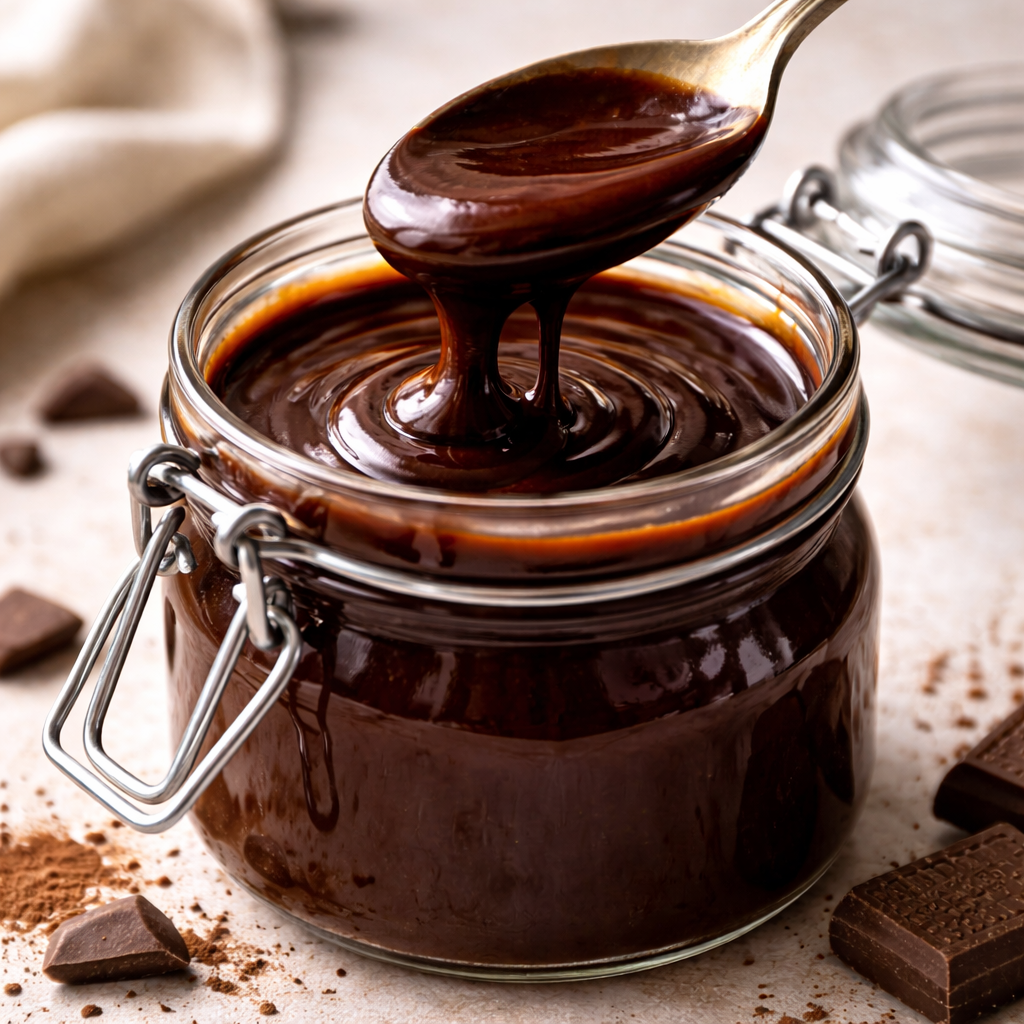
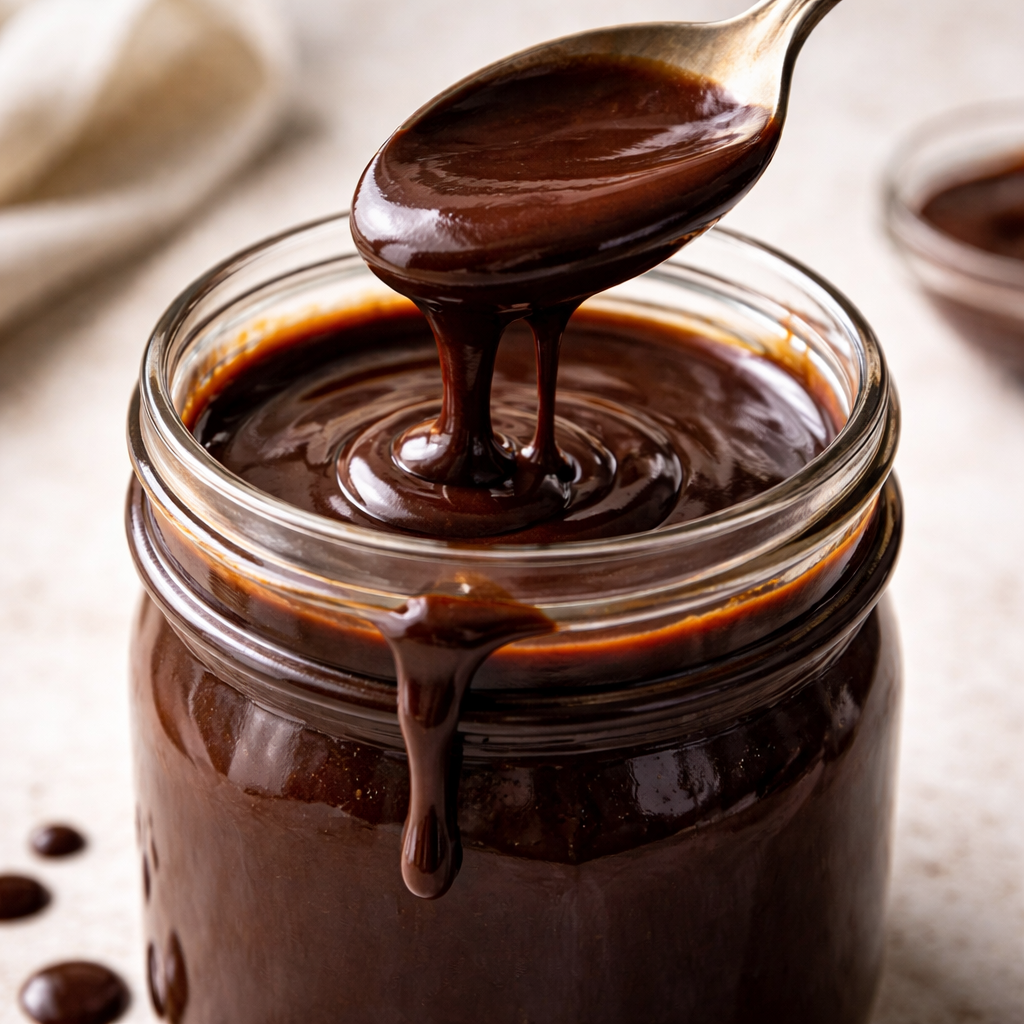
- Refrigeration: Store the sauce in a glass jar (avoid plastic, which can retain odors). It will keep in the refrigerator for up to 3 weeks. Note that it will become a solid block once cold—this is normal.
- Reheating: Never microwave the whole jar for a single serving. Scoop out what you need and heat it in a small saucepan over low heat, or use the microwave in 15-second bursts, stirring between each. If the sauce seems too thick after a week, whisk in a teaspoon of hot water or cream during the reheating process to restore the emulsion.
- Freezing: You can freeze hot fudge, but the texture often suffers upon thawing as the cocoa solids can separate from the fats. It’s better to make smaller batches more frequently.
Reader Questions
“My sauce turned out grainy. Can I fix it?” Graininess usually means the sugar crystallized. You can often fix this by putting the sauce back in a pan with a tablespoon of water and a teaspoon of corn syrup. Heat it gently and stir until the crystals dissolve.
“Why use unsweetened chocolate instead of semi-sweet?” Control. By using unsweetened chocolate, you are the one deciding exactly how much sugar goes into the pot. Semi-sweet chips also often contain stabilizers like soy lecithin that can interfere with the “chew” of a traditional fudge.
“Can I substitute the corn syrup with honey or maple syrup?” You can, but be aware that honey and maple syrup do not have the same “interfering” properties as corn syrup. Your sauce will be delicious, but it will be much more prone to turning grainy after a few days in the fridge.
“Is there a way to make this vegan?” Yes, but you must replace the heavy cream with full-fat coconut milk (the canned kind, shaken well) and use a high-quality vegan butter substitute. The flavor will have a distinct coconut undertone, which actually pairs beautifully with the dark chocolate.