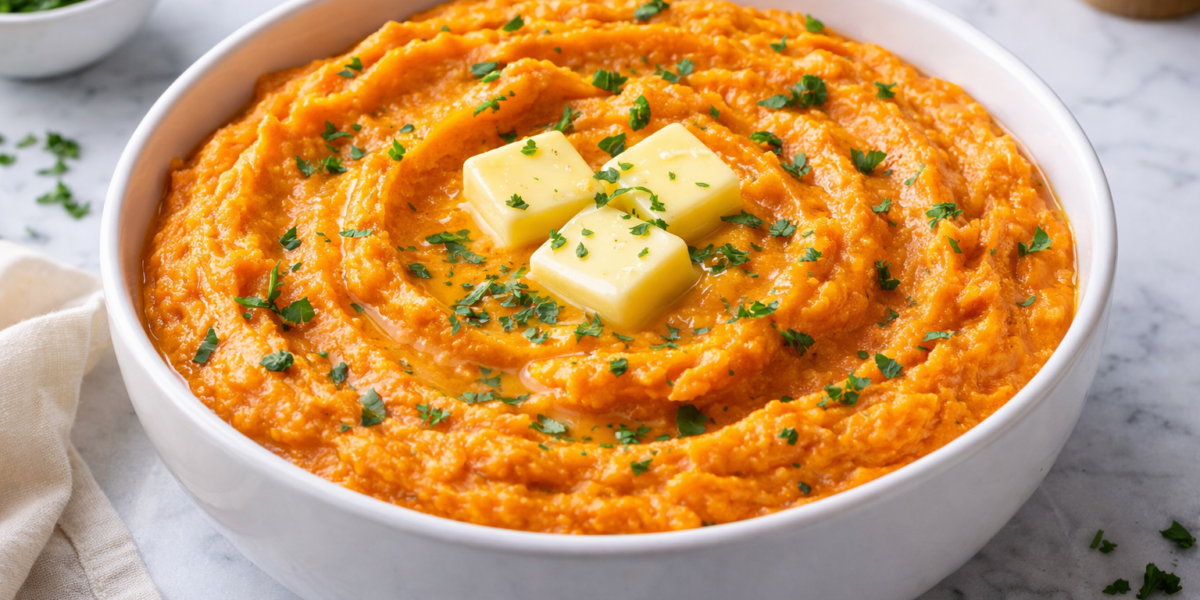
Sweet potatoes are often treated as the rustic, less-refined cousin of the classic Yukon Gold. We frequently see them roasted in jagged chunks or buried under a mountain of marshmallows in a holiday casserole. However, when approached with a focus on texture and temperature control, the mashed sweet potato transforms into a sophisticated, velvet-like side dish that balances natural sugars with earthy depth.Mashed Sweet Potato Recipe
The common frustration with mashed sweet potatoes is their tendency to become stringy or unpleasantly “fibrous.” This occurs when the root is cooked too quickly at high heat, or when the cellular structure is shattered by over-processing. This guide focuses on a controlled-simmer and infusion method, a technique that prioritizes structural integrity and a luxurious mouthfeel.
Traditional vs. This Method
There are three primary ways to reach a “mash,” and each affects the final result significantly.
1. The Roasting Method (Traditional)
Roasting sweet potatoes whole in their skins is the most common traditional approach.
- The Result: Deep, caramelized flavor and a very sweet profile.
- The Drawback: Roasting can create “tough spots” near the skin and often results in a drier mash that requires a significant amount of added liquid (milk or cream) to become smooth. It is excellent for pies, but often too heavy for a dinner side.
2. The Steaming Method
Steaming is often praised for nutrient retention.
- The Result: A clean, pure potato flavor.
- The Drawback: Steaming doesn’t allow for the “salt infusion” that happens when potatoes are simmered in seasoned water. The result can often taste bland unless heavily seasoned afterward.
3. The Controlled-Simmer & Infusion (This Method)
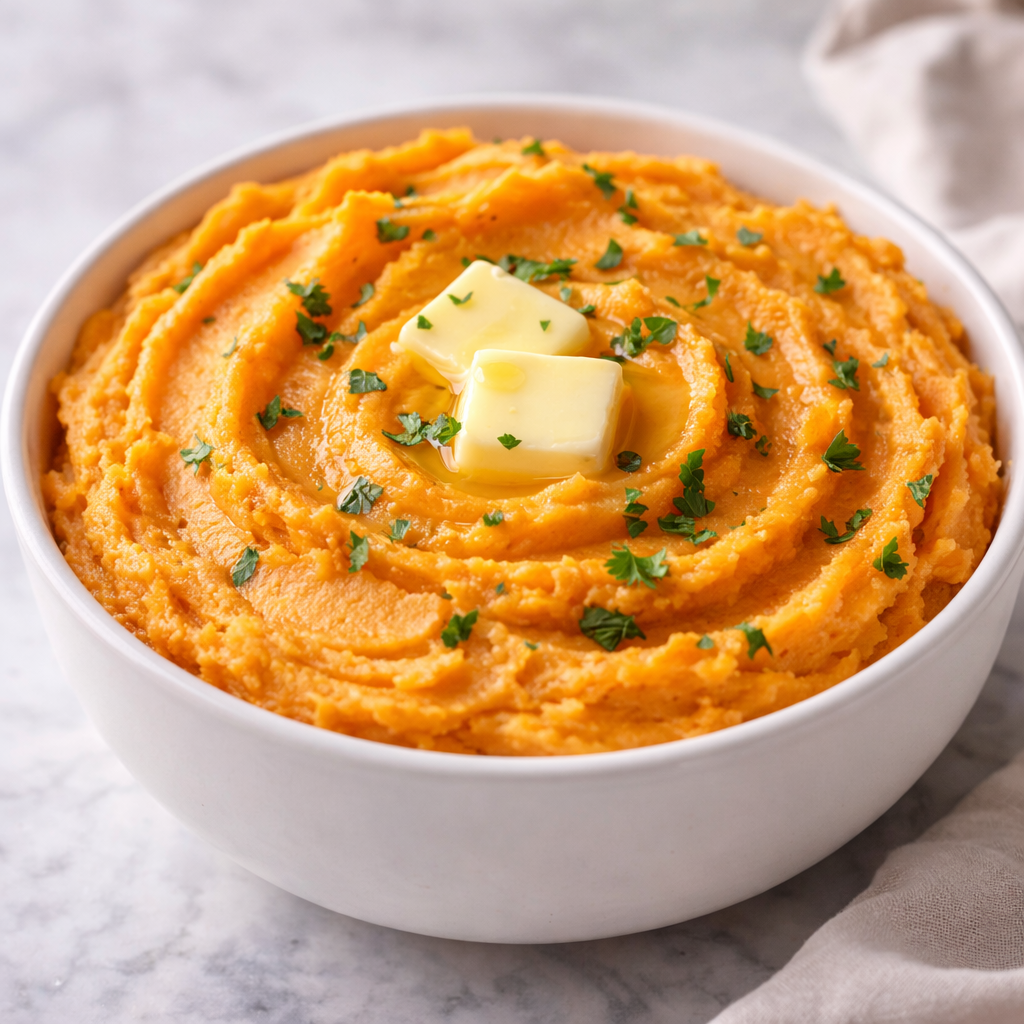
By peeling and cubing the potatoes before simmering them in a salted, aromatic-infused liquid, we achieve two things: even cooking and internal seasoning.
- The Advantage: Because the potatoes are exposed to the seasoned water, they absorb salt and aromatics (like garlic or thyme) into their starch cells as they soften. This creates a multi-dimensional flavor that roasting simply cannot match.
Ingredients
To achieve a professional-grade mash, the quality of your fats and the precision of your aromatics are just as important as the potatoes themselves.
- 3 lbs Sweet Potatoes: Look for “Garnet” or “Jewel” varieties. These have a higher moisture content and a deep orange hue, which results in a creamier mash than the paler, starchier varieties.
- 4 tbsp High-Fat European Butter: (e.g., Kerrygold). Higher butterfat content ensures a silkier emulsion.
- ½ cup Whole Milk or Heavy Cream: This provides the liquid base for the mash.
- 2 cloves Garlic (Smashed): To be simmered with the potatoes for a subtle, savory undertone.
- 1 tsp Kosher Salt: Essential for the simmering water.
- 1 tbsp Maple Syrup or Honey (Optional): To enhance the natural sugars.
- ½ tsp Fresh Thyme or Rosemary: Finely minced for an earthy finish.
- A pinch of Nutmeg: Nutmeg contains chemical compounds that bridge the gap between the sweetness of the potato and the richness of the butter.
Stepwise Cooking
1. Preparation and Sizing
Peel the sweet potatoes and cut them into uniform 1-inch cubes. Uniformity is the key to a consistent texture; if the pieces are different sizes, the smaller ones will turn to mush while the larger ones remain “crunchy” or fibrous in the center.
2. The Cold Start
Place the cubes in a large pot and cover with cold water by at least two inches. Add the smashed garlic cloves and the salt.
- Professional Tip: Always start potatoes in cold water. If you drop them into boiling water, the outside cooks and breaks down before the inside reaches the proper temperature.
3. The Gentle Simmer
Bring the water to a boil, then immediately reduce the heat to a steady simmer. Cook for 12–15 minutes.
- The Doneness Test: A paring knife should slide into a cube with absolutely zero resistance. If the potato “clings” to the knife, it needs another two minutes.
4. The Evaporation Phase
Drain the potatoes in a colander. Return the drained potatoes to the hot, empty pot for 60 seconds over low heat. Shake the pot gently. This allows excess surface moisture to evaporate.
- Why this matters: If you mash “wet” potatoes, the result will be watery. By “drying” them out, you create room for the potato to absorb the butter and cream instead.
5. The Warm Infusion
While the potatoes are drying, warm your milk/cream and butter in a separate small saucepan or the microwave. Never add cold dairy to hot potatoes. Cold liquid shocks the starch, which can lead to a gummy, gluey texture.
6. The Mash
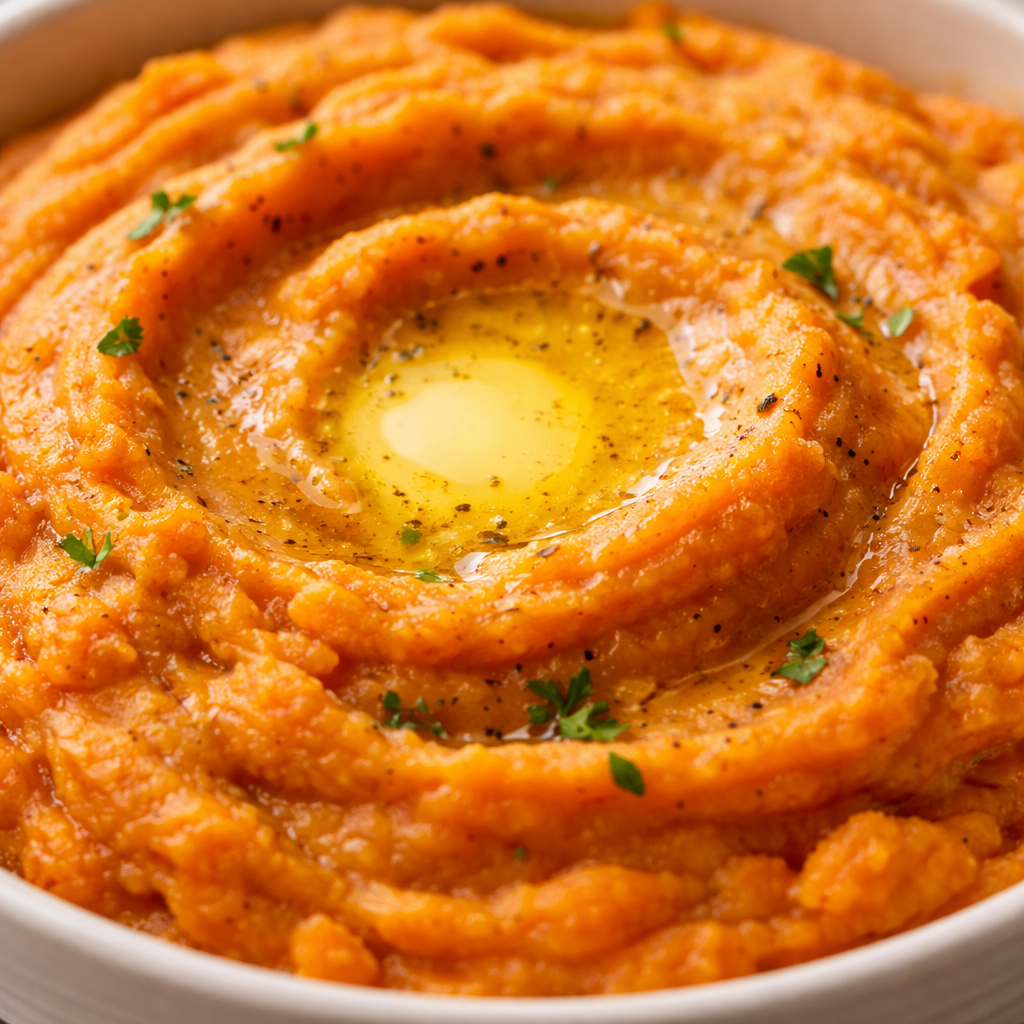
Use a potato ricer or a food mill for the smoothest possible results. If using a standard hand masher, work in a vertical, pressing motion rather than a stirring motion. Gradually pour in the warm butter-milk mixture as you mash. Fold in the fresh herbs and nutmeg at the very end.
Why This Method Produces Better Results
This method relies on starch management. Sweet potatoes contain an enzyme called amylase, which breaks down starch into sugar as the potato heats up. By using the simmering method, we control the rate of this conversion.
Furthermore, by using a potato ricer (or a food mill), you are essentially extruding the potato through small holes. This separates the fibers without crushing the individual starch granules. When you use a high-speed blender or food processor, the blades shear the starch granules, releasing amylopectin—the substance that turns mashed potatoes into an elastic, “sticky” paste. Our method ensures the potatoes remain light and aerated.
Adjustments: From Savory to Sweet
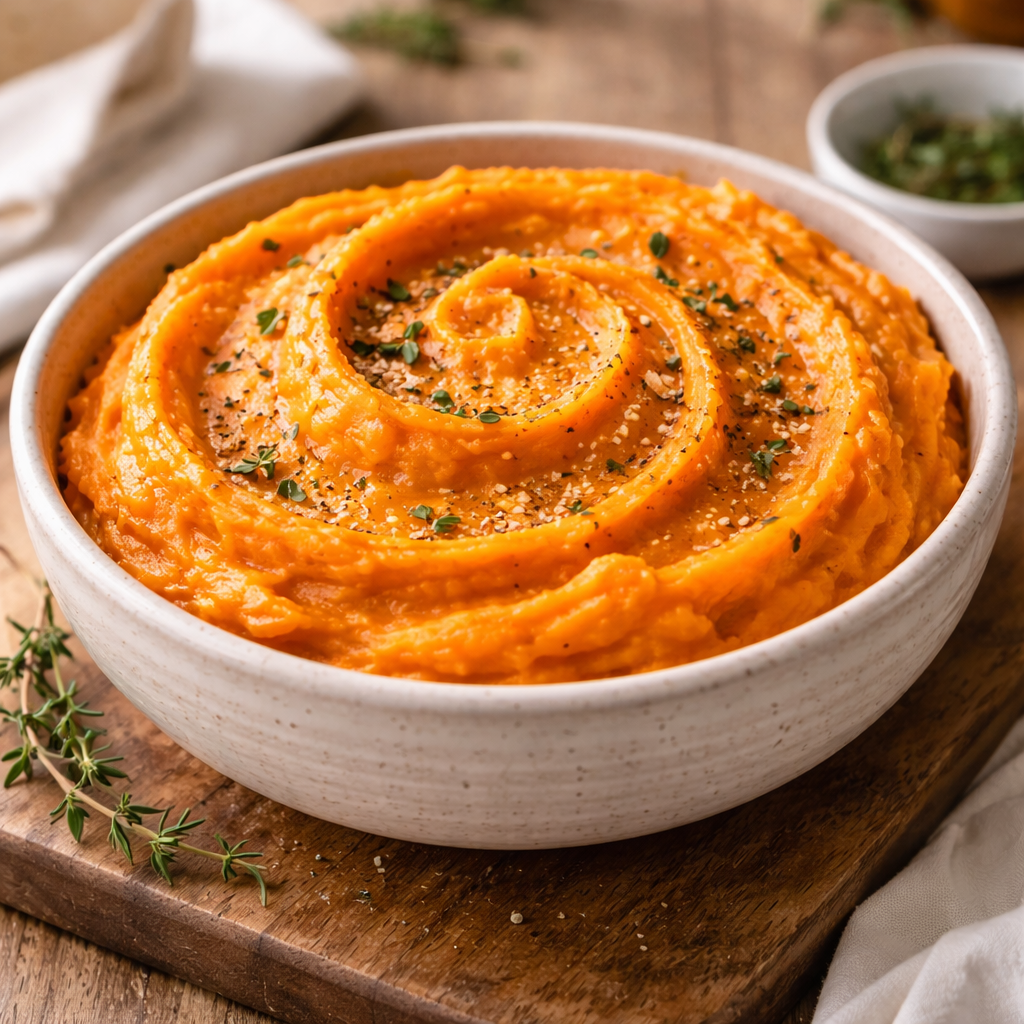
The beauty of the mashed sweet potato is its versatility. You can shift the flavor profile depending on the main course.
- The Savory Twist: Increase the garlic to 4 cloves and add 2 tablespoons of freshly grated Parmesan cheese and a teaspoon of cracked black pepper. This pairs perfectly with roasted chicken or steak.
- The Vegan Adaptation: Substitute the butter with a high-quality extra virgin olive oil and the milk with full-fat coconut milk. The coconut notes naturally complement the sweetness of the potato.
- The “Bright” Mash: Add a teaspoon of lime juice and a handful of chopped cilantro. This acidity cuts through the heaviness of the starch and works beautifully with grilled fish.
Storage and Reheating
Sweet potatoes hold their heat well, but they can oxidize and turn slightly brown if left exposed to air for too long.
- Storage: Store in an airtight container in the refrigerator for up to 4 days.
- Freezing: Mashed sweet potatoes freeze exceptionally well. Place them in a freezer bag, press out all the air, and flatten the bag. They will stay fresh for up to 3 months.
- Reheating: To maintain the silky texture, reheat in a saucepan over low heat. Add a splash of milk or a knob of butter to “loosen” the mash, as it will naturally thicken in the fridge. Stir frequently to prevent scorching on the bottom of the pan.
FAQ: Solving Common Sweet Potato Frustrations
Q: Why is my mash stringy? A: Sweet potatoes have long, tough fibers just under the skin. To avoid this, peel your potatoes deeply—remove the skin and about 1/8th of an inch of the flesh beneath it. Also, ensure you are using a ricer, which catches those fibers before they make it into the bowl.
Q: Can I leave the skins on for extra nutrition? A: While you can, it will change the dish from a “mash” to a “rustic smash.” The skins of sweet potatoes are much tougher than red or Yukon Gold skins and will not soften significantly during the mashing process.
Q: My potatoes taste watery. What happened? A: You likely skipped the “evaporation phase.” If the potatoes aren’t dried out after boiling, that extra water gets trapped in the mash. You can fix this by stirring the mash in a pan over medium heat for a few minutes to cook off the excess moisture.
Q: Do I need to add sugar? A: Sweet potatoes are naturally high in sugar. If you use the simmering method, the flavor is usually balanced enough that extra sugar isn’t necessary. However, if you are serving this alongside a salty ham or roasted turkey, a tablespoon of maple syrup can help bridge the flavor gap.