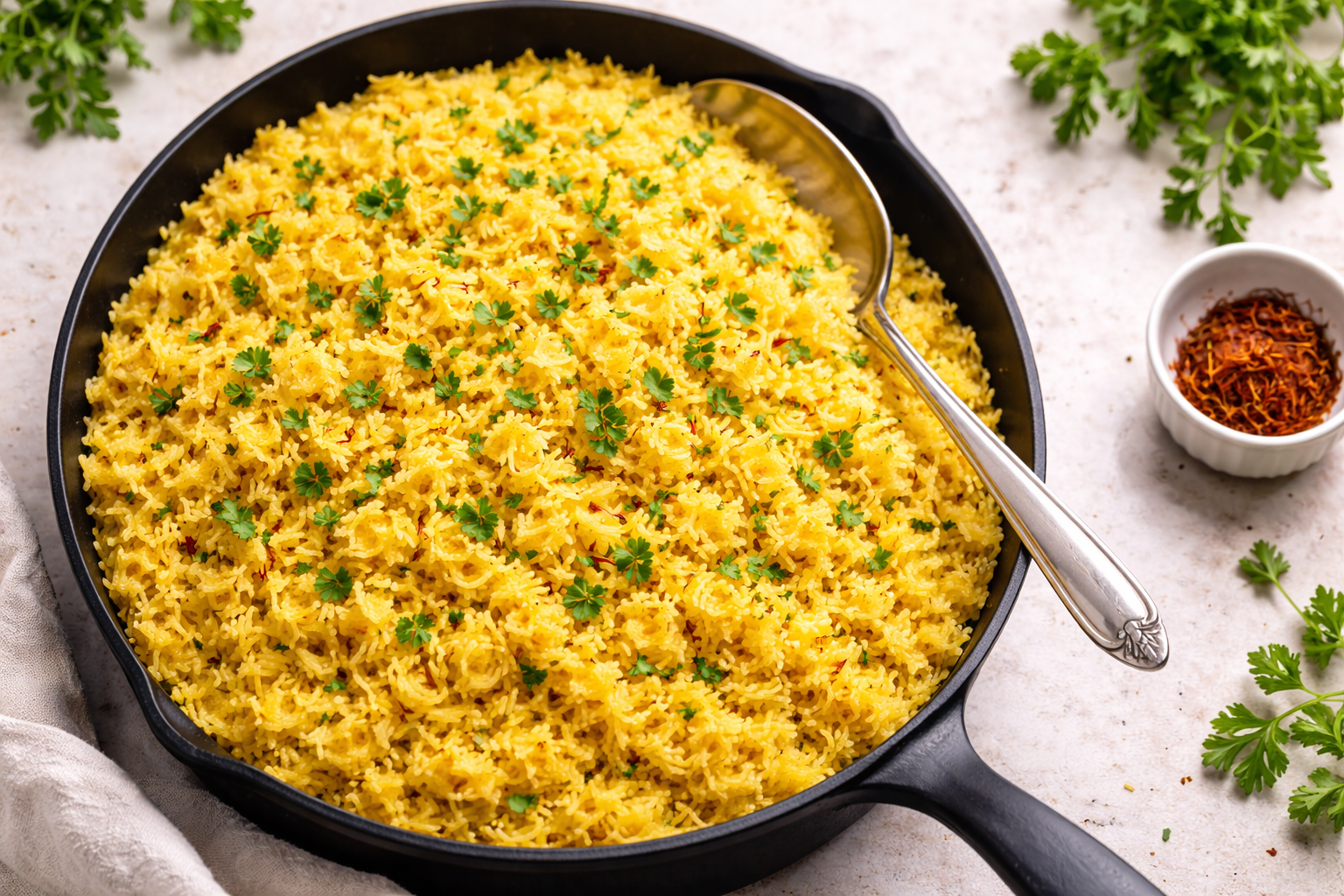
Saffron Rice Recipe Saffron rice is one of those deceptive dishes that looks effortlessly simple but demands a nuanced understanding of heat and hydration. In many cultures, from the Persian plateau to the kitchens of Valencia, saffron rice isn’t just a side dish; it’s a centerpiece. To get it right, you have to move beyond the idea of rice as a “filler.” Instead, you must treat each grain as a vessel for one of the most complex aromatics on the planet.
A truly professional saffron rice is defined by two things: individual grain separation and a vibrant, uniform golden hue. If your rice is clumpy, or if the yellow color is splotchy, you’ve missed a step in the chemistry of the preparation. This guide is designed to walk you through the structural and aromatic requirements of a world-class saffron rice, focusing on the Long-Grain Basmati method—the gold standard for texture and fragrance.
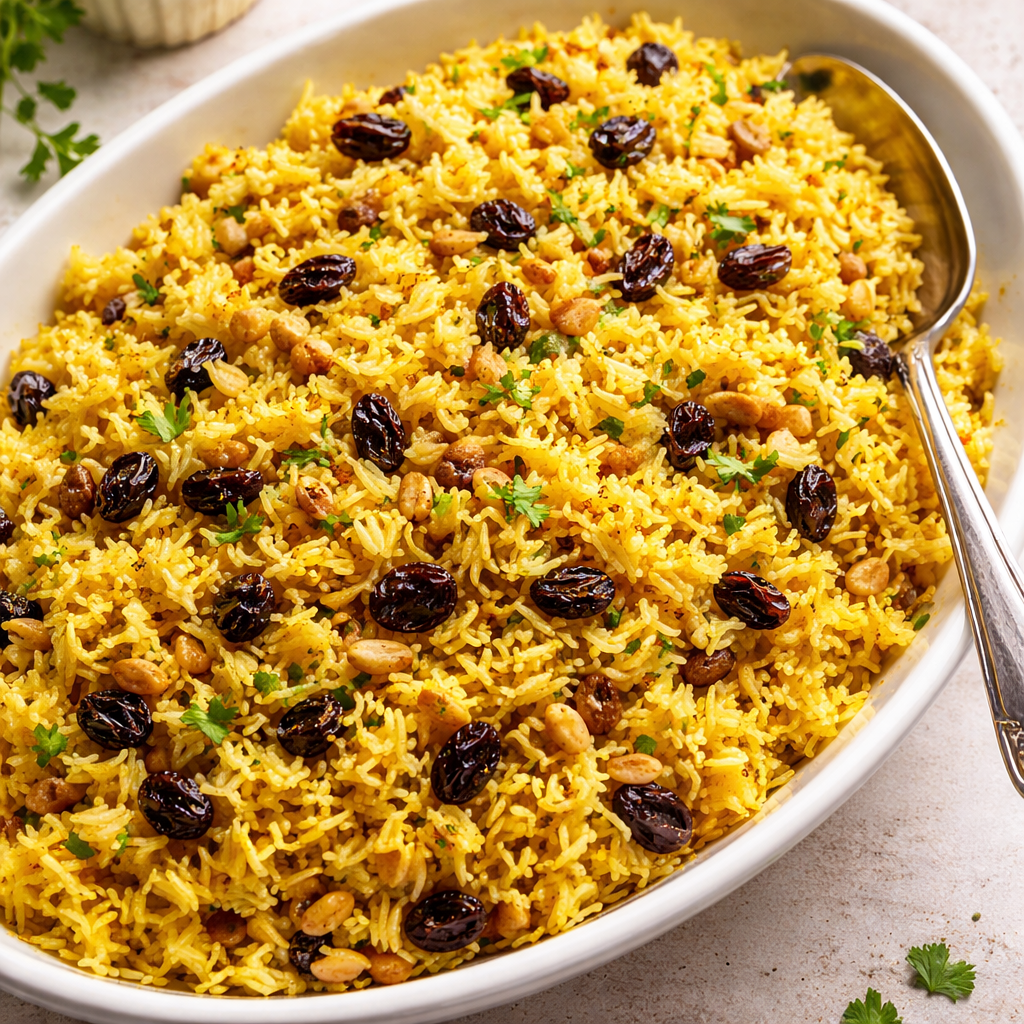
Ingredient Breakdown: The Pillars of Flavor
In a recipe with so few components, the quality of each ingredient is magnified. There is nowhere to hide poor sourcing.
- The Saffron (Crocus sativus): Saffron is the dried stigma of the autumn crocus. It contains crocin (responsible for the color), picrocrocin (the bitter taste), and safranal (the aroma). Look for “Sargol” or “Negin” grade saffron—deep red threads with no yellow styles. If the threads are pale or yellowish, the flavor will be medicinal rather than floral.+1
- The Rice (Extra-Long Grain Basmati): Not all rice is created equal. For this dish, you need aged Basmati. Aging reduces the moisture content of the grain, which allows it to expand into long, needle-like shapes without breaking. High-quality Basmati can expand to nearly double its length when cooked correctly.
- The Fat (Ghee or Clarified Butter): While olive oil works, ghee is superior here. It has a high smoke point and a nutty, toasted milk-solid flavor that complements the earthiness of the saffron. The fat’s primary role is to coat the exterior of each grain, creating a waterproof barrier that prevents the rice from becoming a sticky mass.
- The Liquid (Filtered Water or Light Stock): If you use stock, ensure it is a very light chicken or vegetable broth. A heavy, dark stock will muddy the brilliant yellow of the saffron. Most professionals prefer filtered water to allow the saffron’s nuanced “hay and honey” notes to take center stage.
- The Salt (Kosher or Sea Salt): Salt is essential for more than just flavor. In the soaking phase, salt helps strengthen the exterior of the rice grain, making it less likely to burst during the boiling process.
Preparation Strategy: The Triple-Step Method
The secret to restaurant-quality rice happens before you ever turn on the stove. There are three non-negotiable phases: rinsing, soaking, and blooming.
1. The Scrupulous Rinse
Rice is coated in surface starch. If you leave that starch on the grain, it will gelatinize in the pot, turning your dish into a gummy clump. Place your rice in a large bowl and cover with cold water. Agitate the grains gently with your fingers—don’t be too rough, or you’ll snap the long grains. Drain and repeat 5 to 7 times until the water runs as clear as glass.
2. The Brine Soak
Once clean, soak the rice in salted water for at least 30 minutes (and up to 2 hours). This allows the grain to absorb moisture evenly to the core. A pre-soaked grain cooks faster and more uniformly, which prevents the outside from becoming mushy before the inside is tender.
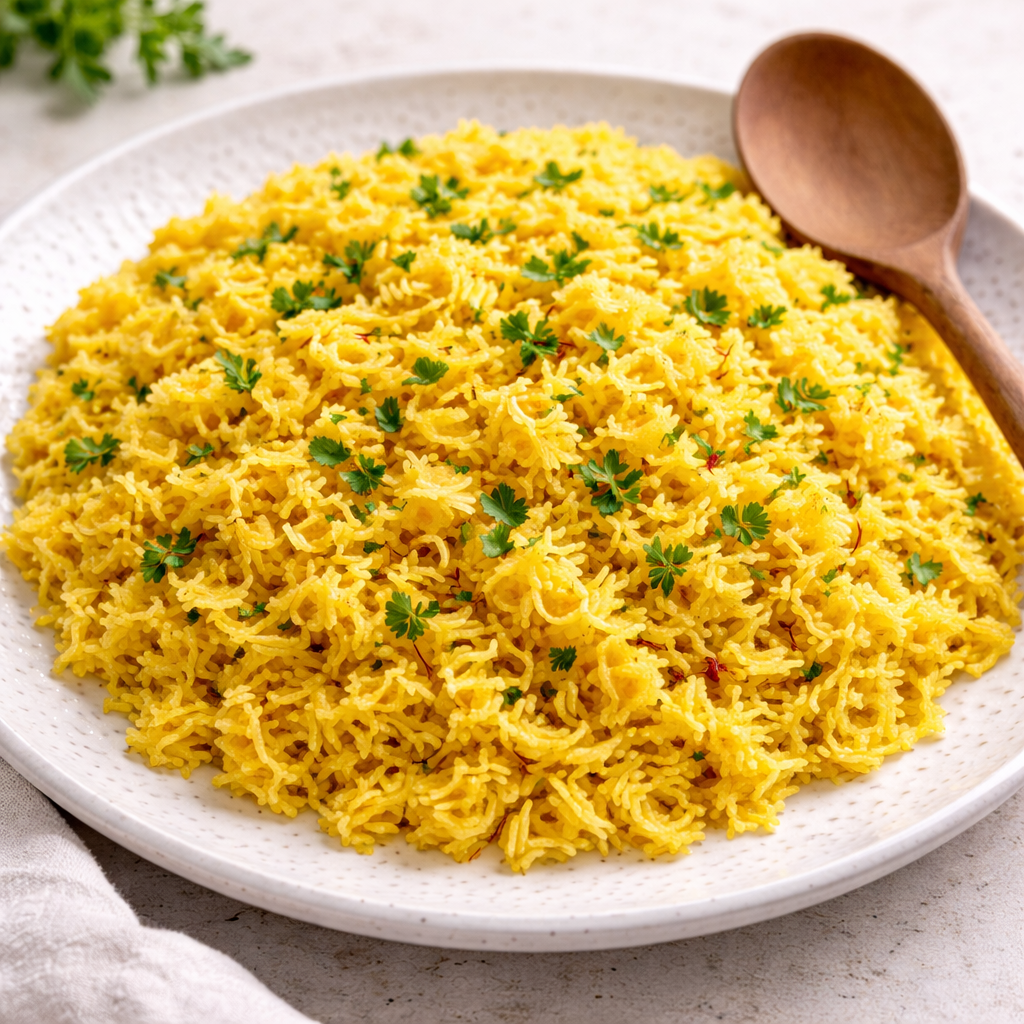
3. Blooming the Saffron
Saffron is hydrophobic; its flavor and color are locked inside the threads. To unlock them, you must “bloom” it. Grind your saffron threads with a tiny pinch of sugar (which acts as an abrasive) in a mortar and pestle until you have a fine powder. Pour 2 tablespoons of hot (but not boiling) water over the powder and let it sit for at least 15 minutes. The water will turn a deep, royal crimson. This liquid is what will dye your rice a perfect sun-yellow.
Cooking Instructions: The “Cheater’s Pilaf” Method
There are many ways to cook rice—steaming, boiling like pasta, or the “absorption” method. For saffron rice, I prefer a hybrid method that ensures maximum aroma retention.
- Sauté the Grains: Heat 2 tablespoons of ghee in a heavy-bottomed pot over medium heat. Drain your soaked rice thoroughly and add it to the pot. Stir gently for 2–3 minutes. You are looking to coat every grain in fat until they look translucent, like tiny pearls. This “toasting” phase adds a layer of flavor and reinforces the grain’s structure.
- The Absorption: Add your water (or light stock) using a ratio of $1$ cup of rice to $1.5$ cups of liquid. Add a generous pinch of salt. Bring the mixture to a simmer.
- The Saffron Integration: Once the water is simmering, pour your bloomed saffron liquid over the top. Do not stir vigorously; a gentle fold is all you need to distribute the color.
- The Seal: Turn the heat to the lowest possible setting. Place a clean kitchen towel over the top of the pot, then press the lid down firmly over the towel. The cloth absorbs the rising steam, preventing it from dripping back onto the rice and making it soggy.
- The Steam: Cook for 15–18 minutes.
- The Rest (Crucial): Remove the pot from the heat but do not open the lid. Let it sit for 10 minutes. This allows the moisture to redistribute evenly throughout the pot, ensuring the grains at the top are as tender as the ones at the bottom.
- The Fluff: Use a fork or a flat rice paddle to gently lift and separate the grains. Never use a spoon, as it will crush the delicate Basmati.
Flavor & Texture Indicators
How do you know you’ve reached the summit of saffron rice?
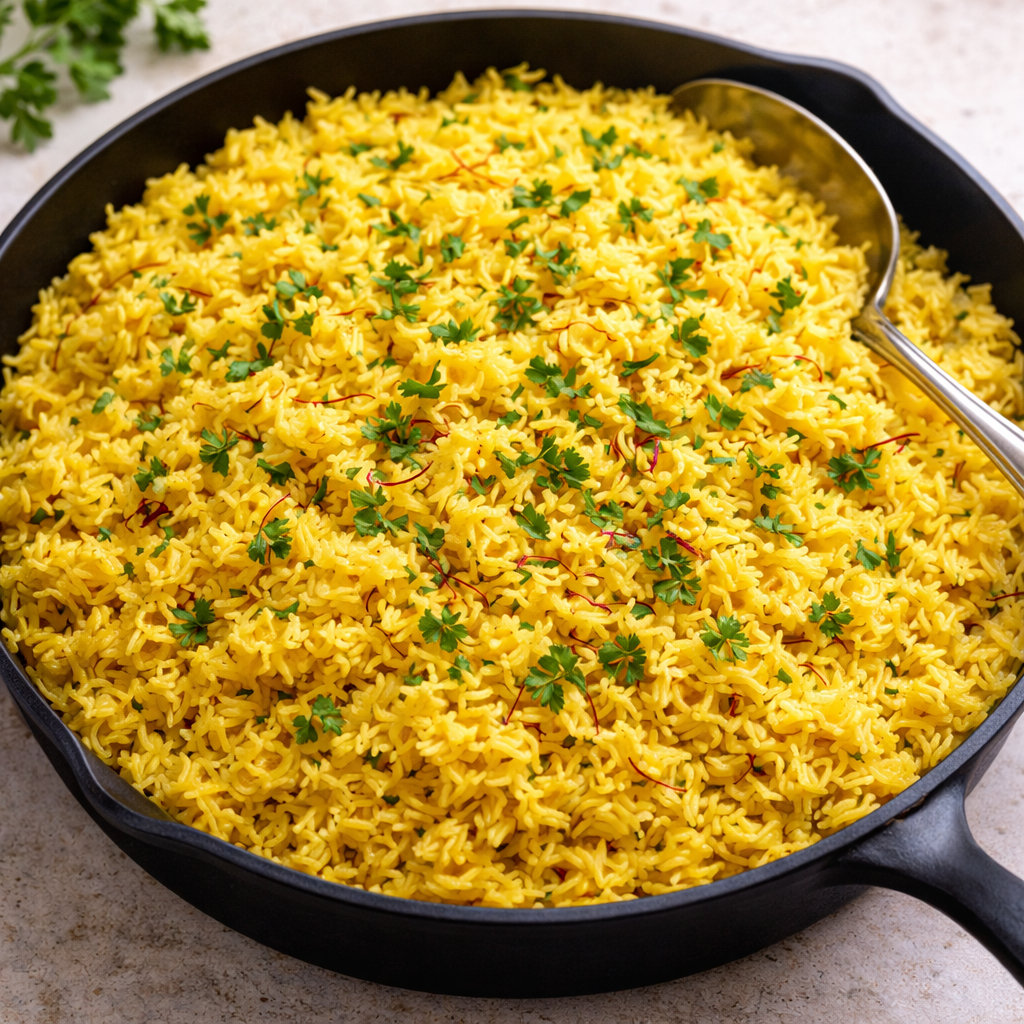
- Separation: When you drop a forkful of rice onto a plate, the grains should scatter like needles. If they fall in “clods,” the rice was either over-hydrated or under-rinsed.
- The “Pop”: A perfectly cooked grain of Basmati should have a slight “bite” or al dente quality. It should not be soft like porridge, nor should it have a chalky, raw center.
- Aroma: The moment you lift the lid, the room should fill with a floral, slightly metallic, and earthy scent. If it just smells like “wet rice,” your saffron was likely old or you used too little.
- Color: The rice should be a uniform, brilliant yellow. Avoid “hot spots” of orange, which indicate the saffron wasn’t ground finely enough or bloomed properly.
Adjustments for Different Skill Levels
- The Novice: If the “towel and steam” method feels intimidating, you can use a high-quality rice cooker. Simply add your rinsed, soaked rice, the bloomed saffron liquid, and water to the machine. Even in a machine, the blooming of the saffron is what will separate your rice from the amateur versions.
- The Intermediate: Try the Persian “Chelow” method. Par-boil the rice in a large pot of salted water (like pasta) for 6 minutes, drain it, and then mound it into a pyramid in a pot with oil and saffron to finish steaming. This produces the most incredible grain separation.
- The Advanced (The Tahdig): If you’ve mastered the fluffiness, aim for the Tahdig—the golden, crispy crust at the bottom of the pot. Mix a small portion of your par-boiled rice with yogurt and saffron, spread it at the bottom of a well-oiled pot, and pile the rest of the rice on top. When inverted, you have a cake of crunchy, saffron-shattered gold.
Storage & Shelf Life
Rice is a high-risk food for bacterial growth if handled incorrectly.
- Cooling: Never leave saffron rice sitting at room temperature for more than an hour. Cool it quickly by spreading it out on a baking sheet before transferring it to an airtight container.
- Refrigeration: It will stay fresh for up to 3 days.
- Reheating: To revive the grains, avoid the microwave if possible. Instead, put the rice in a skillet with a tablespoon of water and a knob of butter. Cover and heat on low; the steam will re-hydrate the starches without making them mushy.
- Freezing: Saffron rice freezes surprisingly well. Freeze in individual portions. Reheat directly from frozen with a splash of water to create a “steam-room” effect in the pan.
Quick Easy Mexican Rice Recipe
Chicken and Yellow Rice Recipe
Reader Questions
“Can I use Saffron ‘Extract’ or ‘Essence’?”
In a word: No. These are almost always synthetic chemicals (like tartrazine) that provide color but none of the medicinal, floral complexity of the real spice. If you can’t find real saffron, you’re better off making a Turmeric Rice, which has its own lovely, albeit different, earthy profile.
“Why is my rice breaking into small pieces?”
This usually happens for two reasons: you’re using un-aged rice, or you are stirring the rice while it’s boiling. Once the rice is in the simmering water, leave it alone. Agitation snaps the starch chains and breaks the physical grain.
“Is it okay to use Saffron threads directly in the pot?”
You can, but you won’t get the same return on your investment. A thread only releases color to the area immediately surrounding it. By grinding and blooming it, you ensure that every single grain of rice is coated in that liquid gold.