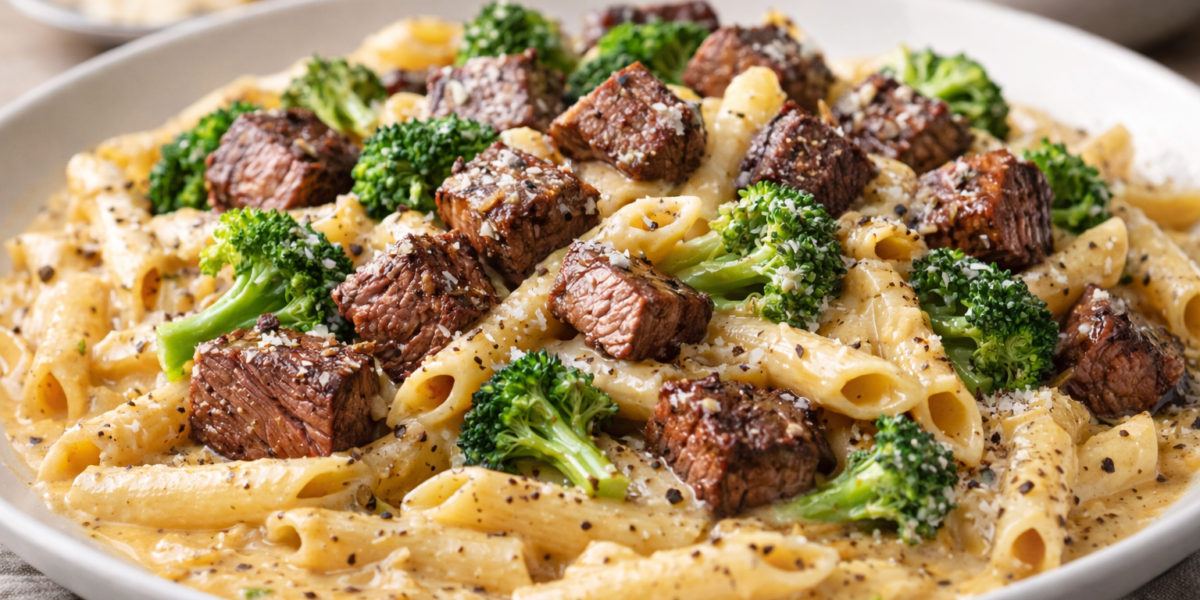
Steak and Pasta Recipes The most pervasive frustration when attempting a steak and pasta recipe is the “timing trap.” We have all been there: the pasta is perfectly al dente, but the steak is still gray and unseared in the pan—or worse, the steak is rested and ready, but the pasta sauce has sat too long, becoming a thick, gluey mass that refuses to coat the noodles. Most home cooks struggle because they treat the protein and the starch as two separate entities rather than a synchronized culinary unit.
The professional solution to this dilemma lies in “fond management” and “starchy-water emulsification.” To achieve a restaurant-quality steak pasta, you must use the caramelized juices from the seared meat to build the foundation of your sauce. This guide deconstructs the science of a Creamy Garlic Peppercorn Steak Pasta, focusing on the “rest-and-integrate” method to ensure the steak remains succulent while the pasta stays silky.
steak and Pasta Recipes Why This Recipe Works
This steak and pasta recipe succeeds by utilizing a single-skillet flavor extraction process that bridges the gap between a hearty steakhouse meal and a delicate Italian pasta dish.
- Fond Utilization: By searing the steak first and then building the sauce in the same pan, we capture the “fond”—those browned, savory bits of protein. This provides a deep, “umami” backbone that no jarred sauce can replicate.
- The Resting Buffer: We intentionally sear the steak to a lower temperature and allow it to rest while the pasta finishes. This prevents the common issue of overcooked, rubbery steak that occurs when meat is tossed into a boiling sauce too early.
- Pasta Water Emulsion: We use the liquid gold of the pasta cooking water. The starches in the water act as a natural bridge between the heavy cream and the rendered beef fats, creating a glossy, stable sauce that “clings” rather than “puddles.”
- Spinach and Acid Balance: The addition of fresh baby spinach and a squeeze of lemon juice provides the necessary bitterness and acidity to cut through the richness of the cream and the iron-heavy flavor of the beef.
Ingredients & Measurements
For a professional-grade steak and pasta, the cut of meat and the shape of the noodle are paramount. This recipe serves four.
The Protein and Starch
- 1.5 lbs Sirloin or Ribeye Steak: Look for a cut about 1 inch thick with good marbling.
- 12 oz Fettuccine or Pappardelle: Wide, flat noodles provide more surface area for the creamy sauce to adhere to.
- 2 tbsp Avocado Oil: Chosen for its high smoke point during the sear.
The Creamy Garlic Base
- 4 tbsp Unsalted Butter: For richness and flavor.
- 6 Cloves Garlic: Minced. Steak requires a heavy garlic presence to stand up to its bold flavor.
- 1 cup Heavy Cream: Full-fat is essential for a stable, velvet-like texture.
- 1/2 cup Freshly Grated Parmesan Cheese: Real Parmigiano-Reggiano provides the salt and “bite.”
- 1 tsp Coarse Black Pepper: To create that “steak au poivre” essence.
The Finishers
- 2 cups Fresh Baby Spinach: Adds color and a soft earthy contrast.
- 1/2 cup Reserved Pasta Water: Do not skip this!
- 1 tsp Fresh Thyme or Parsley: For a bright, herbal top note.
Step-by-Step Cooking Guide
1. The Room-Temperature Rule
Take your steak out of the refrigerator 30 minutes before cooking. Pat it bone-dry with paper towels. A cold, wet steak will steam instead of sear, ruining the flavor profile of your steak and pasta recipe. Season heavily with salt and the coarse black pepper.
2. The High-Heat Sear
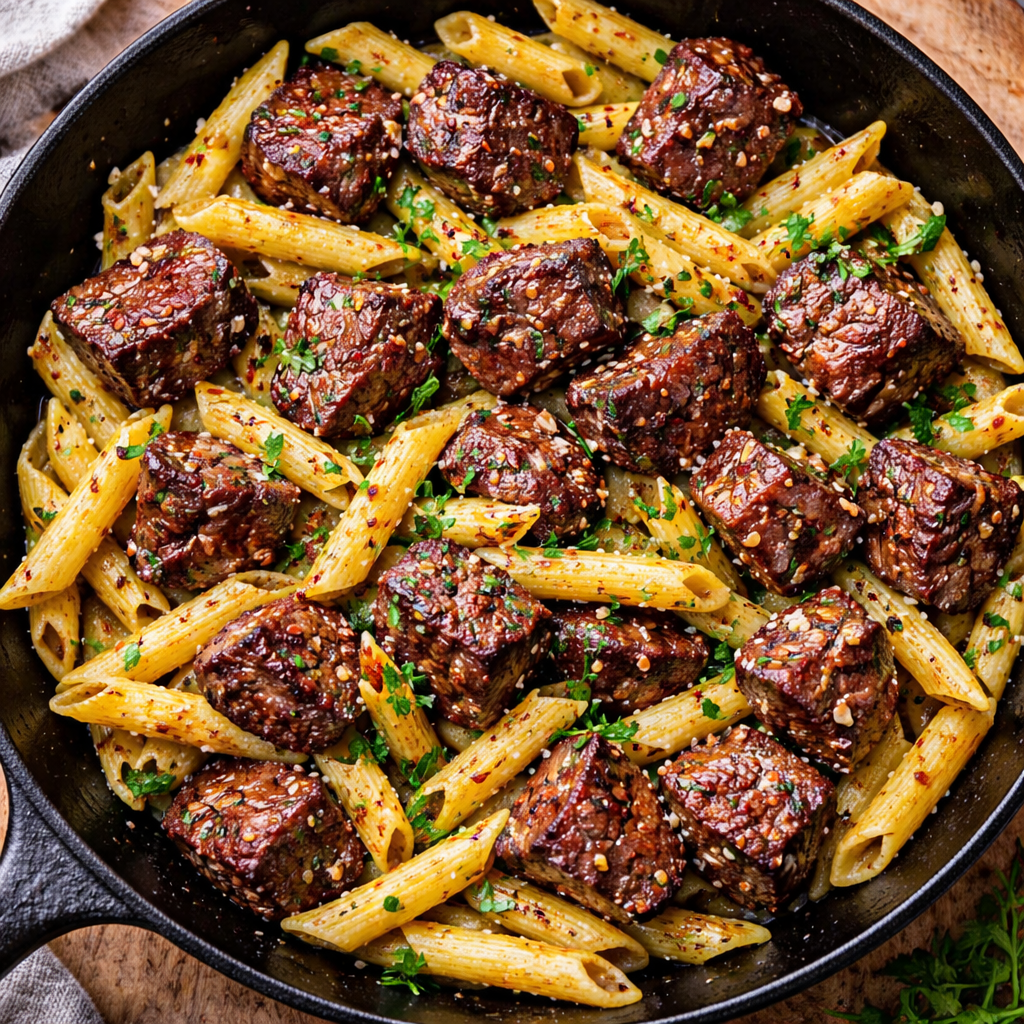
Heat the avocado oil in a large cast-iron skillet over medium-high heat. Once the oil shimmers, sear the steaks for 3–4 minutes per side. We are aiming for medium-rare (an internal temp of 130°F / 54°C). Remove the steak to a cutting board and tent loosely with foil. Do not wash the pan.
3. The Pasta “Al Dente” Boil
While the steak rests, boil your pasta in heavily salted water. Cook it for 1–2 minutes less than the package directions. It should have a distinct “bite” in the center. Before draining, scoop out a cup of the starchy pasta water.
4. Building the Sauce Foundation
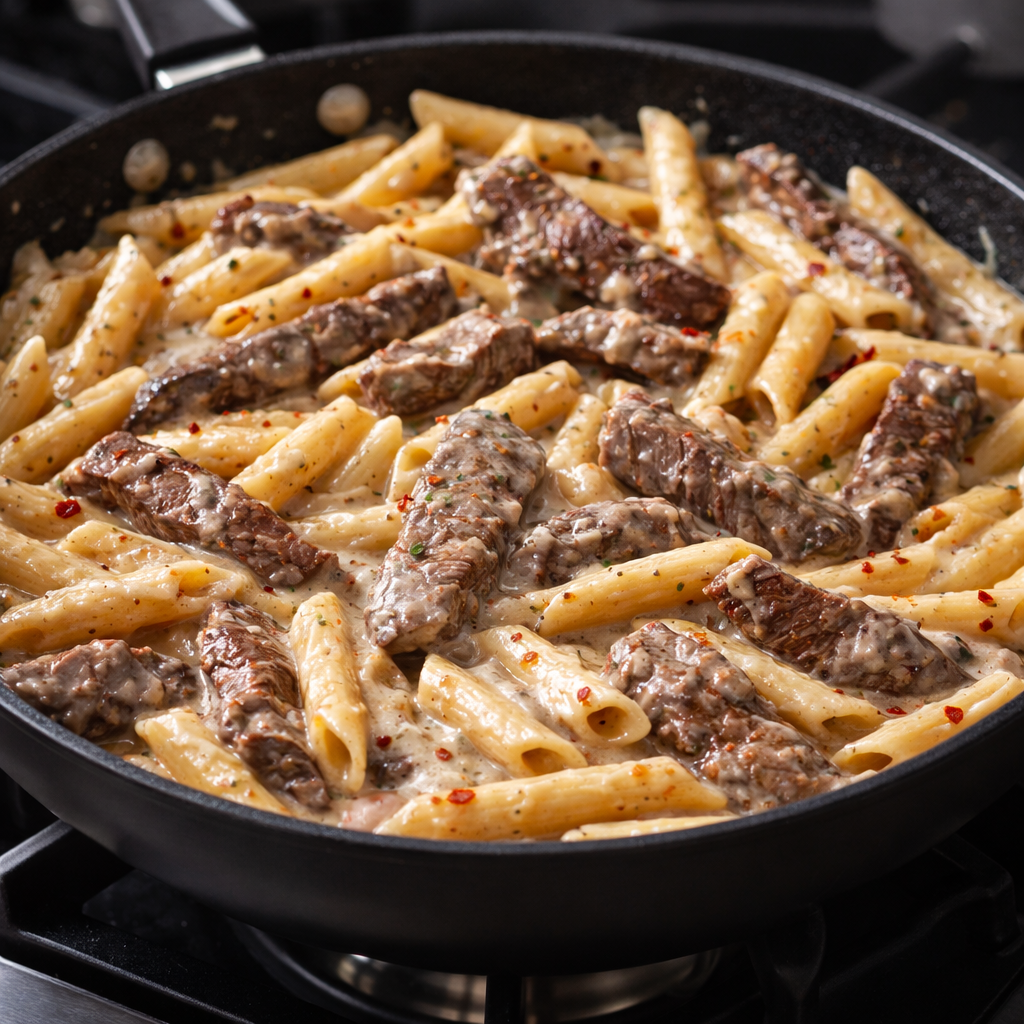
Lower the skillet heat to medium. Add the butter to the steak drippings. Once melted, add the minced garlic and sauté for 1 minute until fragrant. Pour in the heavy cream and use a wooden spoon to scrape up all the browned steak bits from the bottom of the pan.
5. The Emulsion Bridge
Whisk in the Parmesan cheese until melted. Slowly add 1/4 cup of the reserved pasta water. The sauce will look thin at first but will quickly thicken into a glossy glaze. Toss in the spinach and let it wilt for 30 seconds.
6. The Integration
Add the cooked pasta directly into the sauce. Toss vigorously with tongs. If the sauce looks too thick or “dry,” add more pasta water a tablespoon at a time. The noodles will finish cooking in the cream, absorbing the steak-infused garlic flavor.
7. Slicing and Plating
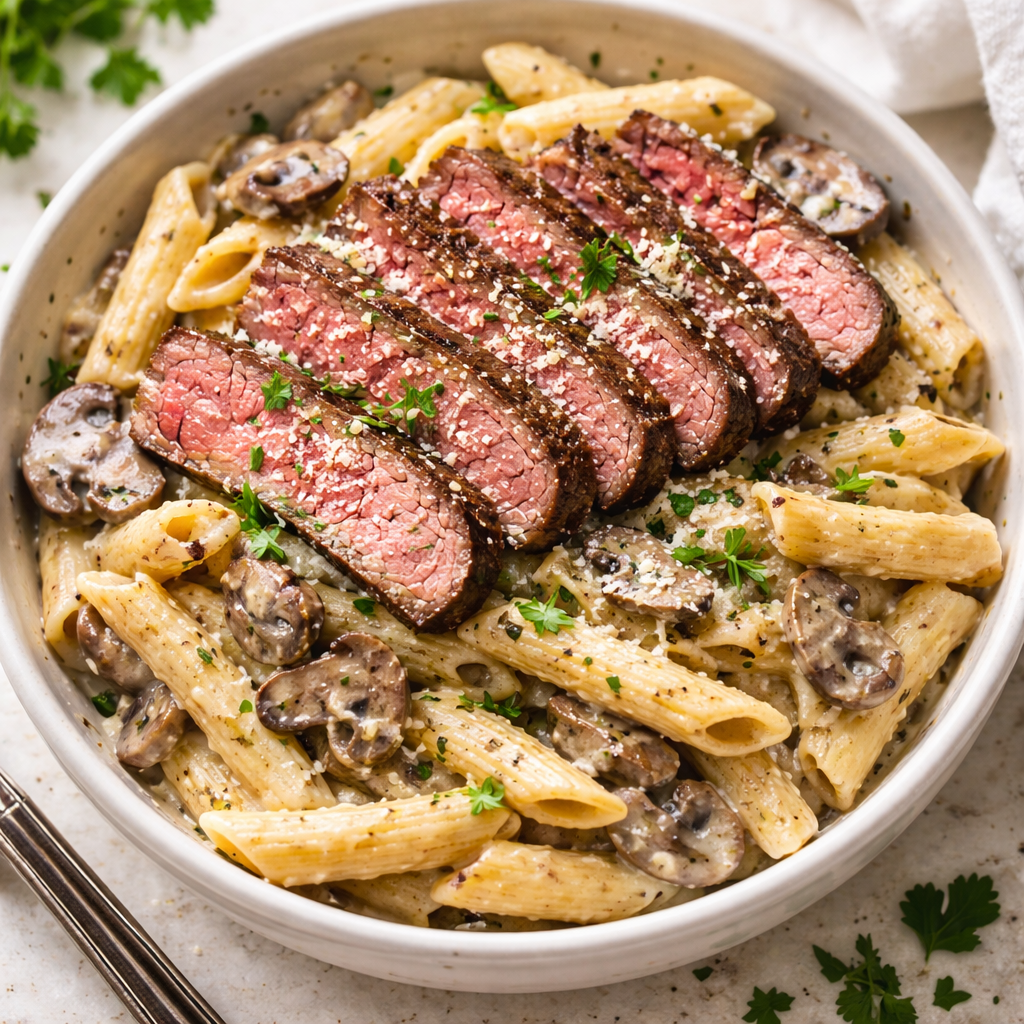
Slice the rested steak against the grain into thin strips. Place a nest of creamy pasta in a bowl and top with the steak slices. Pour any juices that collected on the cutting board back over the meat.
Common Mistakes to Avoid
- Overcooking the Steak in the Pan: Remember that steak continues to cook while it rests and will warm up further when placed on top of hot pasta. Pull it off the heat slightly before your target doneness.
- Rinsing the Pasta: Never rinse your pasta. You need that surface starch to help the creamy garlic sauce bind to the noodle.
- Adding the Steak to the Sauce: If you simmer the steak in the sauce, you lose the crust you worked so hard to build, and the meat will likely overcook. Always slice and place it on top.
- Using “Pre-Shredded” Cheese: Bagged shredded cheese is coated in potato starch to prevent clumping, which will make your steak and pasta sauce grainy. Grate your own Parmesan from a block.
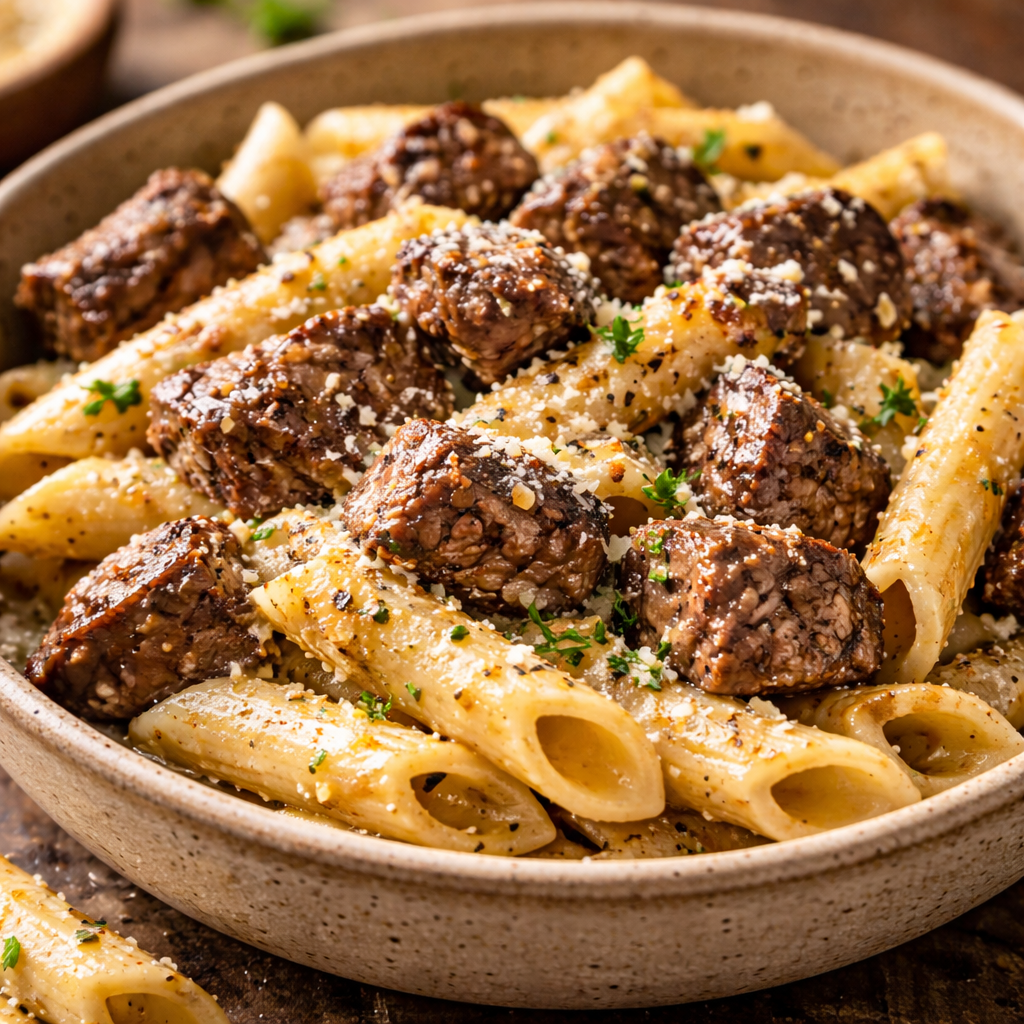
Timing & Doneness Indicators
Serving Suggestions
This creamy steak and pasta recipe is an indulgent meal that benefits from a few thoughtful pairings:
- The Acidic Side: A simple arugula salad with a sharp lemon vinaigrette balances the heavy cream and beef fats.
- The Bread: Serve with toasted ciabatta or garlic bread to mop up any leftover sauce at the bottom of the bowl.
- Wine Pairing: A bold, tannic Red like a Cabernet Sauvignon or a Malbec is the traditional choice to stand up to the steak and peppercorns.
- The Herb Garnish: A heavy sprinkling of fresh parsley and a dash of red pepper flakes adds visual appeal and a final layer of flavor.
FAQ: Solving Your Steak Pasta Frustrations
Q: Why is my sauce separating and looking oily? A: This happens if the heat is too high or if the cream isn’t high-fat. To fix a broken sauce, whisk in a tablespoon of cold pasta water and remove from the heat immediately. The starch will help pull the fats back into the emulsion.
Q: Can I use chicken instead of steak? A: Absolutely! Follow the same steps, but ensure the chicken reaches an internal temp of 165°F (74°C). However, the flavor profile will be milder, so you may want to add extra herbs like rosemary or thyme.
Q: My steak is tough and hard to chew. What happened? A: You likely sliced it with the grain. Always look for the direction of the muscle fibers and slice perpendicular to them. This shortens the fibers and makes the meat feel tender in your mouth.
Q: Can I make this steak and pasta recipe gluten-free? A: Yes. Use a high-quality gluten-free fettuccine (corn or brown rice based). Be careful with the “pasta water” step, as gluten-free pasta water can be more “starchy” than wheat water; start with less and add as needed.