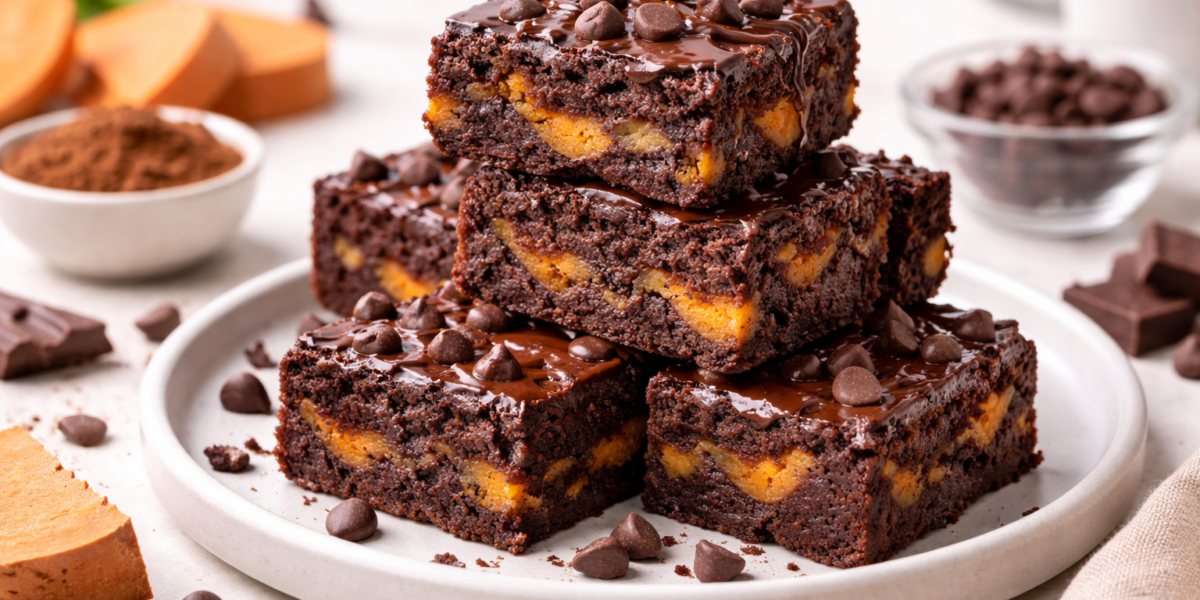
Sweet Potato Brownie Recipe The most persistent frustration in “healthy” baking is the “cardboard texture” dilemma. We have all experienced that moment of optimism where we try to substitute traditional fats and sugars for whole-food alternatives, only to end up with a dessert that is spongy, dry, or—worst of all—vaguely reminiscent of a bran muffin. Most sweet potato brownie recipes fail because the baker treats the vegetable as a mere filler rather than a functional fat replacement. Without a specific understanding of starch gelatinization and moisture-to-cocoa ratios, your brownies will lack that iconic, “melt-in-your-mouth” fudginess.
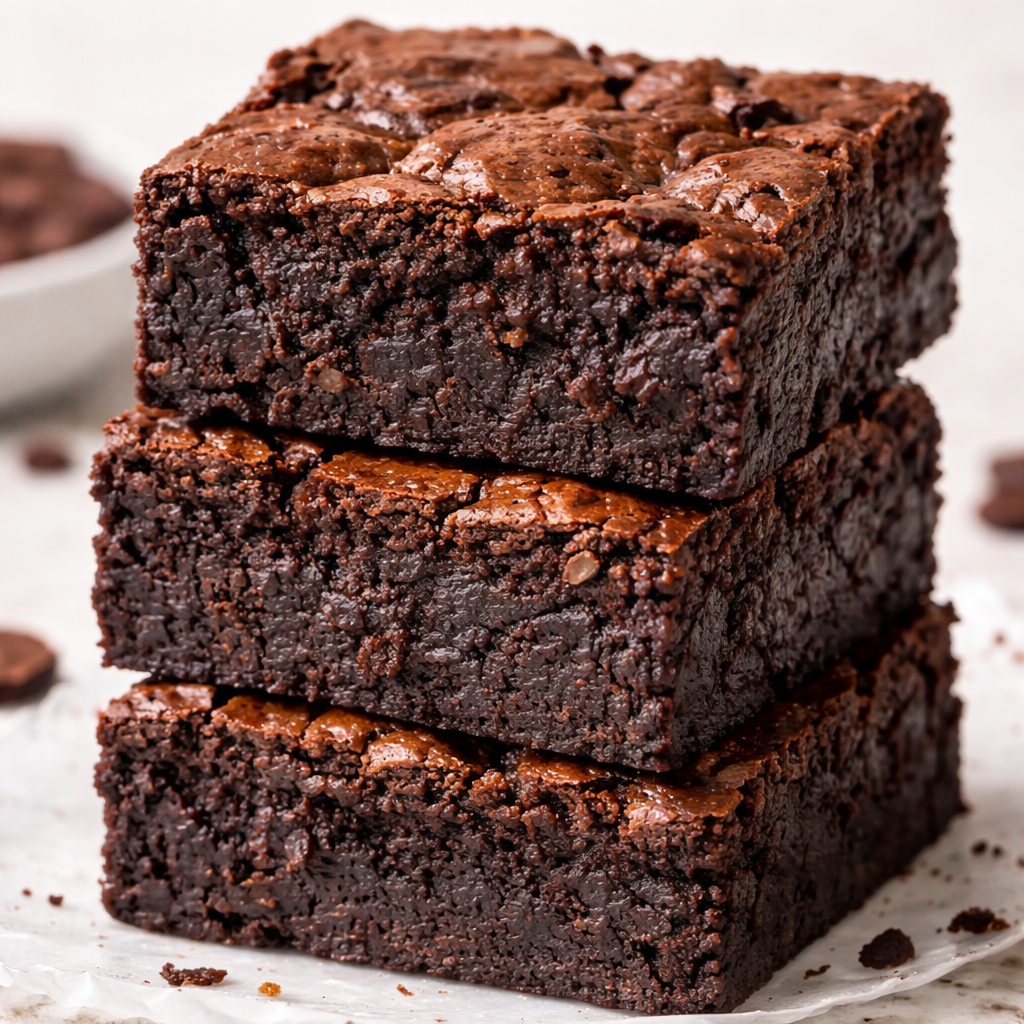
The professional solution lies in utilizing the natural pectins and sugars found in roasted sweet potatoes to create a structural emulsion. This healthy sweet potato brownie recipe is the definitive answer to the “cakey” brownie problem. By balancing the moisture of the puree with high-quality fats and a specific “double-cocoa” method, you can produce a brownie that is nutritionally dense while remaining indistinguishable from a traditional, decadent fudge brownie.
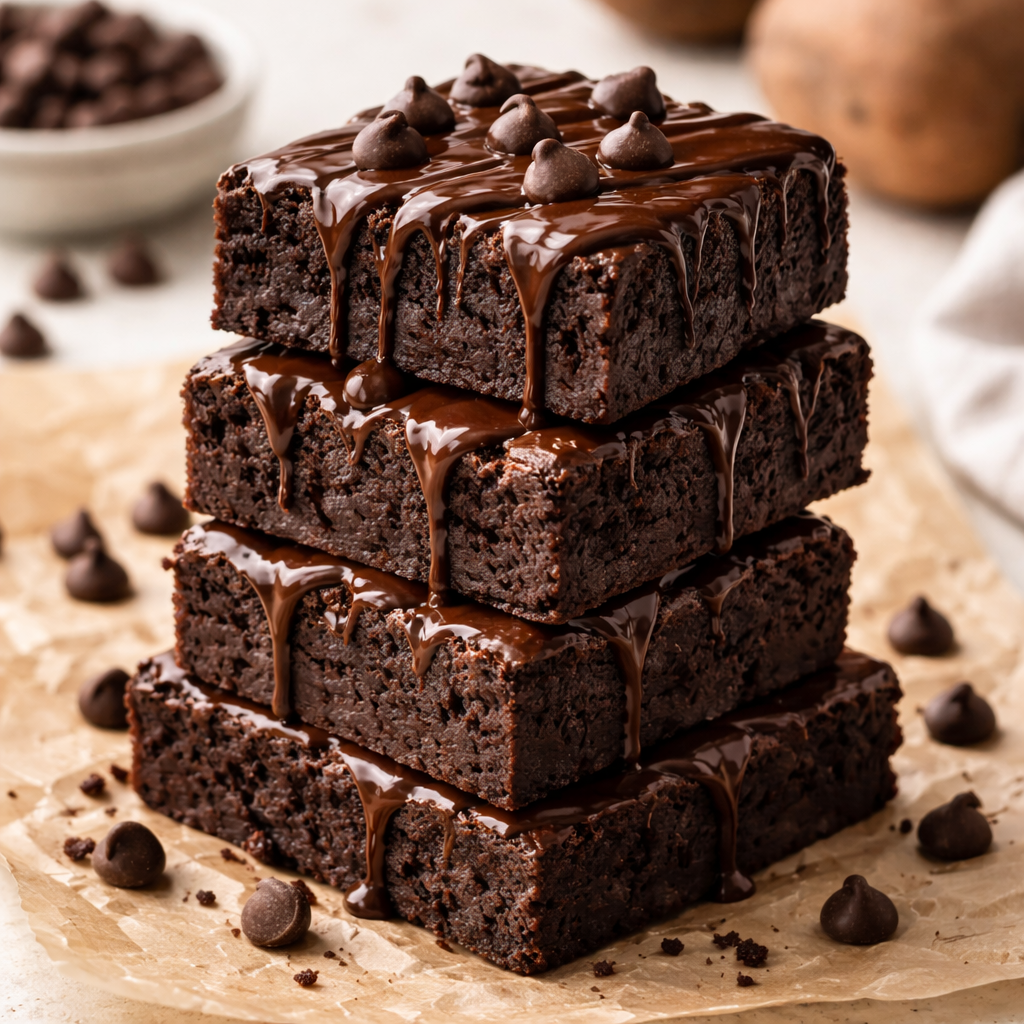
Why This Recipe Works
This approach to the best sweet potato brownie recipe succeeds by utilizing the chemical properties of root vegetables to mimic traditional confectionery textures.
- Starch as a Binder: Sweet potatoes contain complex carbohydrates that, when baked, act as a natural thickener. This allows us to reduce the amount of processed flour (or omit it entirely for a gluten-free sweet potato brownie), resulting in a denser, fudgier crumb.
- Natural Humectants: The natural sugars in sweet potatoes are hygroscopic, meaning they pull moisture from the air and hold it within the brownie. This prevents the dessert from drying out, even three days after baking.
- The Lipid-Cocoa Bloom: By mixing the cocoa powder directly into the warm sweet potato and melted nut butter/oil, we “bloom” the chocolate. This releases the essential oils in the cacao, providing a deeper, darker chocolate flavor that masks any “vegetable” undertones.
- Fat Substitution: The creamy texture of the puree mimics the mouthfeel of butter. This allows for a vegan sweet potato brownie recipe that doesn’t feel like a compromise, as the vegetable provides the luxurious “fatty” coating the palate craves.
Ingredients & Measurements
For a professional-grade yield of 16 brownies, the moisture content of your puree is the most critical variable.
The Foundation
- 1 cup Sweet Potato Puree: (Approx. 2 medium potatoes). They must be roasted, not boiled, to concentrate the sugars and minimize excess water.
- 1/2 cup Creamy Almond Butter or Peanut Butter: Ensure it is the “drippy,” natural kind. This provides the necessary lipids for a fudgy texture.
- 1/3 cup Pure Maple Syrup: This provides a soft, liquid sweetness that complements the earthy sweet potato.
The Chocolate Profile
- 1/2 cup High-Quality Cocoa Powder: Dutch-processed cocoa is preferred for its lower acidity and darker color.
- 1/2 cup Dark Chocolate Chips: Half will be melted into the batter, half will remain whole for textural contrast.
- 1 tsp Vanilla Extract & 1/4 tsp Sea Salt: Essential for “lifting” the chocolate flavor.
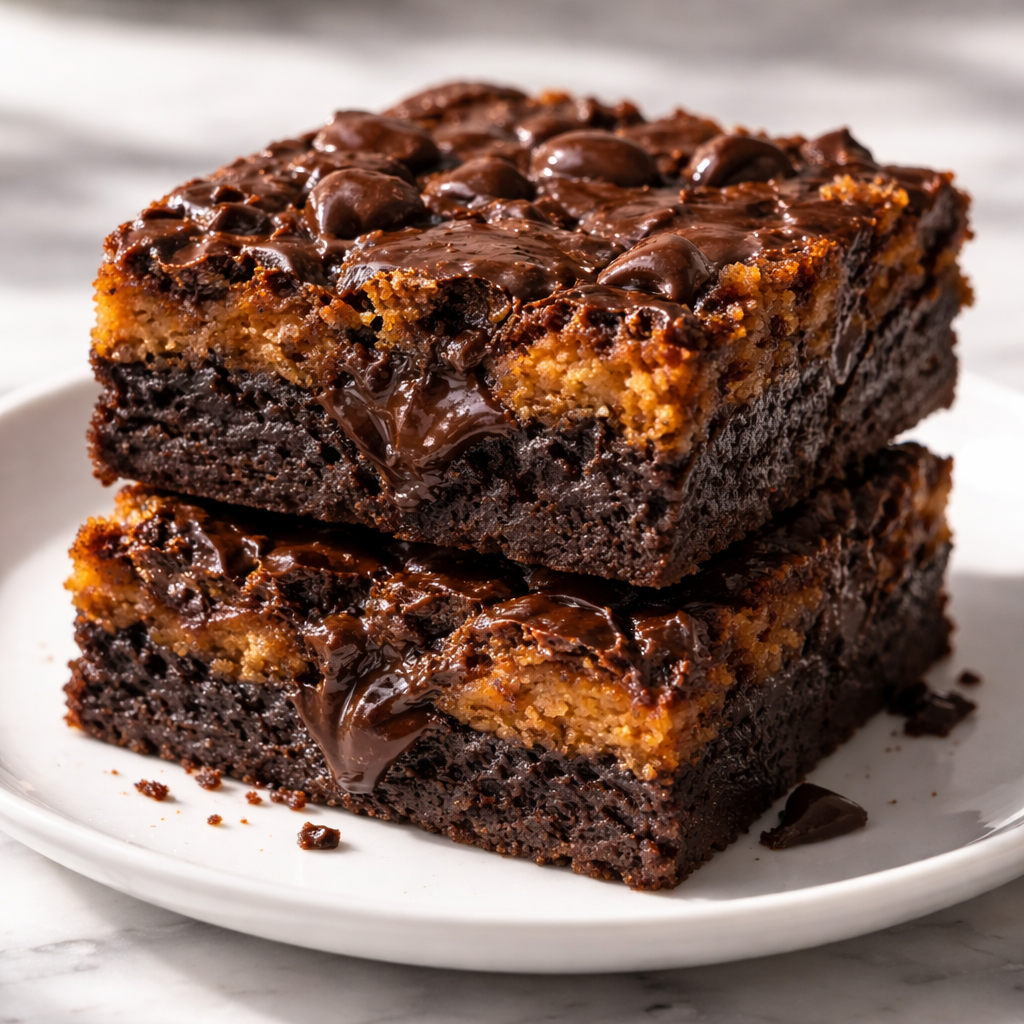
The Structure
- 1/4 cup Oat Flour or Almond Flour: Keeps the recipe gluten-free while providing enough structure to prevent the brownies from falling apart.
- 1 tsp Baking Powder: Just enough to provide a slight lift without turning them into cake.
Step-by-Step Cooking Guide
1. The Roasting Ritual (Preparation)
Preheat your oven to 400°F (200°C). Pierce your sweet potatoes with a fork and roast them whole for 45–60 minutes until they are soft to the core and caramelized juices are leaking out. Do not boil them. Boiling introduces water that will make your brownies soggy. Let them cool, peel the skin, and mash until completely smooth.
2. The Temperature Reset
Lower your oven to 350°F (175°C) and line an 8×8 inch baking pan with parchment paper. Leave an overhang on the sides so you can lift the brownies out easily later.
3. The Emulsion Phase
In a large bowl, whisk together the warm sweet potato puree, nut butter, maple syrup, and vanilla. The heat from the potatoes will help the nut butter become fluid. Whisk until the mixture is glossy and uniform.
4. The Cocoa Bloom
Sift the cocoa powder directly into the wet mixture. This is the secret to an easy sweet potato brownie recipe that doesn’t taste like vegetables. Stir until the cocoa is fully incorporated and the batter looks like dark chocolate ganache.
5. Incorporating the Dry Ingredients
Fold in the oat flour (or almond flour), baking powder, and salt. Stir gently until no white streaks remain. Finally, fold in most of the chocolate chips, reserving a handful for the top. The batter will be much thicker than a boxed brownie mix—this is correct.
6. The Level Bake
Transfer the batter to the prepared pan. Use a wet spatula to smooth the top, as this batter will not “self-level” in the oven. Sprinkle the remaining chocolate chips on top.
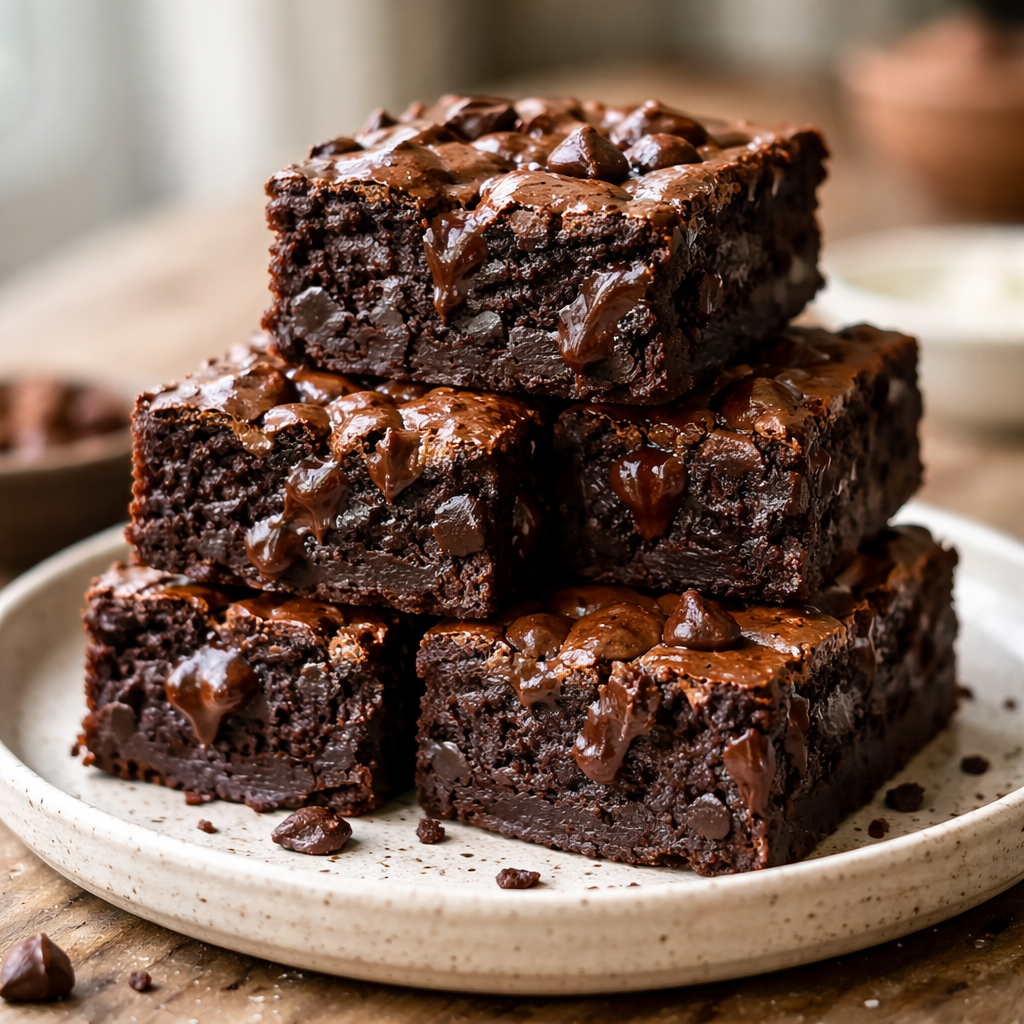
7. The Bake and the “Set”
Bake for 25–30 minutes. The most common mistake in this fudgy sweet potato brownie recipe is overbaking. The brownies are done when the edges look firm, but the center still has a slight “jiggle” when shaken.
Common Mistakes to Avoid
- Using Canned Puree with Additives: Many canned “yams” are packed in heavy syrup. If using canned, ensure it is 100% pure sweet potato. However, freshly roasted is always superior for texture.
- Slicing While Hot: Because these brownies rely on starches and natural pectins, they need time to “set.” If you cut them hot, they will be a gooey mess.
- Substituting Granulated Sugar: This recipe is balanced for liquid sweeteners like maple syrup or agave. Using granulated sugar will change the moisture ratio and potentially lead to a dry brownie.
- Skipping the Salt: Salt is the chemical “key” that unlocks the flavor of the cocoa. Without it, the sweet potato flavor will be too prominent.
Timing & Doneness Indicators
Serving Suggestions
A sweet potato brownie is a dense, rich dessert that benefits from a bit of “brightening”:
- The Sea Salt Finish: A light sprinkle of flaky Maldon sea salt over the top as they cool enhances the dark chocolate notes.
- The Fruit Pairing: Serve with fresh raspberries or a tart strawberry coulis to cut through the richness.
- The “A La Mode”: Warm a brownie for 10 seconds and top with a scoop of vanilla bean coconut milk ice cream for a fully vegan sweet potato brownie feast.
- The Nutty Crunch: Serve alongside a handful of toasted walnuts or pecans for a textural contrast.
FAQ: Solving Your Healthy Baking Frustrations
Q: My brownies are way too mushy. Can I save them? A: This usually happens if the sweet potatoes were boiled or if they weren’t roasted long enough to evaporate moisture. If they are too soft, place the entire pan in the refrigerator for 4 hours. The cold will solidify the fats and starches, turning “mushy” into “fudgy.”
Q: Can I make this sweet potato brownie recipe nut-free? A: Yes! You can substitute the almond butter for sunflower seed butter (SunButter) or tahini. Note that tahini will add a sophisticated, slightly bitter earthiness that pairs beautifully with dark chocolate.
Q: I don’t have oat flour. What can I use? A: You can make your own oat flour by blending rolled oats in a high-speed blender for 30 seconds. Alternatively, all-purpose flour works if you don’t need the recipe to be gluten-free.
Q: Why do my brownies taste like sweet potatoes? A: This occurs if you don’t use enough salt or high-quality cocoa powder. The cocoa and salt are what “mask” the vegetable profile. Ensure you are using a dark, Dutch-processed cocoa for the best results.