Taco Sauce Recipe The most pervasive frustration in the world of home-cooked Mexican-inspired cuisine isn’t the meat or the tortillas—it is the “condiment gap.” We have all been there: you have perfectly seasoned carnitas or crispy ground beef, but the only thing in the pantry is a glass jar of store-bought sauce that tastes primarily of vinegar and preservatives. Or worse, you attempt a taco sauce recipe at home only to end up with something that is either too “chunky” like a salsa or too watery to actually cling to your taco.
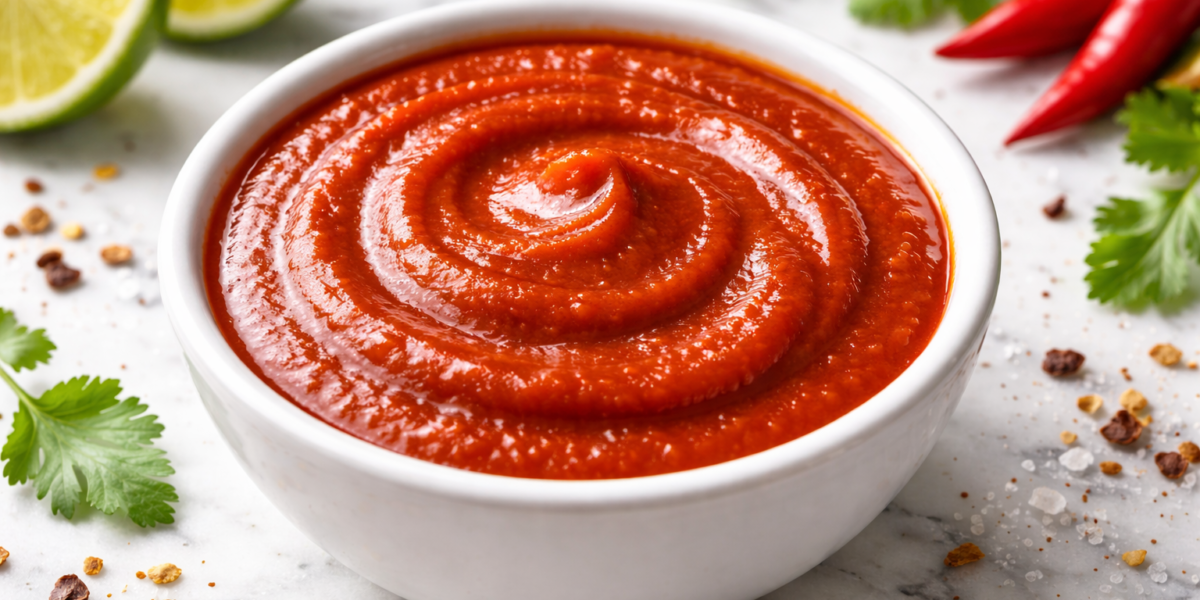
The perfect taco sauce recipe should be a smooth, pourable emulsion that balances smoky heat, bright acidity, and a savory “umami” backbone. It needs to be thick enough to sit atop a street taco without running off, yet smooth enough to be drizzled from a squeeze bottle. This guide deconstructs the science of the sauce, focusing on “spice-blooming” and “starch-stabilization” to ensure you never have to settle for a mediocre bottled alternative again.
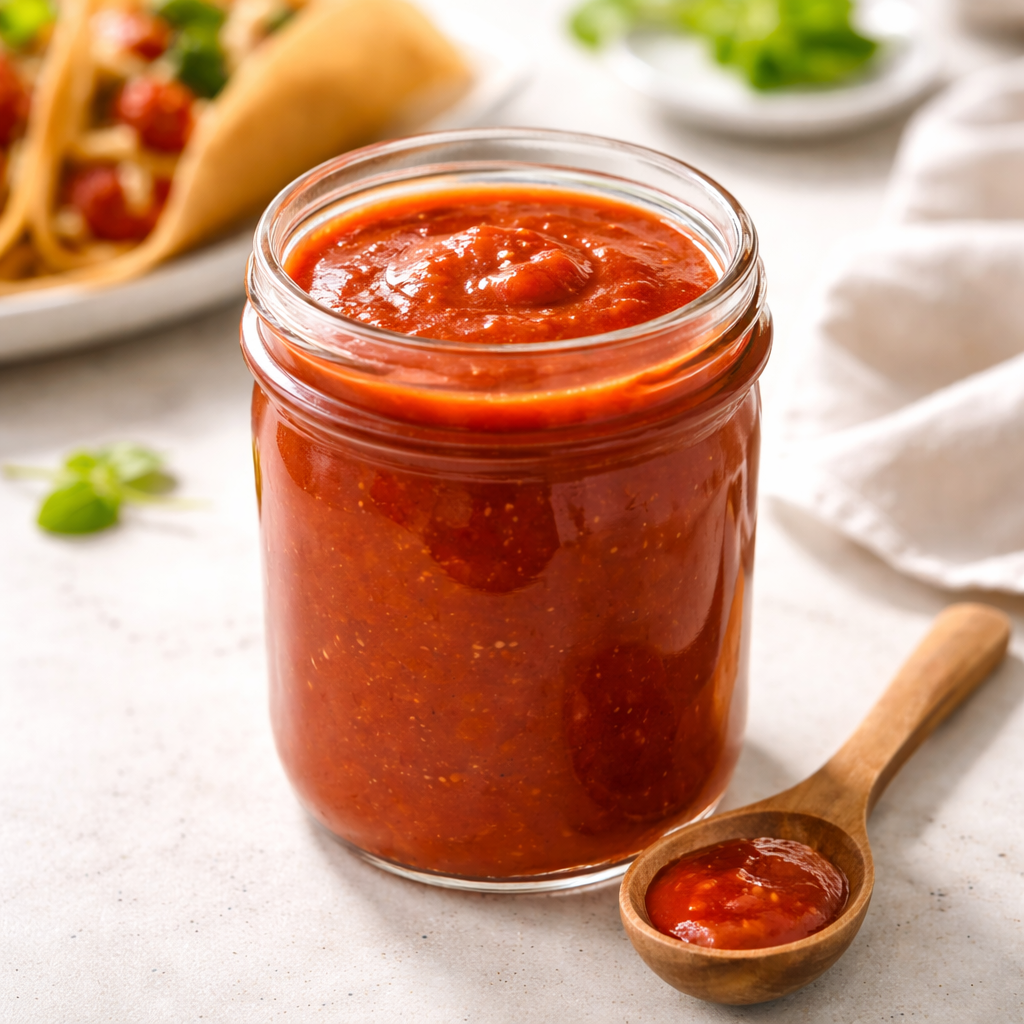
Why This Recipe Works
This taco sauce recipe succeeds by treating spices as volatile oils rather than just dry powder.
- Oil-Based Spice Blooming: Most people add their spices directly to the tomato base. By briefly sautéing our chili powder and cumin in a small amount of oil first, we release fat-soluble flavor compounds that would otherwise remain dormant.
- Controlled Texture via Pureeing: This recipe solves the “chunky salsa” problem. By using a tomato sauce base and then finishing with a high-speed blend, we achieve that iconic, velvety texture found in high-end taquerias.
- The “Vinegar-Sugar” Equilibrium: The secret to a professional taco sauce recipe is the balance between apple cider vinegar and a touch of cane sugar. This mimics the fermented tang of traditional hot sauces while rounding out the sharp edges of the dried chilies.
- Cumin-Forward Aromatics: We use a higher-than-average ratio of toasted cumin. This provides the “earthy” scent that we instinctively associate with professional-grade Mexican street food.
Ingredients & Measurements
For a standard 16-ounce yield of this taco sauce recipe, quality and grind size are paramount.
The Tomato and Liquid Base
- 15 oz Tomato Sauce: Use a plain, unseasoned variety. This acts as our smooth canvas.
- 1/2 cup Water: To adjust viscosity during the simmer.
- 1/4 cup Apple Cider Vinegar: Provides a fruity, complex acidity compared to harsh white vinegar.
The Spice Matrix
- 2 tbsp Chili Powder: A mild, dark blend is best for color and base flavor.
- 1 tsp Ground Cumin: Toasted if possible.
- 1 tsp Garlic Powder & 1 tsp Onion Powder: These dissolve more evenly than fresh aromatics for a smooth sauce.
- 1/2 tsp Smoked Paprika: For that “fire-roasted” essence without the grill.
- 1/2 tsp Cayenne Pepper: Adjust this for your heat preference.
- 1/2 tsp Dried Oregano: Preferably Mexican oregano for its citrusy notes.
The Finishers
- 1 tsp Granulated Sugar: To balance the acidity.
- 1/2 tsp Salt: To sharpen the other flavors.
- 1 tbsp Vegetable Oil: To “bloom” the spices.
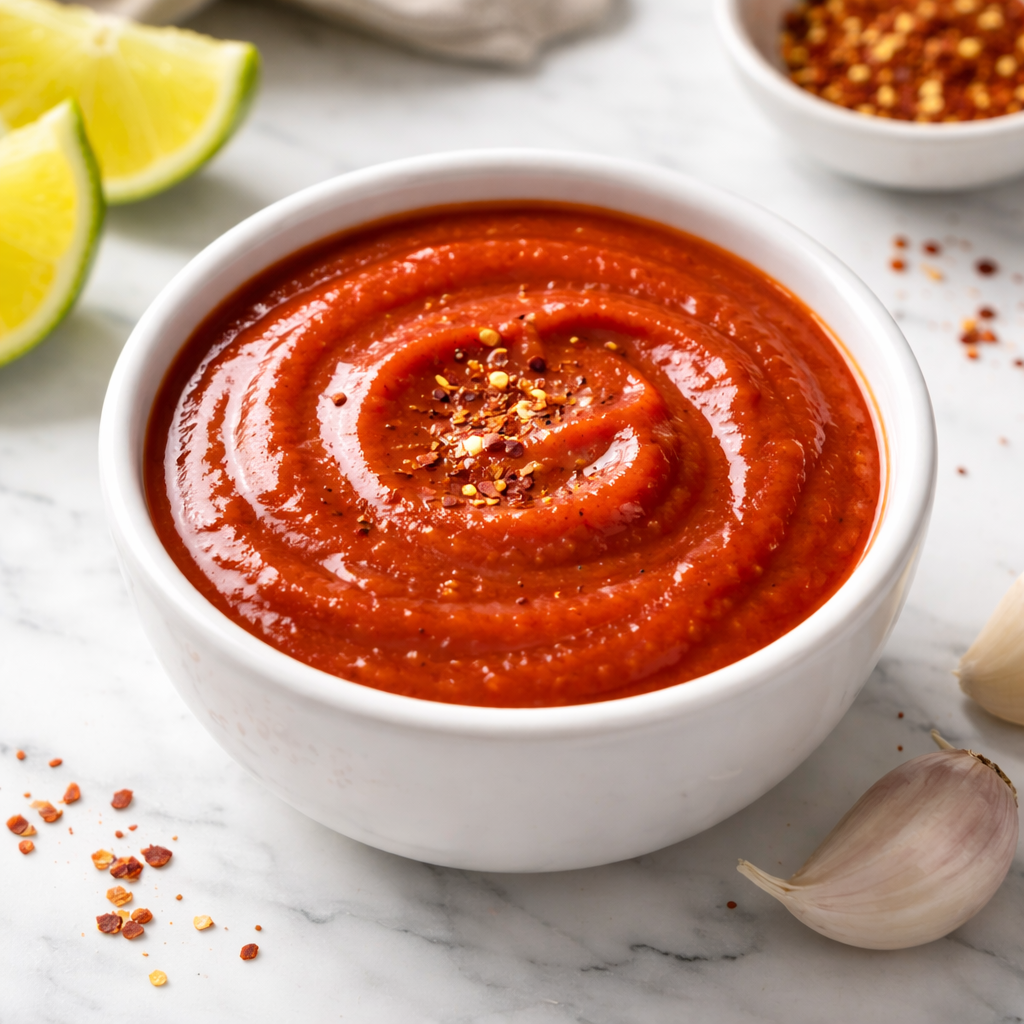
Step-by-Step Cooking Guide
1. The Spice Bloom
In a medium saucepan, heat the vegetable oil over medium-low heat. Add the chili powder, cumin, and smoked paprika. Stir constantly for about 60 to 90 seconds. You are looking for the oil to darken slightly and for the kitchen to smell intensely of toasted chilies. This step is what separates a gourmet taco sauce recipe from a basic one.
2. The Base Integration
Whisk in the tomato sauce, water, and apple cider vinegar. Increase the heat to medium until the mixture begins to produce small, lazy bubbles. Do not let it reach a rolling boil, as this can scorch the tomato sugars and create a bitter aftertaste.
3. Seasoning and Simmering
Add the garlic powder, onion powder, oregano, sugar, salt, and cayenne. Whisk thoroughly to ensure no spice clumps remain. Reduce the heat to low. Simmer the sauce uncovered for 15–20 minutes. As the water evaporates, the flavors will concentrate and the texture will transform from “watery” to “syrupy.”
4. The Emulsion (Optional but Recommended)
If you want that ultra-smooth, restaurant-style finish, carefully pour the warm sauce into a blender or use an immersion blender. Blend on high for 30 seconds. This step breaks down the dried oregano and any tiny clumps, resulting in a vibrant, uniform red color.
5. The Cooling Phase
Transfer the sauce to a glass jar. Let it cool to room temperature before sealing. A taco sauce recipe always tastes better after 24 hours in the fridge, as the spices continue to hydrate and mellow.
Common Mistakes to Avoid
- Using Fresh Garlic/Onion: While usually better in cooking, fresh aromatics in this specific taco sauce recipe create a grainy texture and can spoil faster. Stick to high-quality powders for the perfect pour.
- Over-Reducing: If you simmer the sauce for too long, it will turn into tomato paste. If it gets too thick, simply whisk in a tablespoon of water at a time until the desired flow is restored.
- Skipping the Sugar: Even if you are avoiding sugar, a tiny pinch is necessary to neutralize the “tinny” metallic taste often found in canned tomato sauce.
- Boiling the Vinegar: Adding vinegar too early and boiling it
- aggressively can cause the acidity to evaporate, leaving the sauce tasting flat. Add it with the tomato base and keep the heat gentle.
Timing & Doneness Indicators
Serving Suggestions
This taco sauce recipe is incredibly versatile beyond the standard tortilla:
- The Squeeze Bottle Setup: Transfer the cooled sauce to a plastic squeeze bottle for professional-looking zig-zags across your tacos.
- The Breakfast Burrito: This sauce is the perfect companion for eggs and chorizo, as the acidity cuts through the heavy fats of the sausage.
- Enchilada Shortcut: If you are in a rush, you can thin this sauce with a little extra chicken broth to create a quick enchilada sauce.
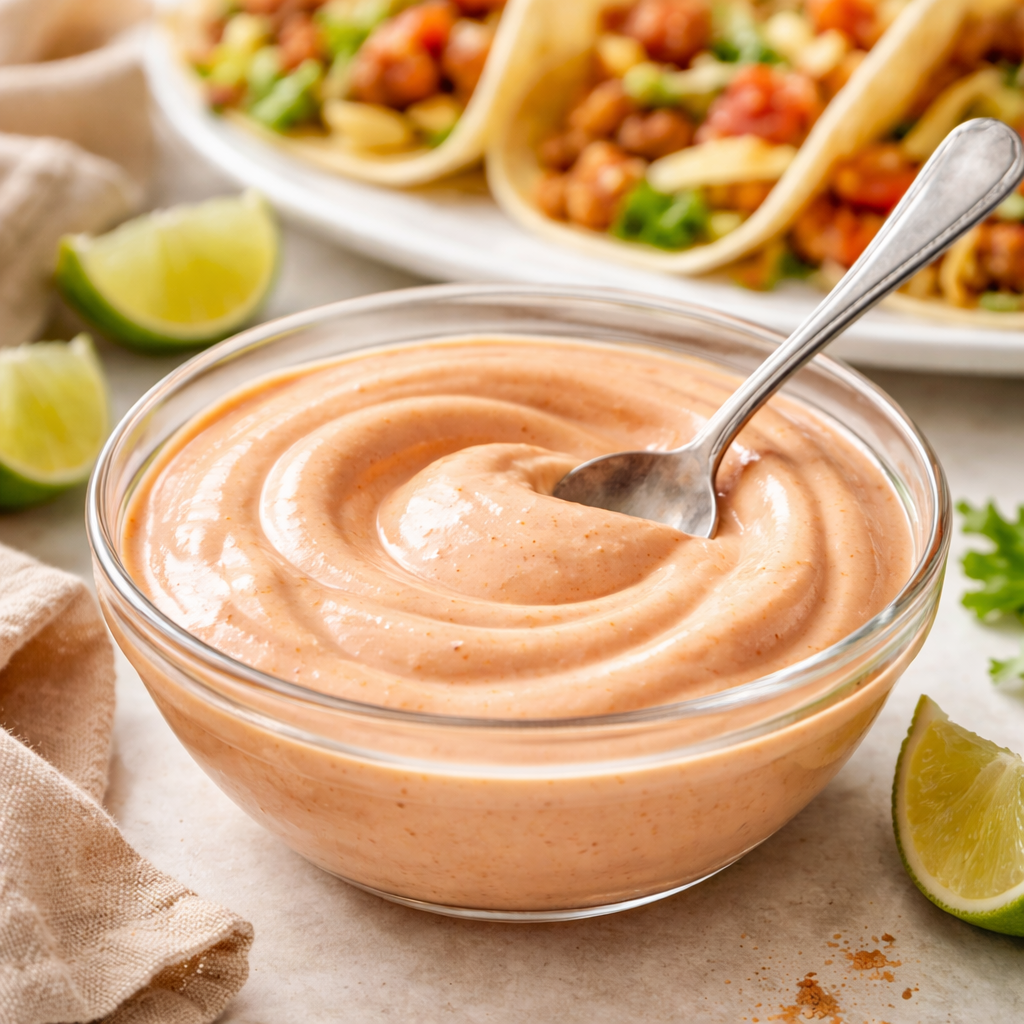
- Taco Salad Dressing: Whisk a few tablespoons of this sauce into some sour cream or Greek yogurt for a creamy, spicy dressing.
FAQ: Solving Your Sauce Frustrations
Q: Why does my homemade taco sauce taste like plain tomato soup? A: This is usually caused by skipping the “blooming” phase. Without heating the spices in oil first, the chili powder stays “raw” and doesn’t infuse the tomato base. Additionally, ensure you are using enough vinegar—the tang is what distinguishes taco sauce from pasta sauce.
Q: My sauce is too spicy! How can I save it? A: Don’t add more water, as that will ruin the texture. Instead, add another small can (8 oz) of tomato sauce and a pinch more sugar. The extra tomato solids will dilute the capsaicin without making the sauce runny.
Q: How long will this taco sauce recipe last in the fridge? A: Because of the high vinegar and salt content (both natural preservatives), this sauce will stay fresh in an airtight glass jar for up to 3 weeks.
Q: Why is the sauce separating after a few days? A: Separation is natural in a taco sauce recipe that doesn’t use chemical stabilizers (like Xanthan gum). Simply give the jar a good shake before use to re-emulsify the ingredients.