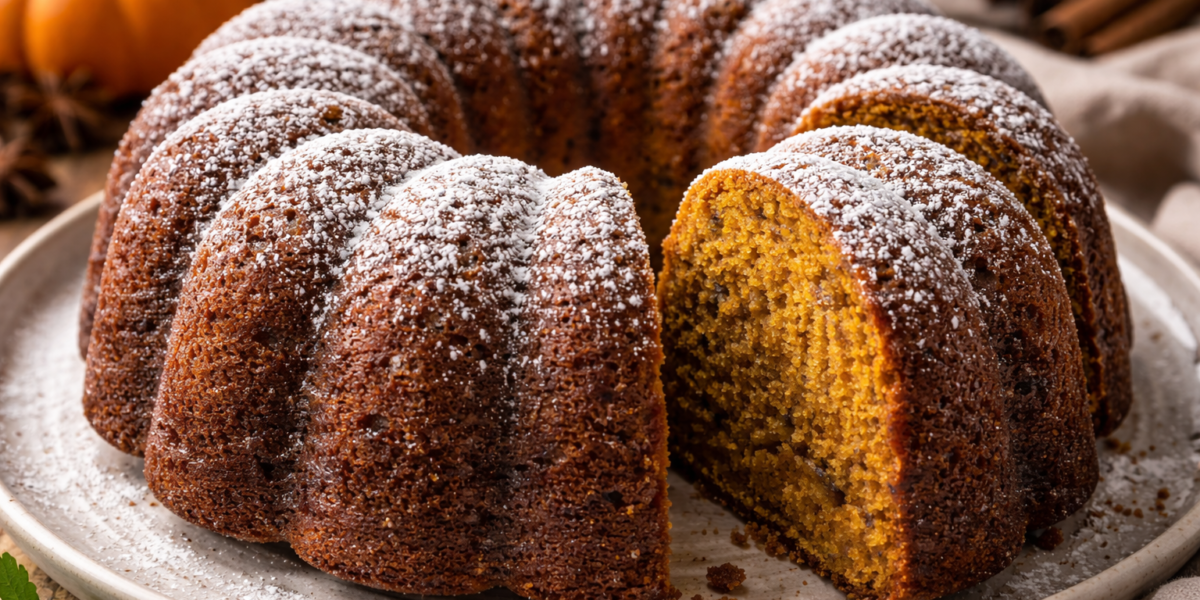
Pumpkin Bundt Cake Recipe One of the most persistent frustrations with any autumn-themed pumpkin bundt cake recipe is the “mystery of the middle.” Because pumpkin purée is heavy, dense, and moisture-rich, many home bakers find themselves pulling a cake out of the oven that looks beautiful on the outside but remains gummy, underbaked, or unpleasantly “pudding-like” in the center.
The challenge of the Bundt form is that it requires a cake sturdy enough to support its own intricate design when inverted, yet tender enough to melt on the tongue. This guide provides a technically superior pumpkin bundt cake recipe that solves the common problem of structural collapse and denseness. By mastering the balance of leavening agents and moisture control, you can produce a bakery-quality centerpiece every single time.
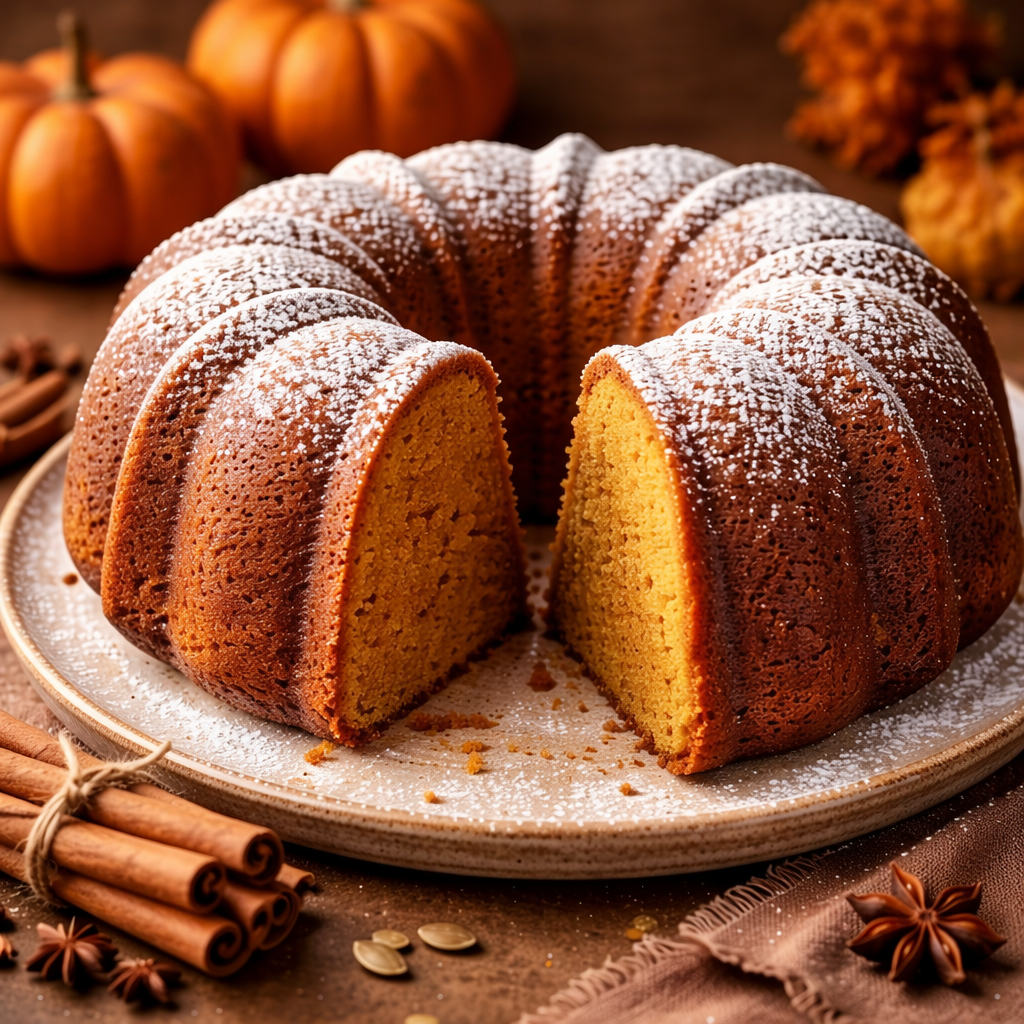
Why This Recipe Works
This pumpkin bundt cake recipe is engineered to bypass the common pitfalls of holiday baking through three specific culinary interventions:
- The Lipid-to-Sugar Ratio: We utilize a combination of oil and butter. Oil provides the long-lasting moisture that pumpkin cakes are famous for, while butter provides the structural integrity and aeration needed to lift the heavy purée.
- Specific Leavening Balance: Most recipes rely on a generic amount of baking powder. This recipe uses a precise $3:1$ ratio of baking powder to baking soda. The soda reacts immediately with the acidity of the pumpkin, while the powder provides the secondary lift during the “oven spring” phase.
- Temperature Management: By starting with a slightly higher temperature and dropping it midway through, we set the intricate edges of the Bundt pan early, preventing the cake from sticking to the design.
Ingredients & Measurements
For a standard 10–12 cup Bundt pan, accuracy is the difference between a masterpiece and a mess.
The Dry Components
- 3 cups (375g) All-Purpose Flour: Spooned and leveled. Avoid cake flour here; you need the protein of AP flour to support the weight of the pumpkin.
- 2 tsp Baking Powder: For lift.
- 1 tsp Baking Soda: To neutralize acid and aid in browning.
- 1 tsp Fine Sea Salt: To sharpen the spice profiles.
- 2 tbsp Pumpkin Pie Spice: Preferably a fresh blend of cinnamon, ginger, nutmeg, and cloves.
The Wet Components
- 1 can (15 oz) Pumpkin Purée: Ensure you are using 100% pure pumpkin, not “pumpkin pie filling” which contains added sugars and water.
- 4 Large Eggs: Room temperature.
- 1 cup (200g) Granulated Sugar: For sweetness and structure.
- 1 cup (200g) Light Brown Sugar: Packed. The molasses content adds the “chew” and depth.
- ¾ cup Neutral Oil: Such as vegetable or grapeseed oil.
- ½ cup Unsalted Butter: Melted and cooled.
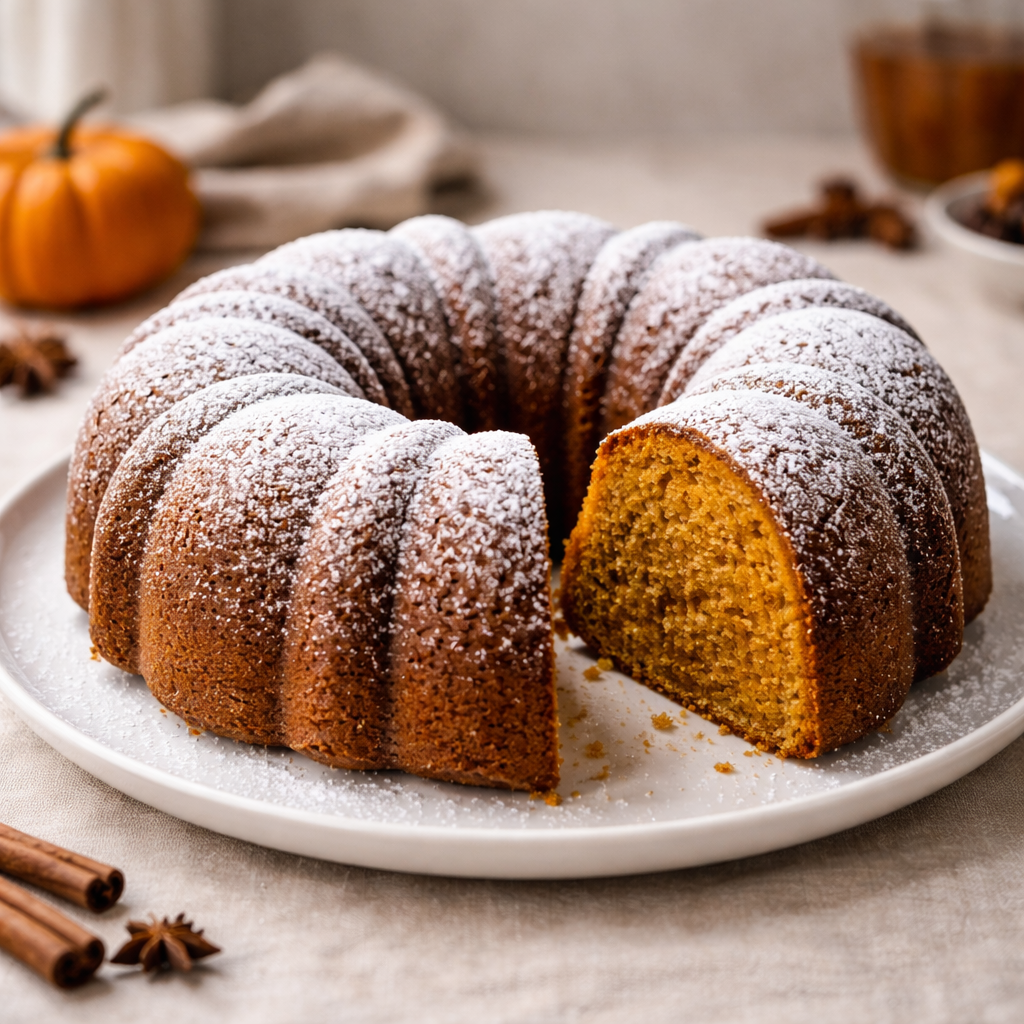
Step-by-Step Cooking Guide
1. The Pan Preparation (The Most Important Step)
The biggest fear in any pumpkin bundt cake recipe is the cake sticking to the pan. Do not use standard butter and flour; it can create a “paste” that glues the cake to the crevices. Instead, use a “goop” made of equal parts melted butter, oil, and flour, and brush it into every single nook with a pastry brush.
2. Sifting and Aeration
Whisk your flour, baking powder, baking soda, salt, and spices in a large bowl. Sifting these together is not just about removing lumps; it’s about aerating the flour so it doesn’t settle into a dense mass when it hits the wet ingredients.
3. The Emulsion Phase
In a stand mixer or a large bowl, whisk together the sugars, oil, and melted butter. Add the eggs one at a time. Once smooth, stir in the pumpkin purée. The mixture should look like a bright orange, velvety ribbon.
4. The Marriage of Ingredients
Add the dry ingredients to the wet in three parts. Fold by hand or use the lowest setting on your mixer. Stop the moment the last streak of flour disappears. Over-mixing develops gluten, which will turn your tender pumpkin bundt cake recipe into a rubbery bread.
5. The Tap and Bake
Pour the batter into the prepared pan. Give the pan three firm taps on the counter to release any trapped air bubbles. Bake at 350°F (175°C) for 55–65 minutes.
Common Mistakes to Avoid
- Opening the Oven Door Too Early: Bundt cakes are sensitive to temperature drops. Opening the door before the 45-minute mark can cause the center of the cake to “sigh” and sink.
- Using Cold Eggs: Cold eggs will cause the melted butter in the batter to seize into tiny clumps, leading to an uneven crumb.
- Over-greasing with Spray: Non-stick sprays can leave a sticky residue on Bundt pans over time. Stick to the “goop” method or a high-quality baking spray with flour included.
- Inverting Immediately: If you flip the cake the moment it comes out of the oven, it is too fragile and will break. If you wait until it is cold, the sugar will have set and it will stick.
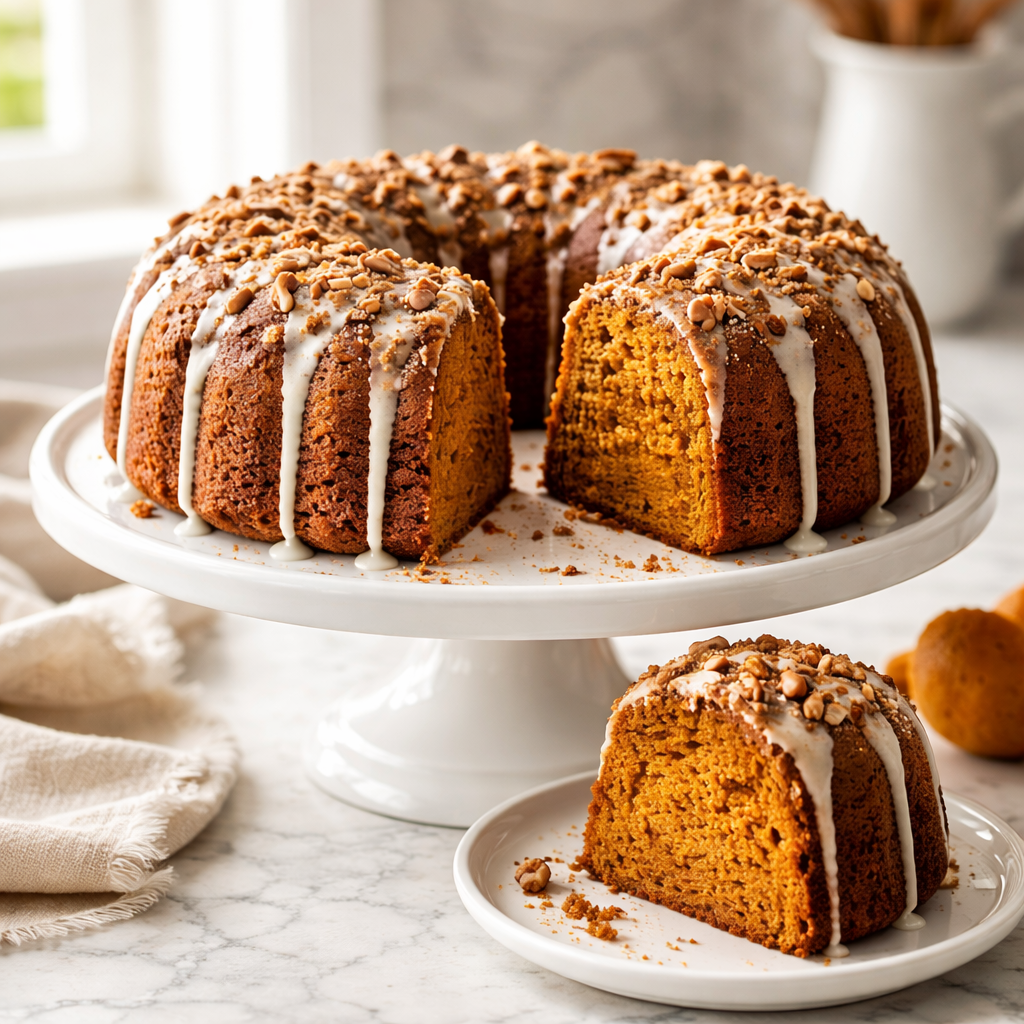
Timing & Doneness Indicators
Because every oven is calibrated differently, do not rely solely on the clock. Use these three indicators:
Serving Suggestions
A pumpkin bundt cake recipe is a canvas for textures.
- The Classic Glaze: A simple cream cheese icing (cream cheese, powdered sugar, vanilla, and milk) drizzled while the cake is slightly warm allows it to “grip” the cake.
- The “Naked” Approach: A simple dusting of powdered sugar allows the intricate design of the pan to be the star.
- The Texture Contrast: Serve with a dollop of unsweetened whipped cream and toasted pepitas (pumpkin seeds) for a sophisticated, crunchy finish.
FAQ: Solving Your Baking Frustrations
Q: Why did my pumpkin bundt cake fall apart when I flipped it?
A: This is usually a timing issue. You must let the cake rest in the pan for exactly 10–15 minutes. This allows the internal structure to firm up while the steam is still present to help lubricate the edges.
Q: My cake is very dark on the outside but raw in the middle. What happened?
A: Your oven may be running hot, or you used a dark-colored Bundt pan, which absorbs more heat. If using a black or dark grey pan, reduce the oven temperature to 325°F (160°C) and increase the bake time by 10 minutes.
Q: Can I use fresh pumpkin instead of canned?
A: You can, but you must drain it. Fresh pumpkin has a much higher water content than canned. Place your fresh purée in a cheesecloth over a bowl for 2 hours before using it in this pumpkin bundt cake recipe.
Q: How do I store leftovers without the cake getting soggy?
A: Because of the high moisture in pumpkin, this cake is prone to sweating. Store it under a cake dome or in a large airtight container at room temperature for up to 3 days. For longer storage, refrigerate, but bring it to room temperature before serving to soften the butter.