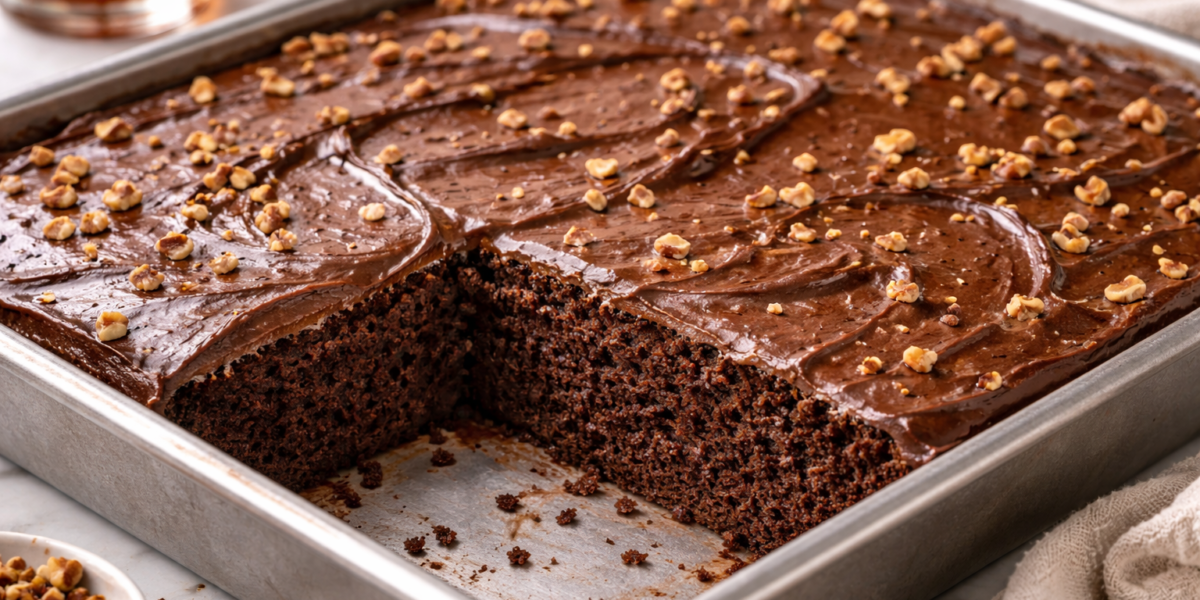
Coca Cola Cake Recipe In the storied tradition of American “heritage” baking, few desserts command as much nostalgic authority as the Coca-Cola cake recipe. Emerging from the mid-century South, this confection is a testament to the ingenuity of home bakers who discovered that the carbonation and unique spice profile of a classic cola could revolutionize the texture of a chocolate sponge.
However, the common frustration for many modern bakers is a cake that turns out overly sweet or, worse, dry and crumbly. The true hallmark of a professional-grade Coca-Cola cake is a “fudgy” crumb—a dense, moist interior that sits halfway between a traditional devil’s food cake and a rich brownie. This guide deconstructs the science behind the soda-based batter, ensuring that your next bake achieves that iconic, velvet-smooth finish and a crackly, pour-over frosting that defines the genre.
Ingredient Breakdown: The Science of the Soda
To execute a flawless Coca-Cola cake recipe, one must understand that the soda is not merely a sweetener; it is a functional chemical agent.
1. Coca-Cola (The Leavener and Tenderizer)
The primary role of the cola is twofold. First, the acidity of the soda reacts with the baking soda to provide an immediate lift, creating air pockets in the dense batter. Second, the phosphoric acid in the soda acts as a powerful tenderizer, breaking down gluten strands to ensure the cake remains exceptionally soft even days after baking.
2. Buttermilk (The Acidic Buffer)
Buttermilk is the essential partner to the cola. Its thick viscosity adds richness, while its lactic acid ensures the chocolate flavor remains bright rather than muddy. It also works as a secondary leavening trigger, ensuring the cake rises evenly across the pan.
3. Natural Cocoa Powder
In this Coca-Cola cake recipe, we prioritize natural cocoa powder over Dutch-processed. Natural cocoa is more acidic, which is necessary to react with the leavening agents. It provides that classic, slightly fruity chocolate note that pairs perfectly with the caramel undertones of the cola.
4. Miniature Marshmallows
Often debated, but technically vital for the “authentic” texture, marshmallows melt into the batter during the bake. They don’t remain as distinct white clouds; instead, they create small “pockets” of concentrated moisture and gelatin, contributing to the cake’s unique, chewy crumb.
5. High-Fat Butter
Unlike oil-based cakes, this recipe relies on creamed or melted butter to provide a foundational flavor. Butter contributes to the “melt-in-your-mouth” quality that oil simply cannot replicate in a heavy sheet cake.
Preparation Strategy: Timing the Temperature
The Coca-Cola cake is traditionally a “boiled” batter cake. Unlike the standard creaming method (where butter and sugar are beaten together), this method requires heating the liquid components to a boil before integrating the dry ingredients.
- The Sift is Non-Negotiable: Because the hot liquid is poured into the dry mix, any lumps in your flour or cocoa will be “sealed” by the heat, making them impossible to whisk out later. Always sift your dry ingredients into a large, heat-proof bowl.
- The Frosting Window: The iconic Coca-Cola glaze must be prepared during the final ten minutes of the cake’s bake time. It is a “warm-on-warm” application; the hot frosting must be poured over the hot cake to allow a small amount of the glaze to seep into the top layer of the sponge.
Cooking Instructions
1. The Dry Base
Preheat your oven to 350°F (175°C). In a large bowl, whisk together 2 cups of all-purpose flour, 2 cups of granulated sugar, and 1 tsp of baking soda. Ensure the mixture is aerated and free of clumps.
2. The Boiling Phase
In a medium saucepan, combine 1 cup (2 sticks) of unsalted butter, 1 cup of Coca-Cola, and 3 tbsp of cocoa powder. Bring the mixture to a rolling boil over medium heat, stirring occasionally. The moment it reaches a boil, remove it from the heat.
3. The Integration
Pour the hot cola mixture over the dry flour/sugar base. Whisk gently until just combined. In a separate small bowl, whisk together 2 large eggs, ½ cup of buttermilk, and 1 tsp of vanilla extract. Fold this into the main batter. Finally, fold in 1 ½ cups of miniature marshmallows.
4. The Bake
Pour the batter into a greased 9×13-inch baking pan. The batter will be thinner than a standard cake mix—this is intentional. Bake for 30–35 minutes.
5. The Signature Glaze
While the cake is in its final minutes of baking, combine ½ cup of butter, 1/3 cup of Coca-Cola, and 3 tbsp of cocoa in a saucepan. Bring to a boil, then remove from heat. Whisk in 3 ½ cups of powdered sugar and 1 tsp of vanilla until smooth. If desired, stir in 1 cup of chopped pecans.
6. The Pour
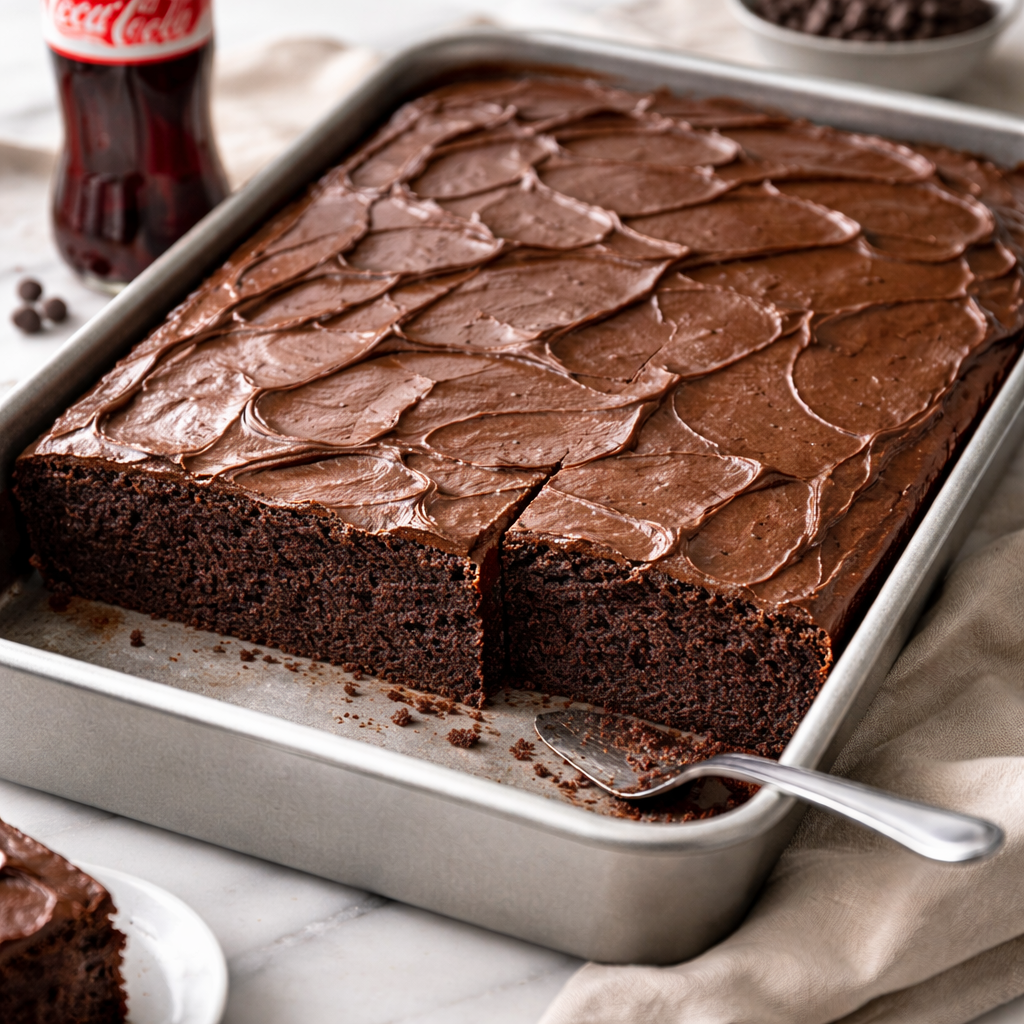
The moment the cake comes out of the oven, pour the hot frosting over the surface. Use a spatula to spread it to the very edges.
Flavor & Texture Indicators
How do you know if your Coca-Cola cake recipe was a success? Look for these three specific markers:
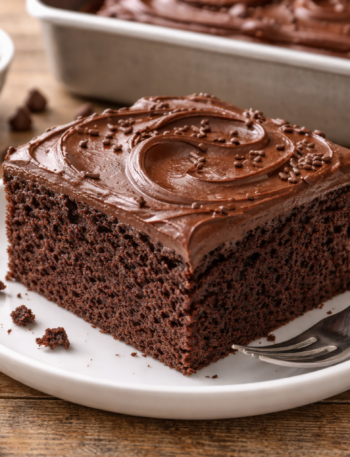
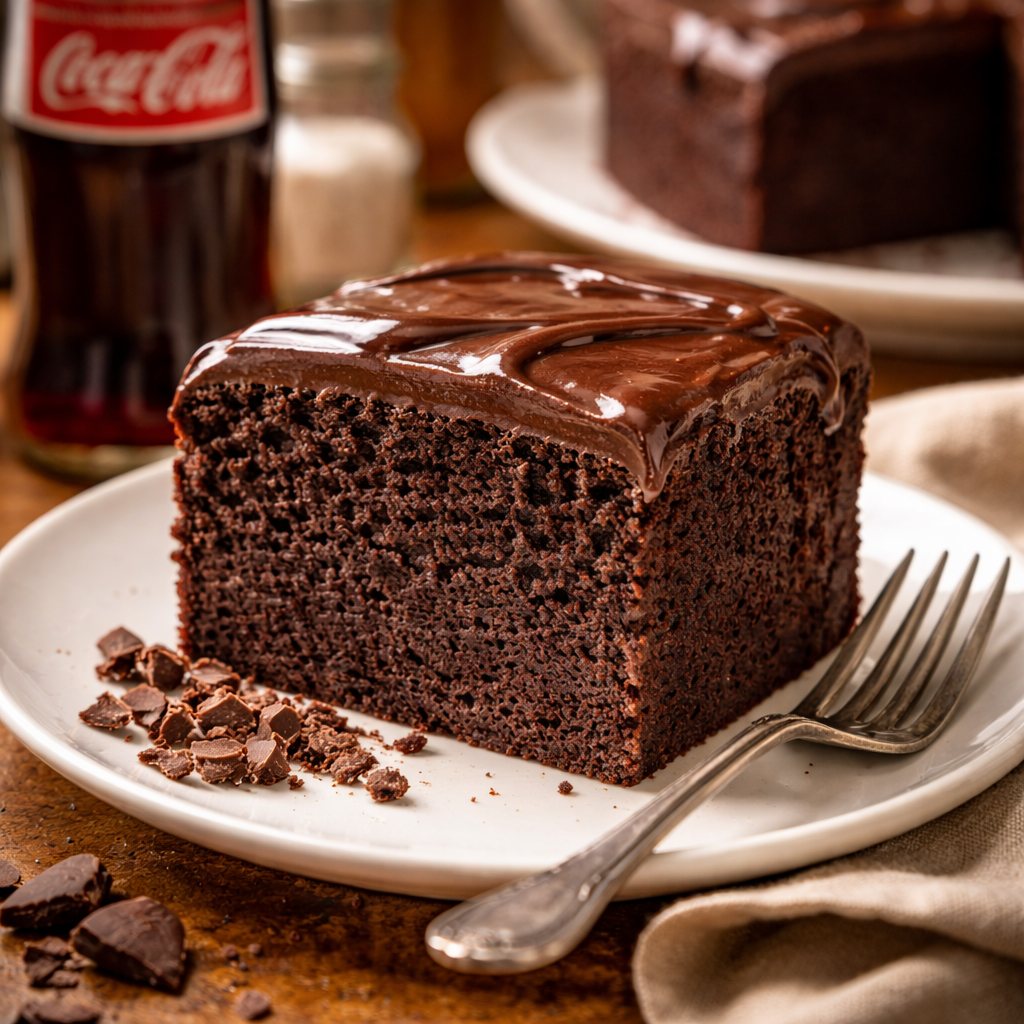
- The “Fudge” Gradient: When sliced, the cake should not look like a dry sponge. There should be a slight “darker” layer near the top where the frosting has infused with the cake.
- The Crackle Top: As the frosting cools, it should develop a thin, delicate “crackle” or sheen. It shouldn’t be soft like a buttercream; it should be firm enough to hold its shape but soft enough to yield to a fork.
- The Flavor Balance: You shouldn’t overtly “taste” the soda. Instead, the soda should manifest as a deep, caramelized sweetness that makes the chocolate taste “darker” and more complex.
Adjustments for Different Skill Levels
For the Novice Baker
Focus on the “doneness” test. Because this cake is so dark, it is easy to overbake. Start checking at 28 minutes. If a toothpick comes out with a few moist crumbs (not wet batter), pull it out immediately.
For the Intermediate Baker
Experiment with the “Cola Reduction.” Before starting the recipe, simmer 2 cups of Coca-Cola in a pan until it reduces to 1 cup. This concentrates the flavor and the phosphoric acid, resulting in an even more intense, tender crumb.
For the Advanced Artisan
Try a “Salted Caramel Cola” variation. Add ½ tsp of high-quality sea salt to the frosting and use a Mexican Coke (made with cane sugar) for a cleaner, crisper sweetness that highlights the cocoa’s natural bitterness.
Storage & Shelf Life
The high sugar and moisture content of the Coca-Cola cake makes it incredibly resilient.
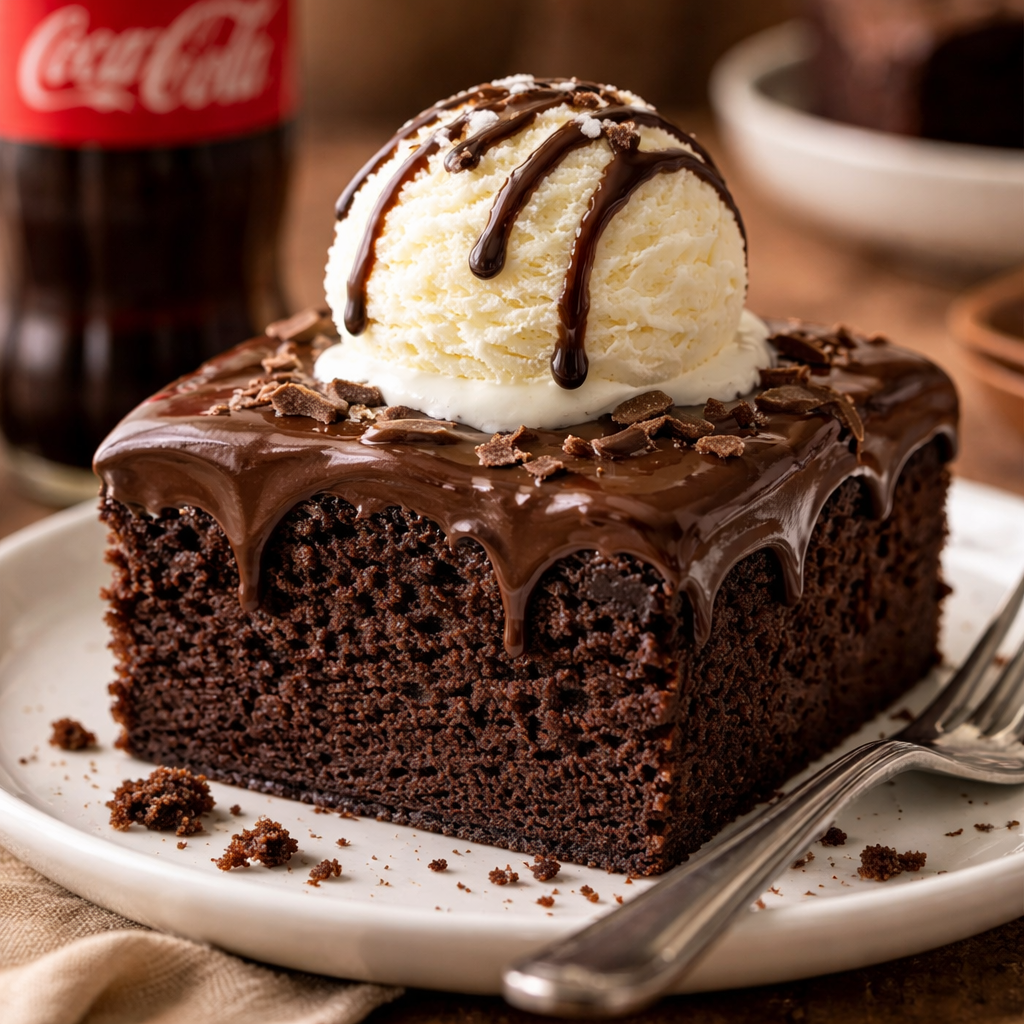
- Room Temperature: This cake actually improves on Day 2. The flavors marry and the crumb settles. Keep it covered at room temperature for up to 4 days.
- Freezing: This cake freezes exceptionally well. Wrap individual squares in plastic wrap and then foil. When ready to eat, thaw at room temperature and microwave for 10 seconds to “re-set” the fudge texture.
Reader Questions
Q: Can I use Diet Coke or Coke Zero for this recipe? A: We do not recommend it. The chemical sweeteners in diet sodas can turn bitter when subjected to the high heat of the oven. Furthermore, the sugar in regular Coca-Cola is essential for the caramelization and the structural integrity of the crumb.
Q: My frosting turned out grainy. What happened? A: Grainy frosting is usually a result of the powdered sugar being added while the liquid was too hot, or not whisking enough. For the smoothest glaze, sift your powdered sugar before adding it to the saucepan.
Q: Why did my marshmallows float to the top? A: This is actually a traditional feature of some variations of the Coca-Cola cake recipe! If you prefer them integrated, ensure they are folded in at the very last second and that your batter hasn’t cooled down too much before entering the oven.
Q: Can I make this in a Bundt pan? A: While possible, it is risky. This batter is very moist and the pour-over frosting is designed for a flat surface. If using a Bundt pan, you must grease and flour the pan with extreme care, and you may need to increase the flour by ¼ cup to provide more structure.
The Coca-Cola cake recipe remains a masterclass in how non-traditional ingredients can produce professional-grade results. It is a celebration of texture and a reminder that sometimes, the best baking “secrets” are found in the soda aisle.