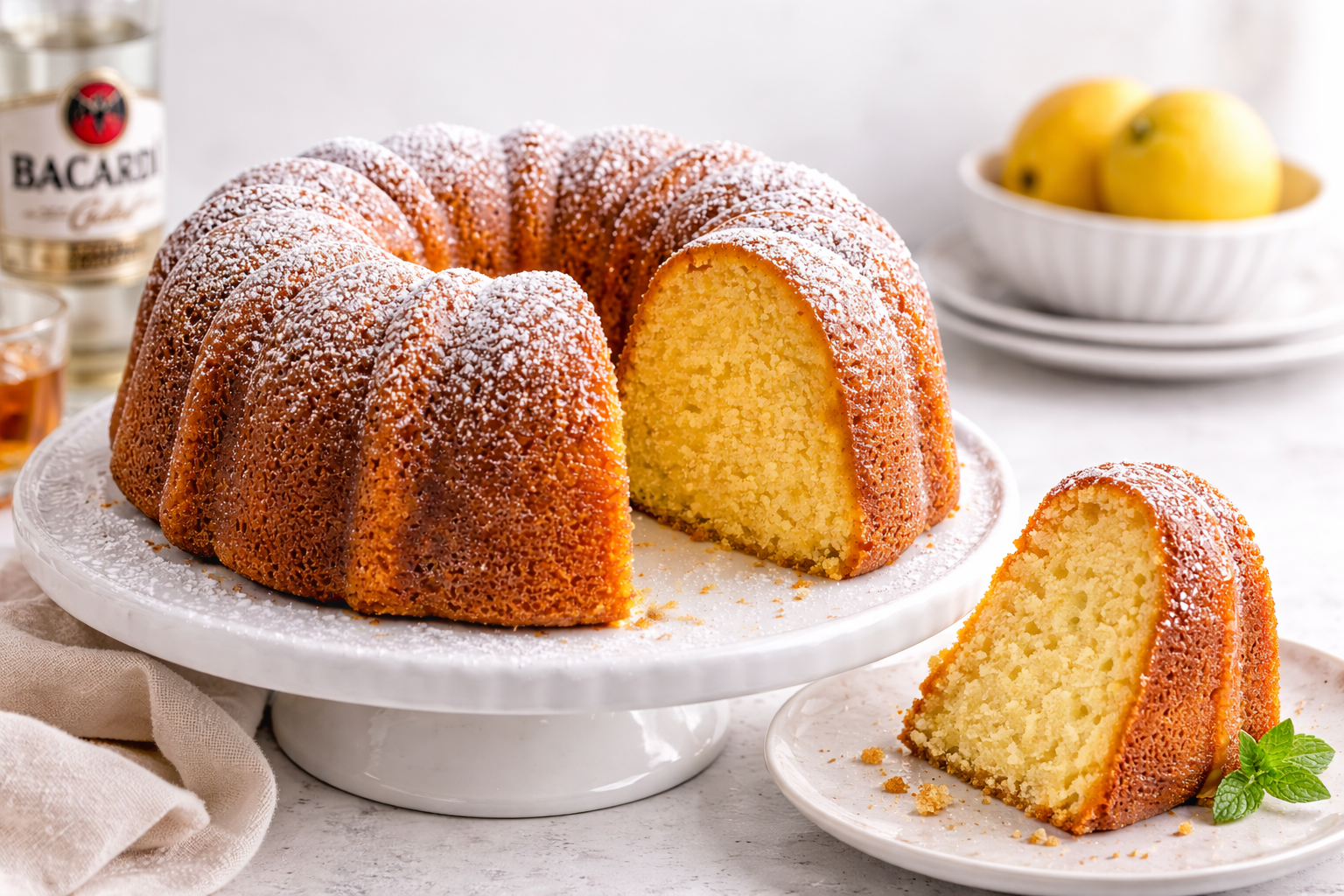
The Bacardi Rum Cake recipe is a piece of mid-century Americana that has endured for a reason: it defies the usual trade-off between convenience and quality. In the professional baking world, we often turn our noses up at anything involving a box mix, but the “original” rum cake recipe is a rare exception where the science of a commercial mix actually serves a specific, structural purpose.
A true Bacardi Rum Cake isn’t just a dessert; it’s a preservation method. The heavy infusion of spirits and sugar creates a crumb so moist it borders on a confection. It is a “keeping cake,” one that matures over forty-eight hours, transforming from a simple sponge into a complex, boozy, buttery masterpiece. To get it right, you have to understand the interplay between the heat of the oven and the saturation of the glaze. It’s not about how much rum you use, but how the cake absorbs it.
Ingredient Breakdown: The Structural Logic
Every element here is selected to support a high volume of liquid without the cake collapsing into a sodden mess.
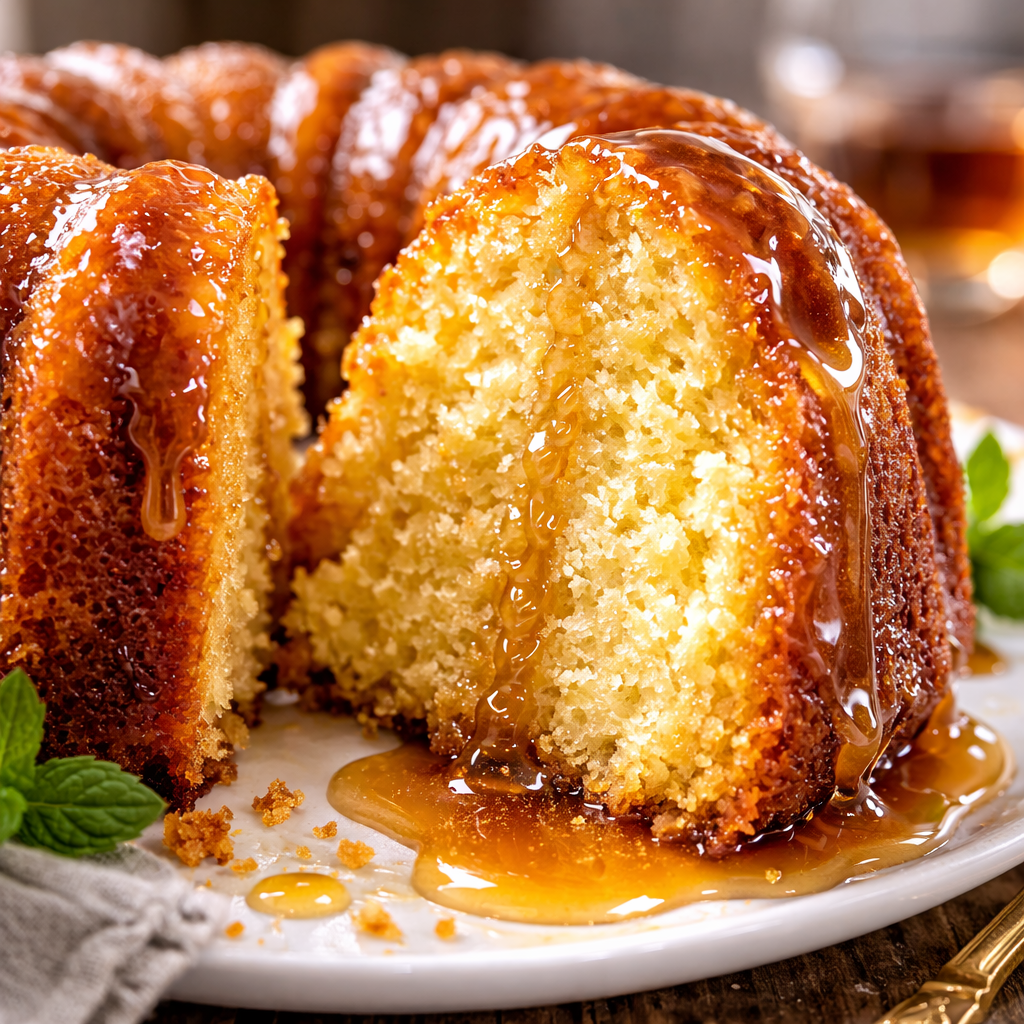
- The Foundation (Yellow Cake Mix & Instant Pudding): We use a high-quality yellow cake mix specifically because it contains emulsifiers that help bind the oil and eggs into a uniform crumb. The addition of instant vanilla pudding mix is the “secret” to the texture; the modified cornstarch in the pudding mix allows the cake to hold a massive amount of rum glaze without leaking or turning into mush.
- Bacardi Gold Rum: While you can use White or Dark, Gold is the traditional choice. It offers a balanced profile—enough oak and vanilla to be noticed, but not so much molasses that it overwhelms the delicate butter notes. The alcohol acts as a solvent, carrying the aromatic compounds deep into the cake’s interior.
- The Fat (Vegetable Oil & Unsalted Butter): We use oil in the batter for a soft, elastic crumb that remains tender even when refrigerated. We save the butter for the glaze, where its milk solids provide a rich, creamy finish that balances the sharp bite of the rum.
- The Crunch (Chopped Pecans): These aren’t just a garnish. Placed at the bottom of the pan (which becomes the top), pecans provide a necessary textural contrast to the soft sponge. They also toast in the oven’s heat, releasing oils that mingle with the glaze.
- The Liquid (Water vs. Milk): In the batter, we stick to water. Since we are adding rum and pudding mix, milk can make the batter too heavy and prone to scorching. Water keeps the focus on the rum.
Preparation Strategy: The Bundt Precision
The Bacardi Rum Cake is almost always baked in a Bundt pan. This isn’t just for aesthetics; the central chimney ensures that heat reaches the middle of the dense, moist batter evenly.
The Release Ritual: Because this cake is glazed while still in the pan, it has a high potential for sticking. Do not simply “spray” the pan. Use a pastry brush to apply a thin, even coat of softened butter, then dust with flour, tapping out every single excess grain. Alternatively, use a “baker’s goop” (equal parts flour, oil, and shortening). If the pecans are added to a poorly greased pan, they will fuse to the metal and ruin the presentation.
The Room Temperature Rule: Ensure your eggs and water are at room temperature. Cold eggs can cause the vegetable oil to “clump,” leading to an uneven bake. We want a smooth, perfectly emulsified batter that looks like heavy satin before it hits the pan.
Cooking Instructions: The Soak and Saturated Method
Phase 1: The Batter
- Prep the Pan: Preheat your oven to 325°F. Grease and flour a 10-cup Bundt pan. Sprinkle 1 cup of finely chopped pecans evenly over the bottom.
- Combine: In a stand mixer or a large bowl, combine 1 package (approx. 15.25 oz) of yellow cake mix, 1 package (3.4 oz) of instant vanilla pudding mix, 4 large eggs, $1/2$ cup of water, $1/2$ cup of vegetable oil, and $1/2$ cup of Bacardi Gold Rum.
- The Emulsion: Beat on low speed just to moisten, then increase to medium and beat for exactly 2 minutes. This aeration is crucial; it builds the tiny air pockets that will later act as reservoirs for the glaze.
- The Bake: Pour the batter over the pecans. Bake for 55–60 minutes. Use the “skewer test”—it should come out clean.
Phase 2: The Bacardi Glaze
While the cake is in its final 15 minutes of baking, prepare the glaze. This is where the magic happens.
- In a heavy saucepan, melt 1 stick (8 tbsp) of unsalted butter.
- Stir in 1 cup of granulated sugar and $1/4$ cup of water.
- Bring to a boil over medium heat and simmer for exactly 5 minutes, stirring constantly. The mixture will become translucent and slightly syrupy.
- The Finish: Remove from heat and stir in $1/2$ cup of Bacardi Gold Rum. The mixture will bubble vigorously—this is normal.
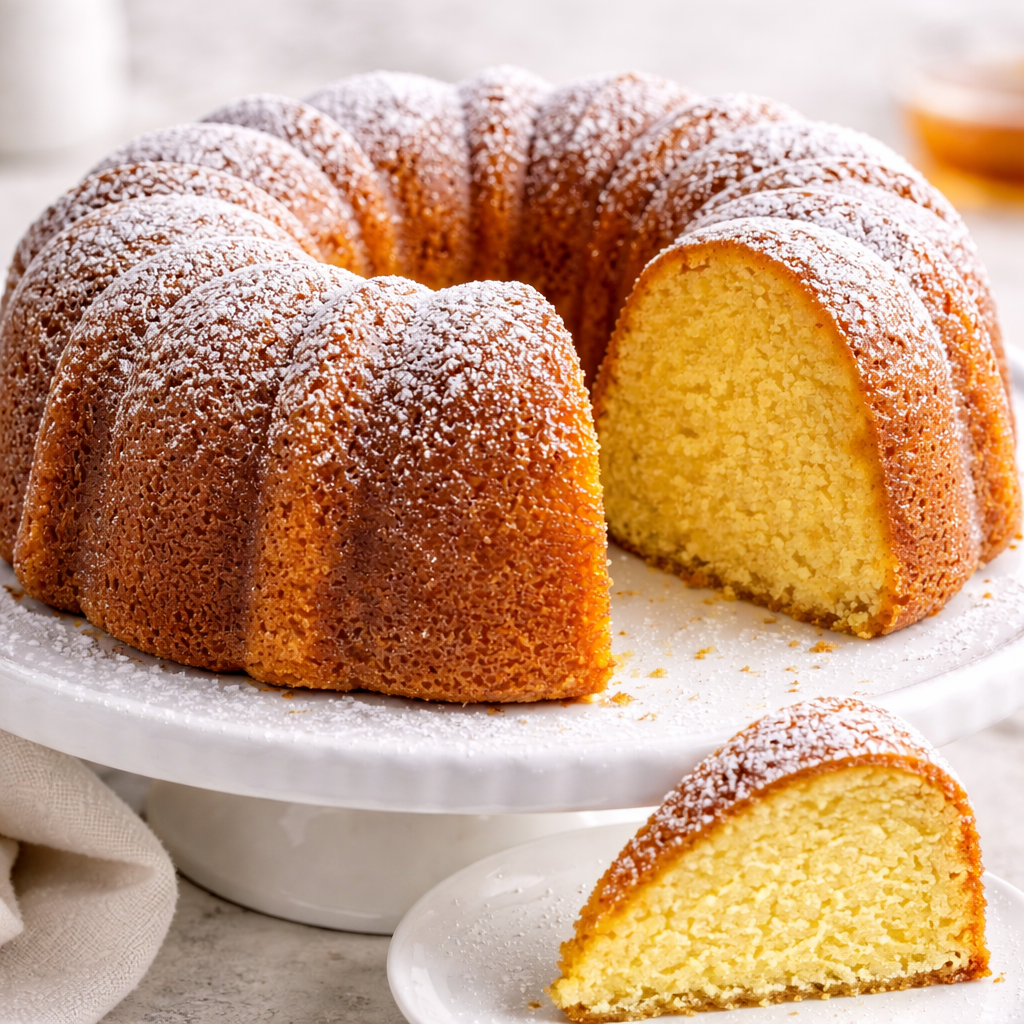
Phase 3: The Infusion (The Critical Step)
- The Piercing: As soon as the cake comes out of the oven, do not remove it from the pan. While it is screaming hot, take a long skewer and poke dozens of holes all the way to the bottom.
- The Slow Pour: Slowly pour about $3/4$ of the hot glaze over the hot cake while it is still in the pan. The cake will hiss and absorb the liquid like a sponge.
- The Rest: Let the cake sit in the pan for 30 minutes. This allows the crumb to set and the glaze to distribute.
- The Inversion: Carefully invert the cake onto a serving plate. Use the remaining glaze to brush the top and sides, allowing it to soak into the pecan crust.
Flavor & Texture Indicators
A successful rum cake should be weighty. If the cake feels light, you haven’t used enough glaze.
- Texture: The crumb should be “tight” but incredibly soft. It shouldn’t be crumbly; rather, it should have a fudge-like density that melts on the tongue.
- Flavor: The first note should be butter and toasted pecans, followed immediately by the warm, spicy “bloom” of the rum. Because we boil the glaze for 5 minutes, much of the raw alcohol bite is tempered, leaving behind the complex notes of caramel and oak.
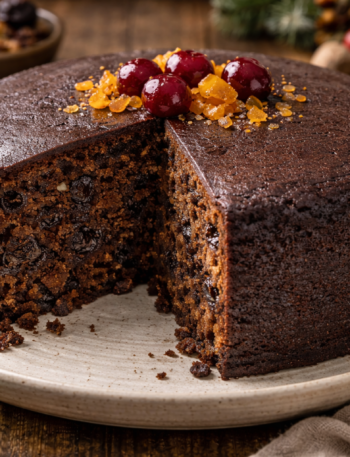
- Visual: The cake should have a glossy, almost “wet” sheen. The pecans should look like they are encased in a thin layer of amber glass.
Adjustments for Different Skill Levels
- The Novice: Stick to the box mix method exactly as described. Your primary focus should be the pan release. If the cake sticks, don’t panic—patch it back together with the pecans and extra glaze; the glaze is a very forgiving “glue.”
- The Intermediate: Experiment with Rum Pairing. Use a Dark Jamaican rum for a funkier, more molasses-forward flavor, or add the zest of one orange to the batter to brighten the profile.
- The Advanced (Scratch Method): If you insist on baking from scratch, use a high-ratio pound cake recipe. You will need to increase the baking powder by 25% to account for the weight of the rum glaze, and ensure your flour is “bleached” to help manage the high moisture content.
Storage & Shelf Life: The Aging Process
This is one of the few cakes that is significantly better on day two or three
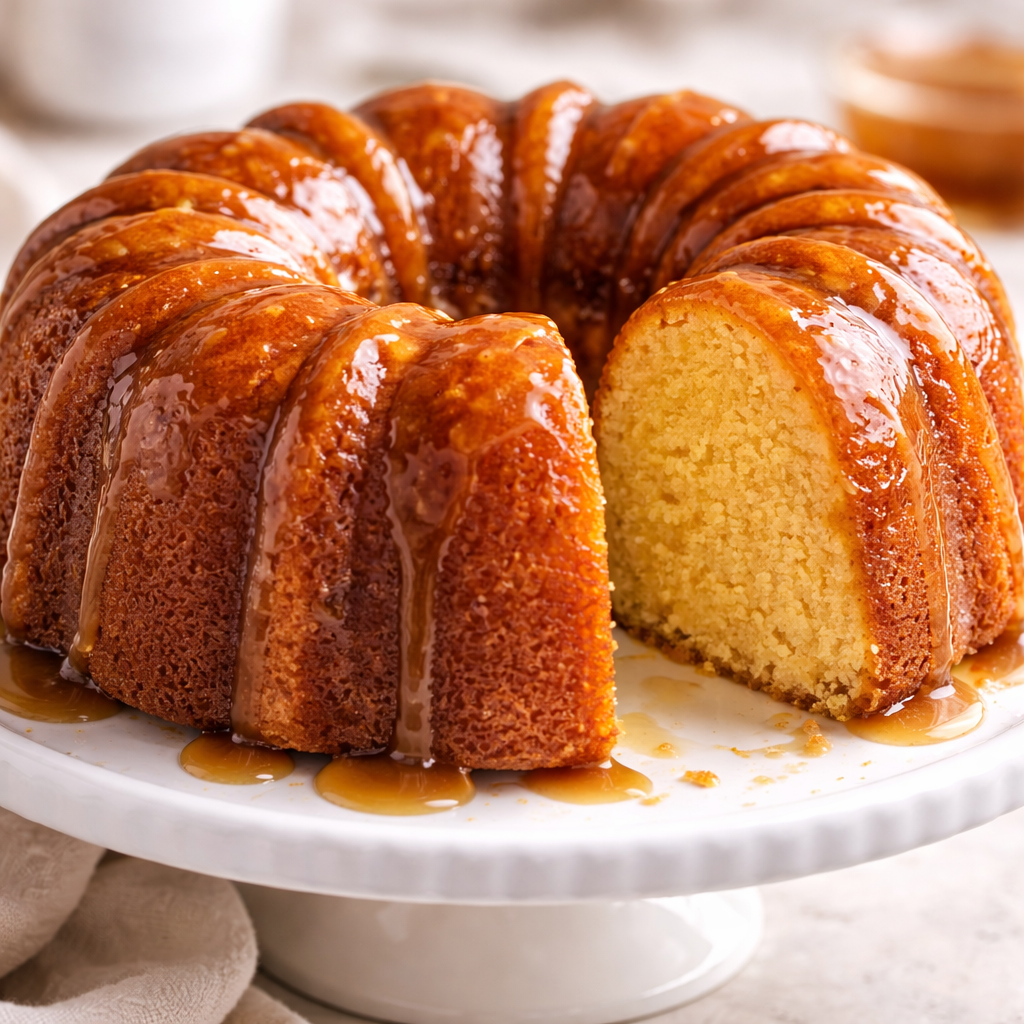
- Aging: Once the cake is fully cooled and glazed, cover it with a cake dome or plastic wrap. Let it sit at room temperature for at least 12 hours before slicing. The rum needs time to “mellow” and the sugar needs to stabilize.
- Shelf Life: Thanks to the sugar and alcohol (both preservatives), this cake stays fresh at room temperature for up to 5 days.
- Freezing: This cake freezes exceptionally well. Wrap it tightly in a double layer of plastic wrap and foil. It will keep for 3 months. In fact, many professional bakers freeze rum cakes because the thawing process helps the glaze penetrate even deeper into the center.
Reader Questions
“Can I make this non-alcoholic?”
Technically, you can use rum extract and water, but you lose the entire identity of the cake. The alcohol provides a specific “wetness” that water cannot replicate. If you want a non-alcoholic citrus cake, you are better off looking for a dedicated lemon or orange syrup cake recipe.
“My cake is too soggy at the bottom. What happened?”
This is usually caused by pouring the glaze too quickly or not letting the cake rest in the pan for the full 30 minutes. The glaze needs time to travel through the “channels” you poked with the skewer. If you flip it too soon, the glaze pools at the bottom.
“Can I use a different nut besides pecans?”
Walnuts are a fine substitute, though they have a slightly more bitter skin. If you have a nut allergy, you can omit them entirely, though I would recommend adding a bit more flour to the greased pan to ensure a clean release.
Homemade Pig Pickin Cake Recipe