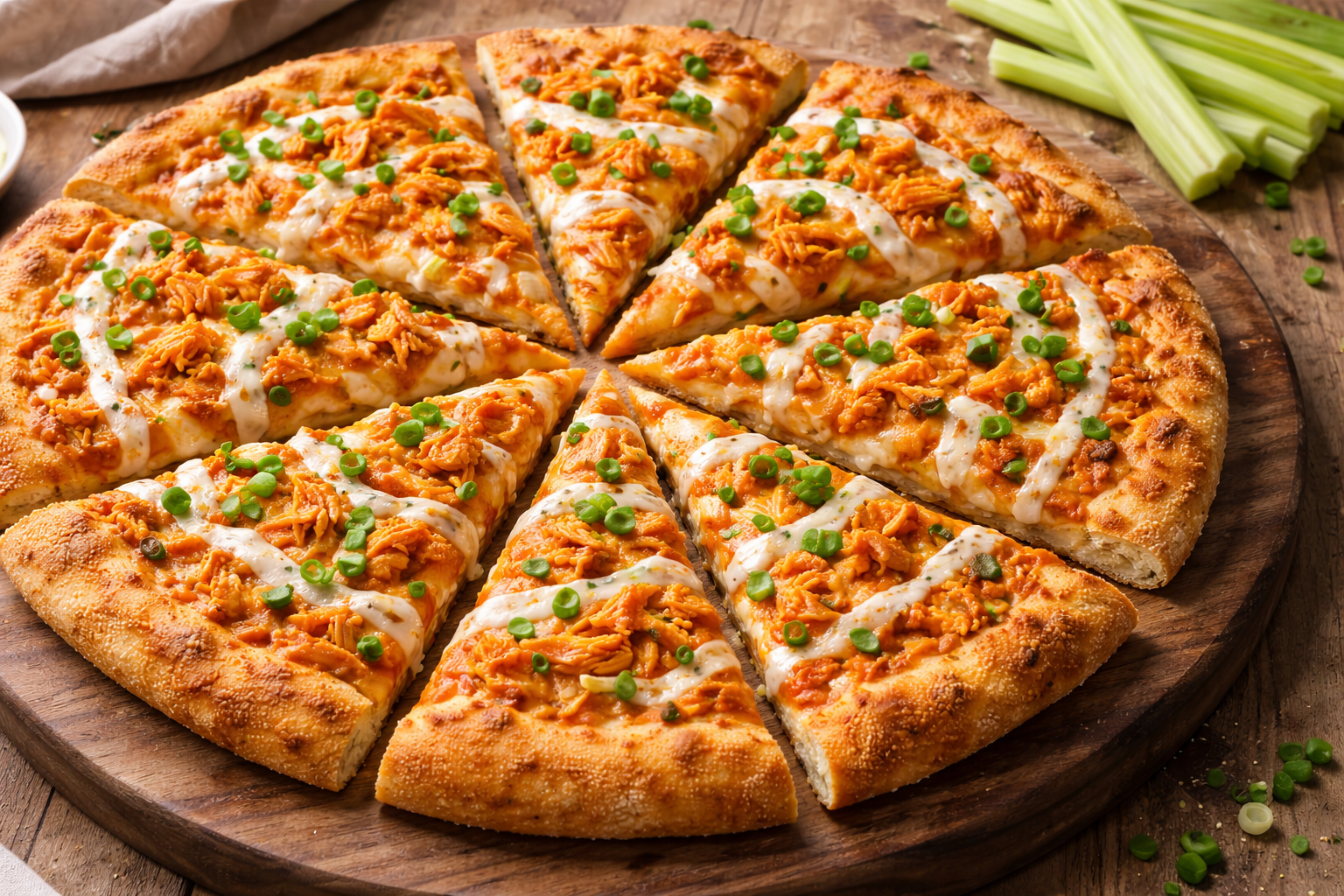
Buffalo Chicken Pizza Recipe The problem with most homemade Buffalo chicken pizza is a structural one. You’ve likely experienced it: a soggy, center-weighted crust that sags under the weight of too much sauce, or chicken that has the texture of pencil erasers because it was twice-cooked into oblivion. It is a dish of high rewards but even higher risks.
When you order this at a pub, it’s often a salt bomb. When you make it at home, it’s often a mess. To get it right—to achieve that shatter-crisp crust, the tangy creeping heat of the sauce, and the creamy, cooling finish of the cheese—you have to treat it with a bit more respect than just tossing leftovers onto store-bought dough.
Why This Recipe Works
Great pizza is an exercise in moisture management. This recipe succeeds because it treats the buffalo sauce not as a base layer, but as a component of the protein itself.
- The “Double-Sauce” Method: We don’t slather the raw dough in wing sauce. High vinegar content in buffalo sauce can interfere with the dough’s ability to crisp up. Instead, we use a thin, high-fat base (garlic butter or a light blue cheese schmear) to create a moisture barrier, then toss the chicken in the buffalo sauce.
- The Maillard Reaction: By using pre-cooked, hand-torn chicken that is briefly seared, we maximize surface area. Those jagged edges catch the sauce and caramelize in the high heat of the oven.
- The Cheese Blend: Straight mozzarella is too oily for this. We use a blend of low-moisture mozzarella for the stretch and sharp Monterey Jack or a mild Gorgonzola for the punch.
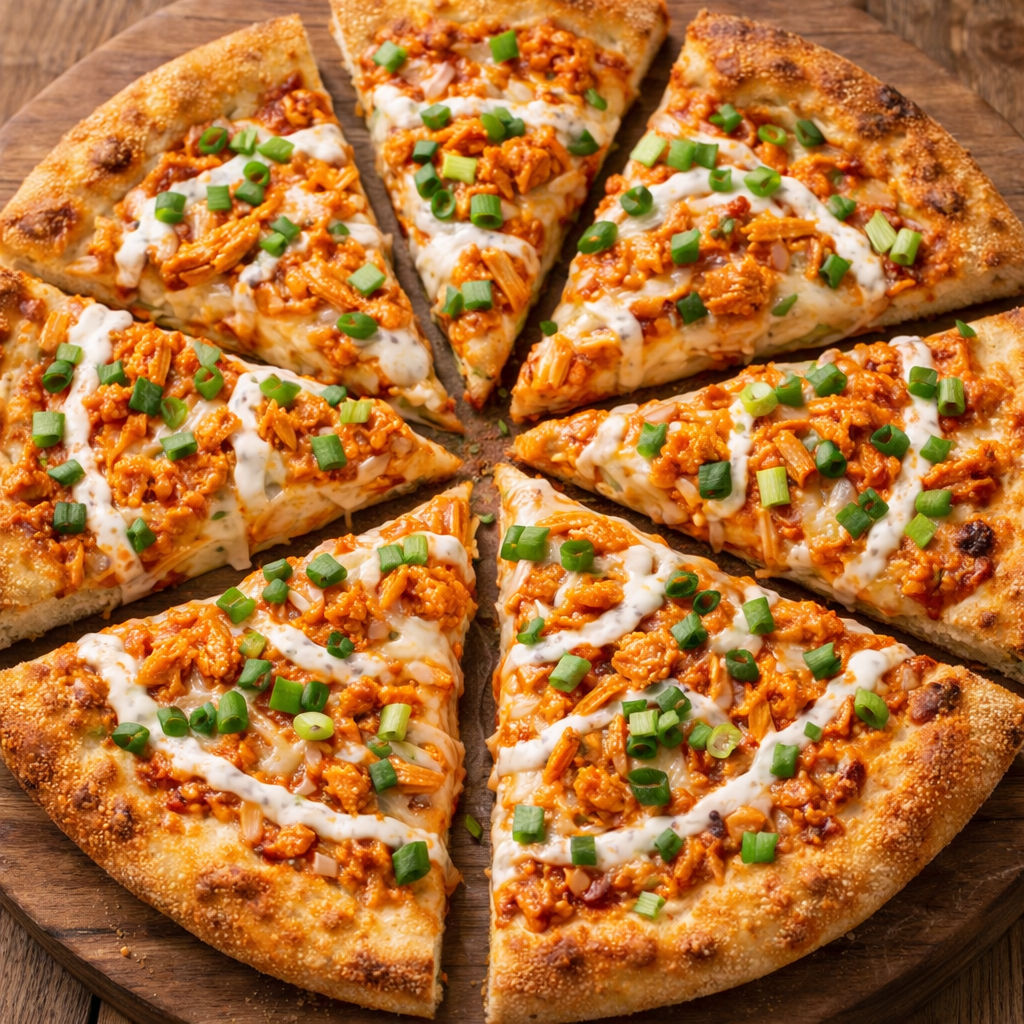
Ingredients & Measurements
Yields two 12-inch pizzas.
The Foundation
- Pizza Dough: 1 lb (500g) of long-ferment dough. If buying store-bought, let it sit at room temperature for at least 90 minutes.
- Bread Flour/Cornmeal: For dusting the peel.
The Buffalo Protein
- Chicken: 1.5 lbs boneless, skinless thighs or breasts. (Thighs stay juicier under 500°F heat).
- Buffalo Sauce: 3/4 cup (I recommend Frank’s RedHot as the base for authenticity).
- Unsalted Butter: 4 tablespoons, melted (this emulsifies the sauce).
- Honey: 1 teaspoon (to balance the vinegar).
The Toppings
- Mozzarella: 8 oz, low-moisture, freshly grated (avoid the pre-shredded bags with potato starch).
- Blue Cheese or Gorgonzola: 1/2 cup crumbles (optional, for the “funk”).
- Red Onion: 1/4 small onion, sliced paper-thin.
- Green Onions: 3 stalks, finely sliced for post-bake garnish.
- Celery Leaves: A handful of the bright green inner leaves (trust me on this).
Step-by-Step Cooking Guide
1. Preparation of the Bird
Pre-cooking the chicken is where most people fail. If you put raw chicken on a pizza, the water release will turn your dough into a swamp.
Poach or pan-sear your chicken until it is just done—around 160°F. Once cooled, do not cube it. Tear it. Hand-torn chicken has more surface area than clean-cut cubes. In a bowl, whisk together the melted butter, buffalo sauce, and honey. Toss the torn chicken in half of this mixture, reserving the rest for a post-bake drizzle.
2. The Oven Environment
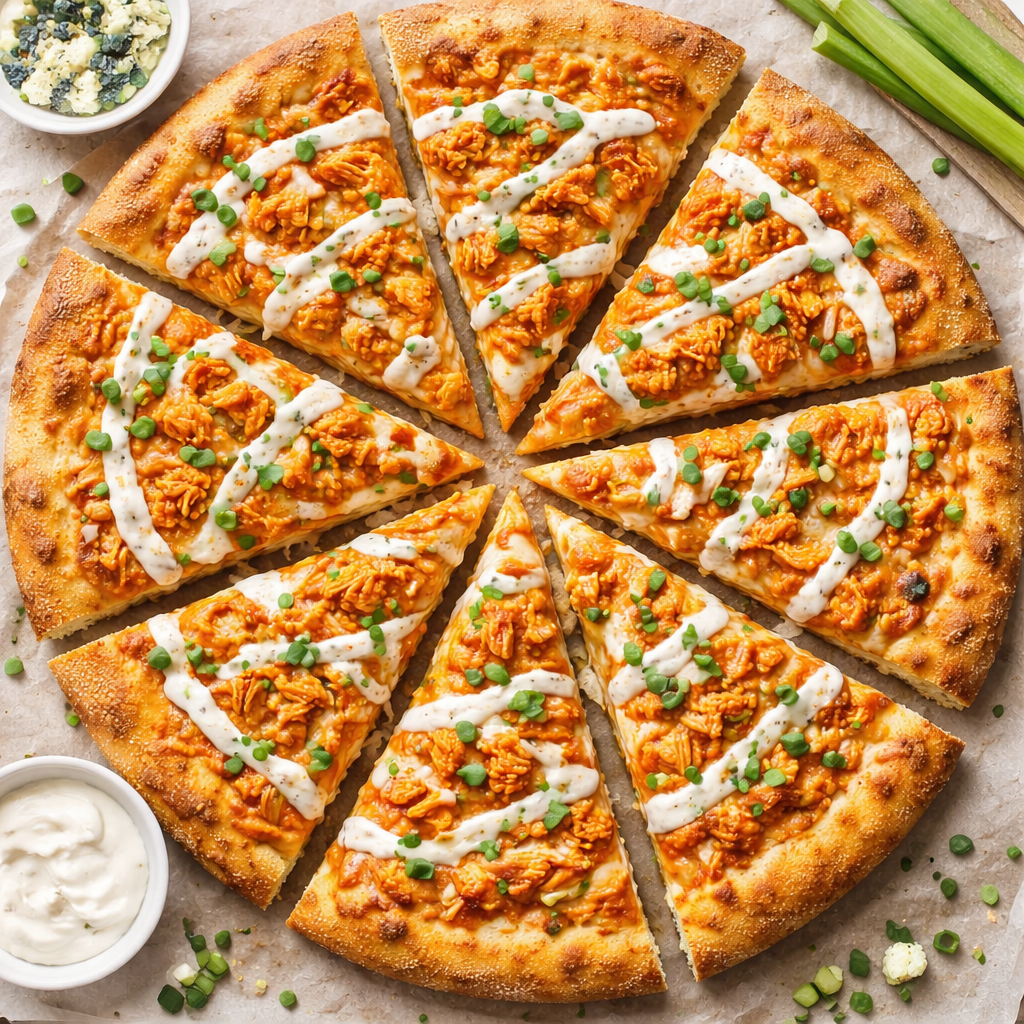
You want your oven as hot as it will safely go. If you have a pizza stone or steel, place it on the top rack and preheat for at least 45 minutes at 500°F (260°C). We want the thermal mass of the stone to hit the dough with immediate conductive heat, springing the yeast and setting the crust before the toppings can weigh it down.
3. Stretching the Canvas
Avoid the rolling pin. Rolling pins crush the carbon dioxide bubbles you’ve waited hours for the yeast to create. Instead, use your knuckles to gently stretch the dough from the center outward. If the dough snaps back, it’s too cold. Let it rest for 10 minutes and try again.
4. The Layering Strategy
Apply a very thin layer of melted garlic butter or a light coating of olive oil to the dough. This is your “sealer.” Next, spread a thin layer of mozzarella. The chicken goes on next. By placing the chicken under or nestled within the cheese, you protect the meat from drying out while allowing the buffalo sauce to infuse into the cheese as it bubbles.
Scatter your red onions over the top. Their natural sugars will caramelize in the high heat, providing a sweet counterpoint to the vinegar-heavy sauce.
5. The Bake
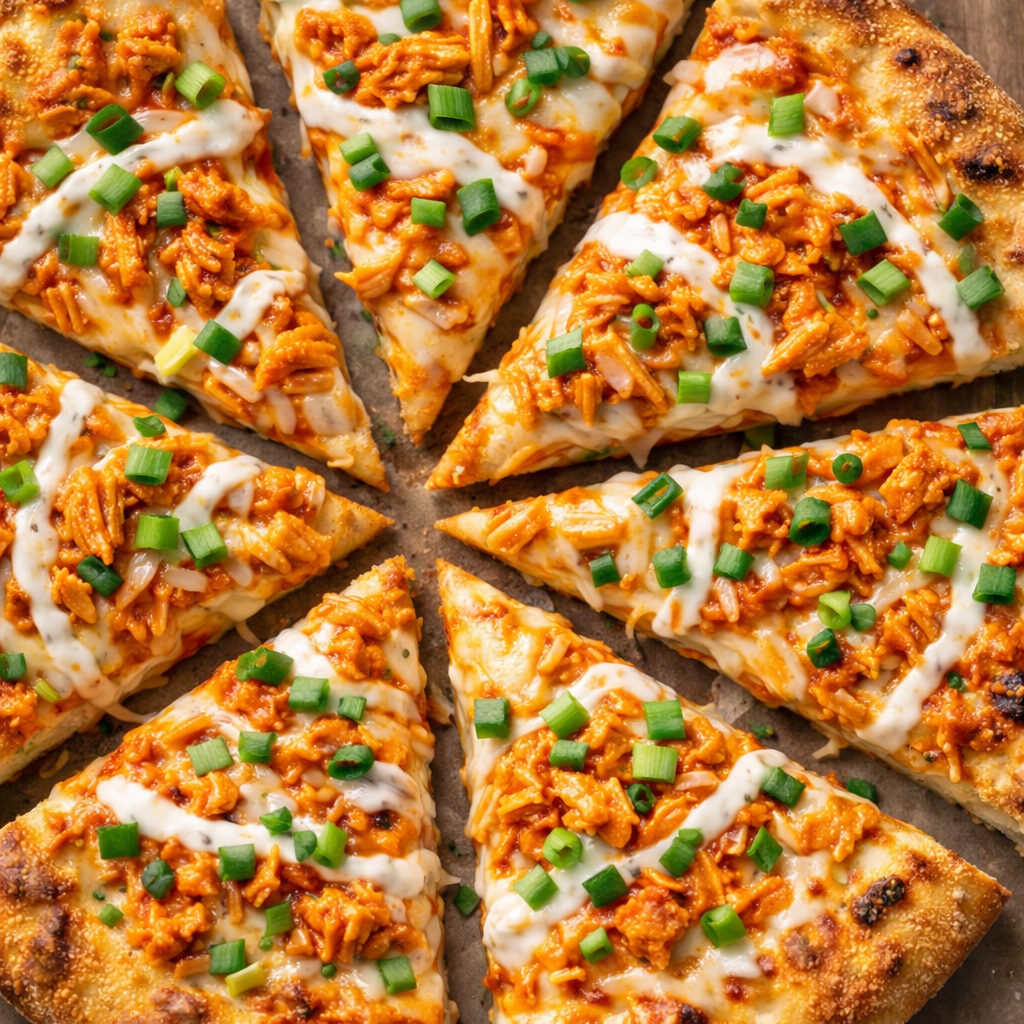
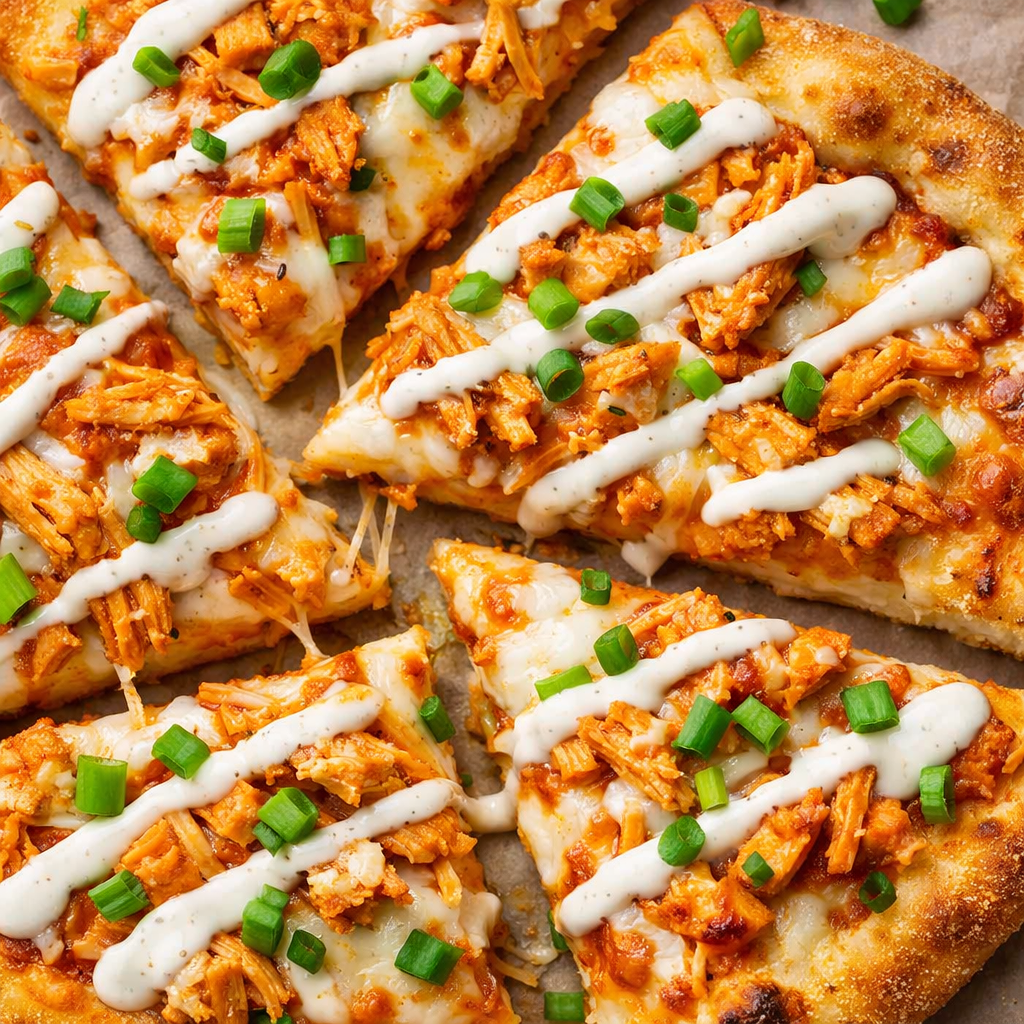
Slide the pizza onto the stone. Watch it closely. In a 500°F oven, the window between “perfect” and “carbonized” is about 90 seconds. You are looking for “leopard spotting” on the crust—small, dark charred bubbles—and a cheese surface that is bubbling vigorously and starting to brown in spots.
Common Mistakes to Avoid
- The “Soggy Middle”: This usually happens because the sauce was applied too heavily. Buffalo sauce is essentially vinegar and water. If you pour it directly on the dough, the dough will never crisp. Always toss the protein in the sauce rather than saucing the crust.
- Cold Dough: If you take dough straight from the fridge to the oven, the “oven spring” won’t happen. The result is a dense, cracker-like crust that lacks chew.
- Over-Cheesing: It’s tempting to pile on the mozzarella. Don’t. Too much cheese releases too much oil, which pools in the center and prevents the dough from cooking through.
Timing & Doneness Indicators
| Stage | Time | Visual Cue |
| Preheat | 45-60 mins | Oven stone should be “heat-soaked.” |
| The Bake | 8-12 mins | Crust is golden brown; cheese is charred in spots. |
| The Rest | 3 mins | Let the cheese set so it doesn’t slide off when cut. |
The “Lift Test”: Use a spatula to lift the edge of the pizza. If the center of the pizza sags or feels soft, it needs another 2 minutes. The pizza should come off the stone as a rigid, singular unit.
Serving Suggestions
Once the pizza comes out, the work isn’t quite done.
- The Fresh Finish: Immediately drizzle the remaining buffalo sauce over the hot cheese.
- The Cooling Element: Drizzle with a high-quality ranch or blue cheese dressing after the bake. Cold dressing on a hot pizza creates a temperature contrast that is essential to the Buffalo experience.
- The Crunch: Scatter the fresh green onions and celery leaves over the top. The celery leaves provide a herbal brightness that mimics the classic side dish of celery sticks.
FAQ
Why does my pizza crust taste like cardboard?
You likely didn’t use enough salt in the dough, or you didn’t let it ferment long enough. Cold fermentation (24-72 hours in the fridge) allows enzymes to break down starches into sugars, which leads to better browning and a more complex, “yeasty” flavor.
Can I use a rotisserie chicken?
Absolutely. In fact, it’s a pro move. Rotisserie chicken is already seasoned and tender. Just be sure to remove the skin before tossing it in the sauce, as the skin will get rubbery when baked a second time.
My buffalo sauce is separating. How do I fix it?
Buffalo sauce is an emulsion of fat (butter) and liquid (hot sauce). If it breaks, it’s usually because it got too hot too fast. Whisk in a teaspoon of warm water or a tiny bit of mustard to help re-bind the fats.
How do I prevent the bottom from burning before the top is done?
Move your oven rack higher. If the bottom is burning, your stone is too close to the bottom heating element. Moving it to the top third of the oven utilizes the ambient heat reflecting off the “ceiling” of the oven to cook the toppings faster.
Homemade Buffalo Chicken Pizza Recipe
Homemade Bang Bang Chicken Recipe
Easy Baked Chicken Tenders Recipe