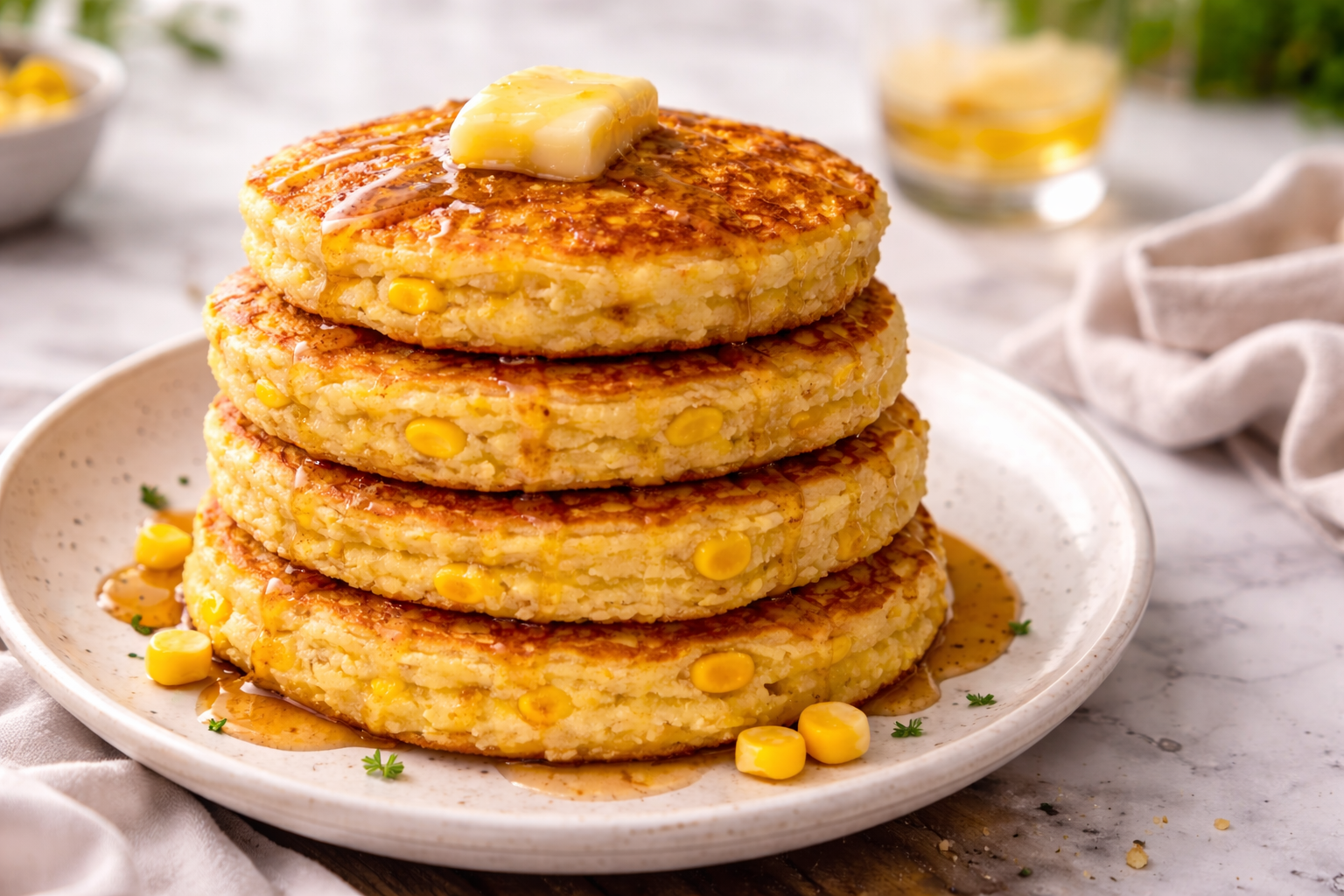
Corn Cake Recipe The humble corn cake often suffers from a bit of an identity crisis. Too often, they emerge from the pan as heavy, leaden pucks that sit in the stomach like a stone, or they crumble into a sandy mess the moment your fork makes contact. Finding that elusive balance—a crisp, golden-laced exterior and a moist, tender crumb that actually tastes of fresh corn—is a challenge that has frustrated many a home cook.
If you’ve ever served a batch of corn cakes only to find them dry enough to require a gallon of water, or so oily they lost their structural integrity, you aren’t alone. Achieving the perfect texture isn’t about luck; it’s about managing moisture and understanding how cornmeal behaves when it meets heat.
This recipe is designed to solve those structural woes while elevating the flavor from “side dish afterthought” to the star of the plate.
Why This Recipe Works
Great corn cakes rely on a specific interplay of chemistry and temperature. Here is why this particular method stands above the rest:
- The Hybrid Flour Approach: By using a specific ratio of fine cornmeal to all-purpose flour, we achieve a “structural soft-focus.” The flour provides the gluten network needed to hold the cake together, while the cornmeal delivers the signature crunch and grit.
- The Buttermilk Secret: Beyond flavor, buttermilk is acidic. When it hits the leavening agents, it creates an immediate carbon dioxide reaction, resulting in a loftier, airier cake. It also helps tenderize the cornmeal granules.
- A “Booster” of Freshness: We aren’t just using dry meal. The inclusion of whole corn kernels—fresh or frozen—provides bursts of sweetness and moisture that prevent the cake from feeling monolithic.
- Temperature Control: We utilize a medium-high sear followed by a brief rest. This ensures the natural sugars in the corn caramelize (the Maillard reaction) without drying out the interior.
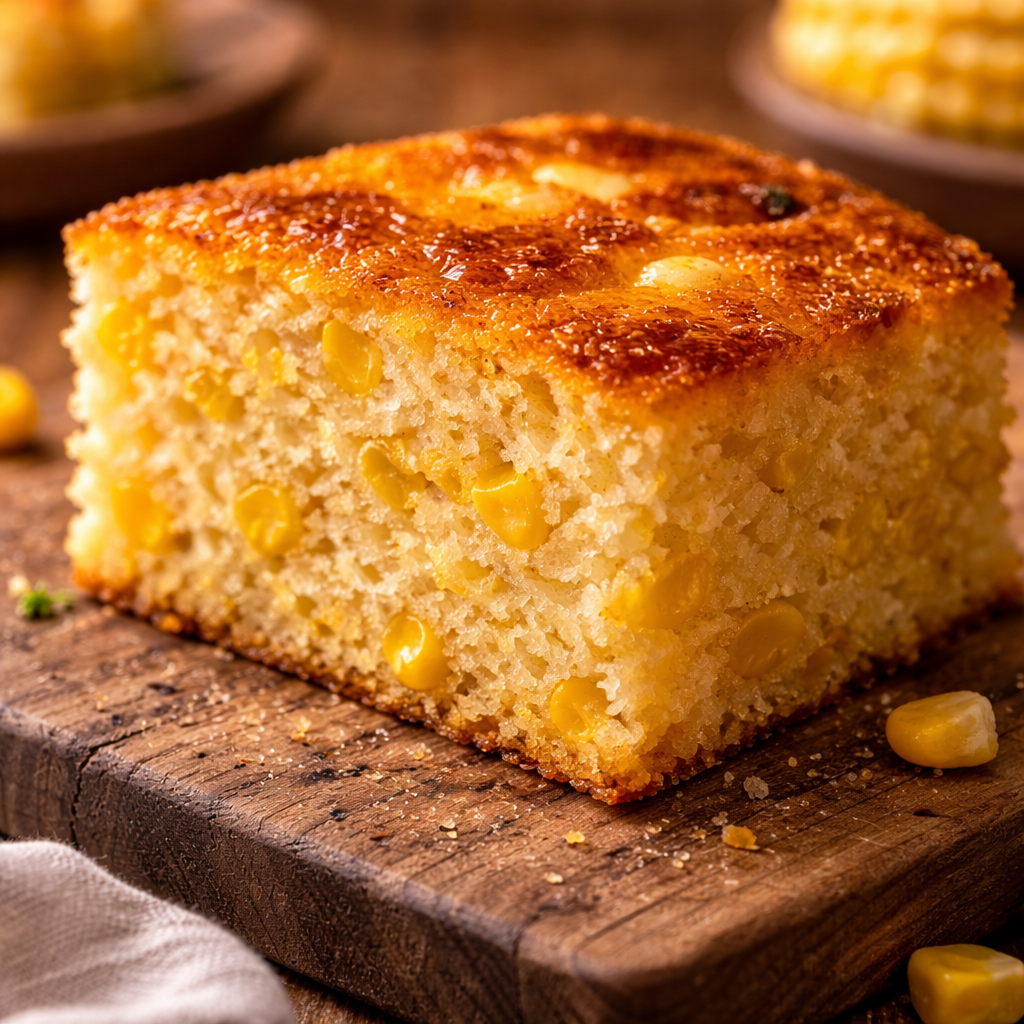
Ingredients & Measurements
Precision matters, particularly with cornmeal, which can vary wildly in how much liquid it absorbs based on the coarseness of the grind.
The Dry Base
- Yellow Cornmeal (Stone-ground is best): 1 ½ cups (approx. 240g)
- All-Purpose Flour: ½ cup (approx. 65g)
- Granulated Sugar: 2 tablespoons (to encourage browning, not to make it a dessert)
- Baking Powder: 1 ½ teaspoons
- Baking Soda: ½ teaspoon
- Fine Sea Salt: 1 teaspoon
The Wet Components
- Buttermilk (Full-fat preferred): 1 ¼ cups
- Eggs: 2 large, room temperature
- Unsalted Butter: 4 tablespoons, melted and slightly cooled
- Fresh Corn Kernels: 1 cup (from about 2 ears, or thawed frozen corn)
- Scallions: 3 stalks, finely minced (white and light green parts)
For the Pan
- Neutral Oil or Ghee: 3–4 tablespoons (Grape-seed or avocado oil works beautifully due to their high smoke points).
Step-by-Step Cooking Guide
1. Prep the Corn and Aromatics
If you are using fresh corn, shuck the ears and remove the silk. Use a sharp chef’s knife to shear the kernels off the cob. A pro tip: place a small bowl upside down inside a larger bowl; rest the cob on the small bowl and cut downward. The large bowl catches all the flying kernels and the “milk” from the cob, which adds incredible flavor.
2. Whisk the Dry Foundation
In a large mixing bowl, whisk together your cornmeal, flour, sugar, baking powder, baking soda, and salt. Whisking isn’t just about mixing; it aerates the flour and breaks up any clumps of leavening agents. You want a uniform, sandy texture.
3. Emulsify the Wet Ingredients
In a separate medium bowl, beat the eggs until the yolks and whites are fully integrated. Whisk in the buttermilk and the melted butter.
Note: Ensure your buttermilk isn’t ice-cold from the fridge. If it is, the melted butter will seize into tiny clumps. Room temperature is your friend here.
4. The Marriage (The Fold)
Make a well in the center of the dry ingredients. Pour the wet mixture into the center. Using a rubber spatula, fold the ingredients together until just combined. Stop while you still see a few streaks of flour.
Now, fold in the corn kernels and minced scallions. Over-mixing at this stage develops too much gluten, which is the primary cause of “rubbery” corn cakes. The batter should be thick but pourable—think of a chunky pancake batter.
5. The Rest (Crucial Step)
Let the batter sit for at least 10 minutes. The Science: During this time, the cornmeal granules begin to hydrate. They soak up the buttermilk, softening their edges. If you skip this, your cakes may have a “sandy” or gritty mouthfeel.
6. The Sear
Heat a heavy-bottomed skillet (cast iron is king here) over medium heat. Add enough oil to thinly coat the bottom. You’re looking for a shimmer on the oil’s surface.
Drop about ¼ cup of batter for each cake. Don’t crowd the pan; if you put too many in, the temperature of the pan drops, and instead of searing, the cakes will soak up the oil and become greasy.
7. The Flip
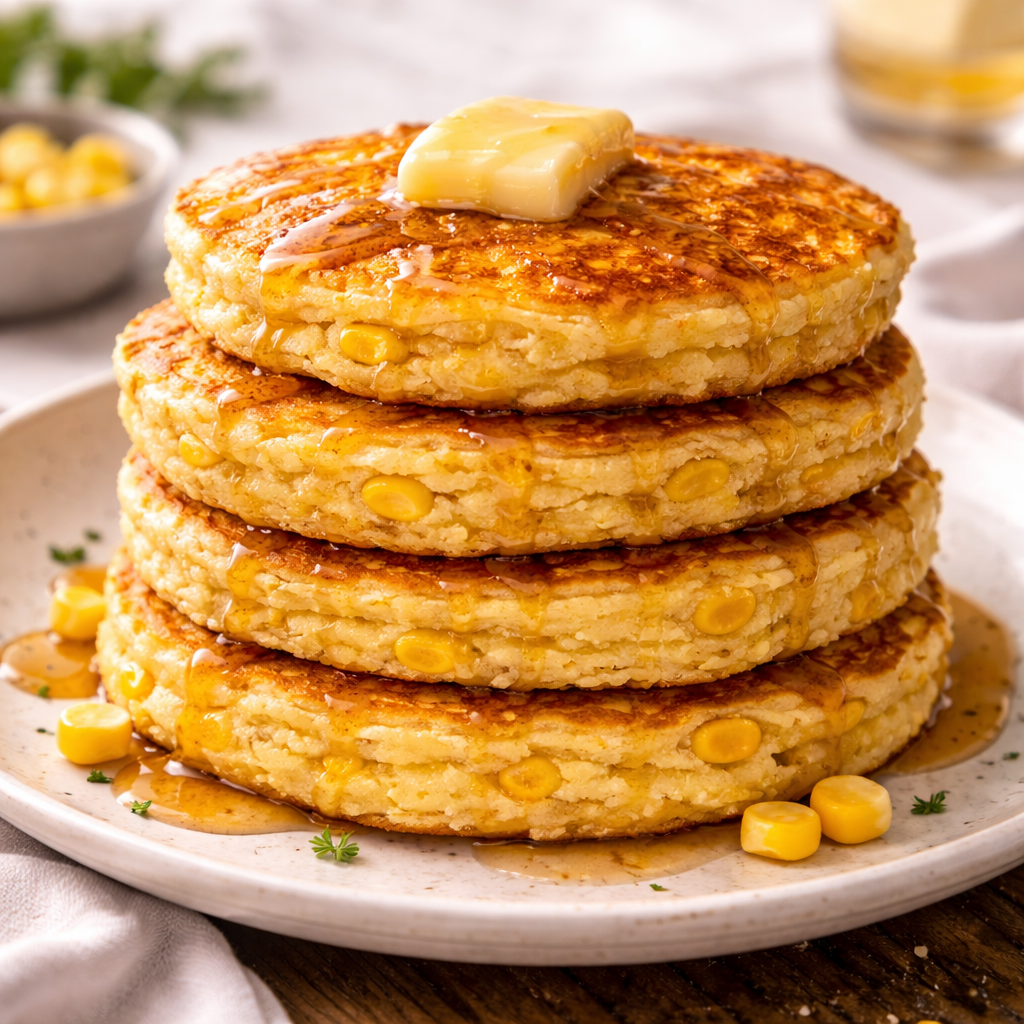
Cook for 2–3 minutes on the first side. Look for bubbles forming on the surface and the edges beginning to look set and matte. Flip carefully. The underside should be a deep, golden brown. Cook for another 2 minutes on the second side.
Common Mistakes to Avoid
- Using Too Much Oil: You want to pan-fry, not deep-fry. If the cakes are submerged, the exterior becomes soggy rather than crisp.
- The “Press-Down” Habit: Never press down on the cakes with your spatula after flipping. This squeezes out the air pockets you worked so hard to create, resulting in a dense, heavy texture.
- Cold Eggs and Dairy: Cold ingredients inhibit the chemical reaction of the baking powder. Take them out of the fridge 30 minutes before you start.
- Ignoring the Smoke Point: Using butter alone for frying often leads to burnt bits because butter’s milk solids burn at low temperatures. Use a neutral oil or a mix of oil and butter for flavor without the scorch.
Timing & Doneness Indicators
Knowing exactly when a corn cake is done requires a bit of sensory observation:
Serving Suggestions
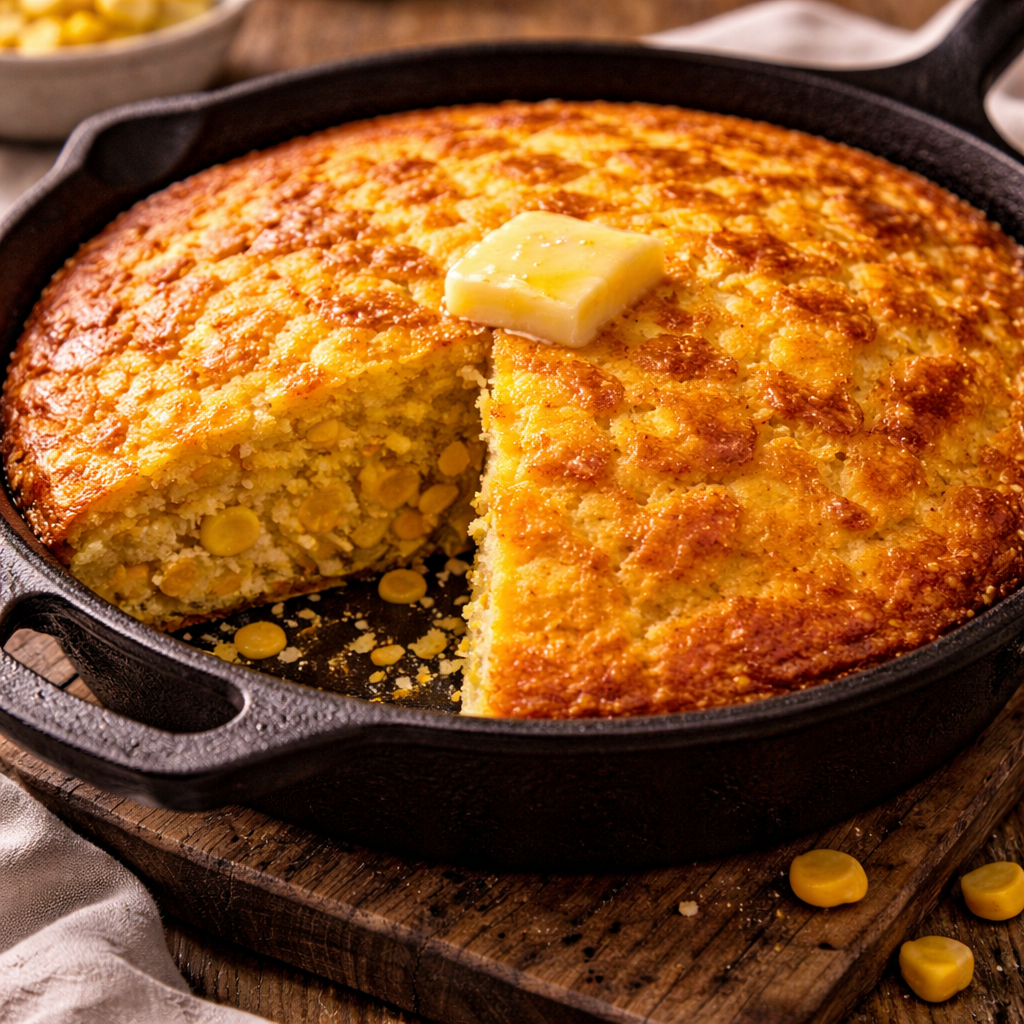
Corn cakes are incredibly versatile, acting as a canvas for both savory and sweet profiles.
- The Classic Savory: Top with a dollop of sour cream, a sprinkle of chives, and perhaps a slice of smoked salmon or crispy bacon.
- The Southern Style: Serve warm with a drizzle of honey-butter or spicy hot honey.
- The Tex-Mex Twist: Top with smashed avocado, pickled red onions, and a squeeze of lime.
- As a Base: Use them instead of English muffins for a “Southwestern Eggs Benedict.”
FAQ
Why are my corn cakes falling apart in the pan? This usually happens because the batter is too thin or wasn’t allowed to rest. If the batter seems watery, whisk in an extra tablespoon of flour. Ensure the pan is hot before adding the batter; the initial “shock” of heat helps the proteins set immediately, holding the cake together.
Can I use canned corn instead of fresh? Yes, but you must drain and pat it dry thoroughly. Excess liquid from the can will throw off the hydration levels of the batter, leading to a mushy interior.
Can I make these gluten-free? You can substitute the all-purpose flour with a 1:1 gluten-free baking blend. However, avoid using only cornmeal, as the cakes will be extremely fragile and likely crumble when flipped.
How do I reheat leftovers without them getting soggy? Avoid the microwave. Instead, place them in a toaster oven or a dry skillet over medium heat for 2 minutes per side. This restores the exterior crunch that the fridge tends to soften.
Classic Bacardi Rum Cake Recipe