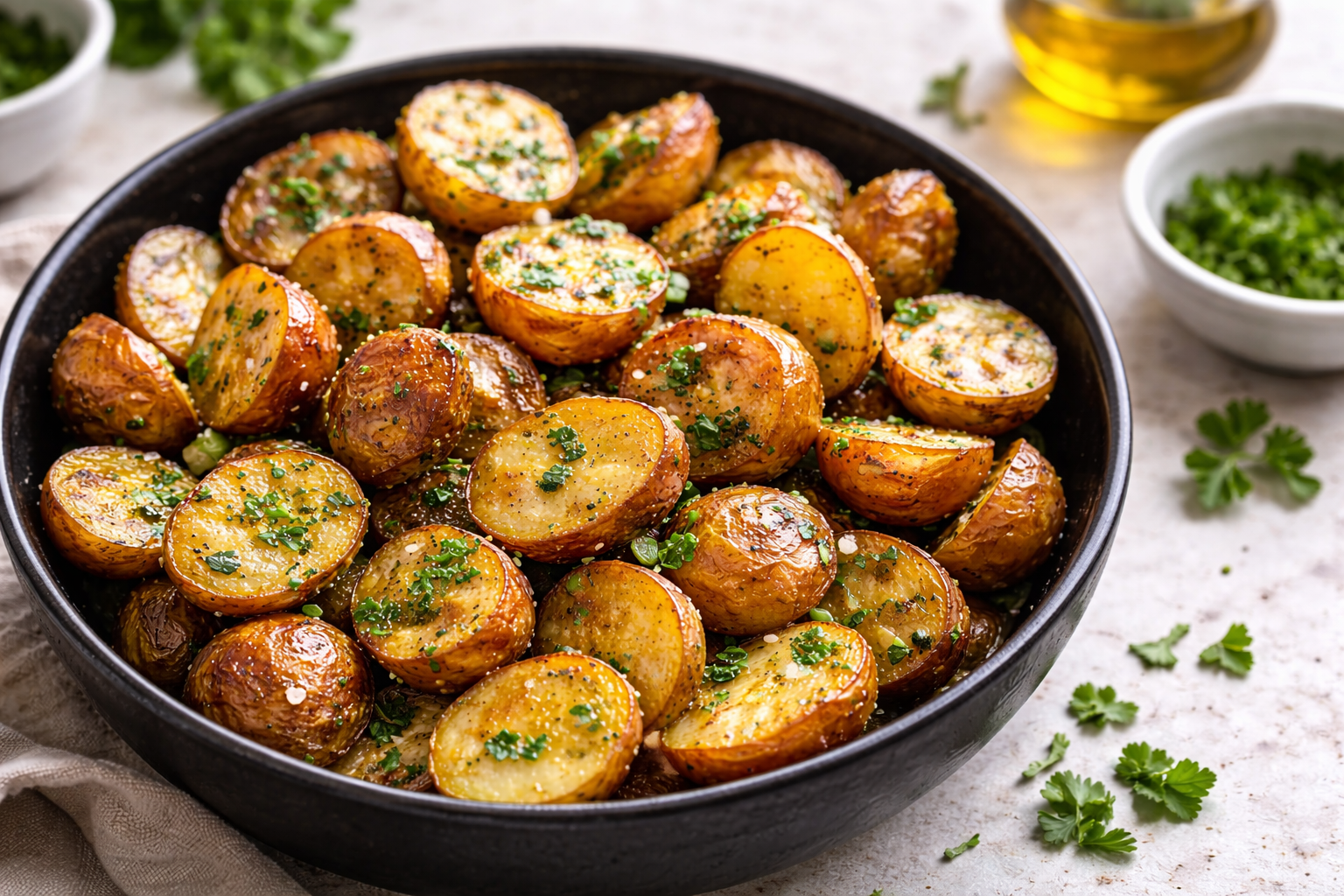
Healthy Potato RecipesThe humble potato often finds itself unfairly maligned in the “healthy eating” discourse, frequently dismissed as nothing more than a starch bomb. But as any seasoned cook will tell you, the potato is a nutritional powerhouse—low in fat, high in potassium, and remarkably satiating—provided you don’t drown it in a sea of heavy cream or submerge it in a deep fryer.
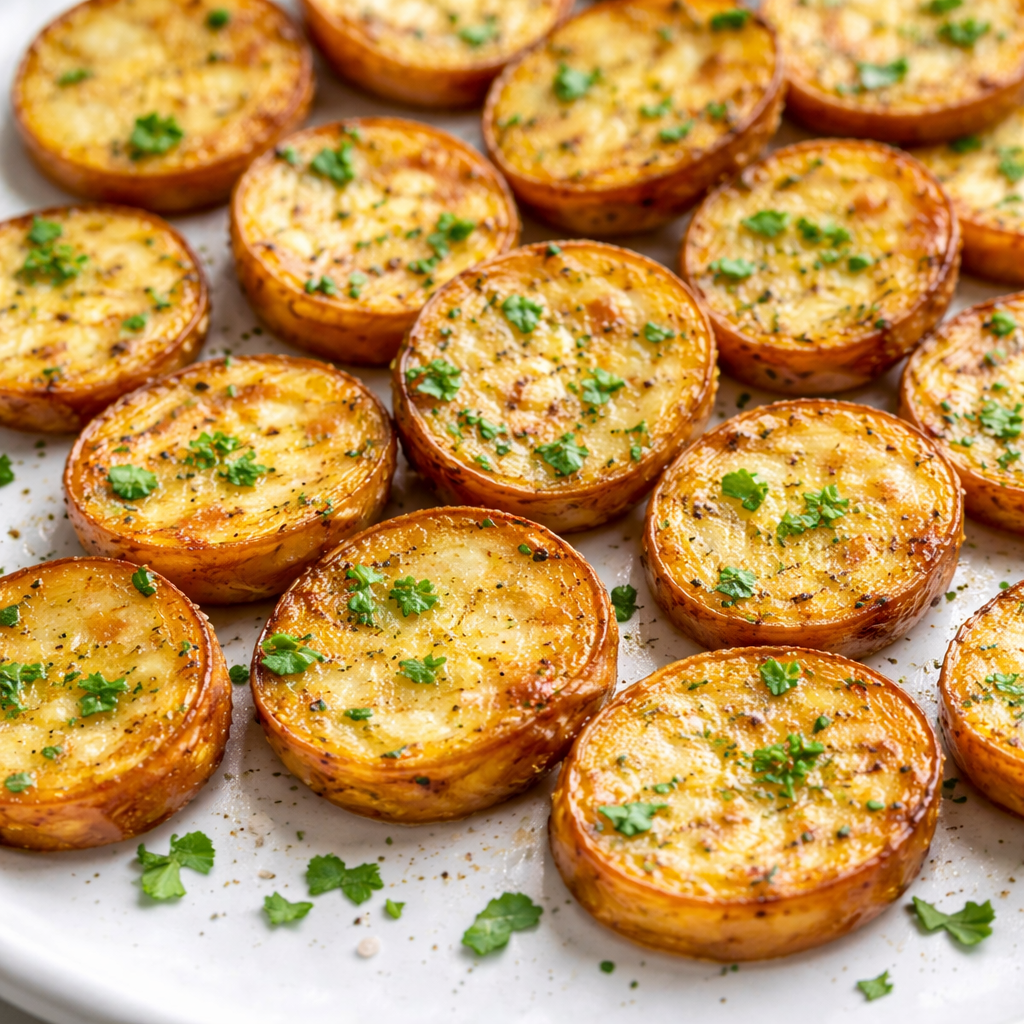
The secret to a healthy potato dish isn’t about restriction; it’s about technique. It’s about leveraging the vegetable’s natural chemistry to create textures that feel indulgent without the caloric heavy lifting. In this guide, we are going to master the Mediterranean-Style Crispy Smashed Potato. This isn’t a fry, nor is it a traditional roast. It is a dual-temperature method that maximizes the surface area for the Maillard reaction (that golden, savory crust) while maintaining a creamy, nutrient-dense center.
Ingredient Breakdown: The Nutritional Architecture
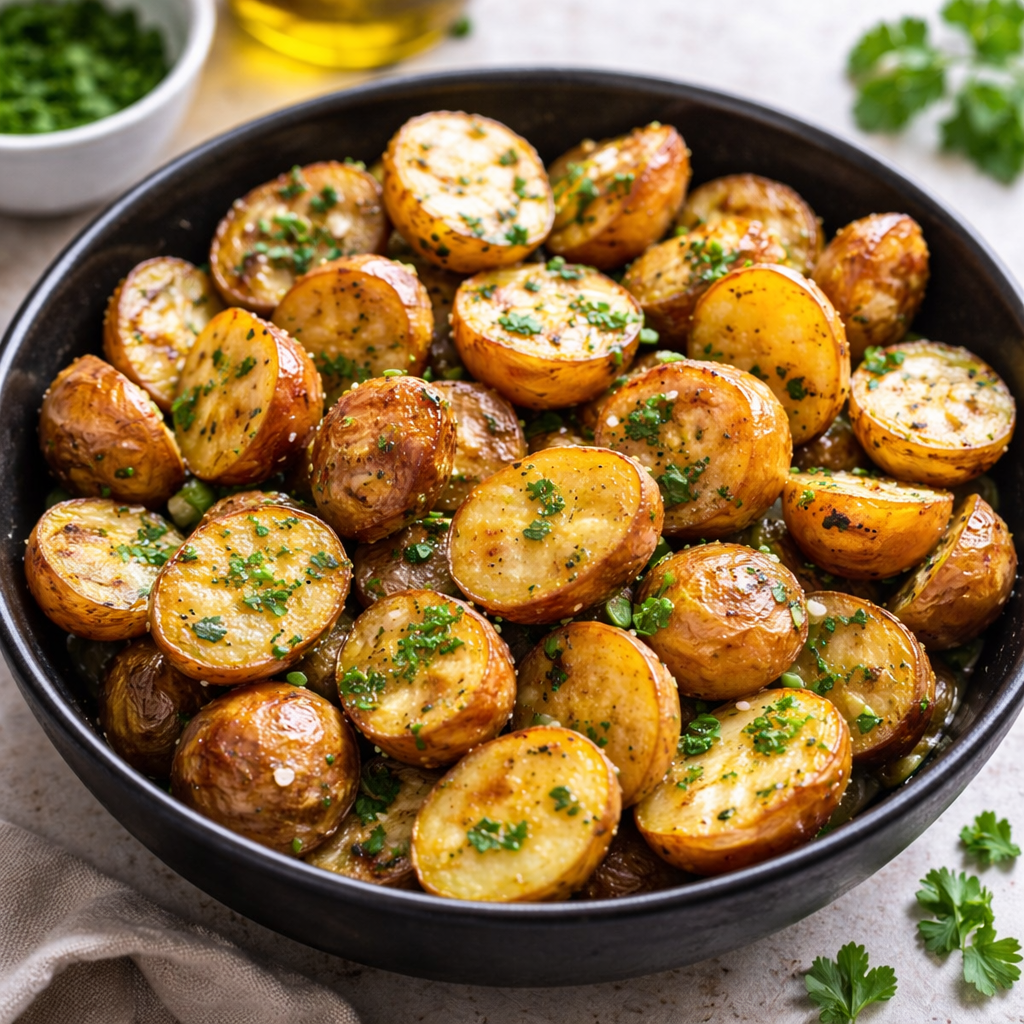
To keep a potato dish healthy while maintaining professional standards, every ingredient must serve a dual purpose: flavor and function.
- The Potato (Yukon Gold or New Potatoes): For a healthy preparation, we want the skin left on. The skin contains the majority of the fiber and iron. Yukon Golds are the “chef’s choice” here because their flesh is naturally “buttery” due to a specific starch-to-sugar ratio. This allows us to use significantly less added fat while still achieving a rich mouthfeel.
- Extra Virgin Olive Oil (EVOO): We are swapping butter for high-quality EVOO. Not only does this provide heart-healthy monounsaturated fats, but olive oil has a distinct peppery finish that cuts through the earthiness of the starch.
- The Aromatics (Fresh Garlic and Rosemary): We avoid “garlic powder” in favor of fresh cloves smashed with the side of a knife. The sulfur compounds in fresh garlic become sweet and mellow when roasted, providing a depth of flavor that means you won’t need to overcompensate with salt.
- The Acid (Lemon Zest or Sumac): This is the “secret” of healthy cooking. When a dish feels like it’s “missing something,” most people reach for the salt shaker. Usually, what it actually needs is acid. A final grating of lemon zest wakes up the starch and provides a bright, high-note contrast to the roasted flavors.
- Kosher Salt and Coarse Black Pepper: Use a coarse salt. Because the crystals are larger, they sit on the surface of the food, giving you a more immediate “salty” hit on the tongue while allowing you to use less total sodium overall.
Preparation Strategy: The Par-Boil and Steam Dry
The biggest mistake home cooks make with healthy roasting is putting raw potatoes straight into the oven. This requires a massive amount of oil to prevent the exterior from drying out before the interior is cooked.
The Light Cooking Science: By par-boiling the potatoes in heavily salted water first, we gelatinize the surface starches. When we drain them, we let them “steam dry” in the colander for five minutes. This step is critical. Removing the surface moisture allows the olive oil to coat the potato effectively rather than sliding off. As the water evaporates, it leaves behind a rough, starchy “slurry” on the skin that, once roasted, turns into a micro-thin, shatteringly crisp crust.
Cooking Instructions: The Smashed & Seared Method
This recipe yields a potato that is fluffy on the inside and crisp on the outside, using only a fraction of the oil used in traditional roasting.
1. The Initial Softening
Place your potatoes (whole and unpeeled) in a large pot of cold water. Add a generous tablespoon of salt. Bring to a boil, then reduce to a simmer. Cook for 15–20 minutes, or until a paring knife slides in with just a tiny bit of resistance. You aren’t making mashed potatoes; you want them “al dente.”
2. The Steam Dry
Drain the potatoes and let them sit in the colander for 5 minutes. You will see steam rising—this is good. This is the moisture leaving the surface, which is the key to crispiness.
3. The Smash
Preheat your oven to 425°F (220°C). Lightly coat a large baking sheet with olive oil. Place the potatoes on the sheet and, using the bottom of a heavy glass or a potato masher, gently press down until they are about $1/2$ inch thick. You want the edges to crinkle and break—those jagged edges are where the texture happens.
4. The Infusion
In a small bowl, whisk together 3 tablespoons of olive oil, 3 cloves of minced garlic, and 1 tablespoon of chopped fresh rosemary. Drizzle this evenly over the smashed potatoes. Flip them once to ensure the bottom is also coated.
5. The High-Heat Roast
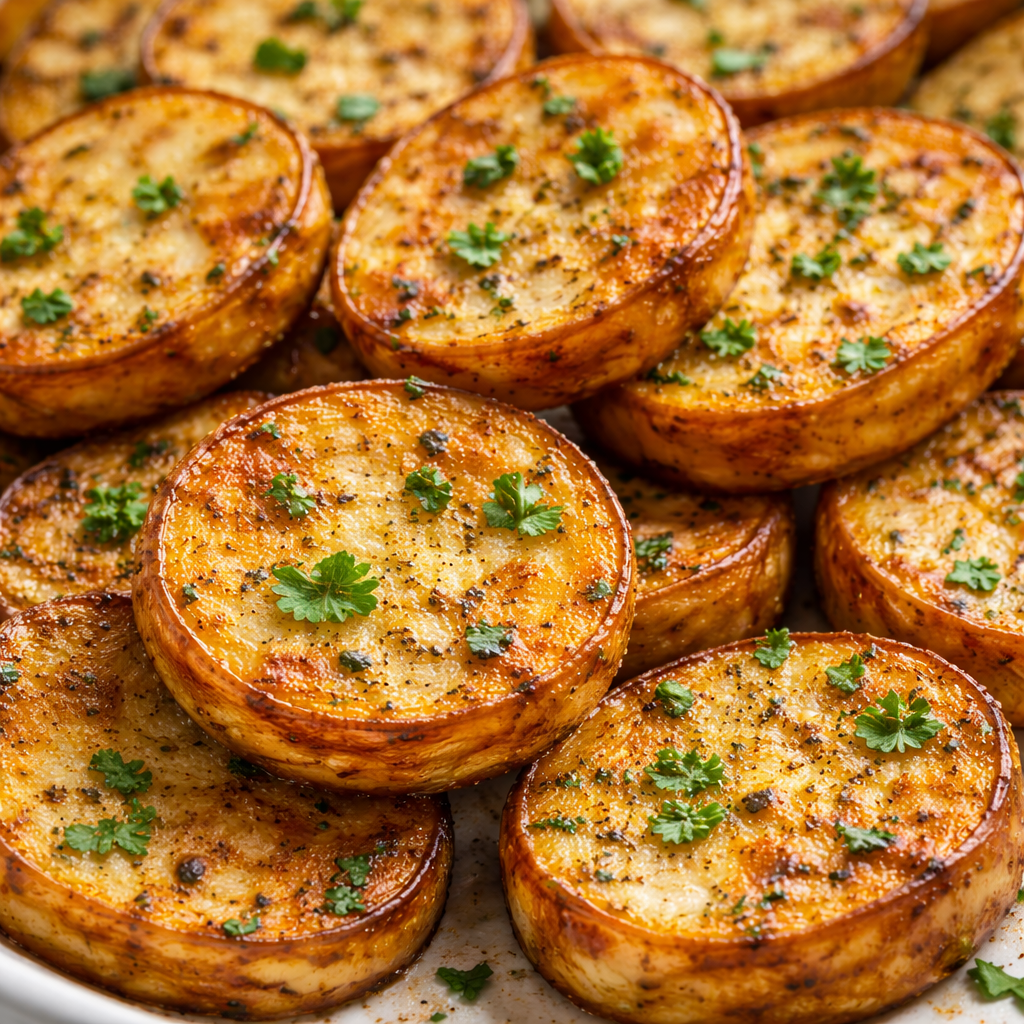
Roast for 25–30 minutes. Do not touch them for the first 20 minutes. You want the bottom to develop a deep golden crust. Flip them only once during the last 5–10 minutes to crisp the tops.
6. The Bright Finish
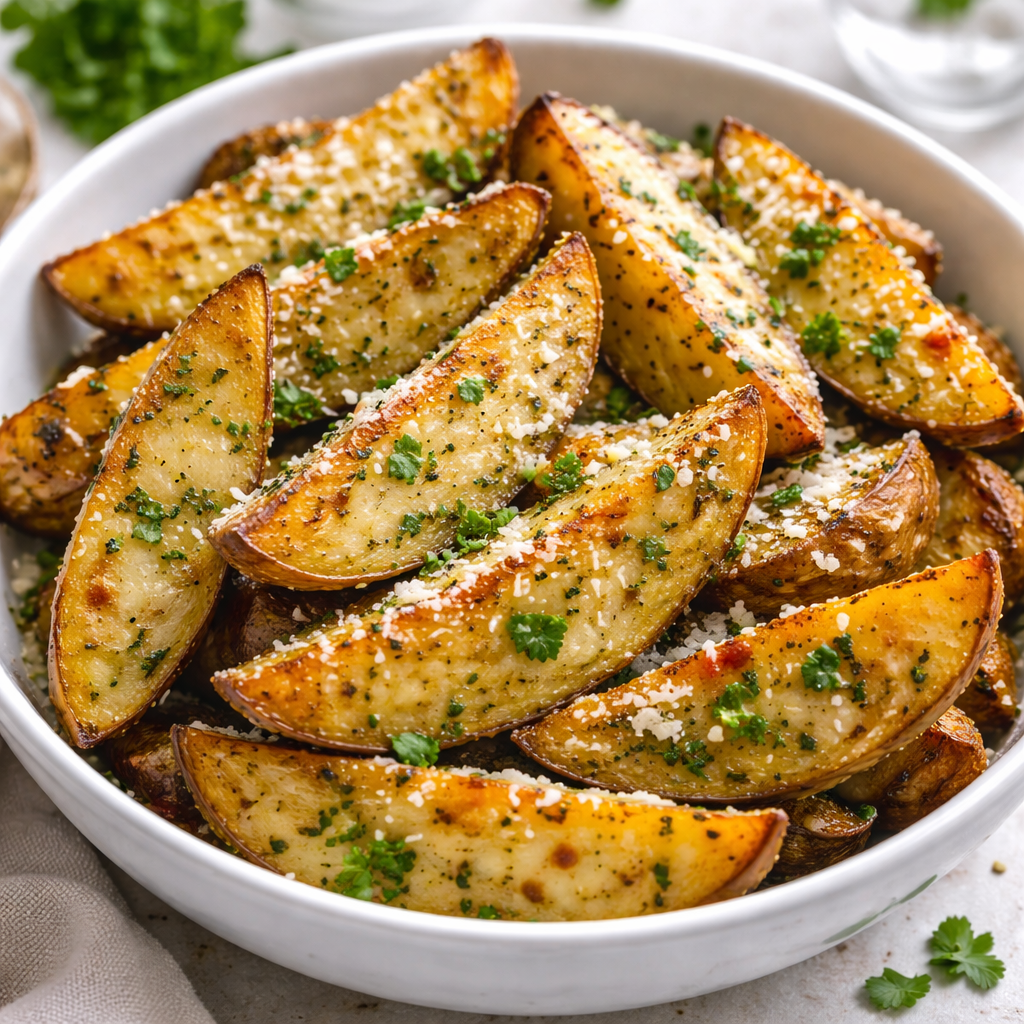
Remove from the oven and immediately hit them with a fresh grating of lemon zest and a pinch of flaky sea salt.
Flavor & Texture Indicators
How do you know you’ve nailed it?
- The Sound: When you move them with a spatula, they should sound like dry leaves—light, rustling, and crisp.
- The Color: Look for “G-B-D” (Golden Brown and Delicious). The edges should be a dark amber, while the centers remain a creamy, pale yellow.
- The Bite: The first sensation should be a sharp crunch, followed immediately by a texture that is nearly as soft as a cloud. If the center feels “waxy” or hard, they were under-boiled.
Adjustments for Different Skill Levels
- The Novice: If you find the “smashing” process makes the potatoes fall apart too much, don’t worry. Simply cut them in half and roast them flat-side down. You still get the crispness of the contact point without the structural risk.
- The Intermediate: Focus on the Dipping Sauce. Instead of ketchup, whisk together plain Greek yogurt, a squeeze of lemon, and some fresh dill. This adds protein and probiotics while mimicking the cooling effect of sour cream.
- The Advanced: Master the Pre-Heated Pan. Place your oiled baking sheet in the oven while it preheats. When you place the boiled, dried potatoes onto the screaming-hot pan, you get an instant sear that locks in the shape and jumpstarts the crisping process.
Storage & Shelf Life
Potatoes are best enjoyed immediately, but they are one of the few starches that can be revived if you know the trick.
- Fridge: Keep in an airtight container for up to 4 days.
- The Reheating Secret: Never, under any circumstances, microwave roasted potatoes. The microwave vibrates the water molecules, making the starch gummy and the skin leathery. Instead, use a dry skillet over medium heat or an air fryer at 380°F for 4 minutes. This will re-emulsify the oil and restore the crunch.
- Freezing: You can freeze the par-boiled potatoes. In fact, freezing them actually breaks down the cell walls further, which can lead to even crispier results when you eventually thaw and roast them.
Reader Questions
“Can I use Sweet Potatoes instead?”
Yes, but the science changes slightly. Sweet potatoes have more sugar and less starch, meaning they burn faster. Lower your oven temperature to 400°F and keep a closer eye on them. They won’t get quite as “shatter-crisp” as a Yukon Gold, but they will be delicious.
“Is it really healthy if I’m using oil?”
Health is about the quality of the fat. Three tablespoons of heart-healthy olive oil spread across four servings of fiber-rich potatoes is a nutritionally sound choice. We aren’t deep-frying; we are using the oil as a heat conductor.
“Why do my potatoes stick to the pan?”
Two culprits: either you didn’t let them steam-dry enough (moisture causes sticking), or you tried to flip them too early. The potato will “release” itself from the pan once the crust has fully formed. If it’s sticking, it’s telling you it needs five more minutes.