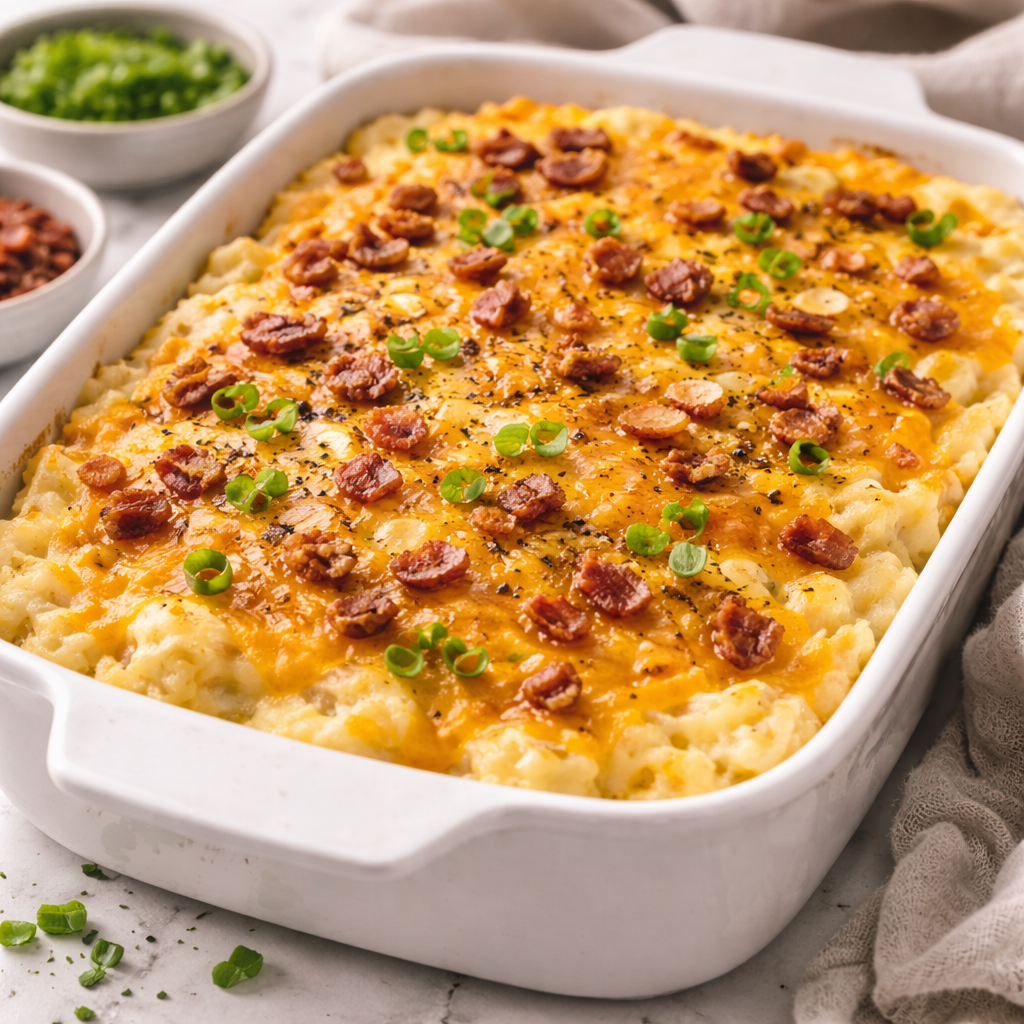
There is something profoundly soul-warming about a big bowl of mashed potatoes. It’s the ultimate culinary hug. But when you take that smooth, buttery foundation and upgrade it with smoky bacon, sharp cheddar, and fresh chives, you aren’t just making a side dish—you’re creating a masterpiece. This Loaded Mashed Potatoes Recipe is the version I turn to when I want to impress a crowd or simply treat my family to the ultimate comfort food.
I’ve spent years tweaking this recipe, experimenting with different potato varieties and fat ratios, all to find that perfect balance between “fluffy” and “decadent.” Whether it’s Thanksgiving dinner or a casual Sunday roast, these potatoes always end up being the star of the show. Forget the watery, bland mash of school cafeterias; we’re diving into a world of texture, flavor, and pure indulgence.

Why This Recipe Works
What makes this specific Loaded Mashed Potatoes Recipe stand out in a sea of side dishes? It comes down to science and soul.
- The Potato Choice: By using Yukon Golds, we get a naturally buttery flavor and a creamy texture that doesn’t turn gluey as easily as Russets.
- The Layered Flavor: We don’t just throw toppings on at the end. We fold the “loaded” elements into the warm mash, allowing the cheese to melt into the crevices and the bacon drippings to season the fluff.
- The Dairy Ratio: We use a mix of heavy cream and sour cream. The cream provides richness, while the sour cream adds a necessary tang that cuts through the heavy starch.
- Steam Drying: A crucial step often missed is letting the potatoes steam-dry after boiling. This ensures they soak up the butter rather than excess water.
What You Need
To execute the perfect Loaded Mashed Potatoes Recipe, quality ingredients are non-negotiable. Here is your grocery list:
- Potatoes: 3 lbs of Yukon Gold potatoes. They have the best wax-to-starch ratio for a “loaded” style.
- Butter: 1/2 cup (one stick) of unsalted grass-fed butter.
- Heavy Cream: 1/2 cup, warmed. Cold cream can shock the starch and make it gummy.
- Sour Cream: 1/2 cup for that signature “loaded” tang.
- Bacon: 6–8 slices of thick-cut bacon, fried until crispy and crumbled.
- Cheese: 1 1/2 cups of freshly shredded sharp cheddar. (Avoid the pre-shredded bags; the anti-clumping wood pulp prevents a smooth melt).
- Garlic: 3 cloves, minced and sautéed (or roasted for a mellower flavor).
- Green Onions or Chives: 1/3 cup, finely sliced.
- Salt and Pepper: To taste. Don’t be shy with the salt—potatoes need it!
How to Make This Recipe
Follow these steps closely to ensure your Loaded Mashed Potatoes Recipe turns out light, fluffy, and packed with flavor.
- Prep the Potatoes: Peel the potatoes and cut them into uniform 2-inch chunks. Consistency is key so they all finish cooking at the same time.
- Boil: Place potatoes in a large pot and cover with cold water by at least an inch. Add a generous tablespoon of salt. Bring to a boil, then reduce to a simmer for 15–20 minutes until fork-tender.
- The Steam Dry: Drain the potatoes in a colander, then return them to the hot, empty pot. Let them sit over the lowest possible heat for 2 minutes, shaking gently. This evaporates excess moisture.
- The Mash: Use a potato ricer or a hand masher. For the smoothest results, a ricer is your best friend. Add the butter first and mash it in—this coats the starch molecules.
- Incorporate the Liquid: Gradually pour in the warm heavy cream and the sour cream. Fold gently with a spatula.
- Load It Up: While the potatoes are still steaming hot, fold in 1 cup of the cheese, half the bacon, and the sautéed garlic.
- Final Touch: Top with the remaining cheese, bacon, and green onions just before serving.

Quick Marinade Tips
You might wonder why a Loaded Mashed Potatoes Recipe needs “marinade” tips. While we aren’t marinating the potatoes themselves, we are marinating the add-ins.
If you want to take the flavor to the next level, try “marinating” your green onions or chives in a tablespoon of olive oil and a pinch of salt for 30 minutes before serving. This softens their bite and infuses the oil with an onion aroma that ripples through the mash.
Additionally, if you are using leftover steak or chicken as a topping, marinate those proteins in a balsamic-garlic blend before searing to ensure every “loaded” bite has a punch of acidity.
Making Creamy Brothy Rice
In the world of professional meal prep and catering, we often serve a variety of starches. If you find yourself wanting a lighter alternative to the Loaded Mashed Potatoes Recipe, you can apply the “loaded” logic to a creamy brothy rice.
To make a side that complements these potatoes:
- Sauté arborio rice in butter and garlic.
- Slowly add warm chicken broth, stirring frequently to release the starches.
- Finish with a splash of heavy cream and some of the bacon bits you prepped for the potatoes. This creates a “Risotto-lite” texture that feels just as indulgent as the mash but offers a different mouthfeel for your guests.
Best Toppings to Try
Standard cheddar and bacon are great, but a Loaded Mashed Potatoes Recipe can be a canvas for your creativity. Try these variations:
- The “Texas” Style: Add pickled jalapeños and a dollop of smoky BBQ sauce.
- The “Lux” Style: Use white truffle oil, gruyère cheese, and crispy shallots.
- The “Broccoli Cheddar”: Fold in finely chopped steamed broccoli florets for a bit of color and nutrition.
- The “Caramelized”: Deeply browned onions and roasted garlic cloves provide a sweetness that pairs beautifully with the salty bacon.
Smart Ingredient Swaps
I believe a Loaded Mashed Potatoes Recipe should be accessible to everyone, regardless of dietary needs.
- Lighter Version: Swap heavy cream for whole milk and use Greek yogurt instead of sour cream. It maintains the tang but lowers the fat content.
- Dairy-Free: Use a high-quality vegan butter (like Miyoko’s) and full-fat canned coconut milk. For the cheese, nutritional yeast provides a surprisingly “cheesy” depth.
- Low Carb: Replace half the potatoes with steamed cauliflower. When mashed together, the potatoes provide the structure, and the cauliflower lightens the load significantly.
- The Spud Swap: Use Red Bliss potatoes with the skins left on for a rustic, “smash” style texture.
Perfect for Meal Prep
One of the best things about this Loaded Mashed Potatoes Recipe is that it actually reheats beautifully if done correctly.
- Storage: Store in an airtight container for up to 4 days.
- Freezing: Believe it or not, because of the high fat content (butter and cream), these potatoes freeze well. Place them in a freezer bag, flatten it out, and freeze for up to 2 months.
- Reheating: Avoid the microwave if possible, as it can make the dairy separate. Instead, place them in a baking dish, add a splash of milk, cover with foil, and warm in a 350°F oven until steaming. Stir well to re-emulsify the fats.
How to Serve It
Serving a Loaded Mashed Potatoes Recipe is all about the “wow” factor.
I like to serve mine in a large, shallow ceramic bowl rather than a deep pot. This creates more surface area for the toppings! Make a few “swirls” on top with the back of a spoon to create little wells that can hold melted butter or gravy.
This dish pairs perfectly with:
- Grilled Ribeye Steak: The acidity in the sour cream cuts through the steak’s fat.
- Roasted Chicken: Use the pan drippings to make a quick gravy to pour over the loaded mash.
- Holiday Ham: The sweetness of a glazed ham is the perfect foil for sharp cheddar and bacon.
Common Mistakes to Avoid
To ensure your Loaded Mashed Potatoes Recipe is flawless, watch out for these common errors:
- Over-Processing: Never, ever put potatoes in a food processor or blender. The high-speed blades tear the starch granules, turning your beautiful mash into literal glue. Stick to a masher or ricer.
- Cold Add-ins: Adding cold butter or cold cream will lower the temperature of the dish too quickly and prevent the ingredients from bonding. Always warm your liquids.
- Under-Salting the Water: You have to season the potato from the inside out. If the water isn’t salty, the potato will taste flat, no matter how much salt you add at the end.
- Draining Poorly: If your potatoes are sitting in a puddle of water, your mash will be thin and soupy. Always do the “steam dry” step!
Simple Scalloped Potatoes Recipe