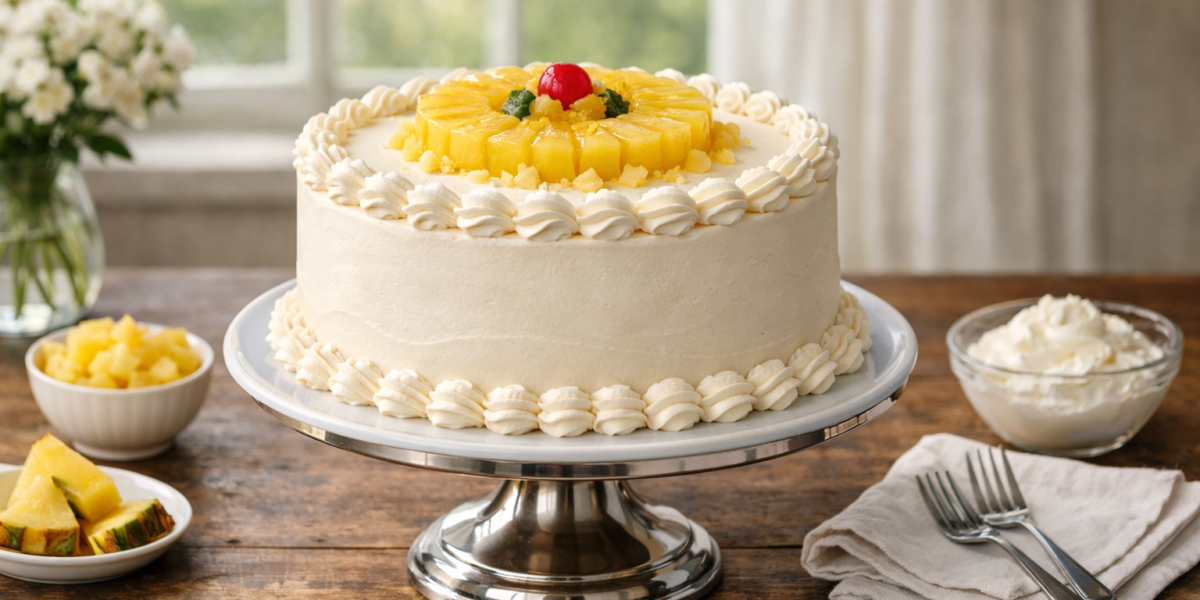
Pineapple Cake Recipe The pineapple upside-down cake is a study in thermal caramelization and moisture management. While often relegated to the realm of nostalgic kitsch, a professionally executed version serves as a masterclass in the interaction between fruit sugars, fats, and leavening agents. This guide moves beyond the simplistic “box-mix” approach, focusing instead on a scratch-built crumb engineered to support the weight of caramelized fruit without succumbing to sogginess.
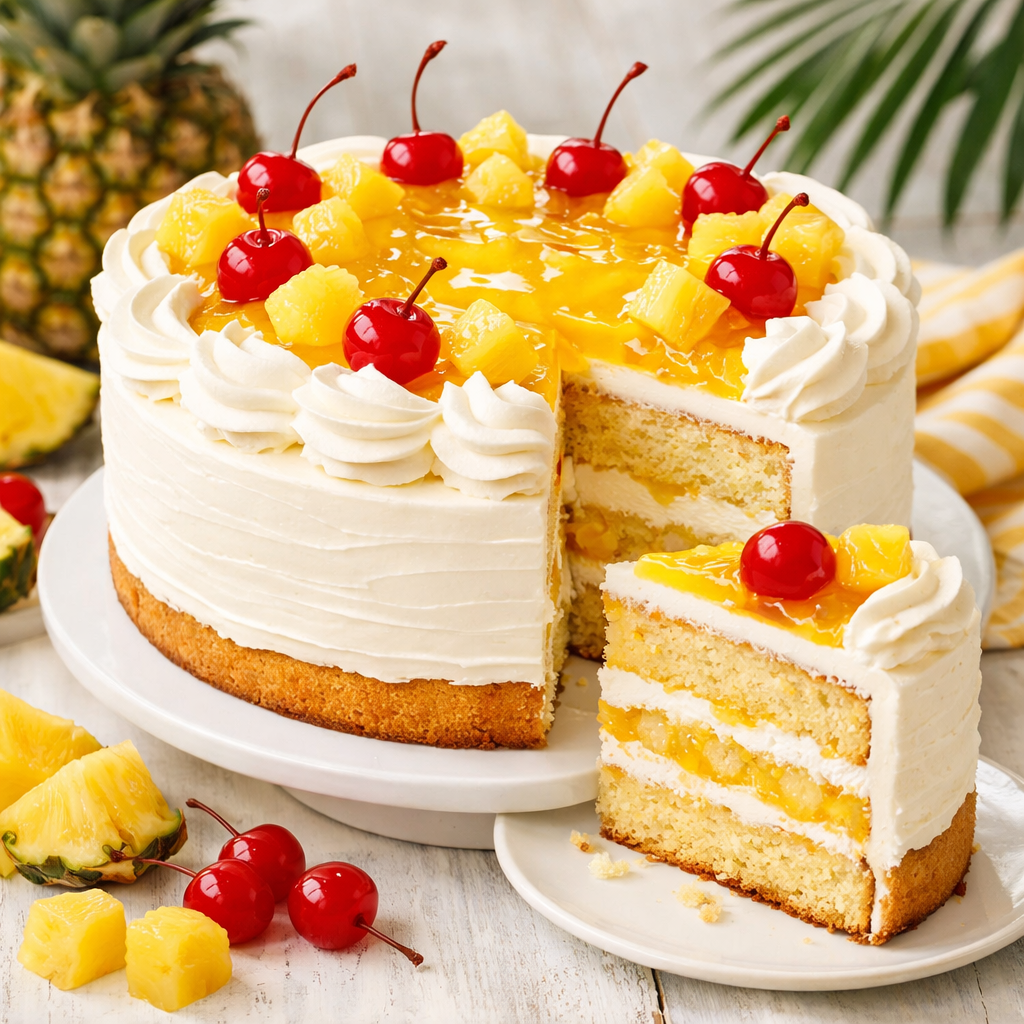
Recipe Overview
This recipe utilizes a reverse-creaming method for the sponge to ensure a tight, velvet-like crumb that resists the migration of fruit juices. The topping—which becomes the “top” only after a precise inversion—relies on a dark brown sugar and butter emulsification that undergoes a secondary caramelization process during the bake.
- Yield: One 9-inch round cake (High-sided)
- Active Prep: 30 minutes
- Bake Time: 45–55 minutes
- Resting Period: 10 minutes (Critical for structural integrity)
Flavor Profile Analysis
The organoleptic experience of this cake is defined by contrast.
- Top Layer (Caramelized Fruit): The primary note is the concentrated acidity of the pineapple, tempered by the deep, molasses-driven sweetness of dark brown sugar. When subjected to the $175°C$ environment, the pineapple’s natural bromelain and sugars undergo the Maillard reaction, resulting in a jam-like consistency.
- The Crumb (The Sponge): To prevent flavor fatigue from the sugar-heavy topping, the sponge is infused with a high concentration of vanilla bean and a significant pinch of kosher salt. This provides a savory counterpoint that cleanses the palate.
- Aromatic Finish: A subtle addition of ground ginger or cardamom within the dry ingredients adds a “back-of-the-throat” warmth that bridges the gap between the tropical fruit and the buttery cake.
Ingredient Ratios Explained
In pastry arts, ratios are the difference between a sponge and a brick. This recipe adheres to a modified 1:1:1:1 ratio (flour, sugar, butter, eggs by weight) but adjusts for the additional liquid introduced by the fruit.
- Protein Content: We utilize Cake Flour (approx. 7–8% protein) rather than All-Purpose. The lower protein count ensures minimal gluten development, resulting in a tender “melt-in-mouth” texture.
- Fat Saturation: The use of European-style butter (82% butterfat or higher) is recommended. The lower water content in high-fat butter produces a richer emulsion that better encapsulates the air bubbles created during mixing.
- Acid/Base Balance: Double-acting baking powder is the primary leavener, but we supplement with a small amount of sour cream. The acidity in the sour cream tenderizes the flour’s proteins and provides a subtle tang.
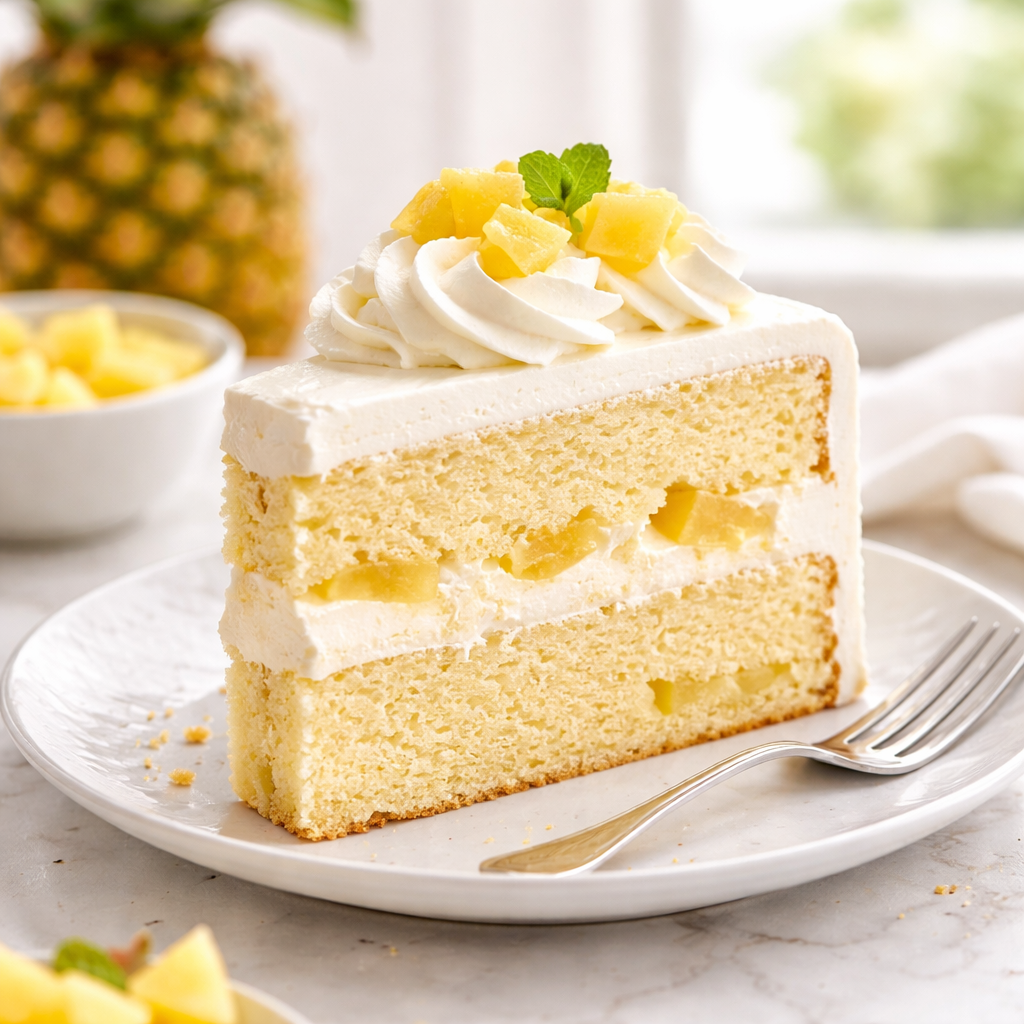
Precise Cooking Method
1. The Caramel Foundation
In a 9-inch heavy-bottomed cake pan (non-springform is essential to prevent leakage), melt 55g of unsalted butter. Whisk in 100g of dark brown sugar until the mixture resembles wet sand. Spread this evenly across the base. Arrange pineapple rings (freshly sliced to 1/2-inch thickness) firmly into the sugar. Place a maraschino cherry or a pecan half in the center of each ring.
2. The Reverse-Creaming Sponge
In a stand mixer fitted with the paddle attachment, combine 225g cake flour, 200g granulated sugar, 1.5 tsp baking powder, and 0.5 tsp salt. Mix on low until combined.
Add 170g of softened butter (cubed) and mix on low for 2 minutes. The goal is to coat the flour in fat, which inhibits gluten formation—this is the secret to a professional crumb.
3. The Liquid Integration
Whisk together 2 large eggs, 120g sour cream, and 2 tsp vanilla extract. With the mixer on medium-low, stream the liquid into the flour-butter mixture in three stages. Scrape the bowl between each addition. Beat on medium-high for 45 seconds to aerate and strengthen the batter’s structure.
4. The Assembly
Gently pour the batter over the arranged pineapple. Use an offset spatula to smooth the surface, ensuring the batter fills the gaps between the rings to lock the fruit in place.
Heat & Timing Control
The physics of this cake requires a middle-rack positioning. If placed too high, the top of the sponge will burn before the caramel has thickened; too low, and the sugar base may scorch.
- Temperature: $175°C$ ($350°F$).
- Visual Cues: The cake is nearing completion when the edges begin to pull away slightly from the sides of the pan and the center springs back when lightly pressed.
- The Skewer Test: A wooden skewer inserted into the center should emerge with a few moist crumbs. If it is wet, add 5 minutes. If it is bone-dry, the cake is overbaked.
Professional Tips
- The Inversion Window: There is a precise 10-minute window for the “flip.” If you flip too soon, the steam will cause the cake to fall apart. If you wait too long (more than 15 minutes), the caramel will cool and “glue” the fruit to the pan.
- The Blotting Technique: If using canned pineapple, pat the slices extremely dry with paper towels. Excessive surface moisture will boil during baking, creating “steam pockets” that detach the fruit from the sponge.
- Pan Selection: Avoid dark-coated pans, which absorb heat too aggressively and can over-caramelize the sugar into bitterness. Bright aluminum or cast iron is preferred.
Customization Techniques
- The Spirit Infusion: For a more “adult” profile, replace 1 tablespoon of the sour cream with a high-quality dark rum or bourbon.
- Tropical Nuance: Swap half of the cake flour with finely ground almond flour. This increases the fat content and adds a nutty, toasted aroma that complements the pineapple.
- Spice Variation: Incorporate 1/4 tsp of ground cloves into the brown sugar base to add a savory, spiced depth reminiscent of a glazed ham.
Storage & Reheating
Because of the high moisture content of the fruit topping, this cake is best consumed within 24 hours.
- Room Temperature: Store under a cake dome for up to 2 days. Do not airtight seal while warm, or the crust will become tacky.
- Reheating: To revive the caramel, place a slice in a $150°C$ ($300°F$) oven for 5 minutes. Avoid the microwave if possible, as it can toughen the cake’s protein structure and make the fruit rubbery.
FAQ
Q: Why did my fruit stay in the pan when I flipped the cake?
A: This usually indicates the sugar didn’t fully melt into a syrup or the pan was too cool during the inversion. Next time, ensure the butter and sugar are well-integrated before adding fruit, and flip exactly 10 minutes after removal from the oven.
Q: Can I use a springform pan for this?
A: It is highly discouraged. The caramel liquid is thin when hot and will almost certainly leak through the seal of a springform pan, creating smoke in your oven and a dry cake. Use a solid, one-piece cake pan.
Q: My cake is sunken in the middle. What happened?
A: This is often caused by over-beating the eggs or opening the oven door too early in the baking process, causing a sudden temperature drop before the structure had “set.”
Q: Fresh vs. Canned Pineapple: Which is superior?
A: Fresh pineapple offers a superior texture and a more complex acidity. However, it contains an enzyme (bromelain) that can soften the cake if left unbaked too long. Canned pineapple is more consistent and convenient, provided it is drained and patted dry.
By mastering the transition from the fatty, aerated crumb to the dense, fruit-forward topping, you elevate this classic from a simple dessert to a sophisticated centerpiece.