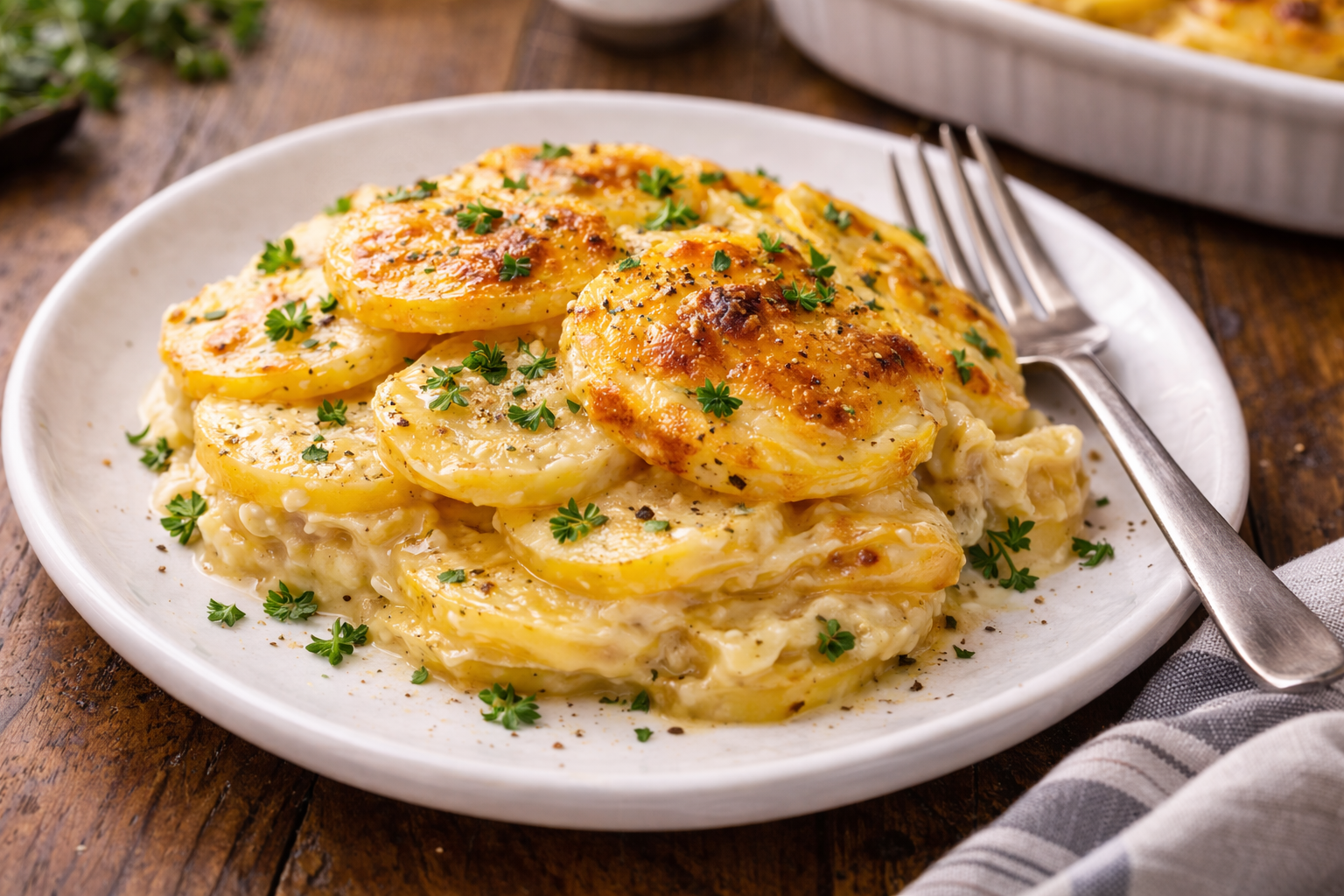
Scalloped Potatoes Recipe The great frustration with scalloped potatoes usually boils down to two disappointing extremes: a dish that is soupy and thin, or one that is “crunchy” because the potatoes refused to soften despite two hours in the oven. It is a heartbreak for any host. You pull a beautiful, golden-brown casserole out of the oven, only to find the interior is a watery mess or the sauce has curdled into unappealing white flecks.
The problem isn’t your oven; it’s usually a misunderstanding of starch and temperature. Scalloped potatoes are essentially a study in gelatinization. To get that creamy, velvety sauce that clings to the potato rather than running away from it, you have to manage the relationship between the moisture in the vegetable and the proteins in the dairy. This “easy” version strips away the need for a complex, temperamental roux, instead leveraging the potato’s own natural starches to do the heavy lifting.
Why This Recipe Works
Most traditional recipes demand you make a béchamel (a flour and butter sauce) on the stovetop first. It’s an extra pot to wash and a frequent point of failure for beginners. This recipe utilizes a “cold-start” infusion. By simmering the sliced potatoes directly in the cream and aromatics before they ever hit the baking dish, we jumpstart the cooking process and ensure every slice is coated in a seasoned emulsion.
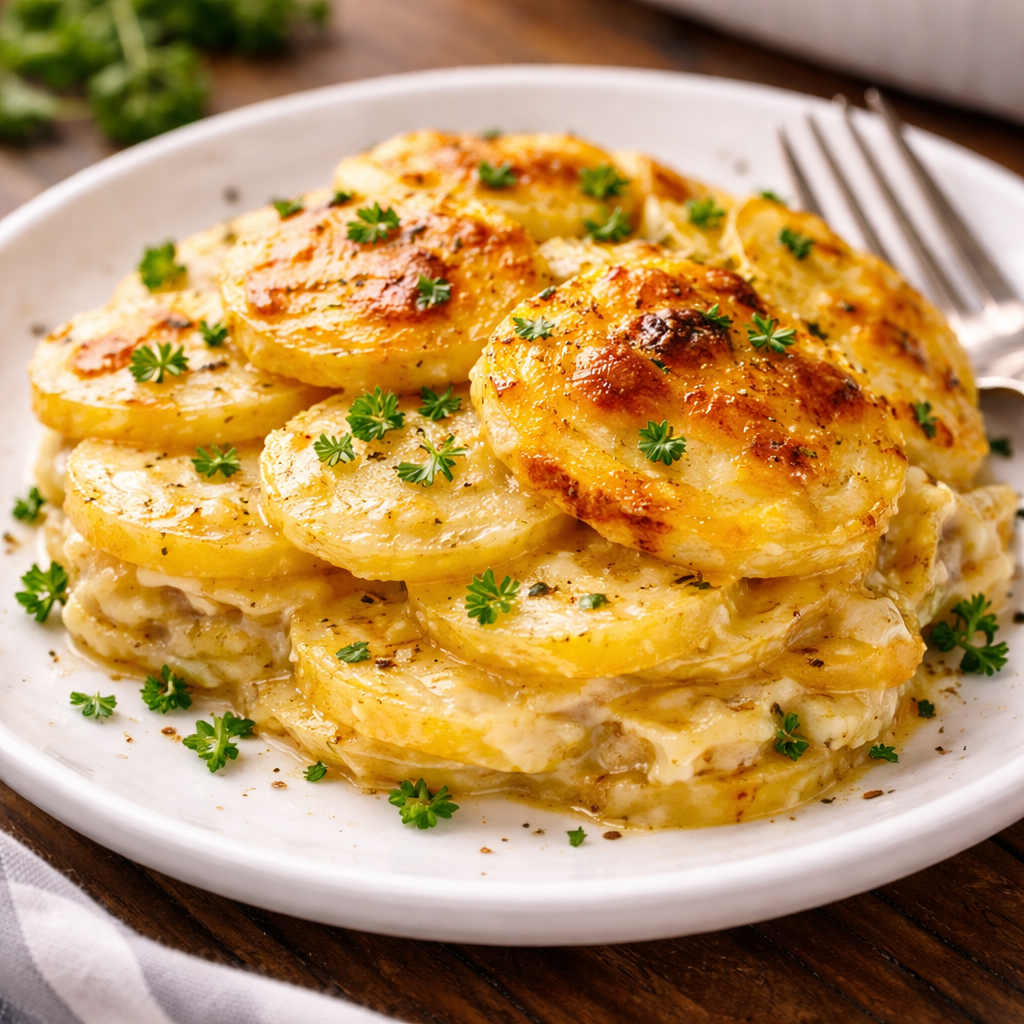
This method solves the “crunchy potato” syndrome. When you bake raw potato slices, they often struggle to reach the necessary $183^\circ F$ (the temperature at which pectin breaks down) before the top of the casserole burns. By par-boiling them in the dairy, we ensure they are already halfway to tender. Furthermore, the starch that sheds off the cut surfaces of the potatoes dissolves directly into the cream, thickening it into a natural, silky glaze that won’t “break” or become oily.
Ingredients & Measurements
Success in a simple dish relies on the quality of the basics. We are looking for high-starch players and high-fat binders.
The Foundation
- 3 lbs Yukon Gold Potatoes: I prefer Yukon Golds over Russets here. While Russets have more starch, Yukons have a naturally buttery flavor and a “creamy-firm” texture that holds its shape under the weight of the sauce.
- 2 cups Heavy Cream: Do not substitute with whole milk or half-and-half if you want that professional finish. The higher fat content in heavy cream prevents curdling when it meets the slight acidity of the potatoes.
- 1 cup Whole Milk: This thins the sauce just enough to allow it to penetrate the layers.
The Aromatics
- 3 cloves Garlic, smashed and peeled: We want the essence of garlic, not bitter burnt bits.
- 1 small Yellow Onion, sliced paper-thin: These should practically melt into the sauce.
- 1 teaspoon Fresh Thyme leaves: (Or $1/2$ teaspoon dried). Thyme is the natural partner to potato and cream.
- 1.5 teaspoons Kosher Salt: Potatoes are notorious “salt-sinks.” They require more seasoning than you think.
- $1/2$ teaspoon Ground Black Pepper: Or white pepper if you prefer a seamless, “no-speck” look.
- $1/4$ teaspoon Ground Nutmeg: This is the chef’s secret. Nutmeg highlights the sweetness of the dairy and adds a sophisticated depth you can’t quite name but would miss if it were gone.
The Finish
- 2 tablespoons Unsalted Butter: For greasing the dish and dotting the top.
- Optional: $1/2$ cup grated Gruyère or sharp White Cheddar. (Technically, adding cheese makes this Au Gratin, but a little hit of savory saltiness on top is rarely a mistake).
Step-by-Step Cooking Guide
1. The Precision Slice
Peel your potatoes (or leave the skins on if you like a rustic look, though peeling yields a more elegant dish). Use a mandoline if you have one. You are aiming for slices about $1/8$-inch thick. If they are too thick, they won’t cook through; if they are paper-thin, they will dissolve into mush. Uniformity is the goal here—even slices mean even cooking.
2. The Infusion (The Secret Step)
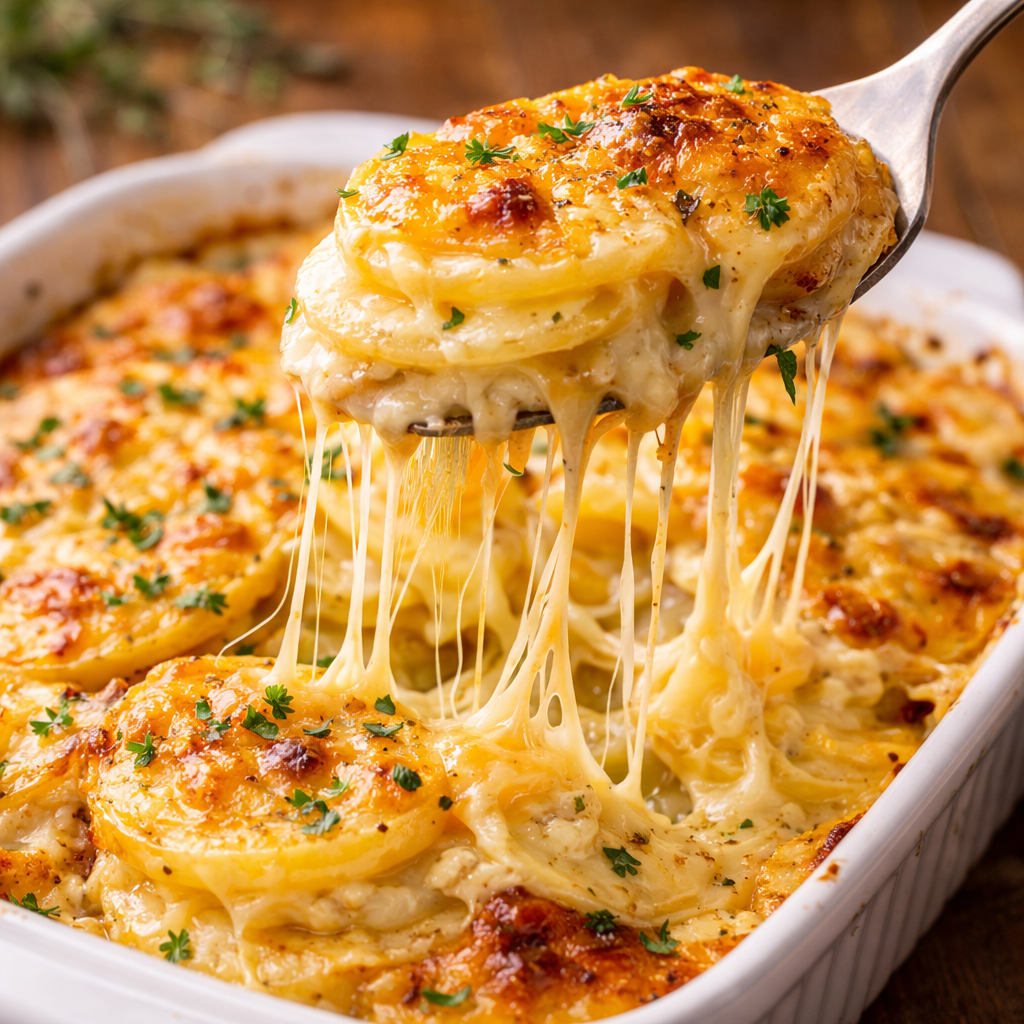
Instead of layering raw potatoes, place your slices in a large, wide saucepan or Dutch oven. Pour the heavy cream, milk, smashed garlic, thyme, salt, pepper, and nutmeg over them. Bring the mixture to a very gentle simmer over medium heat.
Watch the pot. Dairy boils over in an instant. Simmer for about 8–10 minutes, stirring occasionally with a flexible spatula to ensure nothing sticks to the bottom. You’ll notice the liquid start to thicken into a light gravy—that’s the potato starch working its magic.
3. The Assembly
Preheat your oven to 375°F. Generously butter a 9×13-inch baking dish. Pour the warm potato and cream mixture into the dish. Use your spatula to flatten the layers so the potatoes are submerged. Discard the smashed garlic cloves if you find them, or leave them in for a rustic surprise.
4. The First Bake
Cover the dish tightly with aluminum foil. This creates a steam chamber that finishes the softening process. Bake for 30 minutes.
5. The Golden Reveal
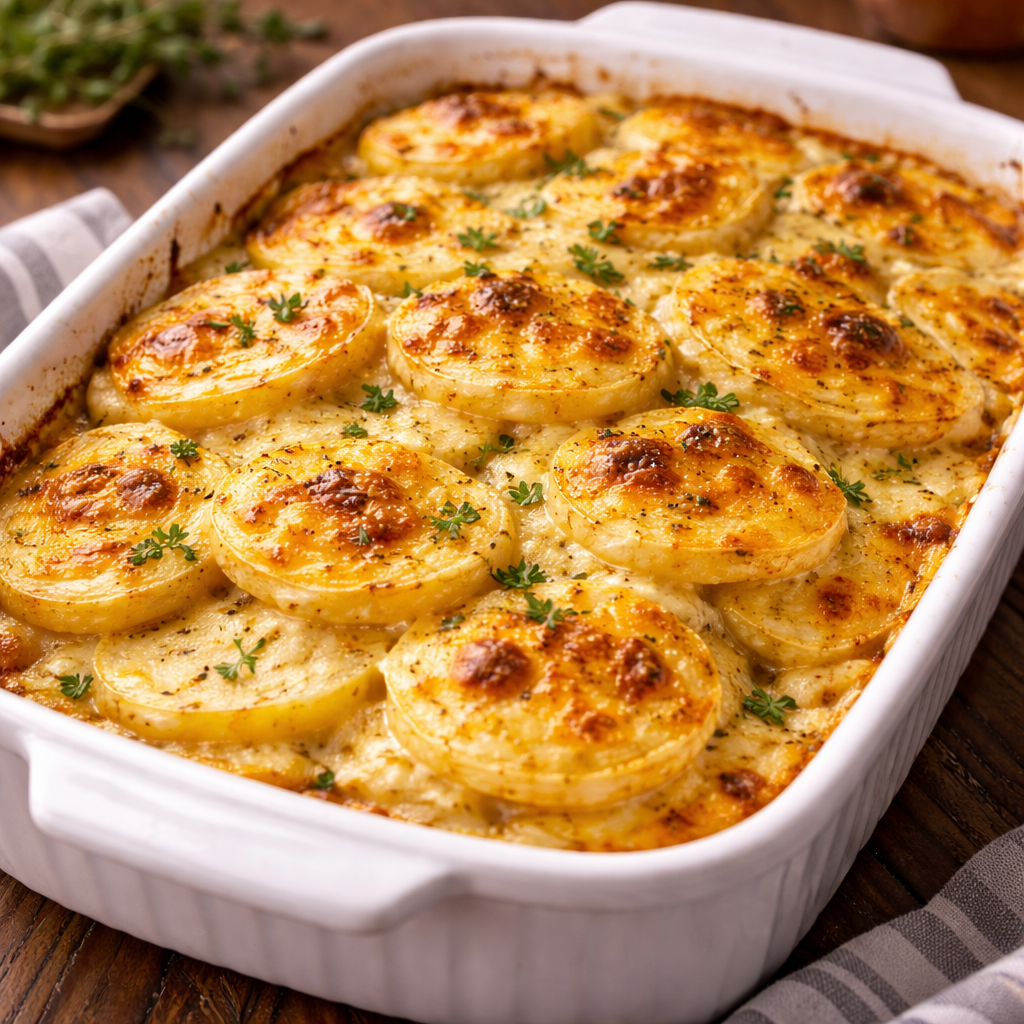
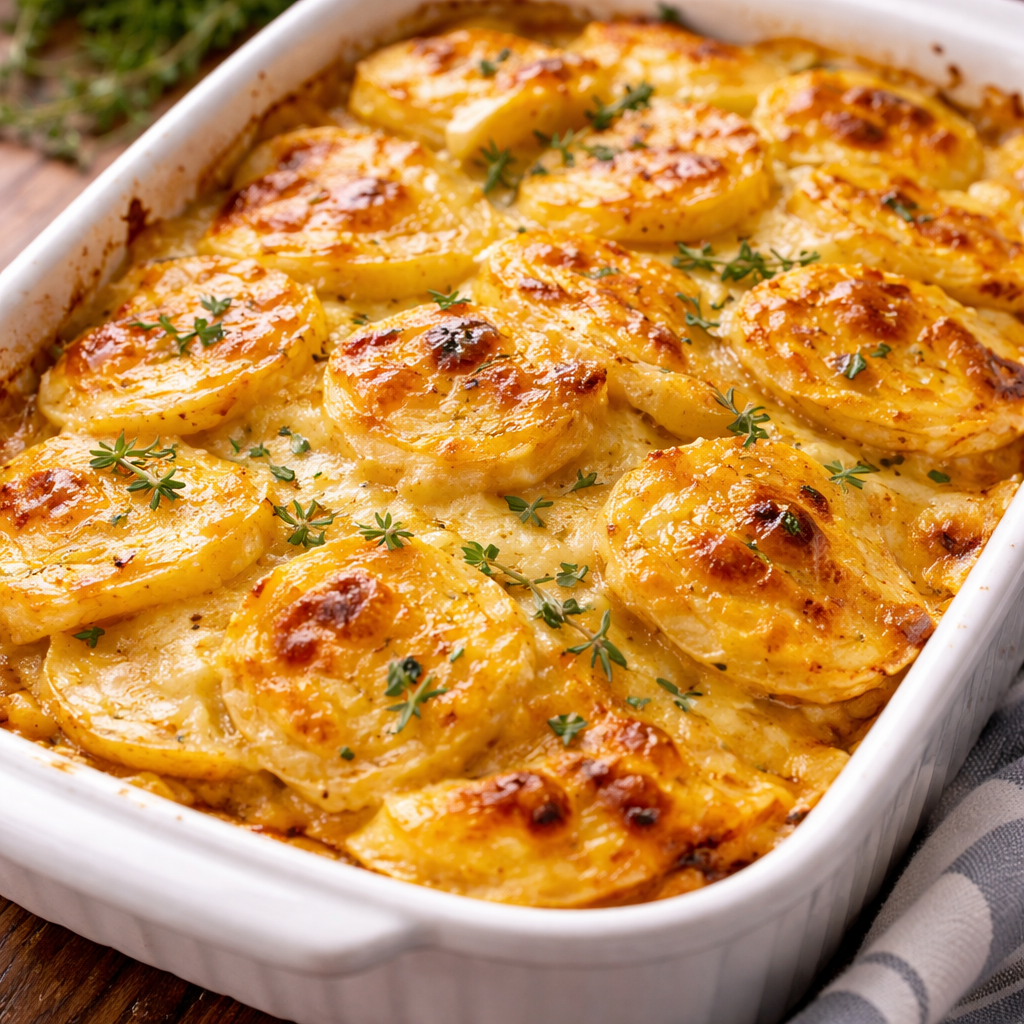
Remove the foil. If you’re using cheese, sprinkle it on now. Dot the top with the remaining butter. Return the dish to the oven, uncovered, for another 20–25 minutes. This is when the Maillard reaction takes over, browning the top and bubbling the edges into a savory crust.
Common Mistakes to Avoid
- Rinsing the Potatoes: This is the most common error. When you rinse sliced potatoes, you wash away the surface starch. In this recipe, we need that starch to thicken the cream. Slice them and put them straight into the pot.
- Using Low-Fat Dairy: If you use skim milk, the sauce will break. The heat of the oven causes the proteins in low-fat milk to tighten and clump, resulting in a watery, grainy mess. If you’re going to make scalloped potatoes, go all in on the cream.
- The “Crowded Pan” Syndrome: If your baking dish is too small and the potatoes are stacked too deep, the middle will never soften. Ensure the potatoes aren’t more than about 2 inches deep in the dish.
Timing & Doneness Indicators
| Stage | Duration | Indicator |
| Simmering | 8–10 mins | Liquid coats the back of a spoon; potatoes are flexible. |
| Foil Bake | 30 mins | Steam is trapped; potatoes are fork-tender. |
| Uncovered Bake | 20–25 mins | Top is golden brown; sauce is bubbling and thick. |
| Resting | 10–15 mins | Sauce sets and stops bubbling; temperature stabilizes. |
The “Knife Test”: Insert a paring knife into the center of the dish. It should meet absolutely no resistance. If the potato “grips” the knife, it needs ten more minutes.
Serving Suggestions
Scalloped potatoes are rich, so they pair best with proteins that have a bit of salt or smoke to cut through the fat.
- The Classic Pair: A honey-glazed ham or a standing rib roast. The saltiness of the ham is the perfect foil for the nutmeg-scented cream.
- The Weeknight Upgrade: Serve alongside a simple roasted chicken and a bright, acidic green salad (think lemon vinaigrette and arugula) to refresh the palate between bites.
- The Vegetarian Feast: Pair with roasted balsamic Brussels sprouts. The acidity of the vinegar balances the heavy dairy.
FAQ: Problem-Driven Solutions
“My sauce looks curdled or ‘broken.’ Can I save it?”
Once the dairy has curdled, you can’t fully reverse the texture, but you can mask it. Sprinkle a layer of breadcrumbs and extra cheese on top and broil it. The crunch will distract from the graininess of the sauce. To prevent this next time, ensure you aren’t using “old” cream and avoid adding acidic ingredients like wine or lemon until the very end.
“Why is the middle of my potato dish still hard?”
This usually happens because the oven temp was too high, browning the top before the heat could penetrate the center. If you see the top getting too dark but the potatoes aren’t tender, put the foil back on and lower the heat to $350^\circ F$ until they finish.
“Can I make this ahead of time?”
Yes, but with a caveat. Potatoes turn grey if left raw. The best way to make this ahead is to follow the recipe through the “Foil Bake” stage, let it cool, and refrigerate. The next day, let it come to room temperature and perform the final “Uncovered Bake” to brown the top.
“Can I add onions without them being crunchy?”
If you don’t like the texture of onions, sauté them in a little butter until they are completely soft and translucent before adding them to the cream and potato simmer. This ensures they disappear into the sauce.
“How do I get that really dark, professional crust on top?”
In the last 3 minutes of cooking, turn on the broiler. Stand right there and watch it. It will go from golden to burnt in a matter of seconds. A few “dark spots” on the surface add a smoky, caramelized flavor that is highly desirable.