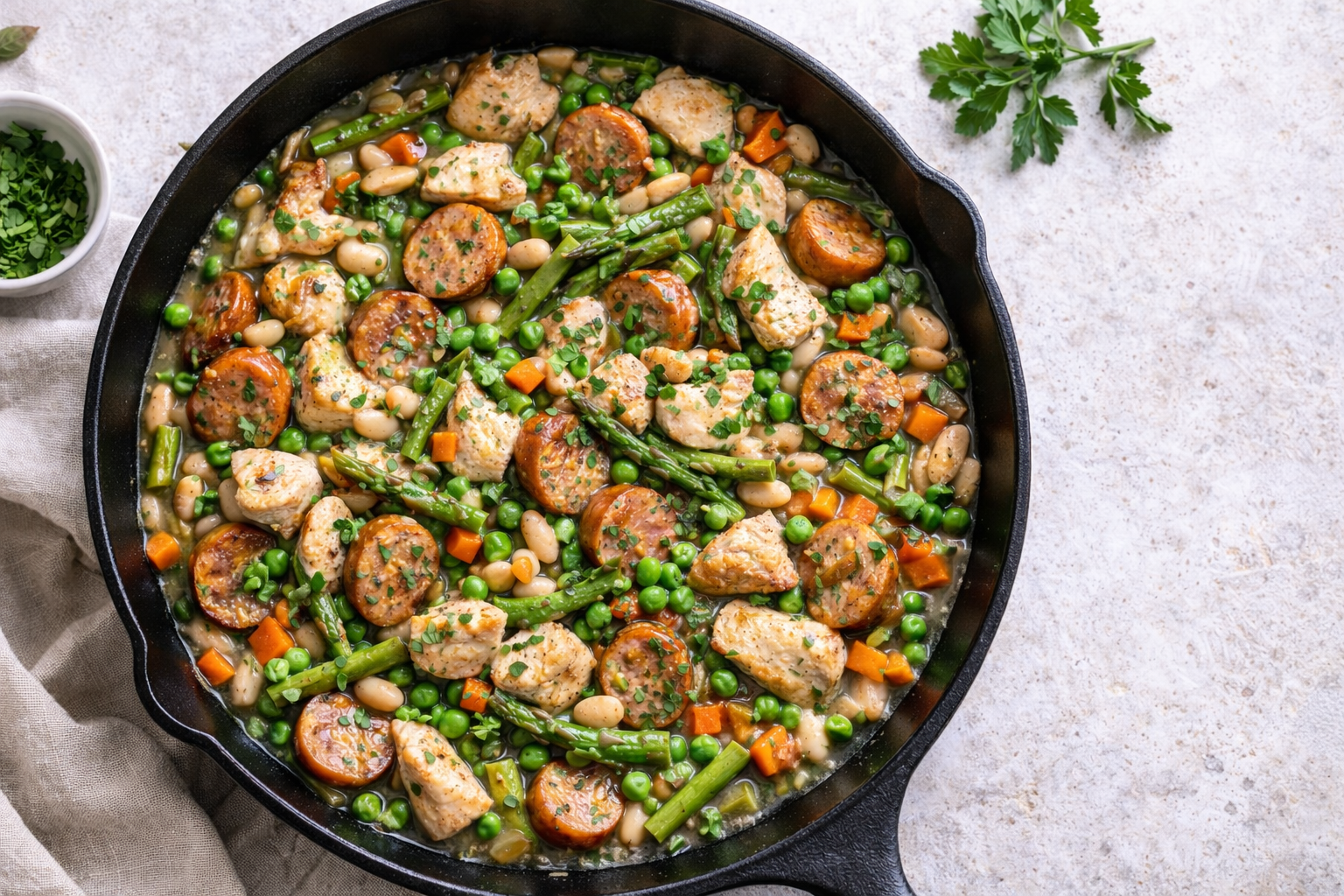
The pairing of chicken and sausage recipes is one of the most enduring alliances in the culinary world. From the rustic cassoulets of France to the spicy jambalayas of the American South, these two proteins provide a structural and flavor-filled contrast that few other combinations can match. Chicken, particularly when cooked on the bone, offers a delicate, savory canvas, while sausage—cured, smoked, or fresh—acts as a concentrated delivery system for fat, salt, and aromatics.
In this guide, we aren’t just throwing meat into a pan. We are exploring the One-Pot Braised Chicken and Smoked Sausage, a dish that relies on the “fond” (the browned bits) of the sausage to season the chicken, creating a unified flavor profile that tastes like it took days to develop, despite being a straightforward weeknight undertaking.
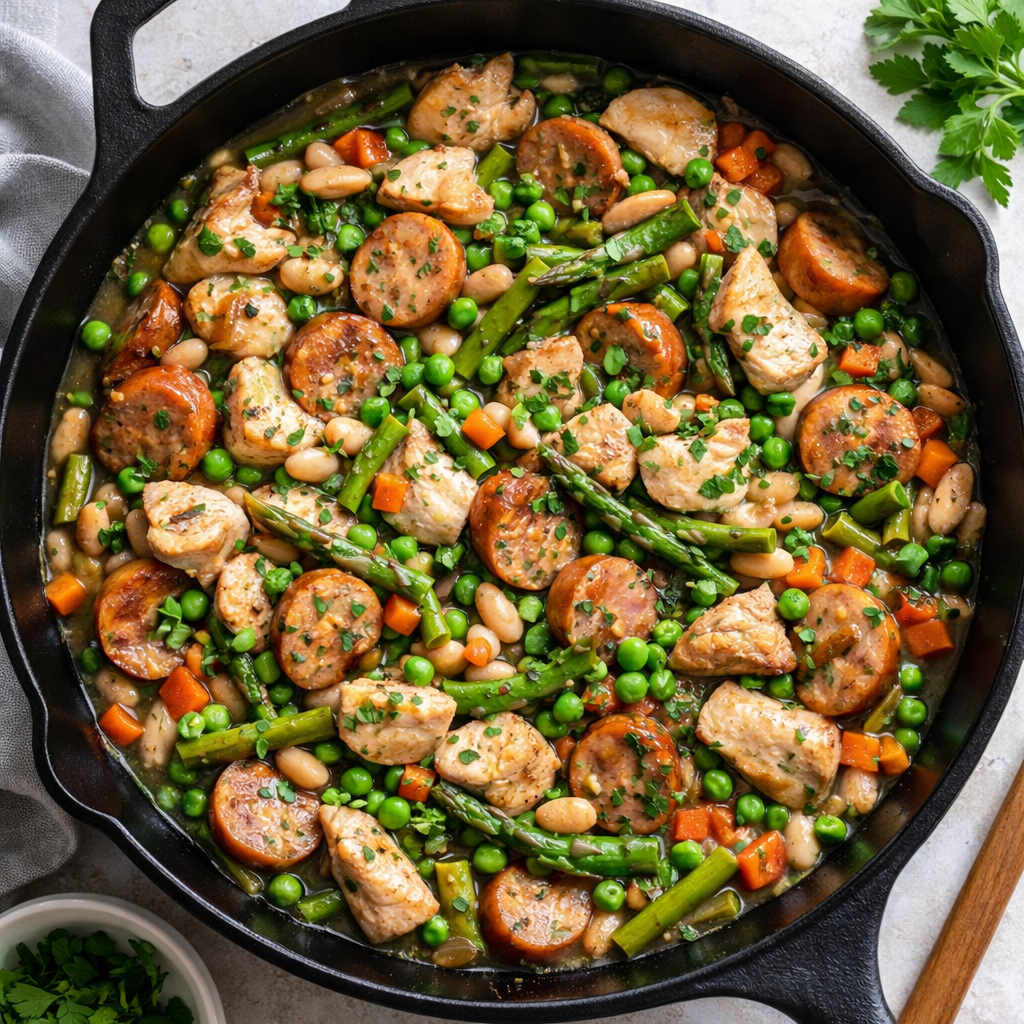
Ingredient Breakdown: The Power of Contrast
To make this dish work, you have to think like a chemist. You are balancing lean protein with rendered fat and bright acids.
- The Chicken (Bone-In, Skin-On Thighs): Do not attempt this with boneless breasts. The bone acts as a thermal conductor, ensuring the meat cooks evenly from the inside out, while the skin provides the fat necessary to jumpstart the Maillard reaction. More importantly, the connective tissue in thighs breaks down into gelatin, giving the sauce a luxurious body.
- The Sausage (Andouille or Kielbasa): You want a pre-cooked, smoked variety for this specific preparation. Smoked sausages contain “liquid smoke” and cured spices that leach into the cooking liquid, effectively seasoning the chicken from the outside in.
- The Trinity (Onion, Bell Pepper, Garlic): These provide the aromatic base. I prefer using a red bell pepper for its higher sugar content, which caramelizes beautifully against the salty backdrop of the meat.
- Chicken Bone Broth: Avoid standard “chicken water.” A high-quality bone broth has a high protein content that emulsifies with the rendered sausage fat, creating a sauce that clings to the meat rather than pooling at the bottom of the bowl.
- Dry White Wine (Pinot Grigio or Sauvignon Blanc): The acidity in wine is the “secret” to cutting through the heavy fat of the sausage. It brightens the palate and loosens the brown bits from the pan.
- Fresh Thyme and Bay Leaves: These add a woodsy, floral note that prevents the dish from feeling too “heavy.”
Preparation Strategy: The Layering of Flavors
The most common mistake in one-pot cooking is adding everything at once. If you do that, you aren’t braising; you’re boiling. The result is grey meat and flabby sausage.
The Sear Order: We always start with the sausage. Sausage has a higher fat-to-protein ratio. By browning the sausage first, you render out the spiced oils, which you then use to sear the chicken. This “cross-pollination” of fats is why restaurant dishes often taste more cohesive than home-cooked ones.
The Dry-Rub Technique: Pat your chicken skin until it is parchment-dry. Season only the skin side with salt at first. If you salt the meat side too early, it draws out moisture that will interfere with your sear.
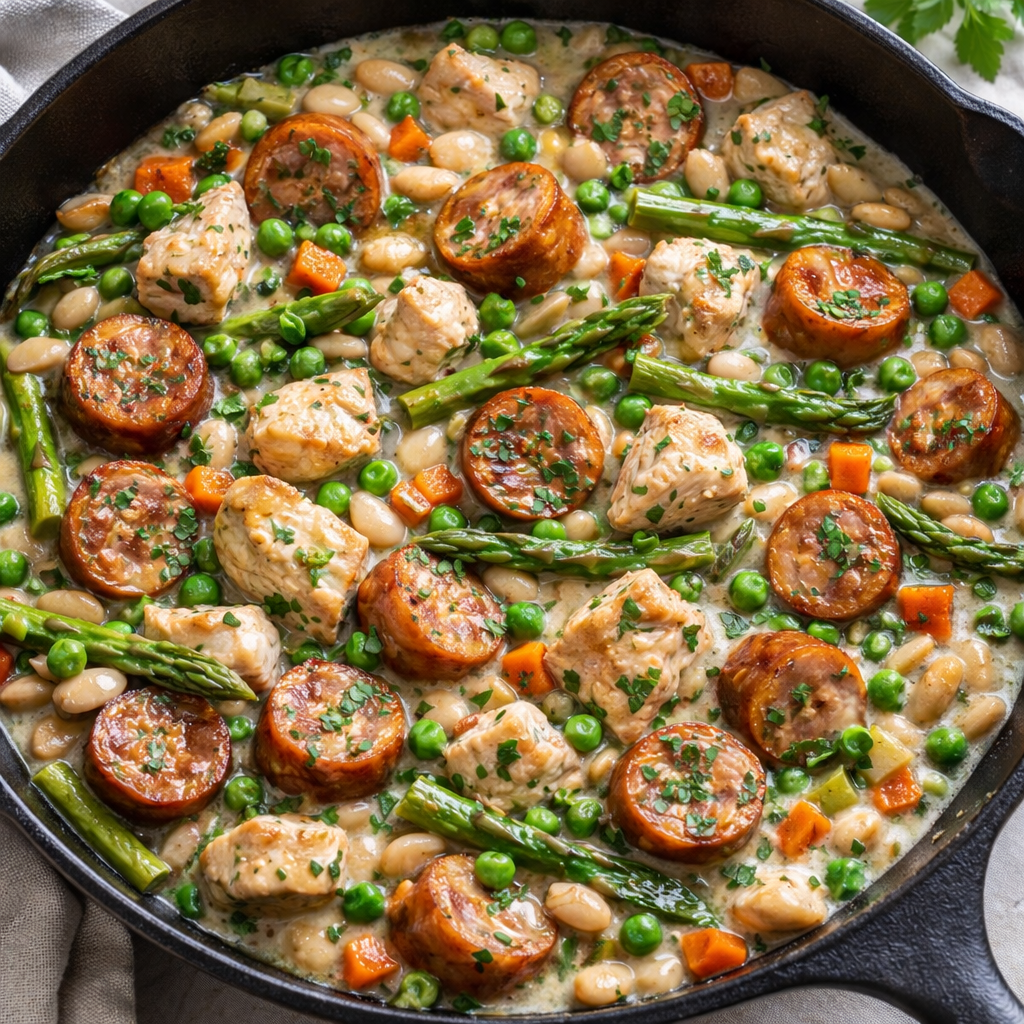
Cooking Instructions: The Professional One-Pot Method
1. The Sausage Render
Slice 12 ounces of smoked sausage into $1/2$-inch coins. In a heavy Dutch oven, heat a teaspoon of oil over medium-high heat. Add the sausage and cook until a dark, crispy crust forms on both sides. Remove with a slotted spoon, leaving the rendered orange oil in the pan.
2. The Chicken Sear
Place 4 to 6 chicken thighs skin-side down into that sausage fat. Do not crowd them. Let them sit, undisturbed, for 5–7 minutes. You are looking for a deep, golden mahogany skin that “releases” easily from the pan. If it’s sticking, it isn’t ready. Flip and sear the bottom for 2 minutes, then remove.
3. The Aromatic Build
Add 1 diced onion and 1 diced bell pepper to the remaining fat. Use a wooden spoon to scrape the bottom of the pot—this is where the “fond” (the flavor) lives. Once the vegetables are soft, add 4 cloves of minced garlic and 1 tablespoon of tomato paste. Cook for 2 minutes until the paste smells toasted.
4. The Deglaze
Pour in $1/2$ cup of white wine. Use your spoon to vigorously scrape the bottom. The liquid will turn a deep brown. Let it reduce until it’s almost gone (this is called au sec).
5. The Braise
Return the sausage and chicken (skin-side up) to the pot. Pour in 1 cup of chicken broth, ensuring the liquid comes halfway up the chicken. Keep the skin above the liquid line—this ensures it stays crispy while the meat below stays moist. Add your thyme and bay leaves.
6. The Finish
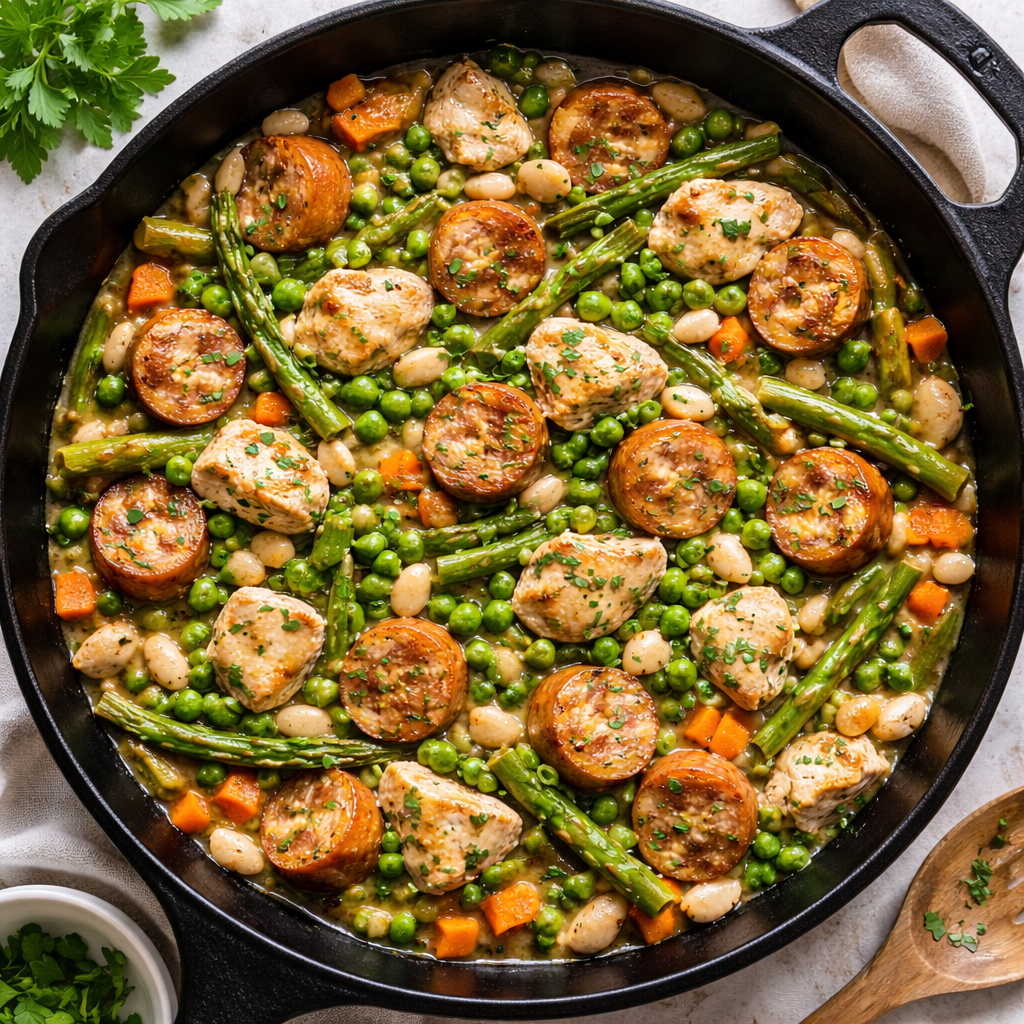
Place the pot in a 375°F oven, uncovered, for 25–30 minutes. The oven’s dry heat will finish crisping the skin while the liquid gently poaches the meat.
Flavor & Texture Indicators
- The “Snap”: The sausage should have a distinct snap when bitten, a sign that the casing was properly seared before the liquid was added.
- The Sauce: The liquid should have reduced by about a third and should look slightly “opaque” or creamy. This indicates that the fats from the sausage and the gelatin from the chicken have emulsified.
- The Chicken: The meat should be pulling away from the bone slightly at the bottom. If you use a thermometer, it should register $175^\circ F$—thighs are actually better at this higher temperature than at the standard 165F because it allows the collagen to fully melt.
Adjustments for Different Skill Levels
- The Novice: If the idea of a pan-sear is intimidating, you can roast the chicken and sausage on a sheet pan with the vegetables. It lacks the depth of the braised sauce, but it’s a foolproof way to get a great dinner on the table.
- The Intermediate: Experiment with Spice Profiles. Switch the white wine for a dark beer and add a tablespoon of Dijon mustard for a German-inspired variation.
- The Advanced: Master the Pan-Sauce Mounting. Once the chicken is done, remove it and the sausage. Place the pot back on the stove and whisk in two tablespoons of cold, unsalted butter. This “mounts” the sauce (monter au beurre), creating a glossy, velvet-like finish that is the hallmark of French bistro cooking.
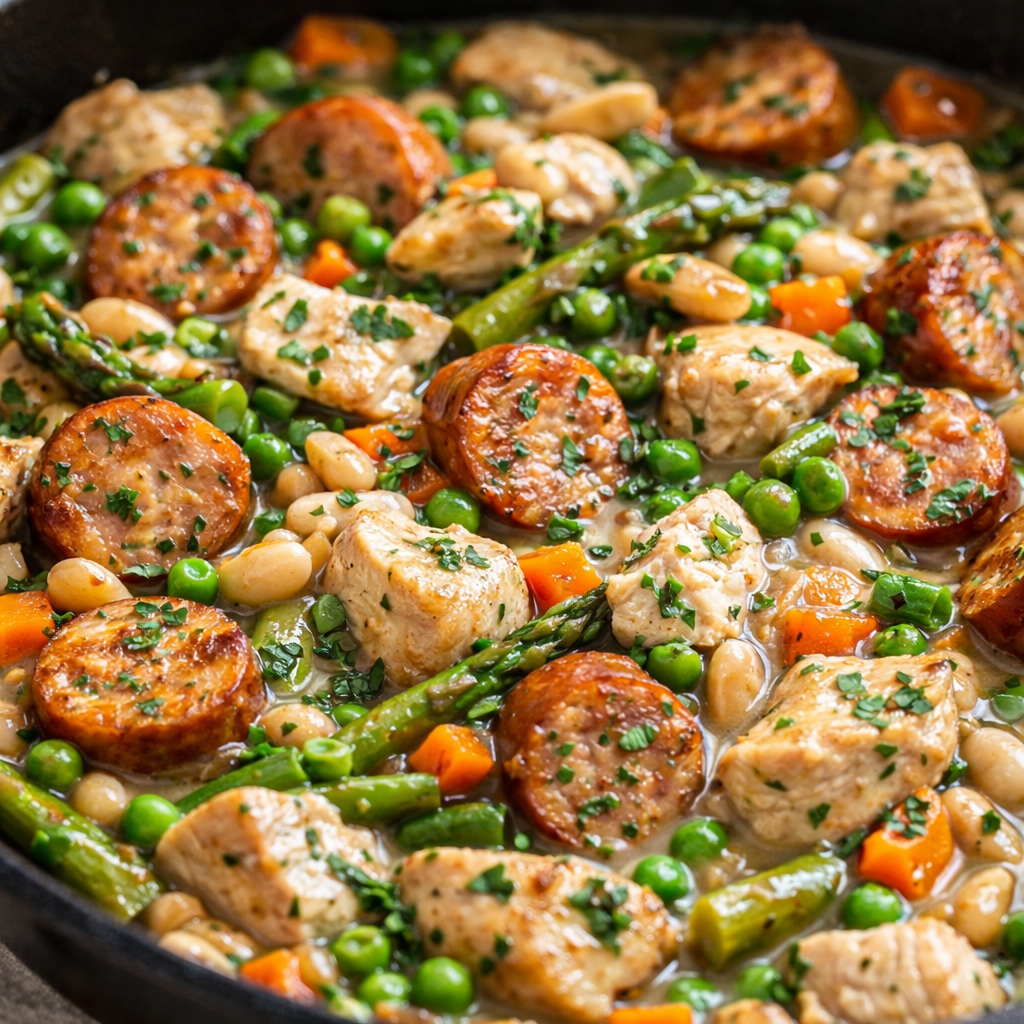
Storage & Shelf Life
This dish is a champion of leftovers. Because it is a braise, the chicken actually becomes more tender as it sits in the sauce.
- Fridge: Store in an airtight container for up to 4 days.
- Reheating: Avoid the microwave. The skin will become rubbery. Instead, place everything in a skillet with a splash of water, cover it, and heat over medium-low for 8 minutes.
- Freezing: This dish freezes beautifully. The sausage is virtually indestructible in the freezer, and the thigh meat holds its structure well. It will last for 3 months.
Reader Questions
“Can I use Italian Sausage instead?”
Yes, but since Italian sausage is usually fresh (raw), you must ensure it is cooked through during the initial browning phase. You may also need to drain more fat from the pan, as fresh pork sausage tends to be fattier than smoked varieties.
“My skin isn’t crispy after the braise. What happened?”
You likely added too much liquid. If the liquid covers the skin, it will steam rather than roast. Next time, ensure the “island” of chicken skin is well above the “sea” of broth.
“What should I serve this with?”
You need something to soak up the sauce. A crusty baguette, a pile of creamy polenta, or even simple white rice is ideal. The sauce is the star here; don’t let it go to waste.
Best Easy Orange Chicken Recipe
Quick Chicken and Orzo Recipes